avatarAnthony Li

Free AI web copilot to create summaries, insights and extended knowledge, download it at here

7997

Abstract

ficials. This made loads of redundant posts and hindered a constructive development of governance.</p><div id="0a53"><pre>In my memory, there were no link between literacy rate (which was <span class="hljs-keyword">not</span> given) <span class="hljs-keyword">and</span> <span class="hljs-keyword">the</span> monitoring posts <span class="hljs-keyword">in</span> <span class="hljs-keyword">the</span> government. In <span class="hljs-keyword">the</span> Chinese History book, <span class="hljs-keyword">the</span> reason behind those posts was that <span class="hljs-keyword">the</span> emperor did <span class="hljs-keyword">not</span> fully trust <span class="hljs-keyword">the</span> officials.</pre></div><p id="ef31">Also, a lot of peace treaties were signed in order to maintain peace in the area. Therefore, the military force were kind of useless in this dynasty. They had nothing to do with peace-keeping and fighting against enemies. They also read too many books and believed that keeping peace could be done by the ministers.</p><p id="39ce">One thing could break the peace which they tried their very best to maintain: When one country broke the treaty. Khitan broke the treaty and invaded China. Sung Chinese military was too weak to fight against them, so they had to find help.</p><p id="dd68">From what learnt in <a href="https://en.wikipedia.org/wiki/Qin_dynasty">Ch’in dynasty</a>, to fight against an enemy near you, you ought to find a friend from afar. This time, China found <a href="https://en.wikipedia.org/wiki/Manchu_people">Manchuria</a>, a country further north of Khitan. Khitan was defeated with help from Manchuria and became Manchurian land, but this made Manchuria, a bigger threat, to destroy China more easily.</p><p id="cf9f">Manchuria did destroy China afterwards. China had to give up the territory north of Yangtze River, once again after Chin dynasty. and became a direct neighbour of Manchuria.</p><p id="d070">China once wanted to get back the territory given to Manchuria by fighting. This included <a href="https://en.wikipedia.org/wiki/Yue_Fei">Yueh Fei</a> (岳飛), a general, but he was quickly sent back to China and got killed. After his death, nobody in China had the power to fight against the barbarians from the north anymore.</p><p id="a6bc">Since nobody could fight, they used the same tactic as before. They tried to keep peace using peace treaties. And when Manchuria tried to invade China, China found another power from the north of Manchuria for help. Guess who?</p><figure id="5c7a"><img src="https://cdn-images-1.readmedium.com/v2/resize:fit:800/0*Mfo2YXbaHINIlPPY"><figcaption>Photo by <a href="https://unsplash.com/@patrick_schneider?utm_source=medium&amp;utm_medium=referral">Patrick Schneider</a> on <a href="https://unsplash.com?utm_source=medium&amp;utm_medium=referral">Unsplash</a></figcaption></figure><h2 id="ef7e">MONGOLS!</h2><p id="adf8"><a href="https://en.wikipedia.org/wiki/Genghis_Khan">Genghis Khan</a> (成吉思汗) nearly killed his brother when he was only six, and he became the clan’s leader and then united all Mongols when he was pretty young. Before <a href="https://en.wikipedia.org/wiki/Kublai_Khan">Kublai Khan</a> (忽必烈汗) defeated China, Genghis Khan and his successors had fought westwards to expand the country and became a great power in Eurasia.</p><p id="9c36">It was such a great power and a threat to the very weak China. However, it was the time when Manchuria was a greater threat to China. China had to ally with Mongolia so that China could get rid of Manchuria’s threat.</p><figure id="d213"><img src="https://cdn-images-1.readmedium.com/v2/resize:fit:800/1*f0wRBFQu7RoMGuLabjKHQQ.jpeg"><figcaption>There are still remnants of the “royal visit” in Hong Kong. For example, Sung Wong Toi, meaning “a plaque for the Sung emperor” is still in Ma Tau Chung, Kowloon. A commemorate garden (Sung Wong Toi Garden) was set up for the rock which was gravely cut down in size to move away for the expansion of Kai Tak Airport during Japanese occupation in the Second World War. Photo taken by Anthony Li in Feburary 2015. All rights reserved.</figcaption></figure><p id="d55d">But of course, history repeats itself. After Manchuria dissolved, Mongols started to invade China. Unable to fight back, the emperor fled towards the south. Legend has it that the Sung emperors fled to Hong Kong and one of them crowned in Mui Wo, Lantau Island, Hong Kong.</p><p id="9dba">But when the emperors fled to Hong Kong, Sung dynasty came to an end as the young emperors took their own lives by drowning into the sea as a glorious death.</p><h2 id="8d70">Part of the Mongolian Empire</h2><figure id="d3be"><img src="https://cdn-images-1.readmedium.com/v2/resize:fit:800/0*E2xq4zOf8fPu4837.jpg"><figcaption>A map of the Mongolian Empire. Picture from <a href="https://gohighbrow.com/the-mongol-empire/">this link</a>.</figcaption></figure><p id="5db5">Even though the empire was massive, the emperor did not directly rule the whole giant empire. The western part of the empire was split into several states governed by the emperor’s relatives. Only the eastern part was governed directly by the monarch. The capital city was set in <a href="https://en.wikipedia.org/wiki/Khanbaliq">Khanbaliq</a>, present-day Peking. And it was decided that the empire to be called the <a href="https://en.wikipedia.org/wiki/Yuan_dynasty">Yuan</a> (元) dynasty.</p><p id="96d2">Mongolians were barbarians, so how could they rule a much more civilised China? The answer was: discrimination.</p><figure id="2667"><img src="https://cdn-images-1.readmedium.com/v2/resize:fit:800/0*UWGJQQQKnZT1jIT_"><figcaption>Photo by <a href="https://unsplash.com/@yirage?utm_source=medium&amp;utm_medium=referral">Andrii Podilnyk</a> on <a href="https://unsplash.com?utm_source=medium&amp;utm_medium=referral">Unsplash</a></figcaption></figure><p id="ce20">Chinese people were in the lowest social status among races. while the northerners were higher than the southerners. <a href="https://en.wikipedia.org/wiki/Semu">Coloured-eyes</a> (色目人), implying Central Asians and Middle Eastern people, were in a status between Chinese and Mongols. As for job discrimination, scholars were in the lowest status, even lower than prostitutes.</p><p id="f5f0">A whole alley could only own a set of cooking utensils, such as knives, woks, and other kinds of utensils which might be harmful to the Mongols. The residents were under heavy surveillance.</p><p id="3a4c">If this way of governance happened in current situation, I would guess it would call for a great war, a lot of diplomatic negotiations, or nobody really cared.</p><p id="f61b">What was the history? Chinese people rebelled several times before they finally succeeded.</p><h2 id="c4c0">Beat the Barbarians the Hell Out at Mid-Autumn</h2><figure id="2a83"><img src="https://cdn-images-1.readmedium.com/v2/resize:fit:800/0*mwaZ_7mgd1PUNN_j"><figcaption>Photo by <a href="https://unsplash.com/@fotote?utm_source=medium&amp;utm_medium=referral">Foto T</a> on <a href="https://unsplash.com?utm_source=medium&amp;utm_medium=referral">Unsplash</a></figcaption></figure><p id="10db">The legend of the origin of mookcakes for Mid-Autumn Festival came from this period. Since people were under heavy surveillance, people started using some secret means to deliver the message to kill and expel the Mongols out of China.</p><p id="9237">People wrote the message “Beat the barbarians out at Mid-Autumn” (八月十五打韃子) and hid them into pastries. Then they delivered the pastries to one another before the festivals. When they eat the pastries, they would notice the messages, and they would acknowledge the messages, and do as the messages said.</p><p id="db69">Anyway, it’s just a legend. Nobody really knows whether it is real nowadays. But Chinese people successfully rebelled the Mongols in just less than a century after Mongol’s conquest. And mooncakes are delicious.</p><h2 id="c865">Make China Great (Season 3?): Age of D

Options

iscovery</h2><p id="5a94">The rebellion was successful. Chinese people expelled the Mongols back to the north of the desert. The Chinese boundary was way bigger than Sung, or even T’ang China, but the capital city was set in <a href="https://en.wikipedia.org/wiki/Nanjing">Nanking</a>. This was the <a href="https://en.wikipedia.org/wiki/Ming_dynasty">Ming</a> (明) dynasty of China.</p><figure id="b83d"><img src="https://cdn-images-1.readmedium.com/v2/resize:fit:800/0*gJjt0jduMXRRwTW2"><figcaption>Photo by <a href="https://unsplash.com/@ling_gigi?utm_source=medium&amp;utm_medium=referral">Gigi</a> on <a href="https://unsplash.com?utm_source=medium&amp;utm_medium=referral">Unsplash</a></figcaption></figure><p id="263d">Later, as <a href="https://en.wikipedia.org/wiki/Yongle_Emperor">the Prince of Peking</a> (燕王. It sounds fancier than King of Yan) rebelled the young emperor, who was the duke’s nephew, and won, the capital moved to Peking. The Forbidden City was built in that period.</p><p id="17b0">One of the greatest things done by the new emperor was that he <a href="https://en.wikipedia.org/wiki/Ming_treasure_voyages">sent groups of navy to the oceans and made some diplomatic relations</a> with countries by the seas. In the records, these sailing from China was way before the Europeans did, but Chinese didn’t colonise those countries.</p><div id="27da"><pre>There are legends <span class="hljs-keyword">on</span> why the emperor did that. One <span class="hljs-keyword">of</span> which <span class="hljs-keyword">is</span> <span class="hljs-keyword">to</span> look <span class="hljs-keyword">for</span> the lost former emperor. <span class="hljs-keyword">By</span> the way, I still remember that I saw an <span class="hljs-built_in">old</span> map written <span class="hljs-keyword">in</span> Chinese <span class="hljs-keyword">on</span> names <span class="hljs-keyword">of</span> <span class="hljs-keyword">some</span> countries <span class="hljs-keyword">from</span> Asia <span class="hljs-keyword">to</span> Europe, <span class="hljs-keyword">from</span> Africa <span class="hljs-keyword">to</span> Caribbean, together <span class="hljs-keyword">with</span> <span class="hljs-keyword">some</span> descriptions <span class="hljs-keyword">in</span> an exhibition <span class="hljs-keyword">in</span> <span class="hljs-type">National</span> Maritime Museum <span class="hljs-keyword">in</span> Greenwich, London. I recognised that it was an <span class="hljs-built_in">old</span> map because the Chinese names were <span class="hljs-keyword">not</span> the <span class="hljs-keyword">current</span> ones. The translation <span class="hljs-keyword">for</span> Christianity was the one <span class="hljs-keyword">in</span> Ming dynasty.</pre></div><h2 id="9cf4">The Eunuch Dynasty</h2><p id="78c5">The Ming dynasty slowly declined. The sea routes were closed a few decades after they started. The main reason was that the Japanese pirates were strong, they went to Chinese coasts and stole a lot of things, maybe even raped some girls. <a href="https://en.wikipedia.org/wiki/History_of_Macau">Macau was stolen by Portugal</a>.</p><p id="b41f">China was like, “I’m too busy dealing with my own problems, so help yourselves here. Except those pirates, I don’t know who you are, but I will find you and I will kill you.”</p><p id="58fe">What was China’s problem? Its fear. The first emperor got the country by rebellion, so the whole royal family was afraid of any potential rebellions. Therefore, the government set up surveillance even heavier than Yuan dynasty. The government would nitpick anything that says you want to rebel and then kill you, no matter if the evidence were real or obsolete.</p><figure id="8899"><img src="https://cdn-images-1.readmedium.com/v2/resize:fit:800/0*J1XTqun7NLTcCFAR"><figcaption>Photo by <a href="https://unsplash.com/@lianhao?utm_source=medium&amp;utm_medium=referral">Lianhao Qu</a> on <a href="https://unsplash.com?utm_source=medium&amp;utm_medium=referral">Unsplash</a></figcaption></figure><p id="9887">The emperors set up 3 chambers of eunuchs to check on the residents, the officials, the royalty, and cross-check one another.</p><p id="d7f6">The government was fully centralised, but who got the actual power? The eunuchs who were close to the emperors did. There were loads of reasons for the emperors not to go out and see their government cabinets. The eunuchs became the communicator between the monarchs and the cabinets. Can you see the problem?</p><p id="3a5f">The eunuchs could do whatever they want. They could deliver fake messages “at the emperor’s will”. They could defame a minister and ask the emperor to kill him if the eunuchs did not like him. Therefore, the eunuchs got the powers and killed a lot of enemies secretly or openly.</p><p id="1926">There were also a lot of fights among eunuchs as they were in different chambers. These used up the energy and power of the country and so people managed to rebel at last.</p><p id="1910">Even though Chinese rebelled, a greater threat from outside stormed China.</p><h2 id="7812">Manchurians Made a Comeback</h2><p id="3e48">As Ming failed, Manchurians from northeast of China had developed their military and clans. They managed to go through the gates at the Great Wall of China. Later, they conquered the rest of China and became the <a href="https://en.wikipedia.org/wiki/Qing_dynasty">Ch’ing</a> (清) dynasty.</p><figure id="df9b"><img src="https://cdn-images-1.readmedium.com/v2/resize:fit:800/0*P2k6m5mOZ1hklpFW"><figcaption>I want this to be a clue of a historic event in late Ming period. Photo by <a href="https://unsplash.com/@eberhardgross?utm_source=medium&amp;utm_medium=referral">eberhard grossgasteiger</a> on <a href="https://unsplash.com?utm_source=medium&amp;utm_medium=referral">Unsplash</a></figcaption></figure><p id="7191">My second year in secondary school ended here for my Chinese History curriculum.</p><p id="a428">Part three is still in progress and it will be about the last Chinese empire and the “later dynasties”. Stay tuned.</p><div id="5cfa" class="link-block"> <a href="https://readmedium.com/how-china-becomes-chinazi-iii-a-44b8378231c5"> <div> <div> <h2>How China becomes Chinazi (III A)</h2> <div><h3>My memories and reflection of what I learnt during Chinese History lessons in secondary school</h3></div> <div><p>medium.com</p></div> </div> <div> <div style="background-image: url(https://miro.readmedium.com/v2/resize:fit:320/0*GLuBvl-D8-Eb4QiZ.jpeg)"></div> </div> </div> </a> </div><div id="8fa8" class="link-block"> <a href="https://readmedium.com/how-china-becomes-chinazi-iii-b-b36eb483cc54"> <div> <div> <h2>How China becomes Chinazi (III B)</h2> <div><h3>My memories and reflection of what I learnt during Chinese History lessons in secondary school</h3></div> <div><p>medium.com</p></div> </div> <div> <div style="background-image: url(https://miro.readmedium.com/v2/resize:fit:320/0*NWoEwCGkk64WdCNx.jpg)"></div> </div> </div> </a> </div><div id="6fac" class="link-block"> <a href="https://readmedium.com/how-china-becomes-chinazi-iv-41e62301b2ea"> <div> <div> <h2>How China becomes Chinazi (IV)</h2> <div><h3>My memories and reflection of what I learnt during Chinese History lessons in secondary school</h3></div> <div><p>medium.com</p></div> </div> <div> <div style="background-image: url(https://miro.readmedium.com/v2/resize:fit:320/0*nE9_oE9j9eQ0-kxk)"></div> </div> </div> </a> </div></article></body>

How China becomes Chinazi (II)

My memories and reflection of what I learnt during Chinese History lessons in secondary school

Last time I talked about the Chinese history from the beginning of civilisation to the north-south divide. You may take a look here.

So now I’m going to take you through the Chinese history I learnt in Secondary 2.

Chinese History from My Memory (Continued)

Disclaimer: Again, the following comes from my memory only. They may be wrong.

The Empire, Long Divided, Must Unite

As the Romance of the Three Kingdoms opens, “The empire, long divided, must unite; long united, must divide. Thus it has ever been.” (「話說天下大勢,分久必合,合久必分。」) The country united again after that long period of division.

This time, the minister’s family from one of the northern states rebelled their emperor and took over their own state. He conquered the other states and reunited China. This started the Sui (隋) dynasty.

Sadly, Sui dynasty was short-lived. The second emperor of Sui spent too much on building the Grand Canal (大運河), which led to poor standard of living among the working class. Then people rebelled. Sui dynasty “died” at the age of 15.

Make China Great (Season 2): East Asia Influencer

The dynasty right after Sui was like the Renaissance of China. It was the T’ang (唐) dynasty.
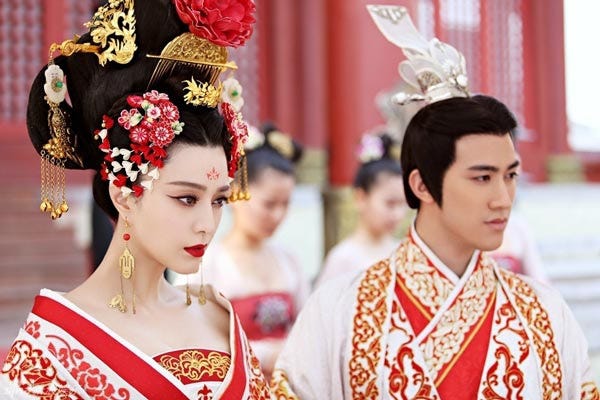
Wu Tze-t’ien, the only female emperor in Chinese history was in the T’ang dynasty. Fan Bingbing acted as Wu Tze-t’ien in the TV series The Empress of China (2014). Picture from this link.

It was (one of) the best time of China in history. People were open-minded. Arts were vivid. Poetry were great and many passes on to generations. The boundary was bigger ever than before.

China kind of connected Tibet through royal marriage. Japan even went across the sea and learnt Chinese characters, which later created Japanese writing system.

The only female emperor in Chinese history was also in this dynasty. Historians said that she preferred not to be called an empress. Even though she was taken down by patriarchy and got killed at old age, she was still regarded as a game-changer in Chinese history.
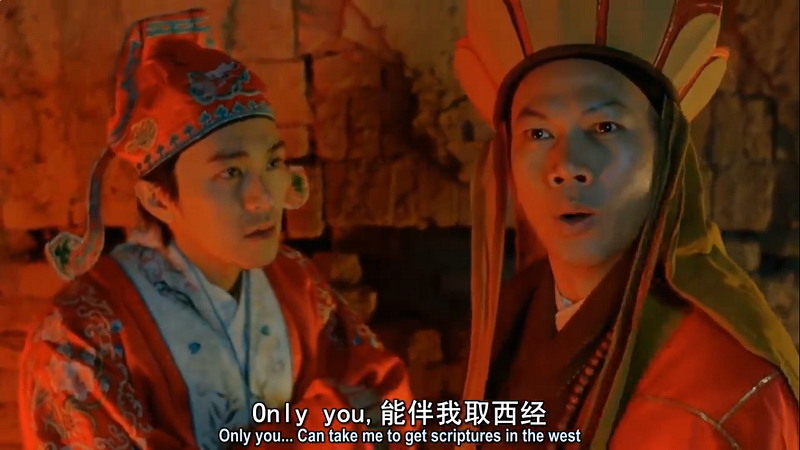
T’ang San-tsang was the monk who went to India to translate Sanskrit in Buddhist literature into Chinese during T’ang dynasty. Law Kar Ying acted as T’ang San-tsang in A Chinese Odyssey Part Two-Cinderella (1995). Image capped from this link.

Another famous Chinese novel Journey to the West (西遊記) based on an actual event in this dynasty with great alterations and fantasies. As a matter of fact, the emperor could not farewell the monk because in that period not a Chinese person could leave the country legally. The monk actually fled to the west and then headed south to India and went back to China. This took him around two decades for the whole trip.

T’ang China was such a great influence to Far East cultures, so as future China.

Long United, Must Divide
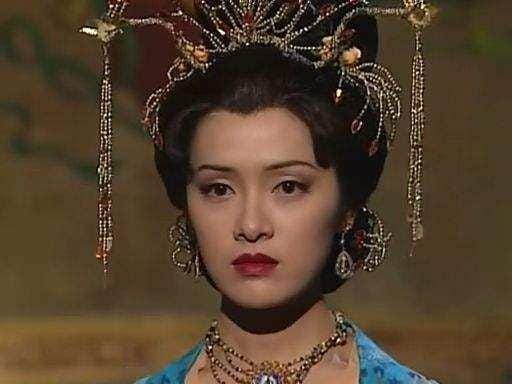
Anne Heung acted as Consort Yang in a TV series The Legend of Lady Yang (2000). Image from this link.

The country was great, then it would fall. The T’ang emperor cared less about the governance and cared more about one of the consorts, surnamed Yang (楊貴妃). Eventually, the monarch could not stop a rebellion from several ministers and eunuchs cooperated.

The royal family fled, but the public condemned the inability of governance solely on the consort Yang. People all asked Yang to take her own life. The emperor didn’t want to, but the consort still did.

However, T’ang dynasty was still unable to survive afterwards. China’s situation deteriorated. T’ang China dissolved into numerous states afterwards.

A Country of Bookworms

After T’ang ended, China was divided by north and south again, there were even 10 states in that period (五代十國). Following the long division of several decades, China got back united. It was the Sung (宋) dynasty. However, a piece of strategic piece of land, 16 cities around Peking on the northern coast of lower Yellow River (燕雲十六州), was still under Khitan (契丹) rule.

Photo by Quinten de Graaf on Unsplash

This made Sung China very susceptible of foreign invasion. However, the empire didn’t think that fighting was a good means of keeping peace. Instead, they encouraged people who wanted to be part of the government (which was the most prestigious path), be them ministry or military officers, to study. It was in fact the order of the first emperor of Sung but every successors followed.

This act might push literacy rate to a record high, and there were too many people who wanted to become a government official. What did the government react probably? They created more government officials, mainly vice posts, to monitor the other officials. This made loads of redundant posts and hindered a constructive development of governance.

In my memory, there were no link between literacy rate (which was not given) and the monitoring posts in the government. In the Chinese History book, the reason behind those posts was that the emperor did not fully trust the officials.

Also, a lot of peace treaties were signed in order to maintain peace in the area. Therefore, the military force were kind of useless in this dynasty. They had nothing to do with peace-keeping and fighting against enemies. They also read too many books and believed that keeping peace could be done by the ministers.

One thing could break the peace which they tried their very best to maintain: When one country broke the treaty. Khitan broke the treaty and invaded China. Sung Chinese military was too weak to fight against them, so they had to find help.

From what learnt in Ch’in dynasty, to fight against an enemy near you, you ought to find a friend from afar. This time, China found Manchuria, a country further north of Khitan. Khitan was defeated with help from Manchuria and became Manchurian land, but this made Manchuria, a bigger threat, to destroy China more easily.

Manchuria did destroy China afterwards. China had to give up the territory north of Yangtze River, once again after Chin dynasty. and became a direct neighbour of Manchuria.

China once wanted to get back the territory given to Manchuria by fighting. This included Yueh Fei (岳飛), a general, but he was quickly sent back to China and got killed. After his death, nobody in China had the power to fight against the barbarians from the north anymore.

Since nobody could fight, they used the same tactic as before. They tried to keep peace using peace treaties. And when Manchuria tried to invade China, China found another power from the north of Manchuria for help. Guess who?
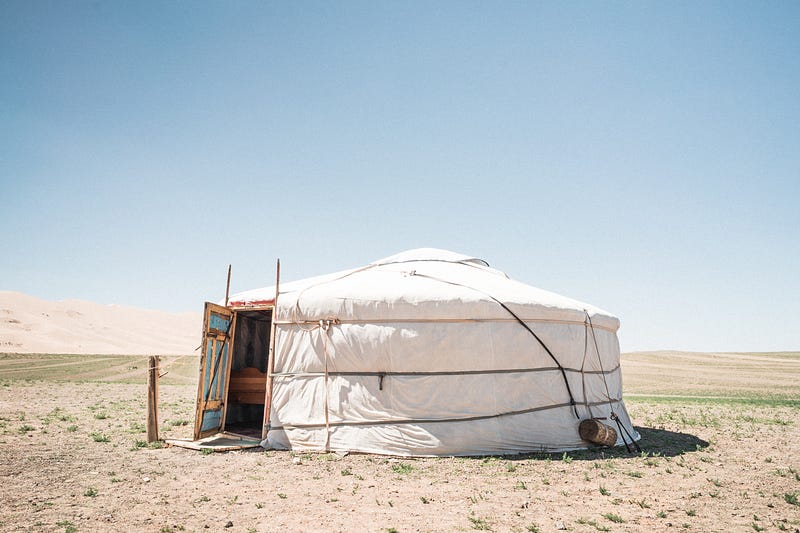
Photo by Patrick Schneider on Unsplash

MONGOLS!

Genghis Khan (成吉思汗) nearly killed his brother when he was only six, and he became the clan’s leader and then united all Mongols when he was pretty young. Before Kublai Khan (忽必烈汗) defeated China, Genghis Khan and his successors had fought westwards to expand the country and became a great power in Eurasia.

It was such a great power and a threat to the very weak China. However, it was the time when Manchuria was a greater threat to China. China had to ally with Mongolia so that China could get rid of Manchuria’s threat.
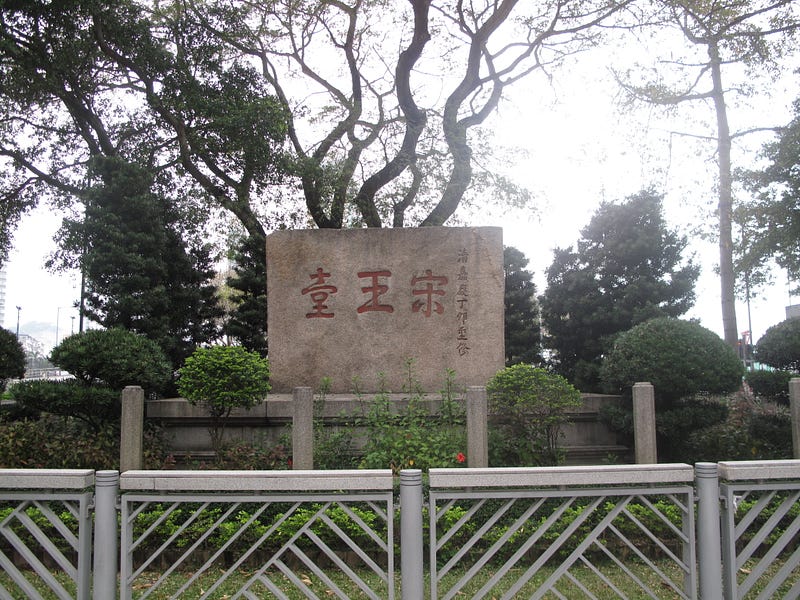
There are still remnants of the “royal visit” in Hong Kong. For example, Sung Wong Toi, meaning “a plaque for the Sung emperor” is still in Ma Tau Chung, Kowloon. A commemorate garden (Sung Wong Toi Garden) was set up for the rock which was gravely cut down in size to move away for the expansion of Kai Tak Airport during Japanese occupation in the Second World War. Photo taken by Anthony Li in Feburary 2015. All rights reserved.

But of course, history repeats itself. After Manchuria dissolved, Mongols started to invade China. Unable to fight back, the emperor fled towards the south. Legend has it that the Sung emperors fled to Hong Kong and one of them crowned in Mui Wo, Lantau Island, Hong Kong.

But when the emperors fled to Hong Kong, Sung dynasty came to an end as the young emperors took their own lives by drowning into the sea as a glorious death.

Part of the Mongolian Empire
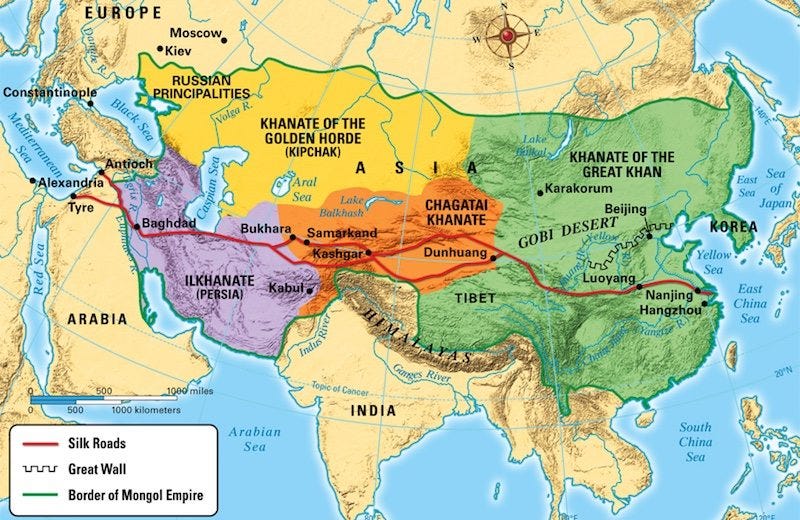
A map of the Mongolian Empire. Picture from this link.

Even though the empire was massive, the emperor did not directly rule the whole giant empire. The western part of the empire was split into several states governed by the emperor’s relatives. Only the eastern part was governed directly by the monarch. The capital city was set in Khanbaliq, present-day Peking. And it was decided that the empire to be called the Yuan (元) dynasty.

Mongolians were barbarians, so how could they rule a much more civilised China? The answer was: discrimination.

Photo by Andrii Podilnyk on Unsplash

Chinese people were in the lowest social status among races. while the northerners were higher than the southerners. Coloured-eyes (色目人), implying Central Asians and Middle Eastern people, were in a status between Chinese and Mongols. As for job discrimination, scholars were in the lowest status, even lower than prostitutes.

A whole alley could only own a set of cooking utensils, such as knives, woks, and other kinds of utensils which might be harmful to the Mongols. The residents were under heavy surveillance.

If this way of governance happened in current situation, I would guess it would call for a great war, a lot of diplomatic negotiations, or nobody really cared.

What was the history? Chinese people rebelled several times before they finally succeeded.

Beat the Barbarians the Hell Out at Mid-Autumn
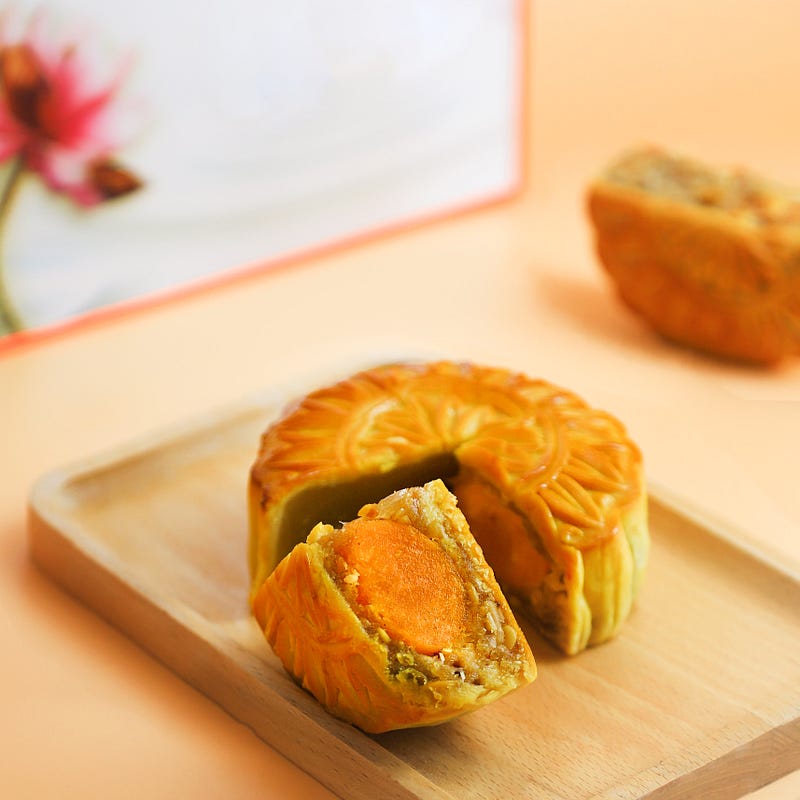
Photo by Foto T on Unsplash

The legend of the origin of mookcakes for Mid-Autumn Festival came from this period. Since people were under heavy surveillance, people started using some secret means to deliver the message to kill and expel the Mongols out of China.

People wrote the message “Beat the barbarians out at Mid-Autumn” (八月十五打韃子) and hid them into pastries. Then they delivered the pastries to one another before the festivals. When they eat the pastries, they would notice the messages, and they would acknowledge the messages, and do as the messages said.

Anyway, it’s just a legend. Nobody really knows whether it is real nowadays. But Chinese people successfully rebelled the Mongols in just less than a century after Mongol’s conquest. And mooncakes are delicious.

Make China Great (Season 3?): Age of Discovery

The rebellion was successful. Chinese people expelled the Mongols back to the north of the desert. The Chinese boundary was way bigger than Sung, or even T’ang China, but the capital city was set in Nanking. This was the Ming (明) dynasty of China.
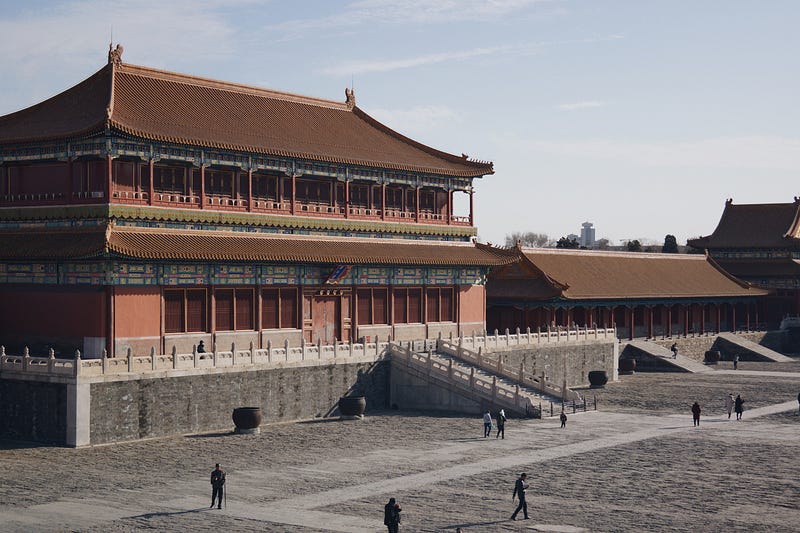
Photo by Gigi on Unsplash

Later, as the Prince of Peking (燕王. It sounds fancier than King of Yan) rebelled the young emperor, who was the duke’s nephew, and won, the capital moved to Peking. The Forbidden City was built in that period.

One of the greatest things done by the new emperor was that he sent groups of navy to the oceans and made some diplomatic relations with countries by the seas. In the records, these sailing from China was way before the Europeans did, but Chinese didn’t colonise those countries.

There are legends on why the emperor did that. One of which is to look for the lost former emperor. By the way, I still remember that I saw an old map written in Chinese on names of some countries from Asia to Europe, from Africa to Caribbean, together with some descriptions in an exhibition in National Maritime Museum in Greenwich, London. I recognised that it was an old map because the Chinese names were not the current ones. The translation for Christianity was the one in Ming dynasty.

The Eunuch Dynasty

The Ming dynasty slowly declined. The sea routes were closed a few decades after they started. The main reason was that the Japanese pirates were strong, they went to Chinese coasts and stole a lot of things, maybe even raped some girls. Macau was stolen by Portugal.

China was like, “I’m too busy dealing with my own problems, so help yourselves here. Except those pirates, I don’t know who you are, but I will find you and I will kill you.”

What was China’s problem? Its fear. The first emperor got the country by rebellion, so the whole royal family was afraid of any potential rebellions. Therefore, the government set up surveillance even heavier than Yuan dynasty. The government would nitpick anything that says you want to rebel and then kill you, no matter if the evidence were real or obsolete.

Photo by Lianhao Qu on Unsplash

The emperors set up 3 chambers of eunuchs to check on the residents, the officials, the royalty, and cross-check one another.

The government was fully centralised, but who got the actual power? The eunuchs who were close to the emperors did. There were loads of reasons for the emperors not to go out and see their government cabinets. The eunuchs became the communicator between the monarchs and the cabinets. Can you see the problem?

The eunuchs could do whatever they want. They could deliver fake messages “at the emperor’s will”. They could defame a minister and ask the emperor to kill him if the eunuchs did not like him. Therefore, the eunuchs got the powers and killed a lot of enemies secretly or openly.

There were also a lot of fights among eunuchs as they were in different chambers. These used up the energy and power of the country and so people managed to rebel at last.

Even though Chinese rebelled, a greater threat from outside stormed China.

Manchurians Made a Comeback

As Ming failed, Manchurians from northeast of China had developed their military and clans. They managed to go through the gates at the Great Wall of China. Later, they conquered the rest of China and became the Ch’ing (清) dynasty.

I want this to be a clue of a historic event in late Ming period. Photo by eberhard grossgasteiger on Unsplash

My second year in secondary school ended here for my Chinese History curriculum.

Part three is still in progress and it will be about the last Chinese empire and the “later dynasties”. Stay tuned.

History
China
Chinese History
Recommended from ReadMedium