
Historic Deal: Artificial Intelligence in the Film Industry
The DGA makes a deal, likely accelerating the application of AI in movies
The Directors Guild of America (DGA) and the Alliance of Motion Picture and Television Producers (AMPTP) have averted a potential strike with a “historic” deal:
In addition to wage increases and higher streaming residuals, among other things, there is a unique agreement on artificial intelligence that could potentially encourage the use of AI in the film industry.
Let’s take a look …
Historic!
The agreement is tentative, meaning that it still requires approval from the DGA’s national board.
However, observers call it a “historic” deal and that’s not because it came just in time to prevent a strike by the 19,000 members of the guild.
The agreement comes with some unprecedented achievements, such as the following:
- Wage increase over three years (5% in the first, 4% in the second, and 3.5% in the third year).
- Increased foreign residuals by 76% for the largest platforms.
- A pilot program employing dedicated safety supervisors and safety training programs for directors and teams (also: ban on the use of live ammunition on set).
- Improvements in diversity and inclusion.
Moreover, as cited by screendaily.com:
Artificial Intelligence Groundbreaking agreement confirming that AI is not a person and that generative AI cannot replace the duties performed by members.
And it is this aspect of the agreement that may turn out to be the most significant, as it potentially encourages the use of artificial intelligence (AI) in the film industry.
How “Not Being a Person” Encourages the Use of AI
The DGA agreement emphasizes that “AI is not a person” and that it cannot replace the duties performed by the members, i.e., the directors.
This unique wording is very interesting because it explicitly does not prevent the use of AI by DGA members. On the contrary, it might even encourage it:
DGA members can continue to use AI technologies to support their work, and it is likely that they will do so increasingly since an AI that is not considered a “person” is not entitled to royalties.
This could encourage its use as a tool for a growing number of tasks.
Currently, AI is being used to streamline processes from pre-production to post-production and also enhance creative output.
Data-Driven Story Worlds
For instance, both studios and filmmakers are already using AI to analyze data to understand audience behavior. This type of use will increase in the future as AI models become more powerful, more widespread, and more vital to effective storytelling.
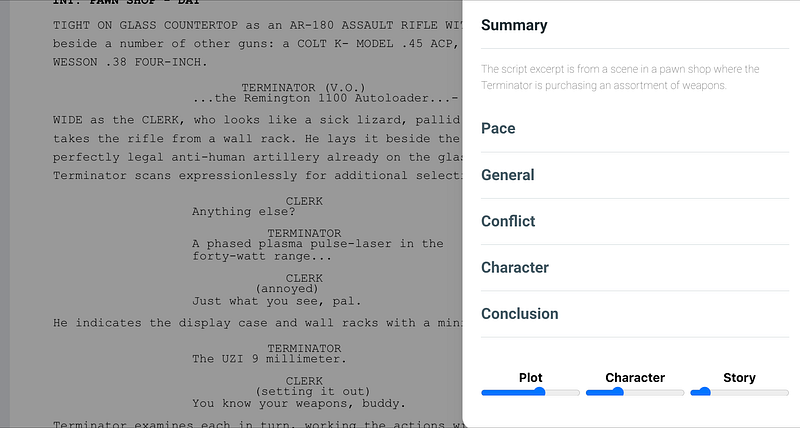
Here’s an example of how storyfit.com provides filmmakers, writers and executives with a script analysis and production service that draws on over 500 audience prediction models and a growing library of screenplays:
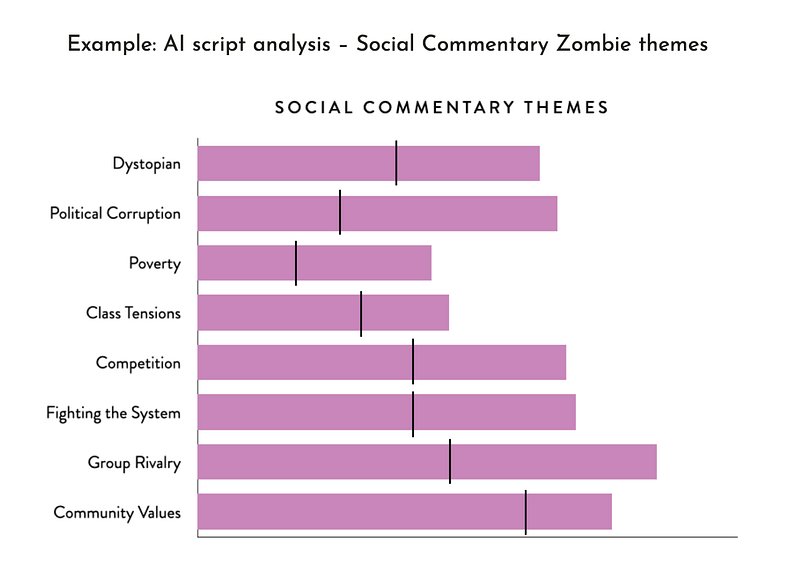
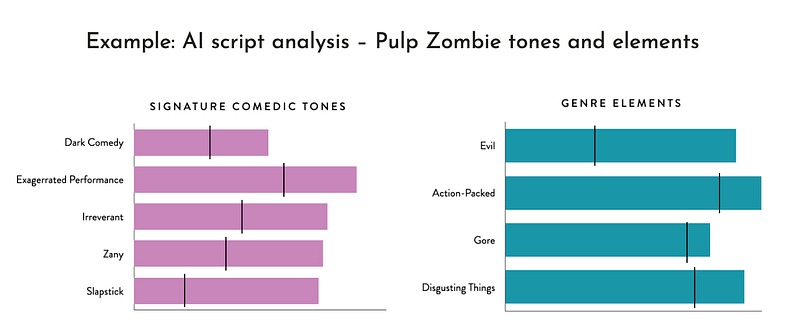
In essence, Storyfit collects data on narrative elements in screenplays that provide insight into their effectiveness. This data then helps studios decide which scripts to acquire, which characters to promote, or which books to adapt. On the other hand, creatives can use such services to improve the development process of their stories and optimize audience targeting.
AI & Screenwriting
Another increasingly common use case is script-writing assistance, with AI serving as a brainstorming and story development tool for both fiction and nonfiction productions.
OpenAI’s ChatGPT is already in high demand among production companies for streamlining pre-production and helping writers with material to build their stories.
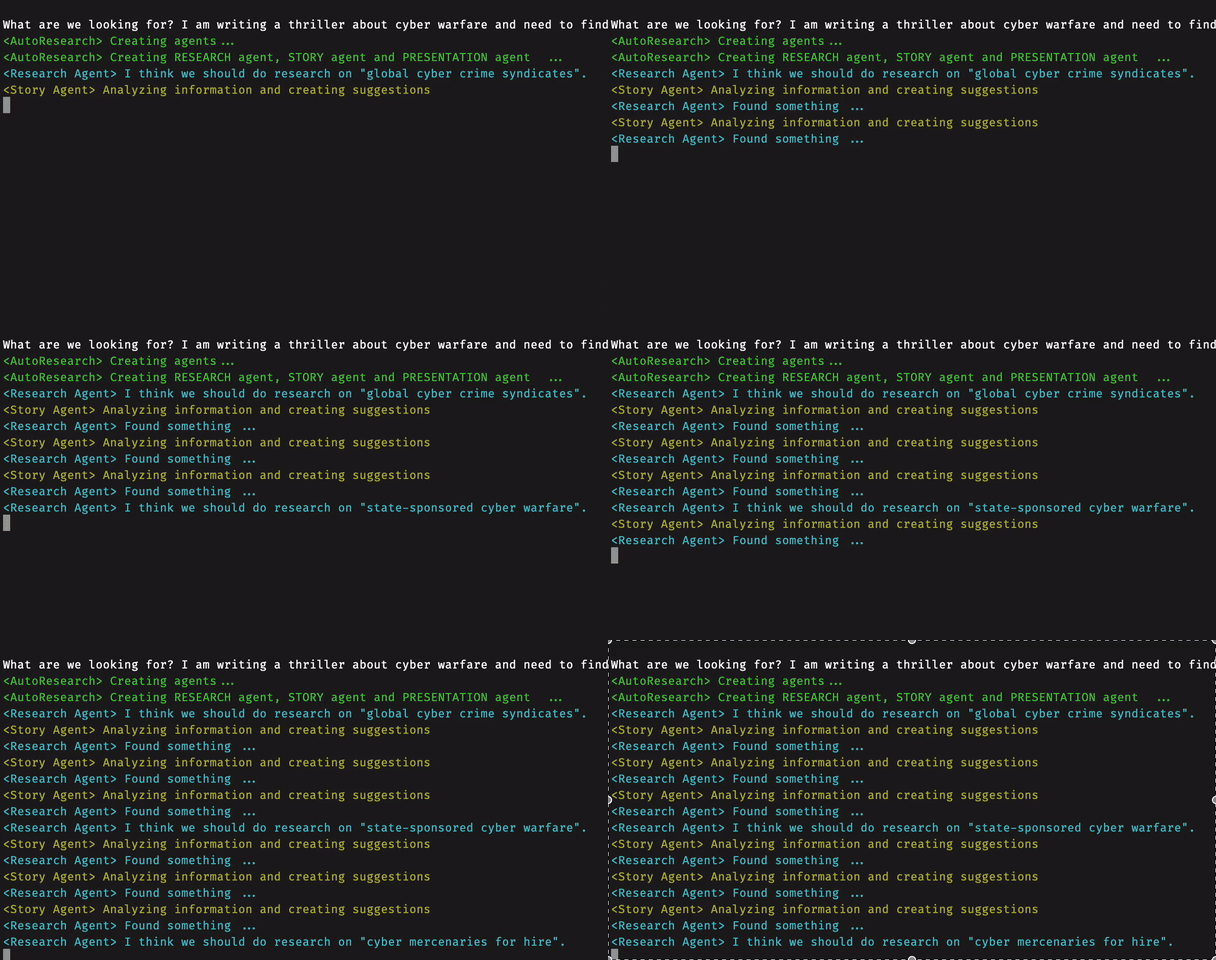
With efficient prompts, production companies can do much of the structural groundwork internally before handing off material to writers, who use AI themselves to help with ideation, character and story exploration, and research automation:
In addition to ChatGPT, Bard, Bing, and open-source alternatives, there are dedicated AI-powered screenwriting apps such as Scriptshaper that facilitate the human-machine collaborative writing process by allowing humans and AI agents to participate in virtual authoring spaces:
AI & Video
Given recent advances in AI image and video technology, we may soon see broader application of AI in special effects, editing, filming and more:
➡️ For more information about AI & Creativity, follow me on Twitter or Medium (use my referral link to get full access to all my articles and those of thousands of other writers).
➡️ If you like my content, why not leave a “clap” at the end of this article, so more people can see it?