
From Screenwriting To Journalism: How AutoGPT Is Reshaping The Work Of Language Professionals
AutoGPT-like systems will automate tasks and require new skills

The picture above, that’s me working on a pitch for a TV thriller …
Actually, right there I am researching some 30+ articles on cybersecurity and cyber warfare for the project.
Do things look relaxed? You bet.
While I am enjoying the sun to prepare for an evening writing session, the actual research work is done by a Python script I wrote based on BabyAGI (some say the predecessor of AutoGPT).
It uses OpenAI language models to understand what I’m working on and autonomously decide what research tasks need to be done in order to support my fictional writing with factual knowledge, dramatic real-world events, and some weird anecdotes…
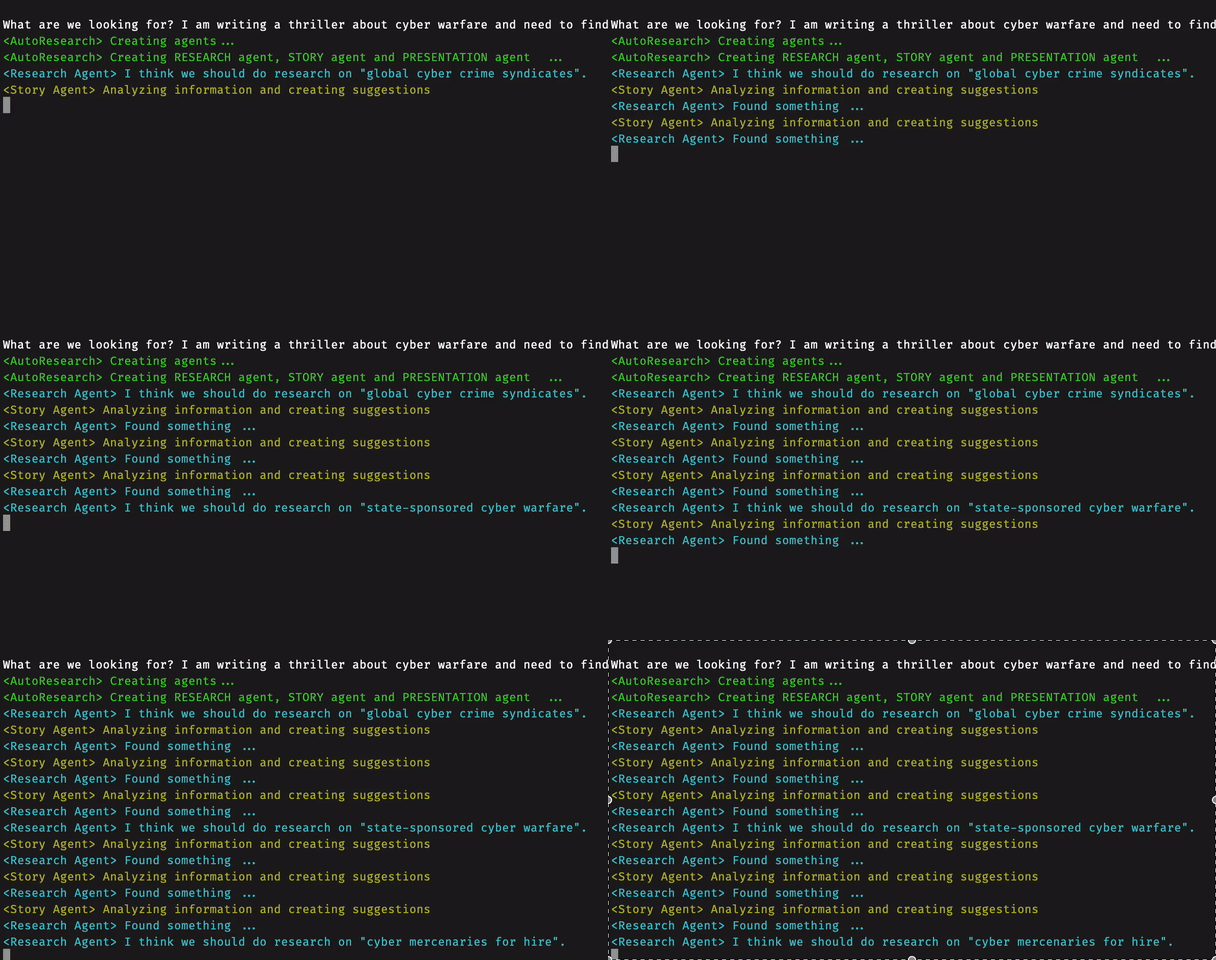
This is just a little research automation tool.
However, what people don’t seem to realize is how fundamentally these semi-autonomous (or soon to be fully autonomous) systems will change the daily work of language professionals, from screenwriters to journalists to consultants to editors and so on.
AutoGPT and beyond
AutoGPT in a nutshell: the program tries to achieve any given goal by breaking it down into subtasks and using long-term memory, file system access, web browsing, and other tools autonomously (running OpenAI’s GPT3.5 & GPT4 under the hood).
Since its release on March 30, 2023, AutoGPT has quickly established itself as one of the leading experiments in autonomous AI. Within just a few weeks it surpassed 100k stars on Github …
(click here for a setup guide)
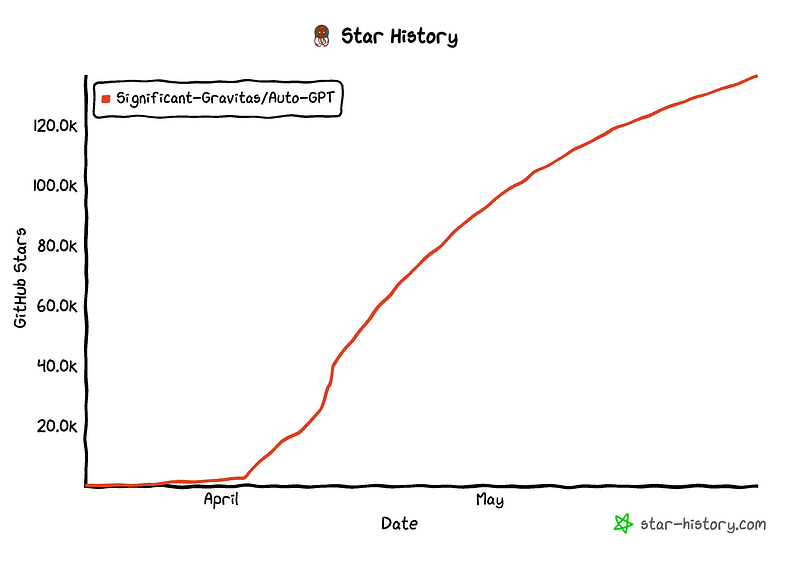
… and there have been many exciting use cases for AutoGPT (it writes code autonomously, builds apps, does market research, and runs email newsletters) and a variety of follow-up projects and web applications.
From the beginning, it was clear that this was a game-changer.
At the moment, it still has its limitations, especially when it comes to multi-step and not quite everyday tasks, but AutoGPT or AutoGPT-like systems are being tested and constantly improved in various industries.
And there is no doubt that these systems will also increasingly automate workflows in the language professions, as they work very well for pure text and research tasks.
AutoGPT & AI-Enhanced Writing
In language professions, AutoGPT-like systems can be a great help when it comes to research, writing summaries, or offering suggestions for your writing process.
Their ability to replace human creativity and intuition in complex tasks (e.g. long-form narratives) is currently limited, but these systems signal the beginning of a new era for knowledge workers and language professionals.
There is no doubt that AI tools will reshape traditional work practices.
However, this does not mean that human skills will become obsolete. Rather, they will evolve as well.

Language skills will be critical, but so will understanding how to use AI tools effectively. Knowledge workers and language professionals will need to understand how these cognitive tools can complement and streamline their workflows while keeping in mind the potential risks of over-reliance.
Balancing human creativity with AI efficiency will be key to navigating this new landscape.
🚨 For more information about AI & Creativity, follow me on Twitter or use my referral link to get full access to all my Medium articles (+ those of thousands of other writers).
➡️ If you like my content, why not leave a “clap” at the end of this article, so more people can see it?


