
Frame for Work: The Hermeneutics of Knowledge Frameworks and Ecological Formism
A Case Study of the Ecological Formism Framework
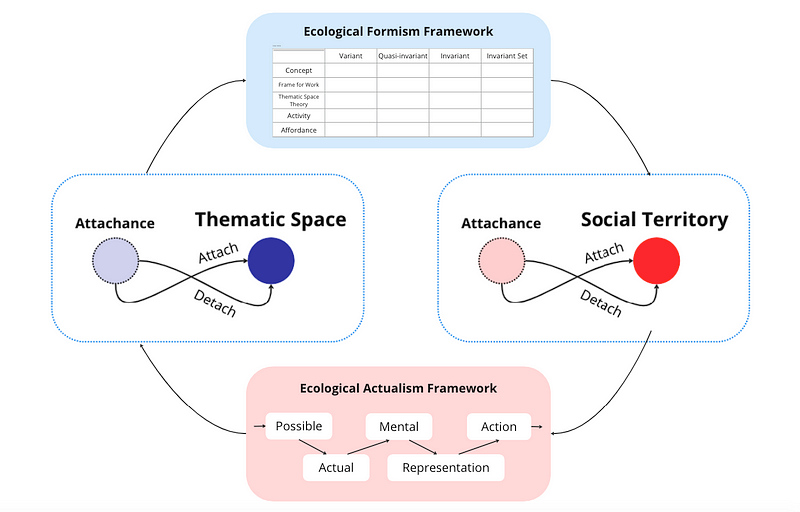
The above diagram is an integrated ecological approach to social cognition.
It was formed by two sub-frameworks: the Ecological Formism framework and the Ecological Actualism framework.
In Frame for Work: The Ontology of Knowledge Frameworks and Ecological Actualism, I discussed five moments of knowledge frameworks.
In Social Moves: Thematic Zones, Thematic Areas, and Social Territory, I used the Knowledge Discovery Canvas as an example to discuss the Thematic Space Theory (TST) Framework which is a sub-framework of the the Ecological Formism framework.
This article aims to discuss four types of knowing behind knowledge frameworks from the perspective of the Ecological Formism framework.
I will use the Container Thinking (the Ecological Practice approach) as an example.
Contents
Part 1: The Background
1.1 The Ecological Formism Framework 1.2 The “Frame for Work” level 1.3 “Container(Containee)” as a Basic Form 1.4 “Nested Structure” as a Derived Form 1.5 Two Worldviews as Frameworks 1.6 Meta-diagrams and Invariant Set
Part 2: Case Study: The Family of “Container Thinking”
2.1 The Basic Model of Ecological Practice Approach 2.2 The Field of Ecological Practice Approach 2.3 The Landscape of Ecological Practice Approach 2.4 Sandglass, Circle, and Square
Part 3: The Meaning of “Frame for Work”
3.1 The “Frame for Work” Project (phase 1) 3.2 The “Frame for Work” Level 3.3 Knowledge Frameworks / Frameworks 3.4 Frames of Social Action
Part 1: The Background
Part 1 briefly introduces the Ecological Formism framework and the “Frame for Work” level as a unit of analysis.
1.1 The Ecological Formism Framework
The Ecological Formism framework is an epistemological framework that frames five units of analysis from four types of knowing.
The “Variant > Quasi-invariant > Invariant > Invariant Set” schema defines four types of knowing.
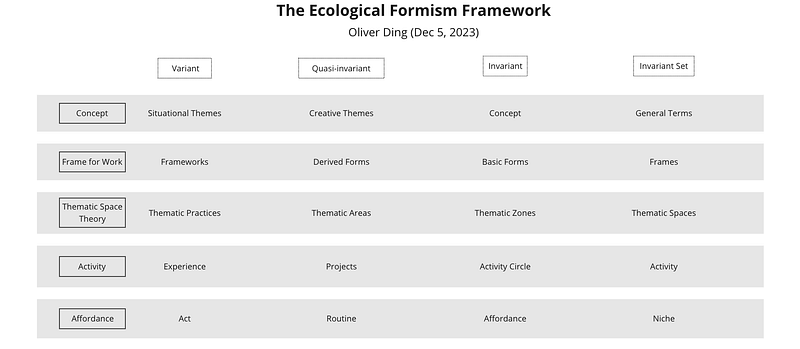
In the above diagram, we see five levels of analysis:
- Concept
- Frame for Work
- “Thematic Space Theory” (TST)
- Activity
- Affordance
The “Concept” level is about the transformation between themes and concepts.
The “Frame for Work” level is about the emergence of knowledge frameworks.
The TST level (the “Thematic Space” level) is a middle level that connects “Activity” and “Frame for Work”.
The “Activity” level is about different patterns of actions.
The “Affordance” level is related to the Operation level of Activity.
You can find more details in Social Moves: An Integrated Ecological Approach to Social Cognition.
1.2 The “Frame for Work” level
This article will focus on the “Frame for Work” level and discuss four types of knowing behind knowledge frameworks.
The Ecological Formism Framework uses “Variant > Quasi-invariant > Invariant > Invariant Set” as the foundation to define four types of entities for knowing:
- Invariant: Basic Forms
- Invariant Set: Frames
- Quasi-invariant: Derived Forms
- Variant: Frameworks
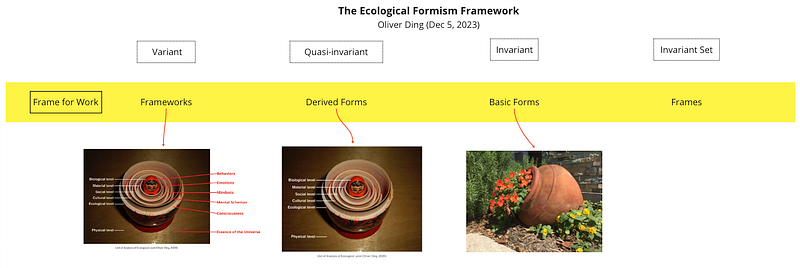
The above diagram uses “Container Thinking” as an example to showcase the differences between “Basic Forms”, “Derived Forms”, and “Frameworks”.
1.3 “Container(Containee)” as a Basic Form
Basic Forms are abstract foundational forms of life world. For example, “Container” is a Basic Form of human life and social practices.
One day In 2017, I saw a sideways flower pot in a local supermarket. As a guy unfamiliar with gardening, I was curious about such a container and the plants it contains. I used to think that plants always grow upward. That day, I was surprised that some plants grow horizontally. I feel ashamed of my ignorance of botany.

This dramatic experience inspired me to reflect on the concept of Container. In 2017, I was fascinated with George Lakoff and Mark Johnson’s conceptual metaphor Container and image schema Containment. For Lakoff and Johnson, Container refers to the in-out orientation and boundary of space. After the day, I moved my attention from the boundary of the container to the dynamic relationship between the Container and the Things it contains. For the sake of discussion, I coined a new term called “Containee” in order to simply represent “Things contained by Container”.


The sideways flower pot taught me an invaluable lesson in which I learned the initial idea of the ecological practice approach. Though a plant is held by a container, the living space occupied by the plant in the world is beyond the interior space of the container. Later, I theorized this phenomenon with the following terms and diagrams.
- Inside Space: the interior space of the container.
- Outside Space: the exterior space of the container.
- Spilling Space: the living space occupied by the container.
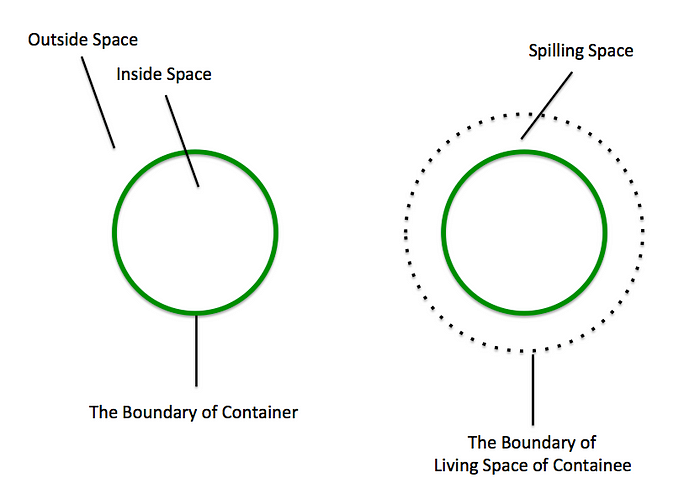
We have to notice that the Spilling Space is dynamic because it can be smaller than the inside space or bigger than the outside space. In this way, the spilling space connects the inside space and the outside space.

There are various creative forms of spilling flower gardening. The above pictures show some amazing ideas. They also tell us that the relationship between Container — Containee is quite fascinating.
1.4 “Nested Structure” as a Derived Form
Derived Forms are based on Basic Forms. For example, a Nested Structure is based on the above basic form “Container(Containee)”.
Matryoshka dolls are concrete material objects of the nested structure. See the picture below.

We can also find other Derived Forms that are based on the basic form “Container(Containee)”.
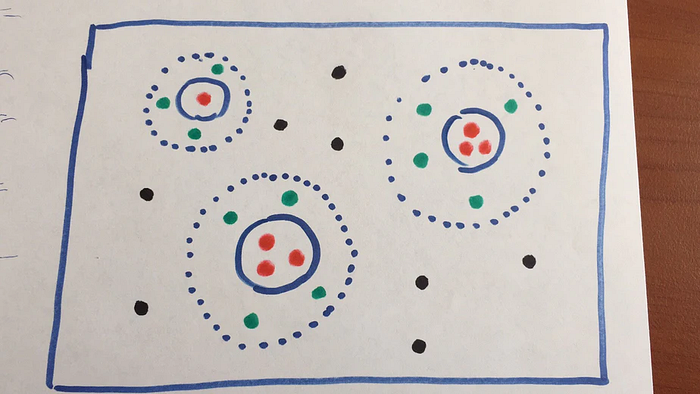
In 2018, I drew the above diagram to present a multiple-container model. I used red dots, green dots, and black dots to represent three types of status:
- Red dots: the entities are located Inside Space.
- Green dots: the entities are located in Spilling Space
- Black dots: the entities are located in Public Space which is outside the Spilling Space.
In 2019, I continuously worked on developing container thinking with the idea of the Container System. Eventually, it became the foundation of my theoretical account: the Ecological Practice approach.
1.5 Two Worldviews as Frameworks
Frameworks, or Knowledge Frameworks, are used by actors in their real-life world. The Ecological Formism framework considers Frameworks as Variants because Frameworks are made, selected, and modified by normal people for various purposes.
For example, one Derived Form such as “Nested Structure” could lead to many Frameworks.
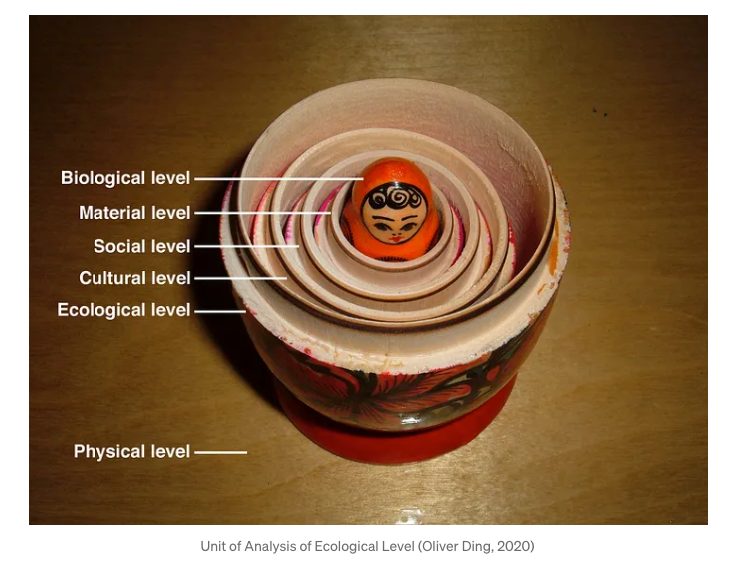
The above picture is the Unit of Analysis of Ecological Interaction which is a method I developed in July 2020. The ecology view focuses on the “organism — environment” relationship. It suggests every living organism has its specific surrounding medium of environment called niche. An organism is also part of other organisms’ environment. Following this general view, I consider “ecological interaction” as “people interacting with their surrounding context” and see “social interaction” as a subset of “ecological interaction” because we can consider other people as social context.
I used the “Nested Structure” to generate a Framework for my ecological approach.
Several days ago, I used the same “Nested Structure” to generate a new Framework that represents a friend’s ideas on a theory about mindset and intelligent life.
On that day, I didn’t find the original picture of Matryoshka dolls, so I just placed his terms on my picture. See the picture below.
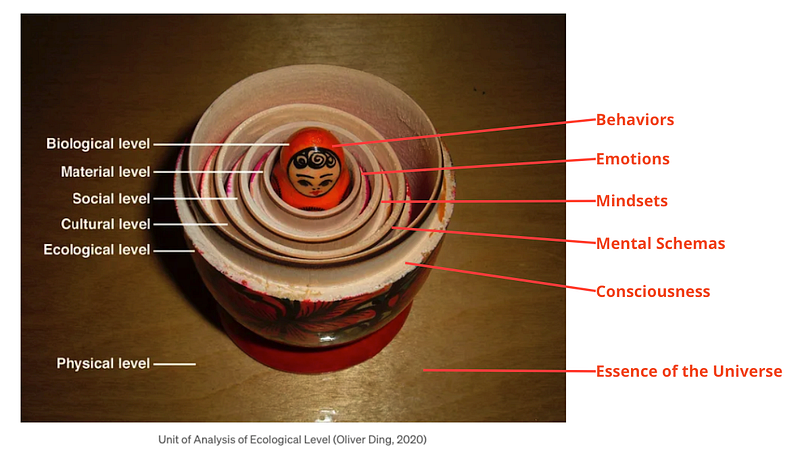
The same “Nested Structure” generates two different Frameworks which represent two different worldviews.
In this case, we see the difference between Quasi-invariant (Derived Forms) and Variant (Frameworks).
1.6 Meta-diagrams and Invariant Set
The term “Invariant Set” is easy to understand. It is just a set of Invariants.
I used “Frames” to refer to a set of Basic Forms.
Why did I consider the “Invariant Set” for the Ecological Formism framework?
Because there is a landscape view of knowing. The Invariant Set places all Basic Forms together and presents a meaningful whole of a deep ecology of Knowledge Frameworks.
It’s hard to give a real example of an Invariant Set. I’d like to use a set of meta-diagrams as a reference. See the picture below.
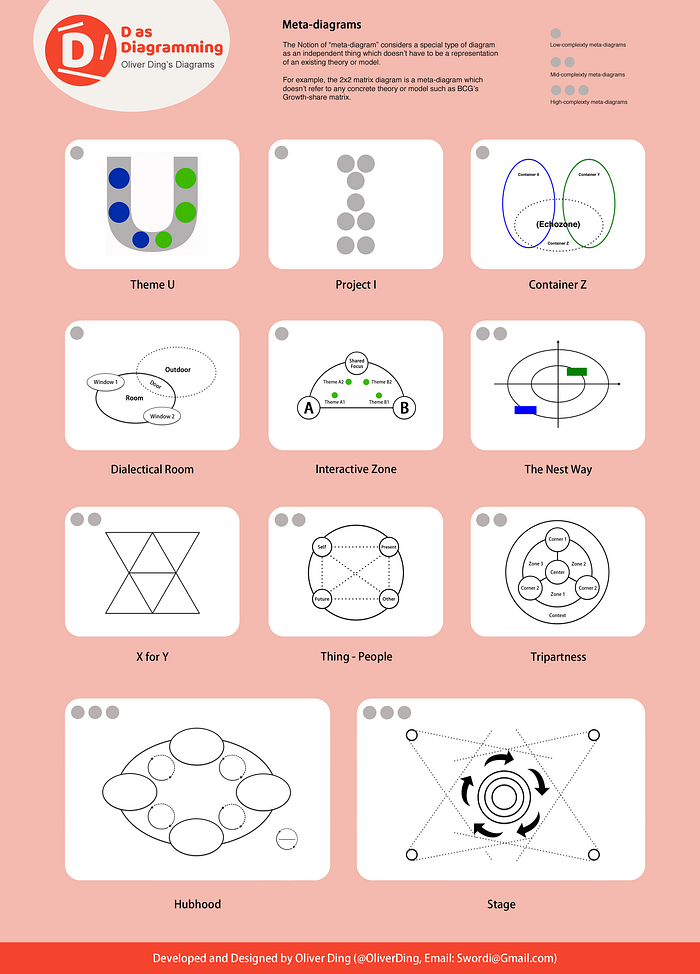
What’s a meta-diagram?
The notion of “meta-diagram” considers a special type of diagram as an independent thing that doesn’t have to be a representation of an existing theory or model. For example, the 2x2 matrix diagram is a meta-diagram that doesn’t refer to any concrete theory or model such as BCG’s Growth-share matrix.
A meta-diagram just represents a spatial structure.
The above picture shows a set of spatial structures.
There is a connection between Meta-diagrams and Basic Forms. We can see Meta-diagrams as External Representations of Basic Forms.
If we perceive a Basic Form, we could make a meta-diagram to represent it.
Part 2: Case Study: The Family of “Container Thinking”
As mentioned above, the Basic Form of “Container(Containee)” became the foundation of my theoretical account: the Ecological Practice approach.
In Part 2, I will share more details about using the Basic Form of “Container(Containee)” to generate many knowledge frameworks for different projects. See the diagram below.
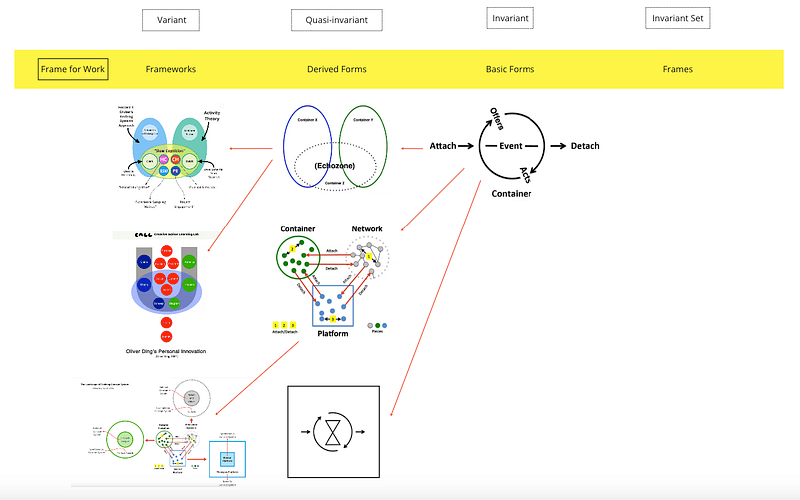
2.1 The Basic Model of Ecological Practice Approach
As mentioned above, I perceived a basic form called “Container(Containee)” in 2017. From Sept 2018 to March 2019, I wrote a book titled Curativity: The Ecological Approach to Curatorial Practice to reflect on one of my life themes: Curation. During the process of writing, I developed a new theoretical approach called the Ecological Practice Approach which aims to build an Affordance-based theory of action and apply ideas of ecological psychology to analyzing various social practices.
Curativity Theory adopts James Gibson’s “Affordance”, George Lakoff’s “Container” and Donald Schön’s “Reflection” as epistemological tools. The diagram below shows the basic elements of Curativity: Pieces — Container — Whole. The basic assumption behind the diagram and the new term is: “In order to effectively curate pieces into a meaningful whole, we need Containers to contain pieces and shape them.”
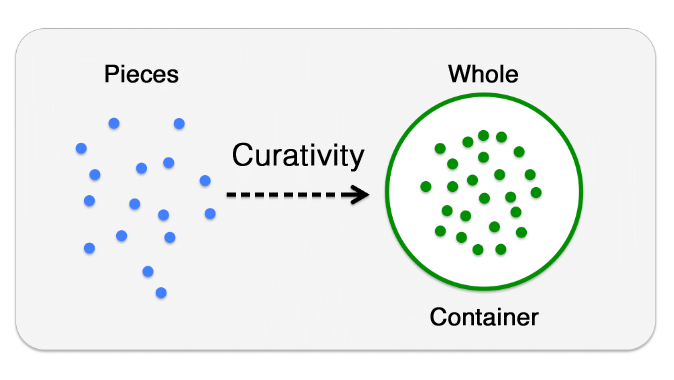
Pieces, containers, and Whole together form a triad which is the basic unit of analysis of Curativity Theory. Also, this unit of analysis establishes a new theoretical category at the ontological level. The concept of Curativity indicates three statuses of things:
- Things-in-Pieces
- Things-in-Container
- Things-in-Whole
Thus, Curativity Theory is all about understanding the structure and dynamics of these three statuses.
You can find more details in Curativity Theory and The Ecological Practice Approach (v2, 2020).
In 2020, I wrote a book (draft) titled After Affordance: The Ecological Approach to Human Action and introduced some new theoretical concepts such as Attachance.
The book also introduced the diagram below as its primary knowledge framework. It is an External Representation of a Basic Form.
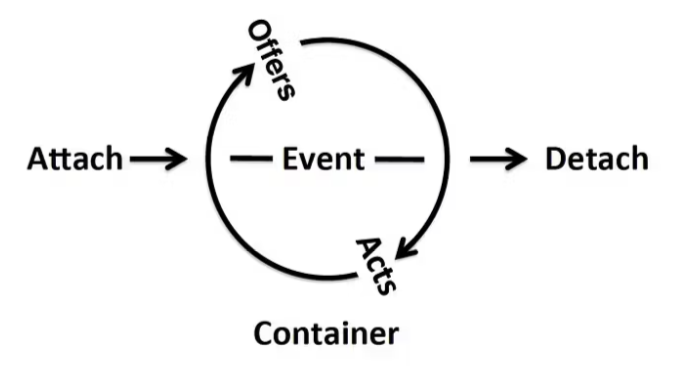
The above diagram combines three core concepts of the Ecological Practice approach: Affordance, Attachance, and Containance. The term “Offers” is an affordance-inspired concept, it refers to opportunities afforded by the Container. The group of “Offer — Act” forms “Event” which changes the status of the Container. The new status of the Container affords new opportunities that guide the new acts and events.
The above diagram also represents the concept of Attachance at the level of Container. We can consider Entering the Container as an Attaching act and Exiting the Container as a Detaching act. However, the diagram doesn’t represent the second attachance which is inside the Container. The Ecological Practice approach considers the “Form of Act” as “Attach” or “Detach”. Any act is either an attaching act or a detaching act.
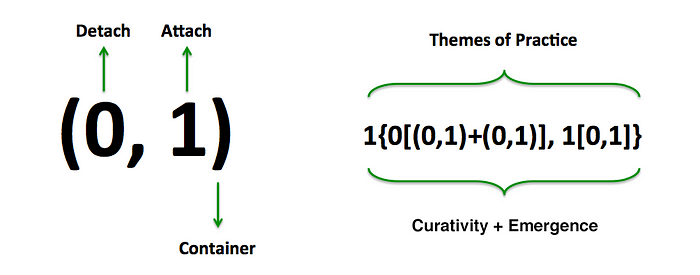
The above picture is another way of representing the germ cell of the Ecological Practice approach. The two forms of the act are represented by binary numbers. The 0 represents detaching act and the 1 represents attaching act. The parenthesis represents the Container. The right diagram shows an example of complex status which brings out other two concepts: Curativity and Themes of Practice.
2.2 The Field of Ecological Practice Approach
Derived Forms are based on Basic Forms. By adjusting the quality and quantity of the Container, we can create advanced frameworks for discussing complex phenomena.
The quality of the Container can be potential and actual, and the quantity of the Container can be one or two. Now let’s develop a new framework with one potential container and two actual containers, the outcome is the following diagram.
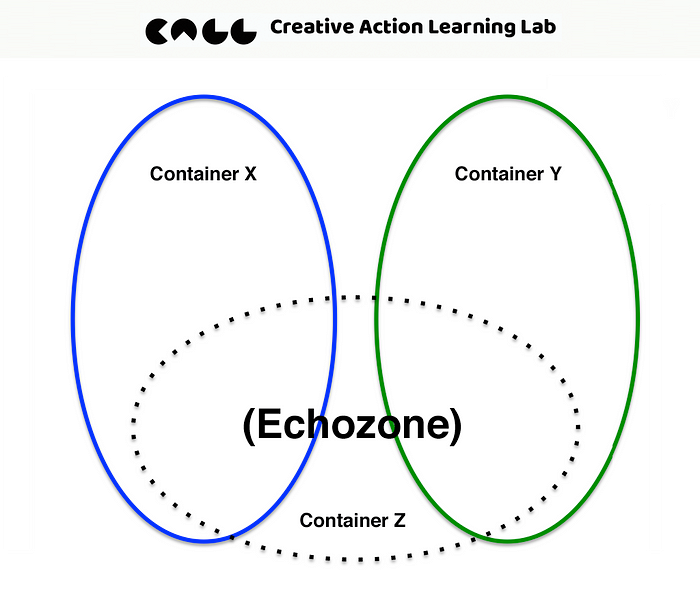
If you have read my previous articles, you know this diagram is the basis of When X Meets Y (WXMY) and HERO U. I named the potential container (Container Z) Echozone which refers to a creative space containing echoes between Container X and the Container Y.
The Echozone is located at the field level of the Ecological Practice Approach.
In the past several years, I used the Echozone diagram to generate many knowledge frameworks. For example, the “Slow Cognition” method and the ECHO Way.
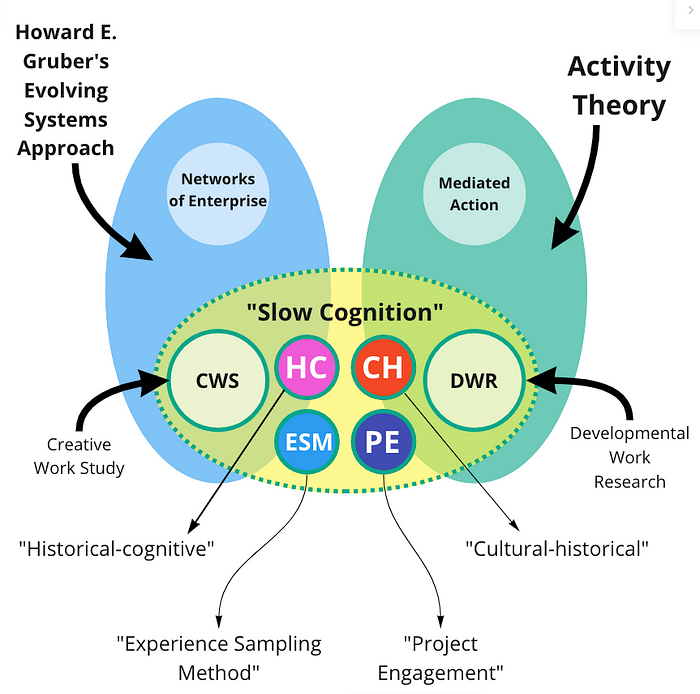
In 2022, I worked on the Slow Cognition project which was inspired by Howard E. Gruber’s evolving systems approach to creative work and Activity Theory’s Developmental Work Research.
The Slow Cognition Method is also inspired by the following ideas:
- The Historical-cognitive method (HC)
- The Cultural-historical method (CH)
- Experience Sampling Method (ESM)
- Project Engagement method (PE)
On May 30, 2022, I made the above diagram to frame a creative space for the Slow Cognition project. You can find more details in The Slow Cognition Project and related methods.
On May 25, 2021, I reflected on my career and made the Career-fit framework. See the diagram below.
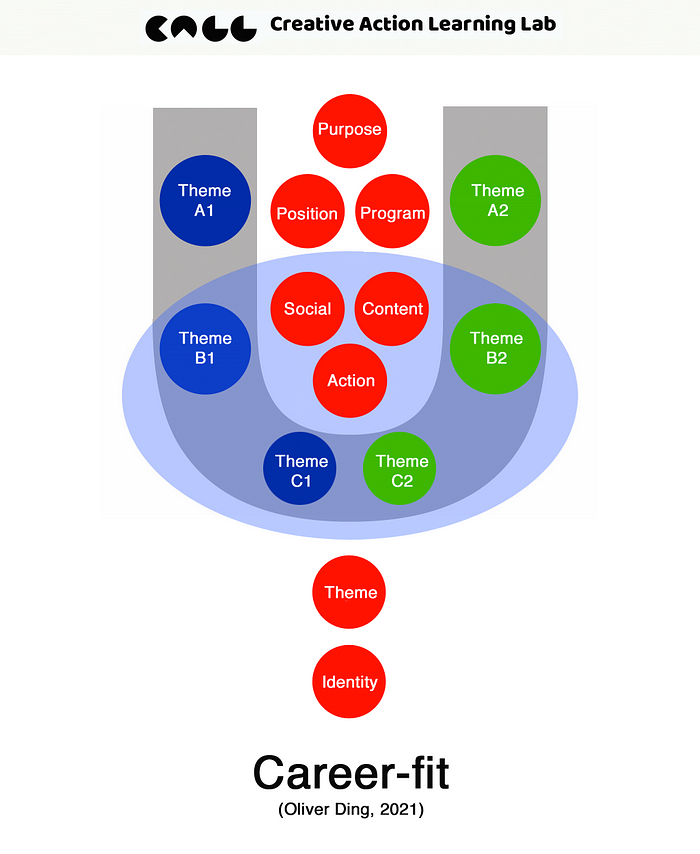
The above diagram can be considered as “an ecological approach” to career development because it refers to the structure of “organism (personal themes of career) — action (fitting) — environment(impact projects)”.
The eight elements of Impact Projects form three groups as a process of transformation. The first group is defined as Situational Context which highlights three important aspects of Developmental Projects: Purpose, Position, and Program. The second group is defined as Developmental Resources which highlights three types of potential opportunities for Developmental Projects: Social, Content, and Action. The third group is defined as Impact by Projects which considers personal development caused by joining Developmental Projects from two dimensions: Theme and Identity.
Where is the fit?
It happens at the “Echozone”!
The diagram below represents the “Echozone” of the Activity U project. I started the Activity U project in August 2020. I used it as an example of a Developmental Project. The diagram below only shows the Echozone with some notes for discussing the process of fit between career themes and developmental projects.
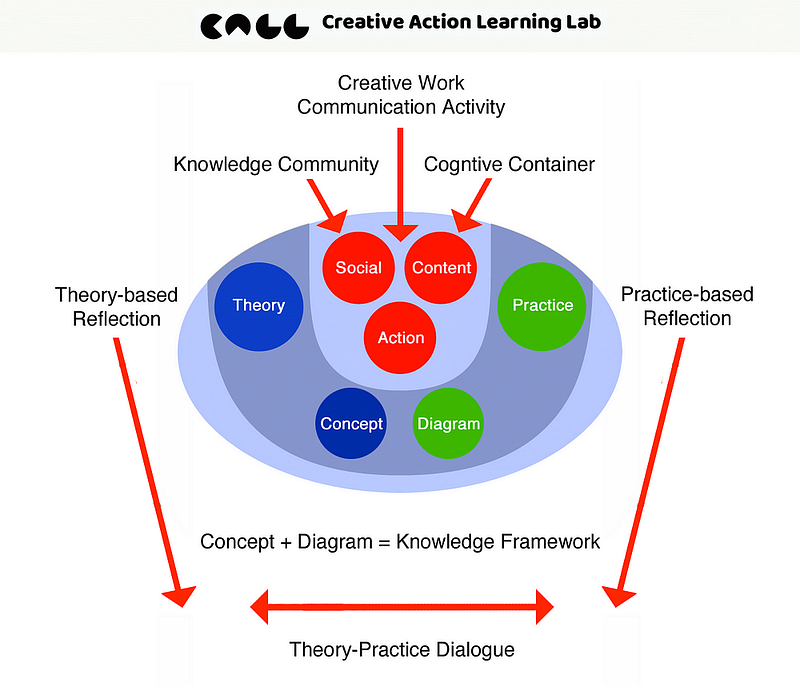
The above diagram presents fits of two pairs of opposite themes. The “Theory v.s. Practice” fit is described with three movements:
- Practice-based Reflection: building rough models with intuition.
- Theory-based Reflection: improving models with theoretical resources.
- Theory-Practice Dialogue: turn models into frameworks and test it with cast studies.
The article Platform Innovation as Concept-fit offers a real example of these three steps. The Concept-fit framework was developed within three months.
The “Concept v.s. Diagram” fit is described with one formula:
- Concept + Diagram = Knowledge Framework
This formula is defined by the HERO U framework.
The above diagram of Echozone also presents three inspirations that are triggered by the Activity U project.
- Social > Knowledge Community
- Action > Creative Work Communication Activity
- Content > Cognitive Container
You can find more details in Personal Innovation as Career-fit.
2.3 The Landscape of Ecological Practice Approach
Let’s move to the landscape level to view the Ecological Practice Approach.
Based on the concept of Container, I coined two related ideas: Network and Platform.
The Network refers to the pre-container status which means pieces loose coupling outside the container.
The Platform refers to the post-container status which means pieces loose coupling within the super large container.
These three ideas form a triad: Network — Container — Platform. I consider the triad as the basic model of collective contexts.
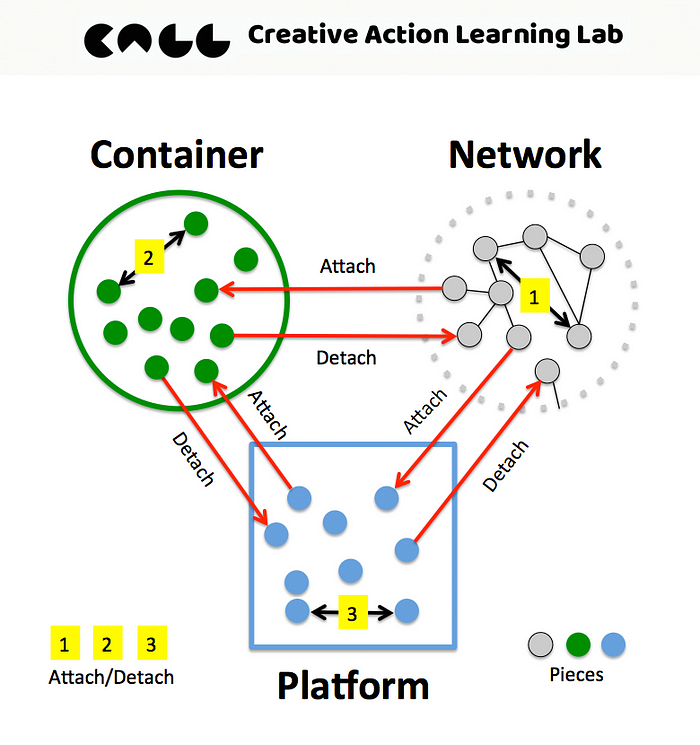
The above diagram represents a large map of the ecological practice approach. Here we see three basic types of collective context and attaching/detaching acts inside contexts and between contexts.
In Feb 2021, I worked on the Platform Ecology project. I used the diagram below to connect it with the Ecological Practice approach.
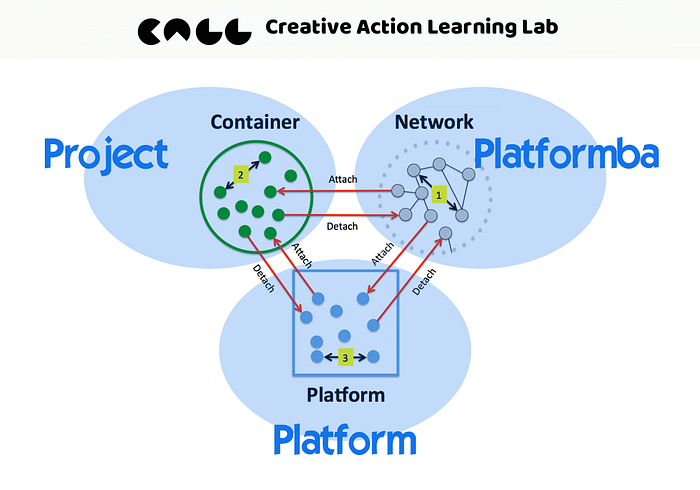
The Platform-for-Development framework and the Supportive Cycle model also adopt the concept of “Project” from Project-oriented Activity Theory and other theoretical resources.
If we go back to the Ecological Practice approach, what does the concept of Project mean?
The Ecological Practice approach doesn’t have a concept of a Project. However, we can consider a Project as a Container at the concrete practical level because Project is a social container that has a clear boundary. We can deal with the concept of Platform-ba in the same way. The Platform-ba can be considered a Network because the human activities of a group of people can be understood from the perspective of the social network and the network of activity.
Thus, we can reduce the triad of Platform — Project — Platformba to the triad of Platform — Container — Network.
If we only develop a concrete framework or model, then we don’t have to consider the above issue. However, my goal is to apply the Ecological Practice approach to Platform Ecology. The former is a meta-theory and the latter is a concrete framework. I have to maintain the internal consistency of a brand-new theoretical account.
You can find more details in Platform, Platform-ba, and Platform Ecology.
In Nov 2023, I used the Network — Container — Platform triad to develop a basic model of Developing Concept System.
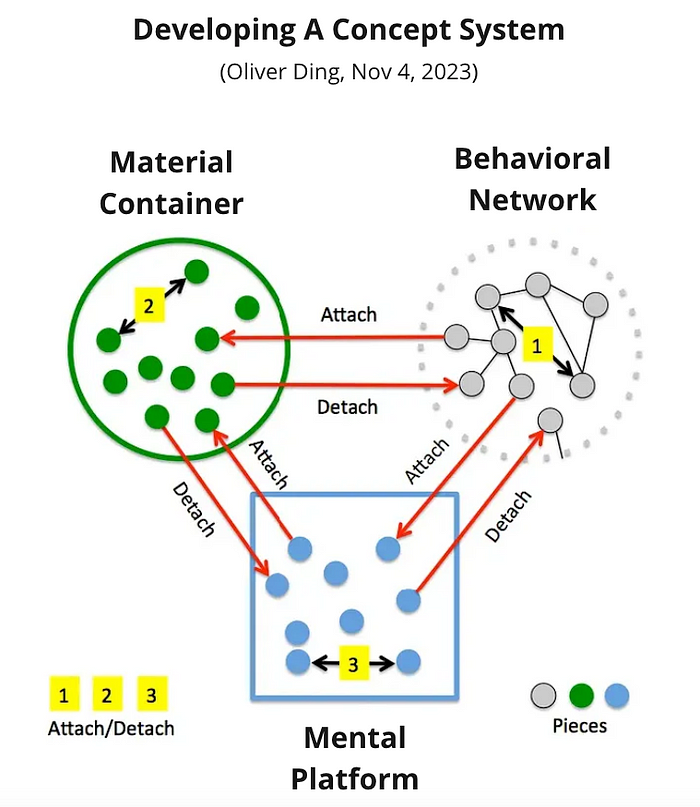
I used “Spontaneous Concept System/Defined Concept System/Scientific Concept System” to explain three parts of an Evolving Concept System.
- Mental Platform: How do you think?
- Behavioral Network: How do you do?
- Material Container: What do you make?
I also made an expanded version of the Developing Concept System. See the diagram below.
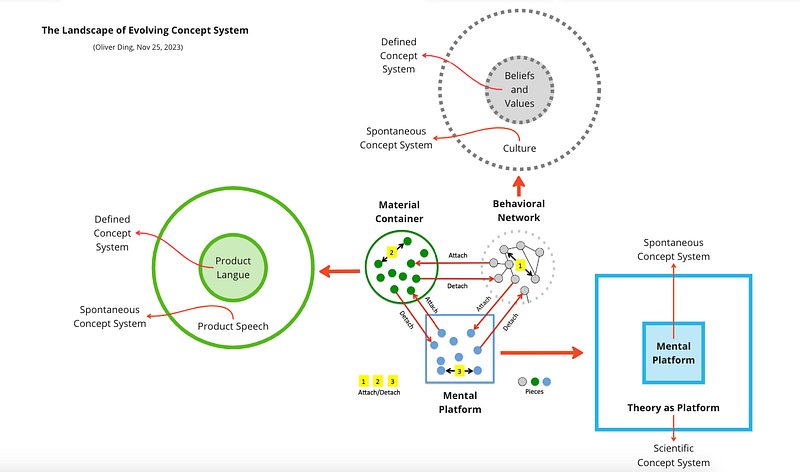
It means the process of Developing A Concept System is not only about thinking, but also about doing, saying, and making.
You can find more details in Mental Platform: The Evolving Concept System.
2.4 Sandglass, Circle, and Square
In Oct 2023, I worked on the Creative Life Theory (v2) and I used the sign below to represent the core ideas of the approach.
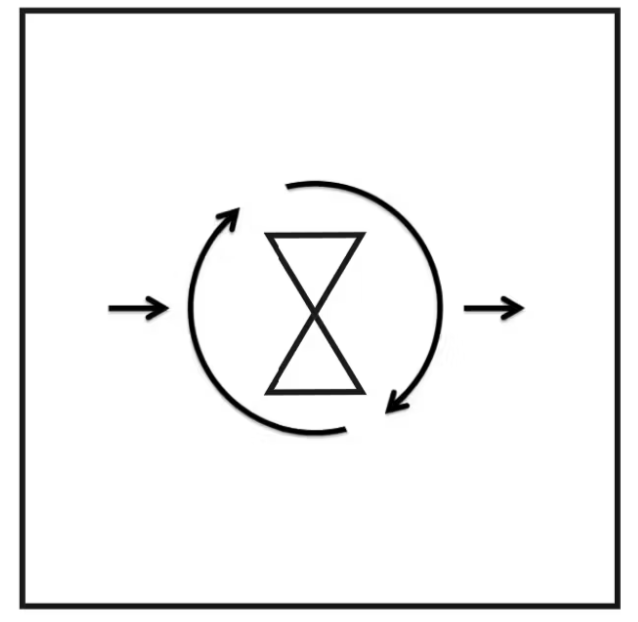
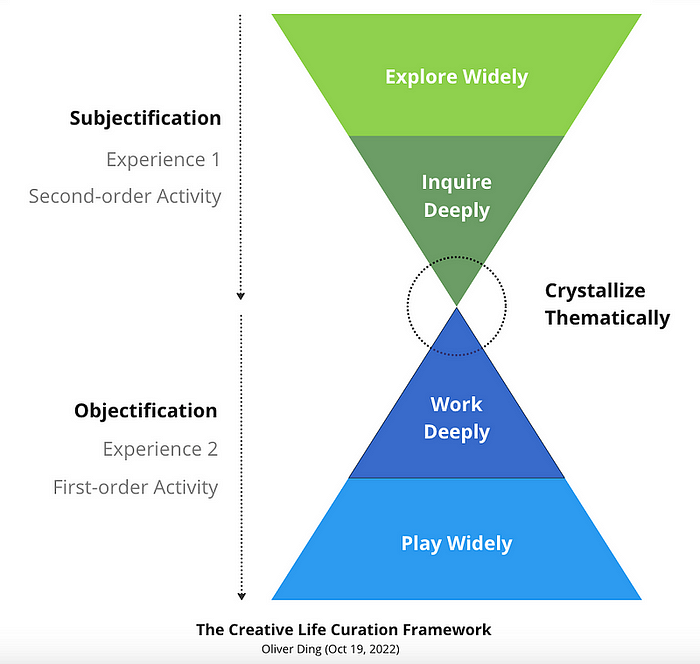
The Sandglass refers to the S-T-O Tendency which is a core idea of the Creative Life Curation framework. It highlights three keywords of the framework:
- Subjectification: turning the world into a person’s experience
- Crystallize Thematically: discovering a match between individual life themes and collective cultural themes
- Objectification: turning the person’s experience into artifacts for the world
You can find more details in Slow Cognition: The Creative Life Curation Framework.
The Circle refers to “Knowledge Center” which is the container of Knowledge Engagement. You can find more details in TALE: A Possible Theme called “Knowledge Center”.
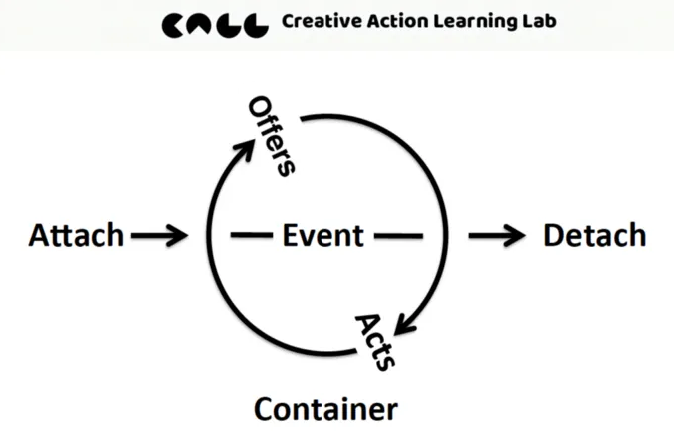
For the Creative Life theory (v2.0) and the Knowledge Engagement project, a “Knowledge Center” is a Collaborative Project too.
From 2022 to 2023, I worked on developing the concept of “Knowkedge Center” and running several networked knowledge centers.
The Square refers to “Lifescope, “ also called “World of Activity”. I use it to define the boundary of a person’s creative space in his/her entire life. You can find more details in Lifescope: The World of Activity for Creative Life Curation.
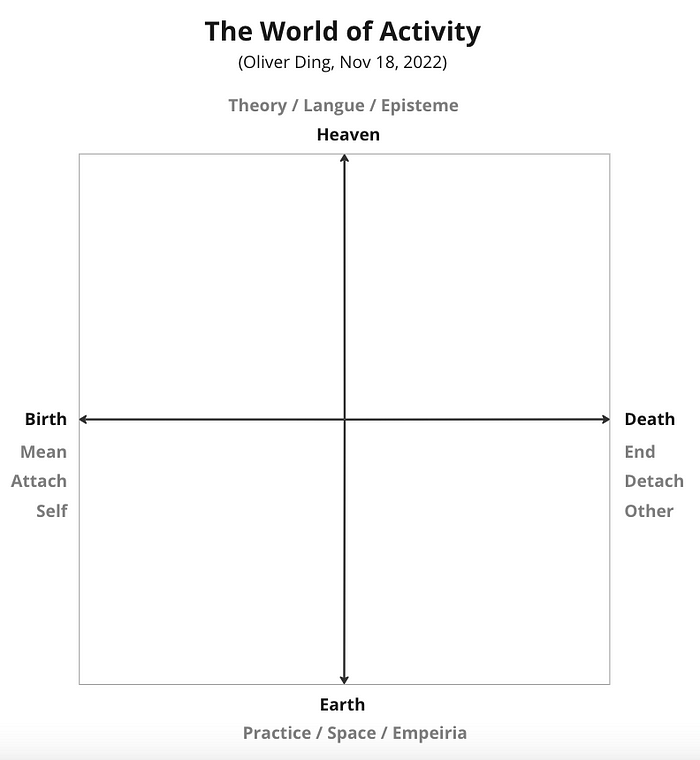
In this example, the sign is a Derived Form.
The Circle refers to the “container” model which is a Basic Form.
Part 3: The Meaning of “Frame for Work”
I used the term “Frame for Work” as a theme for four purposes.
- The “Frame for Work” Project (Jan 2023 — Dec 2023)
- The “Frame for Work” Level (A unit of analysis of the Ecological Formism framework)
- Knowledge Frameworks / Frameworks
- Frames of Social Action
3.1 The “Frame for Work” Project (phase 1)
The “Frame for Work” Project (phase 1) started on Jan 30, 2023, and closed on Dec 13, 2023. In Jan 2023, I worked on a thematic conversation about “Strategic Exploration” and discussed building a knowledge framework around a primary theme with a friend. On Jan 30, 2023, I realized that the further task is to develop a new ontology of knowledge frameworks after publishing the post about the Field of Meta-learning (v1.0). To remember this significant insight, I made a cover image and used “Frame for Work” as a new possible theme.

Four days ago, I published Frame for Work: The Ontology of Knowledge Frameworks and Ecological Actualism and closed the Frame for Work project. The outcomes are 1) A case study of the Ecological Actualism Framework, and 2) A new framework of knowledge frameworks.
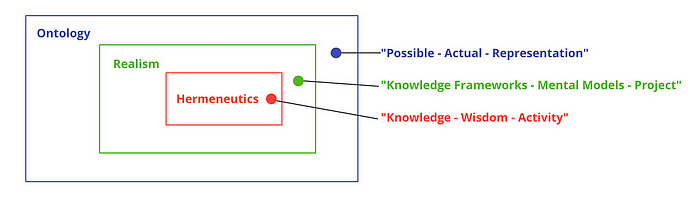
The above diagram uses a schema called “Ontology — Realism — Hermeneutics” to build a model of the “Frame for Work” project.
In the last section of the article, I discussed the part of Hermeneutics called “Knowledge — Wisdom — Activity”. See the diagram below.
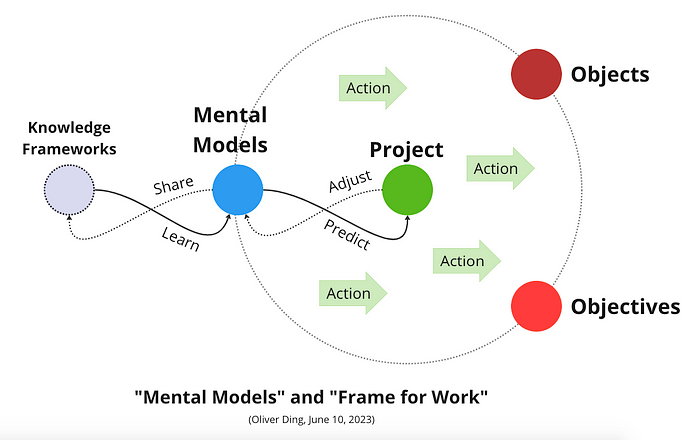
The “Predict — Adjust” interactions between Mental Models and Projects echo the “Learn — Share” interactions between Knowledge Frameworks and Mental Models. While the former is about mental moves between “Knowledge” and “Wisdom”, the latter is about mental moves between “Wisdom” and “Activity”.
3.2 The “Frame for Work” Level
For the Ecological Formism framework, the “Frame for Work” level is a unit of analysis.
The Ecological Formism Framework uses “Variant > Quasi-invariant > Invariant > Invariant Set” as the foundation to define four types of entities for knowing:
- Invariant: Basic Forms
- Invariant Set: Frames
- Quasi-invariant: Derived Forms
- Variant: Frameworks
If we use “Variant > Quasi-invariant > Invariant > Invariant Set” to reflect on the framework of Knowledge Frameworks, we can use it to expand the part of Hermeneutics.
- Theoretical Scientific Perspective: Invariant → Basic Forms
- Empirical Scientific Perspective: Invariant Set → Frames
- Professional Perspective: Quasi-invariant → Derived Forms
- Ordinary Perspective: Variant → Frameworks
These four perspectives echo the four thematic areas of knowledge engagement.
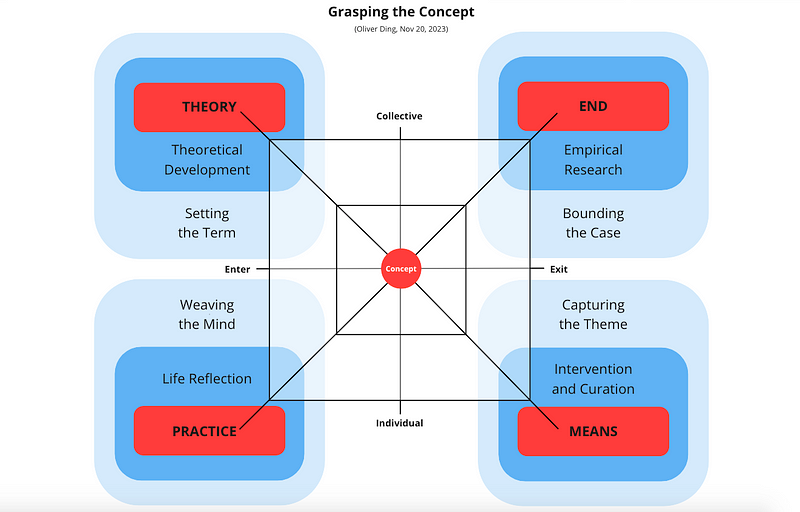
These ideas also echo the “Kind of Actors” framework. See the diagrams below.
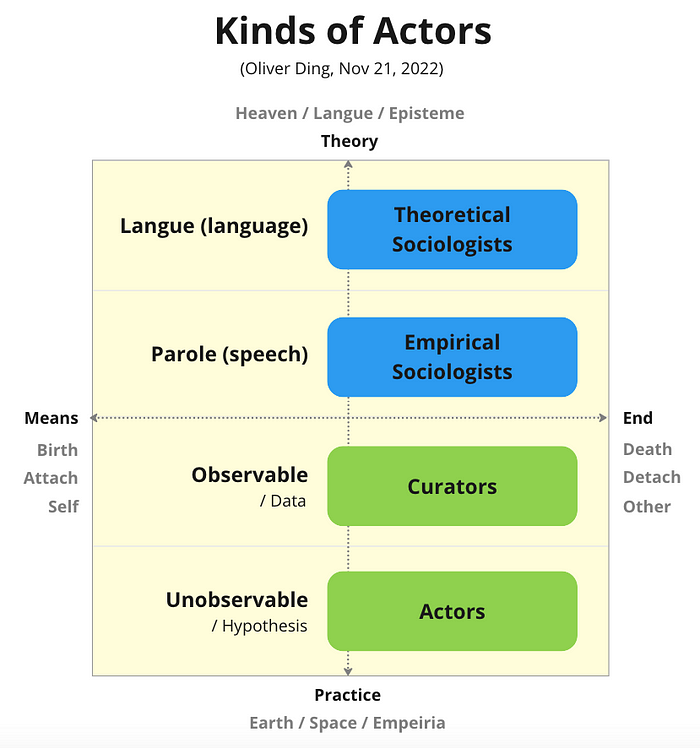
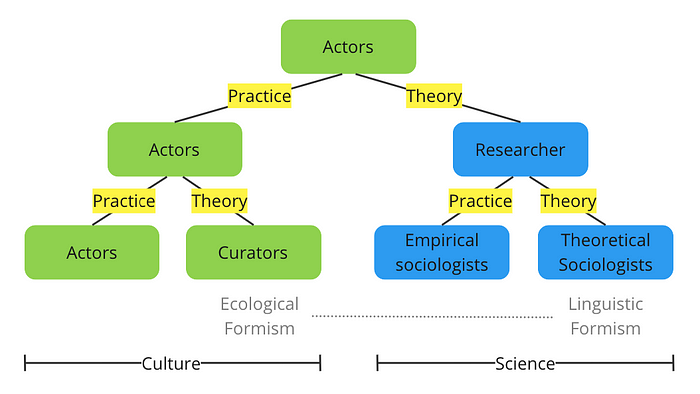
On Oct 4, 2023, I used the Kind of Actors framework to reflect on my work of developing the Creative Life Theory (2020–2023) and discovered four creative life domains:
- Ordinary Perspective> Taking creative actions and working on creative projects
- Professional Perspective > Achieving professional achievements
- Empirical Scientific Perspective > Researching a theme of Creative Life Theory, such as “Knowledge Center”
- Theoretical Scientific Perspective > Curating the semiotic system diagram of Creative Life Theory
If we put these ideas together, we can see four Creative Identities. We see four types of different roles and jobs.
Can a person move between these creative life domains and shape her/his creative identity?
You can find some examples from my journey of developing Creative Life Theory in CALL: The Development of Creative Life Theory (2020–2023, Part 6).
3.3 Knowledge Frameworks / Frameworks
I pay attention to two fields: Knowledge Engagement and Product Engagement. Both two fields share the same pattern of developing a concept system. However, they have different complexities in the stage of Continuous Objectification.
For the field of Knowledge Engagement, Knowledge Frameworks are both MEANS and END.
- END: Making new brand-new knowledge frameworks as public knowledge
- MENAS: Using others’ knowledge frameworks as tools for the journey of knowledge engagement
For the field of Product Engagement, Knowledge Frameworks are MEANS.
- MENAS: Using others’ knowledge frameworks as tools for the journey of knowledge engagement
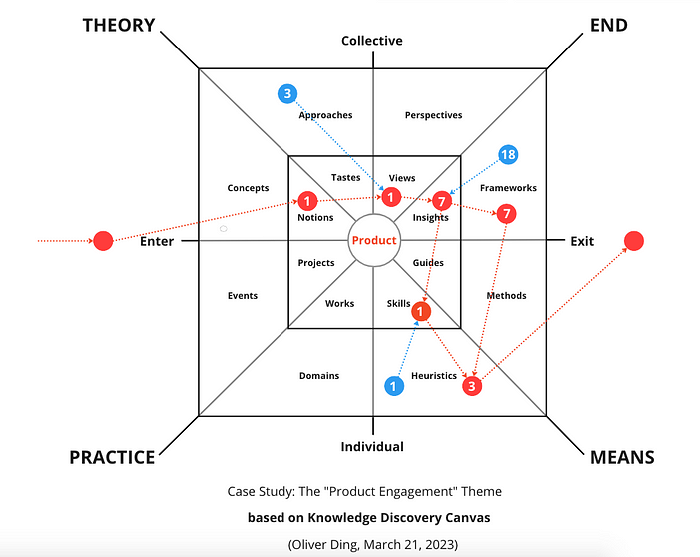
In this perspective, we see more details of the Realism part of the framework: Knowledge Frameroks — Mental Models — Projects.
In Lui’s theoretical sociology, the concept of “Social Territory” is the core of the Realism part.
The Ecological Formism Framework offers a solution to connect the concept of “Thematic Space” with the concept of “Social Territory”. See the diagram below.
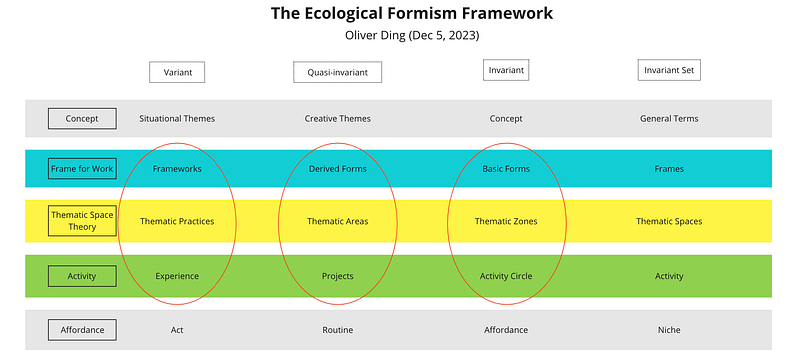
The above diagram highlights the connection between three units of analysis:
- The “Activity” level
- The “Thematic Space Theory (TST)” level
- The “Frame for Work (Knowledge Framework)” level
We also can see three cross-level connections:
- Variant: Experience — Thematic Practices — Frameworks
- Quasi-invariant: Projects — Thematic Areas — Derived Forms
- Invariant: Activity Circle — Thematic Zones — Basic Forms
You can find more details in Social Moves: Thematic Zones, Thematic Areas, and Social Territory.
3.4 Frames of Social Action
In a general sense, the theme of “Frame for Work” can be referred to as “Frames of Social Action”.
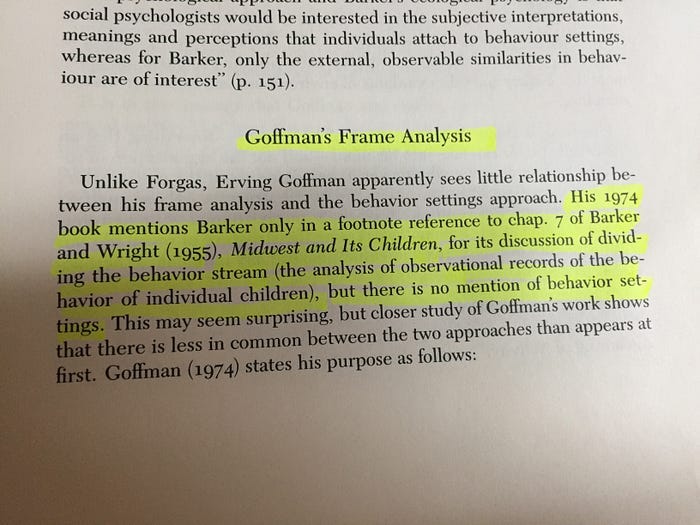
For the “Frame for Work” project, this meaning is about a literature review of others’ concepts and theoretical approaches to frames of social action. For example, Activity Theory, Erving Goffman’s Frame Analysis…
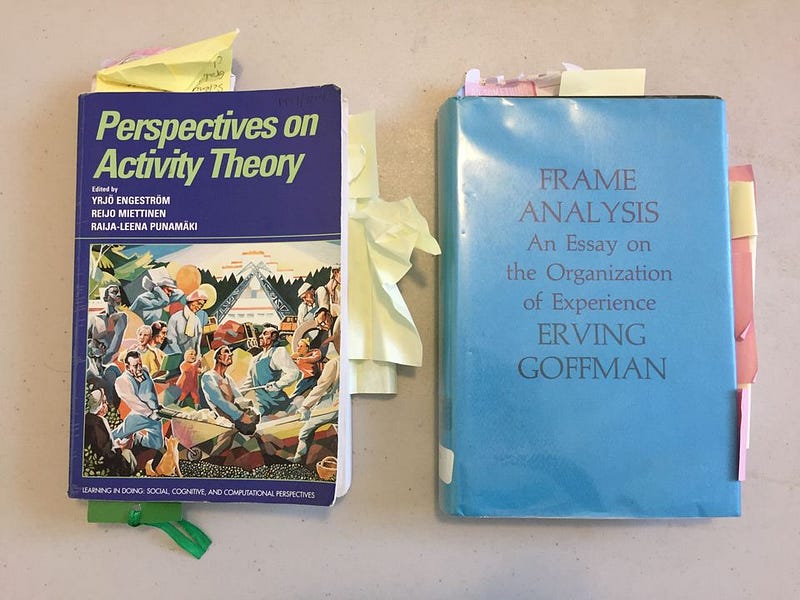
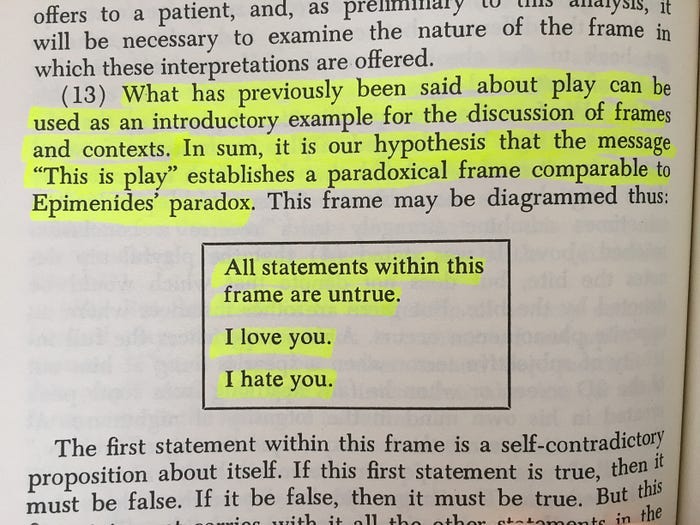
On p.7, Goffman introduced the source of the concept of “Frame”: Gregory Bateson’s paper “A Theory of Play and Phantasy”. At the beginning of Chapter 3 Keys and Keyings, Goffman also mentioned Bateson’s idea “This is Play” again.
I have been a fan of Gregory Bateson for many years. I have read many articles about his ideas. It is easy to find the following three books about Bateson on my bookshelf.
Steps to An Ecology of Mind collected essays Bateson wrote for different audiences and published in various settings. One of these essays is A Theory of Play and Fantasy in which we can find the original idea of “Frame”.
Bateson talked about two types of “Frame”, one is mathematical frames and the other is psychological frames. Bateson said, “But, while the analogy of the mathematical set is perhaps over abstract, the analogy of the picture frame is excessively concrete. The psychological concept which we are trying to define is neither physical nor logical. Rather, the actual physical frame is, we believe, added by human beings to physical pictures because these human beings operate more easily in a universe in which some of their psychological characteristics are externalized. It is these characteristics which we are trying to discuss, using the externalization as an illustrative device.”
Bateson used a simple analogy: a physical picture frame that contains the picture. The psychological frame is a set of messages of meaningful actions.
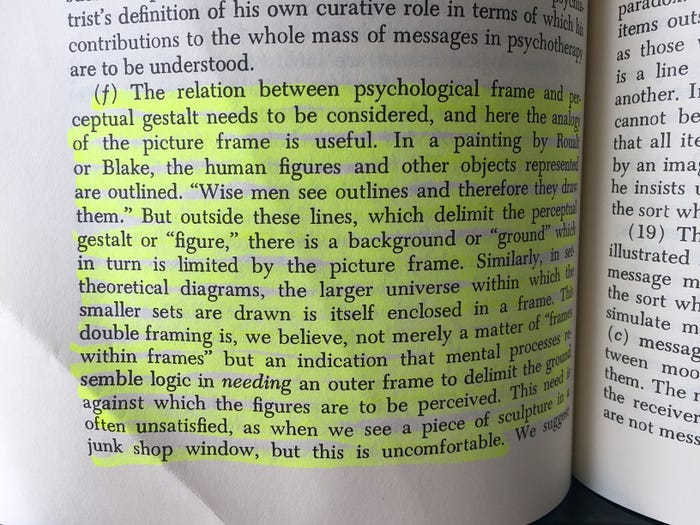
Bateson also mentioned “figure” and “ground” which are two core ideas of Gestalt psychology. For the frame, the picture is a figure and the frame is the ground.
In Mind and Nature, Bateson used the following diagram for analyzing the Iatmul culture. This diagram is a key to understanding Bateson’s “Ecology of Mind”.
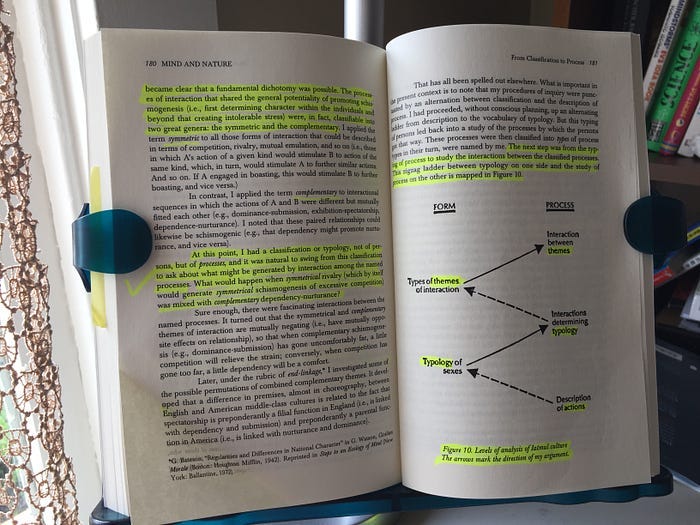
If we put Erving Goffman’s “Frame” back into the above diagram, we can say Goffman’s “Frame” is the “Form” and the human interaction is the “Process.” The “Interaction Order” that Goffman talked about can be seen as “formal cause and ecological meaning” which are used by Harry Heft (2001) to review two approaches of ecological psychology: Gibson’s Affordance theory and Roger Barker’s Behavior Settings theory.
Heft said, “What then is the origin of these patterns or structure in perceptual experience? Instead of making the move that the Gestalt psychologists did and assume that this intrinsic structure arises out of dynamic brain processes, we can adopt James’s and Gibson’s positions that structure, and hence meaning, is intrinsic to the structure of the environment considered in a relation to a perceiver. Further, we can suppose, following Heider, that the structure of the environment features is preserved in the medium to be detected by a perceiver. If it is assumed that the potential meaning of environmental feature is carried in the intrinsic, structural relations in environmental information, and these relations are available in principle to any perceiver, then an account of detecting this environmental structure that uses formal cause as a conceptual vehicle may help to clarify how individuals perceive a common, meaningful environment.” (2001, p.286).
In a broad sense, we can see Goffman’s Frame as a special type of “the structure of the environment” at the level of social activities. Thus, Frame Analysis can be seen as a book of “ecological psychology”.
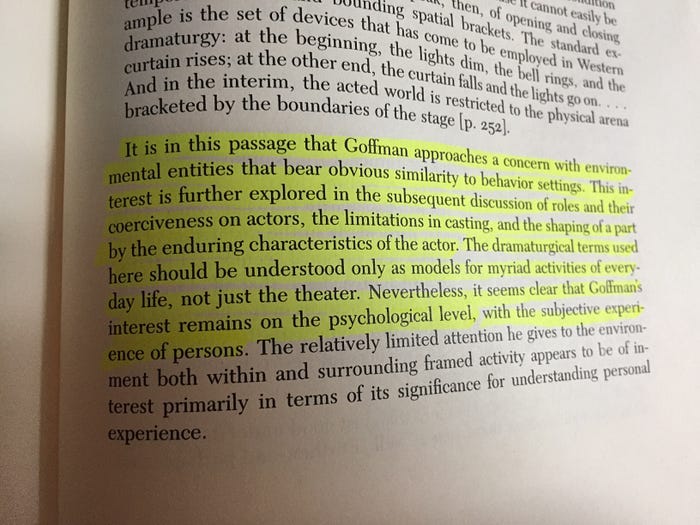
In 2017, I started learning Roger G. Barker’s Behavior Settings theory. In 1989, Phil Schoggen published a book titled Behavior Settings which is a revision and extension of Roger G. Barker’s classic Ecological Psychology: Concepts and Methods for Studying the Environment of Human Behavior (1968). Karl A. Fox wrote a chapter for Schoggen’s edition and mentioned Goffman’s Frame Analysis.
Fox pointed out, “It is in this passage that Goffman approaches a concern with environment mental entities that bear obvious similarity to behavior settings. This interest is further explored in the subsequent discussion of roles and their coerciveness on actors, the limitations in casting, and the shaping of a part by the enduring characteristics of the actor. The dramaturgical terms used here should be understood only as models for myriad activities of everyday life, not just the theater. Nevertheless, it seems clear that Goffman’s interest remains on the psychological level, with the subjective experience of persons. The relatively limited attention he gives to the environment both within and surrounding framed activity appears to be of interest primarily in terms of its significance for understanding personal experience.”
Heft argued that Gibson’s ecological psychology and Barker’s ecobehavioral science share a special type of causality, “Gibson and Barker are offering causal accounts of how structure can be conveyed between two entities. What is critical for understanding both positions is recognizing the kind of causal account they offer. It is not the kind of causal view reflected in much of 20th-century psychological theory, but it is a causal account with a well-established pedigree nonetheless. It is a view traceable to Aristotle’s metaphysics and psychology.” (p.274) The causality Heft highlighted is the formal cause.
Heft suggested, “The key to understanding environmental perception in the case of Gibson, or the effect of settings on the collective actions of its occupants in the case of Barker, is in seeing these problems as requiring an account of how structure is shared, and thus preserved across different entities. That is, in seeing these problems primarily in terms of formal cause.” (p.280). Heft also pointed out that the difference between Gibson’s theory and Barker’s theory is they refer to two different conceptual levels.
Following Heft’s suggestion, we can consider Goffman’s “Frame” as another approach to formal cause at the third conceptual level. Gibson’s affordance theory is about individuals while Barker’s Behavior Settings is about collective actions. The difference between Behavior Settings and Frame is the former focuses on behavior-milieu synomorphs while the latter doesn’t require a fixed physical place. We can see these three approaches as a serial:
Affordance — individual perception Behavior Settings — social action pattern plus physical place Frame — social action pattern
I made the above conclusion on July 21, 2020. You can find more details in Frame Analysis in Context.
From 2020 to 2023, I learned more ideas about Activity Theory and Sociological Theories. I also developed more ideas about my ecological approach to social practices and human activities.
We can also check Talcott Parsons’ concept of “Action Frame of Reference”.
The action frame of reference is associated with the name of Talcott Parsons, whose theory starts with a systematic analysis of action which sees the social actor as choosing between different means and ends, in an environment which limits choice both physically and socially. The most important social limitations on choice are norms and values. From this, Parsons builds up an elaborate model of the social system, such that his theory arguably loses its voluntaristic character: that is, the notion of the choosing actor disappears, in favour of a theory of structural determination in which norms and values play the determining role.
Source: Encyclopedia.com
The Ecological Formism Framework and the integrated ecological approach to social cognition are my new solutions to understanding the issue of “Frames of Social Action”.
Related Articles
- Social Moves: An Integrated Ecological Approach to Social Cognition — Dec 5, 2023
- Social Moves: Weaving the Mind and Clarifying the Order — Dec 7, 2023
- Frame for Work: The Ontology of Knowledge Frameworks and Ecological Actualism — Dec 13, 2023
- TALE: A Possible Theme called “Frame for Work” — May 10, 2023
- Social Moves: Thematic Zones, Thematic Areas, and Social Territory — Dec 15, 2023
- Frame Analysis in Context — July 21, 2020


