Green Soup
High on Nutrients, Low on Calories, Very Low on Effort
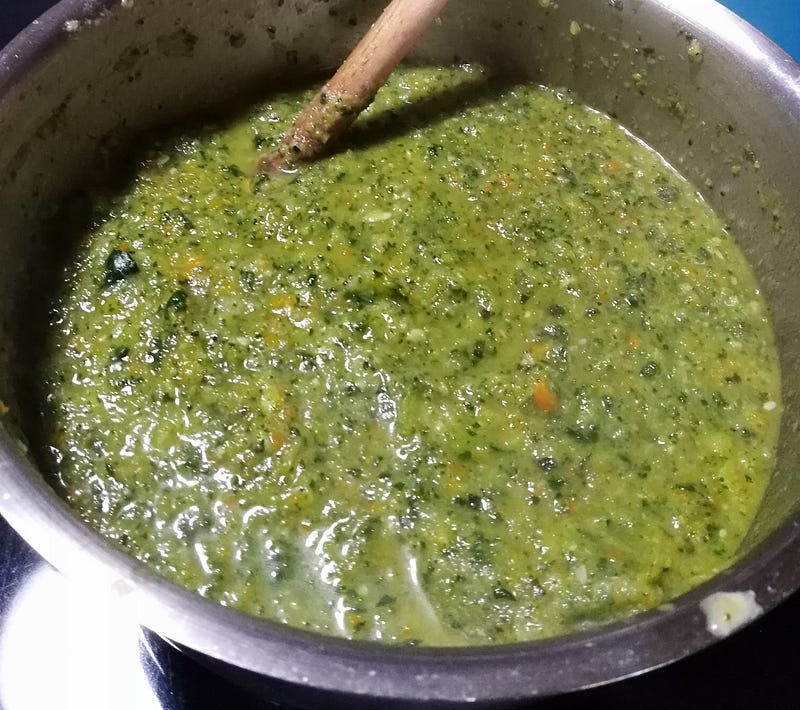
As promised here, I’m sharing one of my soup recipes. Over the last two years, I’ve had to come up with a lot of new vegetable-based recipes which I can cook quickly and then eat through the week, giving me lots of nutrients and not lots of calories. As a result, I’ve lost a lot of weight (44 pounds and counting) and feel much healthier. I’ve also added a lot of new, yummy dishes to my family’s dining experience, and now I’m sharing some of them with you. I love to browse through recipe books, but I tend to take the idea (ooh, meatloaf, yum) and then make the recipe up to suit myself and the ingredients I have. It’s a joy to me to come up with new meals and recipes, but I know this is definitely not the case for everyone.
So, let me do the hard work and you can benefit!
I’ve written here about how cooking shouldn’t be a hugely stressful undertaking and that you don’t have to obsessively follow recipes to the letter. In keeping with this philosophy, I’ve included the recipe twice below. The first version is the long, annotated one. I’ve included some tips on how to do things and some ideas on how to vary the recipe according to your desires and resources. I’ve included the recipe in brief at the end as well, to make it easier to copy and paste, if you so desire.
Without further ado, let me introduce Green Soup.
This is a super-healthy, super-fast and very versatile soup. It’s rough and textured. Ain’t no straining or creaming going on here. Just good, old fashioned stick blending. Expect plenty of small soft lumps if you (like me) get bored of blending quickly. You can put pretty much any vegetable in it, even ones that aren’t green, although the two main ingredients for me are always silver beet and zucchini.
Useful note:
When I end up with a surfeit of zucchinis in the garden (or if you don’t garden, keep an eye on the in-season produce at the store, for when zucchinis are plentiful and cheap, and buy up lots), I chop them up, skin-on, roughly into dice (about 1–2 cm square, no more than an inch. But honestly, just chop ’em. Make a large zucchini into many smaller pieces of zucchini. Who cares about size, shape or anything else?) and throw them into plastic zip-lock bags and freeze them. When I want to make a soup or a stew, I get a bag out, bash it with the handle of a knife to loosen the pieces a bit, and toss it into the pot. It will thaw and cook and you’ll get all the goodness without having to buy fresh all the time.
Calories and Stuff:
Green Soup does not have ingredients such as lentils, split peas, chicken, beans or anything else that adds too many calories. That’s because it’s a soup I eat on days I’m watching my calorie count, but still want to eat healthily and feel full for a while. If you decide to be creative (go you!) and add some or all of these ingredients, or any others of your desire, that’s awesome! But if your goal is weight loss or maintenance, don’t underestimate the amount of calories you’re adding. Having said that, any soup can be turned from a light meal into a main meal by adding protein (meat, lentils, beans) and grains or starch (potatoes). That’s a perfectly yummy option!
Likewise, if you decide to have a piece of toast, a pumpkin scone, a sandwich or some crackers with your soup, go for it! But you’re turning it into a main meal, not a light one. Do whatever you like! Just be mindful about it.
The Ingredients:
I’ve commented on everything here, but at the bottom of the post is the short version you can copy and paste if you wish. Remember, you can mix and match. For any soup or stew base, I usually start with:
Vegetable oil or, if you love it and aren’t vegan, butter. This will be the first thing in the hot pan, and the veggies will sauté in it. Butter adds a very yummy quality, but extra virgin olive oil or your preferred veggie oil is totally fine as well.
2–3 cloves of garlic. You can never have too much. You lay them down flat on the chopping board and squash them with the flat of a knife. Then you can just pull the skin right off and chop up the garlic into teeny tiny pieces. Some people just throw them in whole, which is fine as well. Some people include the skin — also fine, though can be a bit unpleasant on the tongue in a soup.
One onion (any size). It really doesn’t matter if your onion is massive or teeny. The bigger the soup, the more onion you might want to use. If the onions at my local shop are small (around golf ball size or slightly bigger) I might use two.
Optional: a few sticks of celery. The leaves are great to use, too.
Optional: a couple of leeks. If picking them from your garden, chop the white end off with the roots and chop the green spreading leaves off the top. Depending on the size of your leek, you’ll get a couple of inches to maybe five inches of useable leek in the middle. If the leek has been in the ground too long, the centre will start to harden (when you chop it, it won’t collapse into rounds) — don’t use this hard bit, it’s crunchy and unpleasant.
2–6 zucchinis, skin on (depends on the size of the zucchinis and the amount of soup you want to make). Add more if you want.
A good big bunch of silver beet leaves (if picking from your garden, wash thoroughly under running water to remove spiders, spider webs, snails, ladybugs and all the other critters that love silver beet as much as you do). This is meant to be a vegetarian dish…
Optional: a couple of carrots. I call it optional, but I always like to add a bit of carrot because it offers some sweetness to an otherwise quite bitter set of ingredients. Pumpkin works just as well. I always keep carrots whole (I don’t peel them).
Optional: a chunk of pumpkin. Skin can be on or off, your choice.
Optional: a couple of potatoes. Skin on. This will thicken your soup, but you don’t really need them unless you find you’ve added too much water later on. In which case, a couple of potatoes can thicken things up nicely.
2–6 cups of vegetable or chicken stock. You can use liquid stock or powdered stock (1 teaspoon per 250 ml — cup — of hot water.
Salt and pepper to taste. You can always season a bit more at the end of the soup-making process. DO NOT over-salt at the beginning. Wait till you’ve added the stock before tasting for salt and pepper.
The Method:
First, a note on chopping.
Ladies and gentlemen and all other humans, you are making soup. You are not presenting a dish for judgement on Master Chef. Do not stress about perfect cubes and identical sizing. Chefs will tell you that if you make your pieces of onion or what have you all different sizes, then they will cook at different speeds and your dish will be ruined. RUINED! Hey, they are probably right about the different speeds thing. But it’s called a wooden spoon. It’s called stirring. You do it regularly and often, and everything will cook just fine. Promise!
When chopping onions (or anything round):
· First, cut the onion in half, from the top to the bottom.
· Next, lie the halves, flat side down on the chopping board.
· One at a time, slice the onion-half in one direction, aiming for around 1cm width per slice. It doesn’t matter if they’re big, ugly pieces! It’s all going to get blended in the end, anyway.
· Turn the onion-half 90 degrees, holding the slices together so they still look like half an onion.
· Slice in the other direction.
Second, a note on vegetable (and fruit) skins.
I use them as much as possible. Lots of the nutrients live just under the skin. They also have a lot of fiber, which is part of the reason we need vegetables at all. Obviously, if you hate the taste or texture, or if they are not edible (like melon rinds) or if you know for a fact they have been soaked in pesticides, you might be better off without them. But if you can, do! Or if you’re not sure, definitely give the skin a try before you reject it out of hand. Read this article for more information, although I question some of their assumptions. I have cooked with garlic skin, pumpkin (or squash) skin and lemon and orange skin. I even know a couple of people who eat banana skins! Actually, didn’t Jim Carrey eat a whole banana in one of his Ace Ventura movies? But I digress. https://www.healthline.com/nutrition/peeling-fruits-veggies#section7
Okay, back to the method.
1. Thoroughly wash all vegetables, especially if they’ve been grown with pesticides. Peel if you must. Use cold water and a bit of detergent if you’re really concerned. Rinse well. If you have picked them from your garden or know for certain that no pesticides were used, give them a good scrub in cold water and don’t stress if there are still little tiny bits of earth in the crevices of your carrots. Tiny quantities of earth contain vitamin B12 and possibly other things useful for our gut health, and won’t hurt you — as long as you’re confident that the earth is not contaminated. There are critics of this, who are concerned that the earth our veggies are grown in does not contain sufficient cobalt to produce vitamin B12, and that other risks such as nasty bacteria and toxins from pesticides are too severe to risk eating dirt at all. So, exercise your judgement. I live in a small rural village in Tasmania, Australia. We have our own garden with no contaminants in the soil. We are fine with a bit of dirt on our carrots. Make your own informed choices.
2. Put your soup pan (make it a nice big one) onto your stove top and put the heat to medium. Don’t put oil in yet.
3. While it’s warming up, chop your onions and garlic and, if you’re using them, leeks and celery. These will form the base of your soup.
4. When the pan is warm (hover your hand over the base. Don’t touch the base!), add the vegetable oil. Add more than you think you need, enough to cover the bottom of the pan.
5. Immediately add the chopped base ingredients and stir well but gently. Don’t get bits of onion all over your kitchen.
6. If the veggies sizzle at top volume or smoke comes up from the oil when you add it, your pan is too hot. Remove it from the heat, turn the heat down a bit, stir well and then continue with the stove top a little lower.
7. While the base veggies are sautéing (that means cooking in a little bit of oil), chop the remaining veggies (carrot or pumpkin, silver beet, zucchinis if you’re using fresh ones). With silver beet, if you don’t like the stalk, which takes longer to cook into softness, cut along the stalk on both sides and pull it out.
8. Once the base ingredients have softened and gone a bit paler or translucent, add the rest of the veggies. If you’re using frozen veggies, add from frozen. They will thaw and cook in the pan. Stir well and regularly but you don’t have to be attached to the spoon. If nothing much seems to be happening, turn the heat up a bit. If your veggies are going brown, black or sticking to the bottom, add a bit more oil and turn the heat down a bit. Never be afraid to experiment with heat. Lots of chefs advocate cooking at lower temperatures for longer, to get the most flavor out of their ingredients. But if you’re in a rush, crank up the heat, stir for your life and get it done.
9. Once the veggies have had a chance to soften slightly, it’s time to add the stock. If using liquid stock, just pour it on in. If using powdered, boil the kettle for 3 cups. Put three teaspoons of stock powder into a bowl or just whack it straight into the soup pan. Pour three cups of boiling water over the top and stir. If you haven’t already, pour the stock into the pan and stir.
10. Check the amount of liquid in the soup. Remember that when you blend it, it will thicken up. You want plenty of liquid — but you can always add more later. Start with 3 cups of liquid and add more, cup by cup, until you think it looks the business.
11. Bring to the boil and then simmer for as long as you can be bothered. It always tastes nicer if it’s had a chance to simmer for a bit. But if you don’t have time, just give it five minutes and call it a day.
12. Using a stick blender, blend the soup until you can’t find any more big lumps. As mentioned above, expect little lumps in this soup. We aren’t going for perfectly smooth, restaurant quality here.
13. Now taste the soup. Don’t make the mistake of sticking a spoon in, collecting a big mouthful and then shoving into your mouth. You will a) burn your mouth to kingdom come and b) not taste anything anyway. Get a spoonful of the soup and rest it on the bench for at least a minute. Taste it when it’s lukewarm. This will give you the full flavour.
14. Add salt and/or pepper and stir after each pinch is added. Taste again before adding more. When it tastes yum, stop.
15. Your soup is done.
Some final notes:
This soup can include whatever ingredients you have in your fridge or garden. If you add more ingredients that aren’t green, your soup may no longer be Green Soup. So what? You have invented Brown Soup. Or Orange Soup. Or White Soup. Yum!
I can make this soup in less than an hour, from start to finish, including picking and washing the veggies. But you can leave it simmering on low for a nice long time too, if you wish.
I’d love to know your own tweaks and preferences for soups, if you can be bothered to spare a minute or two. Happy eating (or as my granny used to say, happy drinking!). Realistically, this is a soup you need to chew, at least a bit. So, I’m sticking with happy eating!
Quick Recipe for The Time Poor
Ingredients:
· Vegetable oil or butter
· 2–3 cloves of garlic
· 1–2 onions
· (Optional) 1–2 leeks, 2–3 celery sticks
· 2–6 zucchinis
· 1 large bunch silver beet
· 2–3 carrots
· 2–6 cups liquid vegetable or chicken stock
Method:
1. Wash or peel all vegetables.
2. Heat pan on medium.
3. Roughly chop onions, garlic, leeks and celery.
4. Add oil to pan followed by onions, garlic, leeks and celery.
5. Sauté, stirring regularly, five to ten minutes until soft and translucent.
6. Meanwhile, roughly chop carrots, zucchinis, silver beet and any other vegetables.
7. Add all vegetables except silver beet to the pan.
8. Sauté 5–10 minutes, stirring regularly, until vegetables begin to soften.
9. Add chopped silver beet.
10. Sauté another 5 minutes.
11. Add liquid stock and stir. Add more stock, cup by cup, until you’re happy with the liquidity.
12. Bring to a boil then turn stove to low heat and simmer as long as you like.
13. Blend well with a stick blender.
14. Taste soup. Add salt and pepper, pinch by pinch, stirring and tasting again after each addition.
15. Store in the fridge for several days or freeze in single serve containers for a couple of months.
Hey, if you enjoyed this article, you might like these as well:


