avatarAnthony Eichberger

Free AI web copilot to create summaries, insights and extended knowledge, download it at here

5956

Abstract

enegades inched closer to adulthood, America as a whole became increasingly divided over slavery and the concept of states’ rights. <a href="https://en.wikipedia.org/wiki/Compromise_of_1850">The Compromise of 1850</a>, <a href="https://en.wikipedia.org/wiki/Kansas%E2%80%93Nebraska_Act">the Kansas-Nebraska Act of 1854</a>, and <a href="https://en.wikipedia.org/wiki/Dred_Scott_v._Sandford">the <i>Dred Scott</i> decision of 1857</a> further inflamed conflict between abolitionists and secessionists. Such acrimony led to this generation being the youngest to enlist (or be conscripted into) the Civil War.</p><p id="a05a">The second half of their lives saw them navigating Reconstruction and the new sources of popular anger that arose. This tumult included: the rise of the Ku Klux Klan, the impeachment of <a href="https://en.wikipedia.org/wiki/Andrew_Johnson">President Andrew Johnson</a>, heightened warfare between the U.S. federal government and Tribal Nations, the Electoral College losses of <a href="https://en.wikipedia.org/wiki/Samuel_J._Tilden">Samuel Tilden</a> as well as <a href="https://en.wikipedia.org/wiki/Grover_Cleveland">Grover Cleveland</a>, and millions of new immigrants arriving from China and various parts of Europe.</p><p id="863e">These ongoing tectonic shifts fueled this generation’s lifelong desire for adventure, escapism, frankness, and hierarchy.</p><h1 id="76c0">How They’re Misunderstood</h1><p id="1e0d">Many Golden Renegades were born into the depression caused by <a href="https://en.wikipedia.org/wiki/Panic_of_1837">the Panic of 1837</a>. Those who lived long lives would be subjected to three additional national “panics” in <a href="https://en.wikipedia.org/wiki/Panic_of_1857">1857</a>, <a href="https://en.wikipedia.org/wiki/Panic_of_1873">1873</a>, and <a href="https://en.wikipedia.org/wiki/Panic_of_1893">1893</a>. Systemic racism, populism, and the devaluing of gold and silver were some of the long-term consequences. Although they enjoyed the massive railroad expansion made possible by the Kansas-Nebraska Act, it would come at a severe cost of national morale.</p><p id="e6a3">These children grew up in an environment of lingering anti-British resentment from <a href="https://en.wikipedia.org/wiki/War_of_1812">the War of 1812</a>. <a href="https://en.wikipedia.org/wiki/Andrew_Jackson">President Andrew Jackson</a> was the original frontiersman president, waging war against the Creeks and, ultimately, using the power of the presidency to decimate Indigenous Tribal Nations. Such genocide was normalized in their young minds.</p><p id="57bc">As they aged, Golden Renegade kids either experienced or witnessed the influx of westward wagon trains and propaganda of manifest destiny. After <a href="https://en.wikipedia.org/wiki/James_K._Polk">President James Knox Polk</a> negotiated with the British for acquisition of Oregon Territory, he pulled America into <a href="https://en.wikipedia.org/wiki/Mexican%E2%80%93American_War">a war with Mexico</a> to acquire California. The admission of Texas to the Union led to increased anti-Mexican and anti-Spanish sentiments. <a href="https://en.wikipedia.org/wiki/Millard_Fillmore">President Millard Fillmore</a> opened up U.S. relations with Japan. <a href="https://en.wikipedia.org/wiki/Franklin_Pierce">President Franklin Pierce</a> secured <a href="https://en.wikipedia.org/wiki/Gadsden_Purchase">the Gadsen Purchase</a>.</p><p id="9122">For Golden Renegades who were on the side of American imperialism, these actions gave way for robber barons and outlaws to rise throughout the rest of the Nineteenth Century.

We also must remember: those Golden Renegades who lived to the turn of the century would have watched the assassinations of three different U.S. presidents — Lincoln, Garfield, and McKinley — play out during their lifetimes. The divide between Radical Republicans and Dixiecrats was constant. They hungered to find leaders who appeared to relate to common folks.</p><p id="90cc">These attitudes would be foreshadowed by <a href="https://en.wikipedia.org/wiki/Martin_Van_Buren">President Martin Van Buren</a>’s patrician demeanor turning off Americans who didn’t want to be held responsible for reckless gambling that had led to economic instability. The contrast between the stodgy perception of “Old Fuss and Feathers” (<a href="https://en.wikipedia.org/wiki/Winfield_Scott">Winfield Scott</a>’s 1852 presidential defeat) and the popularity of “Old Rough and Ready” (previous presidential victor <a href="https://en.wikipedia.org/wiki/Zachary_Taylor">Zachary Taylor</a> in 1848) would serve as a metaphor for this dichotomy.</p><h1 id="0688">Why They Matter</h1><p id="ebd9">Golden Renegades were the third and final “Gold Rush Generation,” although their torment and hustle would greatly fuel the upcoming <a href="https://en.wikipedia.org/wiki/Gilded_Age">Gilded Age</a> — and beyond.</p><p id="9b2e">They embraced transcontinental railways. Many of them were more than eager to put their lives on the line across battlefields over regional differences. Others became literal gunslingers west of the Mississippi River.</p><p id="b4df">By the time they’d reached their thirties and forties, Golden Renegades began demanding transparency from lawmakers. While they didn’t always end up with it, this generation helped to elect an unprecedented string of U.S. presidents who valued honesty and candor — <a href="https://en.wikipedia.org/wiki/Rutherford_B._Hayes">Rutherford Hayes</a>, <a href="https://en.wikipedia.org/wiki/James_A._Garfield">James A. Garfield</a>, <a href="https://en.wikipedia.org/wiki/Chester_A._Arthur">Chester Arthur</a>, <a href="https://en.wikipedia.org/wiki/Grover_Cleveland">Grover Cleveland</a>, <a href="https://en.wikipedia.org/wiki/Benjamin_Harrison">Benjamin Harrison</a>, <a href="https://en.wikipedia.org/wiki/William_McKinley">William McKinley</a>, <a href="https://en.wikipedia.org/wiki/Theodore_Roos

Options

evelt">Theodore Roosevelt</a>, and <a href="https://en.wikipedia.org/wiki/William_Howard_Taft">William Howard Taft</a>. Even though these eight presidents disagreed on a lot of public policy, they shared a commitment to being forthright about their beliefs.</p><p id="a570">Three of them — Cleveland, Harrison, and McKinley — were Golden Renegades themselves. Arthur, meanwhile, was from the “Gilded Architect” microgeneration straddling Redeemers and Golden Renegades.</p><p id="3f6e">Additionally, five of the longest-serving and most impactful U.S. Supreme Court justices — <a href="https://en.wikipedia.org/wiki/John_Marshall_Harlan">John Marshall Harlan</a>, <a href="https://en.wikipedia.org/wiki/Melville_Fuller">Melville Fuller</a>, <a href="https://en.wikipedia.org/wiki/David_J._Brewer">David Brewer</a>, <a href="https://en.wikipedia.org/wiki/Joseph_McKenna">Joseph McKenna</a>, and <a href="https://en.wikipedia.org/wiki/Oliver_Wendell_Holmes_Jr.">Oliver Wendell Holmes Jr.</a> — would come from the Golden Renegade generation. Another, <a href="https://en.wikipedia.org/wiki/Horace_Gray">Horace Gray</a>, was a Gilded Architect.</p><p id="2a1e">Their generation left behind many positive things: civil service reform, naval expansion, antitrust legislation, and food safety — all of which they passed in partnership with Stowegressives and Redeemers. But their power brokers would also contribute to Jim Crow, Indigenous displacement, the anti-immigration pullback, and subjugation of the Philippines and the Kingdom of Hawai’i.</p><p id="0509">Most Golden Renegades would pass away within the first decade or two of the Twentieth Century. Their golden years were spent bearing witness to World War I and the Roaring Twenties. Barely any of them would live to see The Great Depression.</p><p id="8173">The largest amount of Civil War military officers would come from this generation, as would other prominent Civil War era players. In addition to producing an outstanding number of suffragists, abolitionists, and U.S. Supreme Court justices, Golden Renegades would be the first generation to truly broach casual interest in organized sports (which, prior to the Civil War, had pretty much consisted of mainly baseball and cricket).</p><p id="5658">But Golden Renegades were hardly monolithic. With their visible political activity during the Gilded Age, they’d churn out an assorted buffet of warriors, outlaws, industrialists, equality activists, imperialists, robber barons, and cultural artists from all walks-of-life.</p><p id="462e">As with every main generational cohort, Golden Renegades were surrounded by two distinct “<a href="https://readmedium.com/skimming-the-generational-fringes-bb0f602b1d8e?sk=c37bf01bc4767676521f88f2f469981d">microgenerations</a>.”</p><p id="0cfd">The<b> “Gilded Architects” </b>(born approximately from 1828 to 1832) featured the oldest of the Golden Renegades coupled with the youngest of those born into a time when Westward Expansion first ballooned (i.e., the generation I’ve dubbed as the “Redeemers”). Their adult lives encompassed the transition between the Gold Rush era and the Civil War.</p><p id="03c9">This microgeneration boasted historical figures personified by the likes of <a href="https://en.wikipedia.org/wiki/Louisa_May_Alcott">Louisa May Alcott</a>, <a href="https://en.wikipedia.org/wiki/Edward_Wilmot_Blyden">Edward Wilmot Blyden</a>, <a href="https://en.wikipedia.org/wiki/David_Edward_Hughes">David Edward Hughes</a>, <a href="https://en.wikipedia.org/wiki/Belva_Ann_Lockwood">Belva Ann Lockwood</a>, and <a href="https://en.wikipedia.org/wiki/Geronimo">Geronimo</a>.</p><p id="32d0"><b>“Late-Goldens”</b> (born approximately between 1845 and 1849) would be the youngest Golden Renegades alongside of the oldest Stowegressives. They continued the conquest and showmanship of those who belonged to the Gilded Generation, but they would be forced to confront the realities of emancipation and industrialization as they wielded power between wars.</p><p id="6432">This microgeneration included personalities as varied as <a href="https://en.wikipedia.org/wiki/Buffalo_Bill">Buffalo Bill</a>, <a href="https://en.wikipedia.org/wiki/Joseph_Pulitzer">Joseph Pulitzer</a>, <a href="https://en.wikipedia.org/wiki/Alexander_Graham_Bell">Alexander Graham Bell</a>, <a href="https://en.wikipedia.org/wiki/Emma_Lazarus">Emma Lazarus</a>, and <a href="https://en.wikipedia.org/wiki/Jesse_James">Jesse James</a>.</p><p id="920d">Some of the more famous Golden Renegades who’ve taken prominent spots on the mantle of American history have included <a href="https://en.wikipedia.org/wiki/Mark_Twain">Mark Twain</a>, <a href="https://en.wikipedia.org/wiki/Crazy_Horse">Crazy Horse</a>, <a href="https://en.wikipedia.org/wiki/Anna_Elizabeth_Dickinson">Anna Elizabeth Dickinson</a>, <a href="https://en.wikipedia.org/wiki/Oliver_Wendell_Holmes_Jr.">Oliver Wendell Holmes Jr.</a>, and <a href="https://en.wikipedia.org/wiki/Ambrose_Bierce">Ambrose Bierce</a>.</p><p id="2a89">A list of historical figures who were members of the <a href="https://readmedium.com/golden-renegades-at-a-glance-df626f4df0b4"><b>Golden Renegade</b></a> cohort:</p><div id="0bc8" class="link-block"> <a href="https://eichy815.medium.com/golden-renegades-at-a-glance-df626f4df0b4"> <div> <div> <h2>“Golden Renegades” at a Glance</h2> <div><h3>A rundown of temporal attributes and historical peers shared by many Gilded Experts</h3></div> <div><p>eichy815.medium.com</p></div> </div> <div> <div style="background-image: url(https://miro.readmedium.com/v2/resize:fit:320/0*1RnIHwhJJaufF54G)"></div> </div> </div> </a> </div><p id="c30c"><a href="https://eichy815.medium.com/subscribe"><b>Click here</b></a> to subscribe to my stories.</p></article></body>

JIGSAW GENS

Golden Renegades — A Legacy of Enterprise & Ferocity

The Golden Renegades (“Gilded Experts” or “Red Shirts”) risked their lives to represent and industrialize American culture
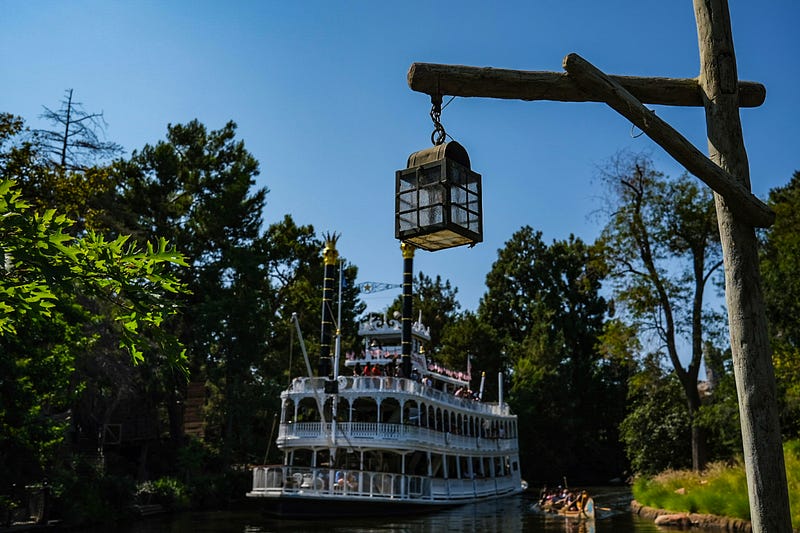
Photo by Steven Beyer on Unsplash

Throughout 2023, I’ve been documenting the evolution of American generations through my “Jigsaw Gens” series. I started out by profiling the eight identified generational cohorts of the past 150 years (Hemingrebels, GI-Gens, Traditionalists, Baby Boomers, GenXers, Millennials, Zoomers, and Alphas).

Currently, as part of this desire for intergenerational literacy, I’m researching the previous century of historical peer cohorts. So far, I’ve tracked the Missionary and Stowegressive generations.

So who came before the Stowegressives?

They would be those belonging to the generation whom I call the “Golden Renegades.”

Who They Are

Golden Renegades were born approximately between 1833 to 1844 — give or take a few years on either end. Based on the theory jointly constructed by historians William Strauss and Neil Howe, they overlap with the Strauss/Howe-designated Gilded cohort of “nomads” and “reactives” that spans 21 years. However, I’ve zeroed in on a 12-year cohort from the Gilded Generation who were born in the prime of American Westward Expansion.

As kids, members of this generation were raised under a cloud of tension regarding slavery and potential secession on both sides of the Mason-Dixon Line. They were the youngest soldiers eligible to serve during the Civil War. Most of them approached middle age as Reconstruction proceeded. Many died at the turn of the Twentieth Century and during the years directly before World War I. The reason I’ve dubbed them as “Golden Renegades” is because they attained their apex of power and prestige during the Gilded Age. Their exploitation of the Old West and their mutual disdain on either side of the Union/Confederate binary gave them renegade status.

Other nicknames for Golden Renegades could include: Gilded Experts, in order to showcase their primacy as Gilded Age power brokers; Red Shirts, since so many of them lost their lives in the Civil War and amongst the violence of the Wild West; Outlaws, because of the excess of historical figures from their cohort — such as Custer, Hickock, Stuart, and Fisk — who defied civility or diplomacy so they could enforce their whims on those around them; Judicial Gatekeepers, seeing how the 8–14 eventual U.S. Supreme Court Justices born into the Golden Renegade generation (and its surrounding microgenerations) merged more than 240 years of combined experience on the High Court (especially concentrated during the administrations of William McKinley and Theodore Roosevelt); or Whistlestops, in reference to how American railroads became increasingly pivotal as this generation continued to age.

True to form, I’ve constructed many of these nicknames to align with their generation’s spirit and travails.

What They Went Through

Similar to the Stowegressives who would proceed them, Golden Renegades were the first generation to be carted out west by their parents en masse. These involuntary transients were greeted by missionaries who’d already set up shop throughout the Western United States while converting and proselytizing to both Indigenous tribes and White settlers alike.

As the Golden Renegades inched closer to adulthood, America as a whole became increasingly divided over slavery and the concept of states’ rights. The Compromise of 1850, the Kansas-Nebraska Act of 1854, and the Dred Scott decision of 1857 further inflamed conflict between abolitionists and secessionists. Such acrimony led to this generation being the youngest to enlist (or be conscripted into) the Civil War.

The second half of their lives saw them navigating Reconstruction and the new sources of popular anger that arose. This tumult included: the rise of the Ku Klux Klan, the impeachment of President Andrew Johnson, heightened warfare between the U.S. federal government and Tribal Nations, the Electoral College losses of Samuel Tilden as well as Grover Cleveland, and millions of new immigrants arriving from China and various parts of Europe.

These ongoing tectonic shifts fueled this generation’s lifelong desire for adventure, escapism, frankness, and hierarchy.

How They’re Misunderstood

Many Golden Renegades were born into the depression caused by the Panic of 1837. Those who lived long lives would be subjected to three additional national “panics” in 1857, 1873, and 1893. Systemic racism, populism, and the devaluing of gold and silver were some of the long-term consequences. Although they enjoyed the massive railroad expansion made possible by the Kansas-Nebraska Act, it would come at a severe cost of national morale.

These children grew up in an environment of lingering anti-British resentment from the War of 1812. President Andrew Jackson was the original frontiersman president, waging war against the Creeks and, ultimately, using the power of the presidency to decimate Indigenous Tribal Nations. Such genocide was normalized in their young minds.

As they aged, Golden Renegade kids either experienced or witnessed the influx of westward wagon trains and propaganda of manifest destiny. After President James Knox Polk negotiated with the British for acquisition of Oregon Territory, he pulled America into a war with Mexico to acquire California. The admission of Texas to the Union led to increased anti-Mexican and anti-Spanish sentiments. President Millard Fillmore opened up U.S. relations with Japan. President Franklin Pierce secured the Gadsen Purchase.

For Golden Renegades who were on the side of American imperialism, these actions gave way for robber barons and outlaws to rise throughout the rest of the Nineteenth Century. We also must remember: those Golden Renegades who lived to the turn of the century would have watched the assassinations of three different U.S. presidents — Lincoln, Garfield, and McKinley — play out during their lifetimes. The divide between Radical Republicans and Dixiecrats was constant. They hungered to find leaders who appeared to relate to common folks.

These attitudes would be foreshadowed by President Martin Van Buren’s patrician demeanor turning off Americans who didn’t want to be held responsible for reckless gambling that had led to economic instability. The contrast between the stodgy perception of “Old Fuss and Feathers” (Winfield Scott’s 1852 presidential defeat) and the popularity of “Old Rough and Ready” (previous presidential victor Zachary Taylor in 1848) would serve as a metaphor for this dichotomy.

Why They Matter

Golden Renegades were the third and final “Gold Rush Generation,” although their torment and hustle would greatly fuel the upcoming Gilded Age — and beyond.

They embraced transcontinental railways. Many of them were more than eager to put their lives on the line across battlefields over regional differences. Others became literal gunslingers west of the Mississippi River.

By the time they’d reached their thirties and forties, Golden Renegades began demanding transparency from lawmakers. While they didn’t always end up with it, this generation helped to elect an unprecedented string of U.S. presidents who valued honesty and candor — Rutherford Hayes, James A. Garfield, Chester Arthur, Grover Cleveland, Benjamin Harrison, William McKinley, Theodore Roosevelt, and William Howard Taft. Even though these eight presidents disagreed on a lot of public policy, they shared a commitment to being forthright about their beliefs.

Three of them — Cleveland, Harrison, and McKinley — were Golden Renegades themselves. Arthur, meanwhile, was from the “Gilded Architect” microgeneration straddling Redeemers and Golden Renegades.

Additionally, five of the longest-serving and most impactful U.S. Supreme Court justices — John Marshall Harlan, Melville Fuller, David Brewer, Joseph McKenna, and Oliver Wendell Holmes Jr. — would come from the Golden Renegade generation. Another, Horace Gray, was a Gilded Architect.

Their generation left behind many positive things: civil service reform, naval expansion, antitrust legislation, and food safety — all of which they passed in partnership with Stowegressives and Redeemers. But their power brokers would also contribute to Jim Crow, Indigenous displacement, the anti-immigration pullback, and subjugation of the Philippines and the Kingdom of Hawai’i.

Most Golden Renegades would pass away within the first decade or two of the Twentieth Century. Their golden years were spent bearing witness to World War I and the Roaring Twenties. Barely any of them would live to see The Great Depression.

The largest amount of Civil War military officers would come from this generation, as would other prominent Civil War era players. In addition to producing an outstanding number of suffragists, abolitionists, and U.S. Supreme Court justices, Golden Renegades would be the first generation to truly broach casual interest in organized sports (which, prior to the Civil War, had pretty much consisted of mainly baseball and cricket).

But Golden Renegades were hardly monolithic. With their visible political activity during the Gilded Age, they’d churn out an assorted buffet of warriors, outlaws, industrialists, equality activists, imperialists, robber barons, and cultural artists from all walks-of-life.

As with every main generational cohort, Golden Renegades were surrounded by two distinct “microgenerations.”

The “Gilded Architects” (born approximately from 1828 to 1832) featured the oldest of the Golden Renegades coupled with the youngest of those born into a time when Westward Expansion first ballooned (i.e., the generation I’ve dubbed as the “Redeemers”). Their adult lives encompassed the transition between the Gold Rush era and the Civil War.

This microgeneration boasted historical figures personified by the likes of Louisa May Alcott, Edward Wilmot Blyden, David Edward Hughes, Belva Ann Lockwood, and Geronimo.

“Late-Goldens” (born approximately between 1845 and 1849) would be the youngest Golden Renegades alongside of the oldest Stowegressives. They continued the conquest and showmanship of those who belonged to the Gilded Generation, but they would be forced to confront the realities of emancipation and industrialization as they wielded power between wars.

This microgeneration included personalities as varied as Buffalo Bill, Joseph Pulitzer, Alexander Graham Bell, Emma Lazarus, and Jesse James.

Some of the more famous Golden Renegades who’ve taken prominent spots on the mantle of American history have included Mark Twain, Crazy Horse, Anna Elizabeth Dickinson, Oliver Wendell Holmes Jr., and Ambrose Bierce.

A list of historical figures who were members of the Golden Renegade cohort:

Click here to subscribe to my stories.

History
Society
Culture
Productivity
Self Improvement
Recommended from ReadMedium