
Fiction So Often Reflects Reality
How Circe by Madeline Miller relates to my professional and personal experiences

Over the winter break, I read the book “The Song of Achilles” by Madeline Miller and absolutely loved it. I don’t usually read this type of fiction, but it was so well-written and engaging, that I ordered the sequel, Circe.
There are no true spoilers in this piece, however I will reference passages from late in the book, so you may want to come back to this if you are planning to read Circe.
A few nights ago I came across a couple of paragraphs that really resonated with me as they reflect, in a very unique way, my philosophy when it comes to parenting and supporting children.

A little background
I am definitely not a greek mythology scholar, this is far outside my usual areas of study, so please correct me if I get any details wrong.
The book is told from the perspective of Circe. She is a lesser god, but daughter of the powerful god of sun, Helios. Circe has been banished to live alone on an island, but is visited by sailors to find her shores.
She has a child who is inconsolable as an infant, wailing and crying for most of his days and nights. As he grows, he becomes a strong-willed child who does as he pleases and tests Circe’s patience at every turn. Even greek gods find themselves struggling as parents!
One particularly difficult evening, he has wreaked havoc on her household, causing broken dishes and a sticky mess. Once Circle finally gets him cleaned up and into bed, she whispers a question to him, “why can’t you be more peaceful?”
I think many parents can relate to this sentiment.
But this question brings up memories of Circe’s own childhood spent in the halls of her father’s palace. Helios, the sun god, was known for his immediate and powerful wrath.
Although gods are immortal, they still experience pain and injury, they simply heal very quickly, and Circe had once before been scorched — literally — by her father’s rage.
On the inside, Circe was so much like her son when she was a child. She recalled all the fun, games, and mischief she longed to experience, but she suppressed these childlike urges for fear of her father’s severe punishment.
“If I had done even one of those things there would have been no mercy… Why should he be peaceful? I never was… The difference was that he was not afraid to be burnt.”
Relevance to my work
This is exactly the message I work to impart to parents, school staff, and other professionals who support children. Compliance does not mean a child has learned the skills needed to deal with difficult situations.
Compliance on on the outside does not mean the child is well on the inside. In fact, if a child is exceedingly compliant, meaning they almost never seem to push against limits, that is a major red flag. Children are meant to test boundaries, to learn by trial and error, and all humans are meant to make mistakes.
When people spend their childhoods repressing every urge and behaving out of fear rather than respect and knowledge, they grow to resent their parents, as Circe did.
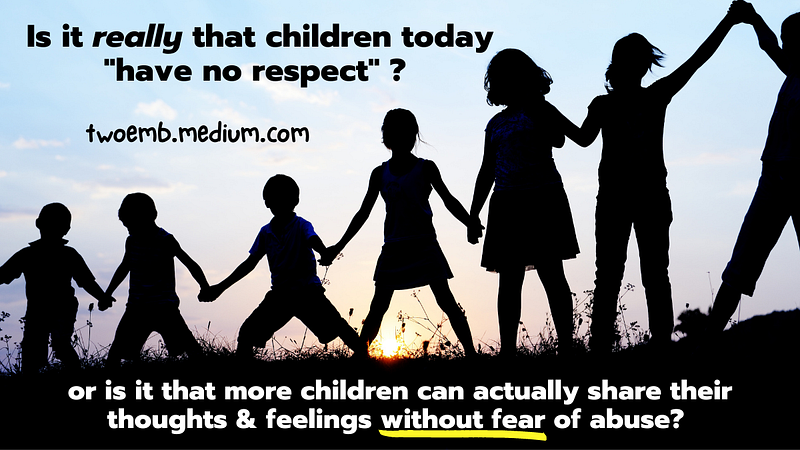
Worse, they turn into adults who did not learn the skills needed to regulate their own emotions and behaviours, aside from stuffing them until they explode. These are often the adults who say they were spanked as children and “turned out fine”.
Many of these same adults proceed to bully and insult me in the comments sections of my articles, declaring that my child will grow into a teenager who pushes me around (or worse), when I advocate for approaches that are kinder and more effective than punishment.
It makes no sense and it’s hypocritical. Teach our children not to be mean by being mean to them and making them afraid of us?
“If they don’t make good choices, we punish them until they remember to be kind… I am going to be unkind to you in the hopes that you snap out of it, and in the future, do the exact opposite of what I am doing to you right now.” — Dr. Jody Carrington
Emotional co-regulation
So many of Circe’s stories about her daily life with her son resonate with real-life parenting experiences. How her son demands her attention every moment. Then when he became headstrong and pushed her away, she tried to get something accomplished. As she began her work, suddenly there he was, demanding her attention again.
Later, the mom-guilt. When her child was sleeping Circe would tell herself “tomorrow I will do better.”
The struggle is real, even for a greek goddess.
Trying to keep her cool was the biggest struggle of all.
“Like a spell after all, but one that I had to cast upon myself. He was a great river in a flood, and I must have channels ready every moment to safely draw his torrent.”
The author, Madeline Mills, must be a parent. These sentences so beautifully and poetically illustrate emotional co-regulation they stopped me in my tracks. Circe describes what it means to be a calm and loving presence for our children when their emotions run wild. To do so in a book about greek mythology is very impressive indeed.
Circe uses those painful memories of her childhood to help self-regulate when she feels herself losing patience with her son. She understands that her son needed to be free to be himself, free to know the joys of childhood, but it is so very hard on her — as it is on many of us as parents.
“I clutched that thought like a spar that would save me from the waves… when he stared at me, furious and defiant… I would think of it and take one more breath.”
When I picked up this book never did I think I would find such powerful parenting advice, and from a greek goddess no less.
© Jillian Enright, Neurodiversity MB
More for Fiction Lovers
Related Stories
When you join medium, as a member you’ll have access to unlimited reads for only $5 per month. If you use my referral link, I’ll earn a small commission, and you’ll earn my undying gratitude.

More literature reviews
References
Carrington, J. (2020). Kids These Days: A game plan for (re)connecting with those we teach, lead, and love. IMpress Books.
Miller, M. (2018). Circe. Little, Brown and Company.


