Festivals of India — A Sneak Peek
For ANYONE interested in India, its rich culture and heritage.
The Great Land of India
“India is the cradle of the human race, the birthplace of human speech, the mother of history, the grandmother of legend, and the great grand mother of tradition. Our most valuable and most artistic materials in the history of man are treasured up in India only!”
- Mark Twain
The annals of history paint India as the world’s wealthiest nation, up until the 18th century. Her riches and prosperity attracted many a wanderer and invader to her lofty shores. But no riches can compare India’s true wealth that abounds in her knowledge of spirituality, thirst for self-realization and relentless search for God, through Yoga*. Those are India’s real gifts to the modern world. In a world torn asunder by hatred, politics, and greed, India is a shining beacon and an epitome of the harmonious co-existence — of people of different races, religions, and castes, in 29 states and 7 union territories — made possible by its devout upholding of religion and spirituality.
Enter Hinduism, the most practised and prolific religion in the Indian sub-continent. The practice of Hinduism’s tenets is demonstrated in one common thread that weaves the different states and its people into one magnificent social fabric of community and camaraderie. That thread is the festivals of India. They are not outdated rituals; their significance holds water even today.
In India, there are 365 festivals in a year… Almost every Indian festival is connected to the calendar. We want to do something that is conducive to what is happening that day in the solar system. Why this is important, is because, what you call as my body has come out of this planet. The solar system is working like a potter’s wheel to generate this body. So everything that happens to the solar system happens to you in some way. There is a very keen observation of what is happening in the solar system today. Accordingly, we have crafted one kind of celebration and we do those specific things (on that day)
— Sadhguru, a Mystic of India and the Founder of Isha Yoga, in a video on celebrating religious festivals.
Man tires easily of his duties and the monotony of every-day life. He needs to let his hair down, rejuvenate, celebrate and socialize, and festivals provide that perfect platform for him to do so.
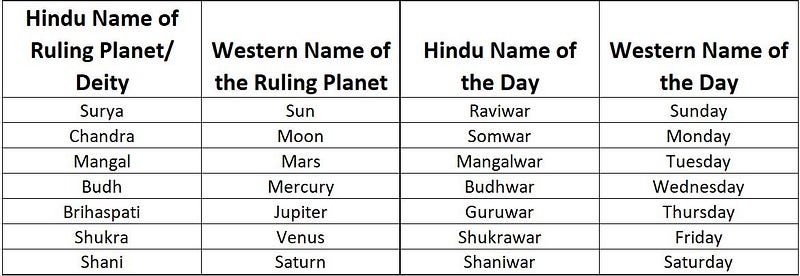
Every single day in a week is dedicated to a specific deity and is celebrated in one way or another by observing fasts, making offerings in temples, singing devotional hymns etc. I attempt to bring to life for you, some of the most celebrated festivals from the great land of India.
“Where Ganges, woods, Himalayan caves, and men dream God — I am hallowed; my body touched that sod.” - Paramhansa Yogananda, Father of Yoga in the West, in his poem, My India
The Hindu Calendar and Gregorian Calendar — A Comparison
Before delving into the most popular festivals of India, let’s compare the Indian Hindu calendar with the Gregorian calendar, which is used by most of the Western world.
The Indian Hindu calendar differs significantly from the Gregorian calendar in that it does more justice to the phases of the moon in relation to earth’s rotation around the Sun, unlike the Gregorian calendar which is entirely partial to the latter. 365 days, 5 hours, 59 minutes and 16 seconds, which we call a year, is the amount of time the earth takes to complete one revolution around our favorite star. To make up for those extra 5 hours, 59 minutes, and 16 seconds each year, the Gregorian calendar adds an extra day in February every fourth year, called a leap year.
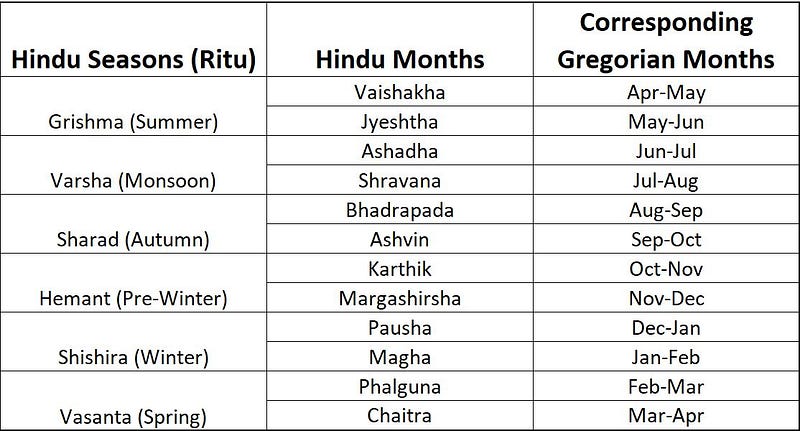
The Hindu calendar, on the other hand, is a lunisolar calendar, which means it has lunar months which coalesce into a solar year. Unlike the Gregorian months which have 31 and 30 days alternately (except February), Hindu months are more integral to the moon’s 29.5-day cycles (rotation around the earth) and have precisely 29.5 days uniformly. 29.5*12 equals 354, and so, we fall 11 days short of the solar year of 365 days. To make up for this mismatch, the Hindu calendar adds an extra month every 2.71 years. It is called Adhikmaas (‘adhik’ means extra, and ‘maas’ stands for a month). This ensures that the seasons in a year, which are dictated by the solar cycle, remain intact in this lunisolar calendar. Due to this difference of 11 days, the dates of all the Hindu festivals fall on different days every year.
The twelve Indian months are divided into six seasons based on agricultural cycles and the weather conditions. Every month consists of 15 lunar days of the waxing and the waning phases of the moon each.
The Pantheon of Indian Gods
India has two million Gods, and worships them all. In religion all other countries are paupers; India is the only millionaire. — Mark Twain
Hinduism is not based on the teaching of any particular prophet; it is rightly referred to as Sanatan Dharma (eternal religion). Brahma, Vishnu, Mahesh (Shiva) and Shakti are the four main Gods at the core of Hinduism. All other deities are either related to or forms (incarnations) of these four.
The practice of Idol worship exists to provide neophytes with a prop to focus their devotion and prayers on. It is hard for a beginner to visualize God as the Infinite, Omnipotent, Omnipresent, Cosmic Spirit. So idol worship is the simplest form of worship which even a child can practise.
Most Popular Indian Festivals
Below are some of the most famous festivals of India (that I will cover in separate blog posts for each festival).
- Raksha Bandhan — A celebration of the brother-sister bond.
- Gudi Padwa/ Ugadi — Celebrated as the first day of the Hindu year in the states of Maharashtra, Andhra Pradesh, Telangana and Karnataka.
- Rama Navami — The day on which Lord Rama was born.
- Hanuman Jayanti — A commemoration of Lord Hanuman’s birth.
- Guru Purnima — The day of worship of one’s Guru.
- Navaratri — A festival dedicated to Goddess Durga.
- Dussehra — A celebration of the victory of Lord Rama over the asura (demon) Ravana and the triumph of Goddess Durga over Mahishasura.
- Diwali — A fiesta of lights spread over five different days-each day being a festival in itself.
- Makar Sankranti/Pongal — A day selected for the worship of the Sun who is considered a God.
- Maha Shivratri — A night anointed to Lord Shiva.
- Ganesh Chaturthi — A social celebration of Lord Ganesh.
- Holi — The festival of colors.
Commonalities in Celebrations
Traditions
People get up early in the morning, preferably at Brahma Muhurta (the period one and half hours before sunrise), which is considered the best time to wake up, to maintain the stability of your body. After waking up, it is advised to freshen up and have a bath because water — one of the five elements — cleanses your aura. After this, people engage in prayers, recitation of mantras, holy verses or meditations. Brahma Muhurta is also the best time of the day to engage in spiritual practices.
Attire
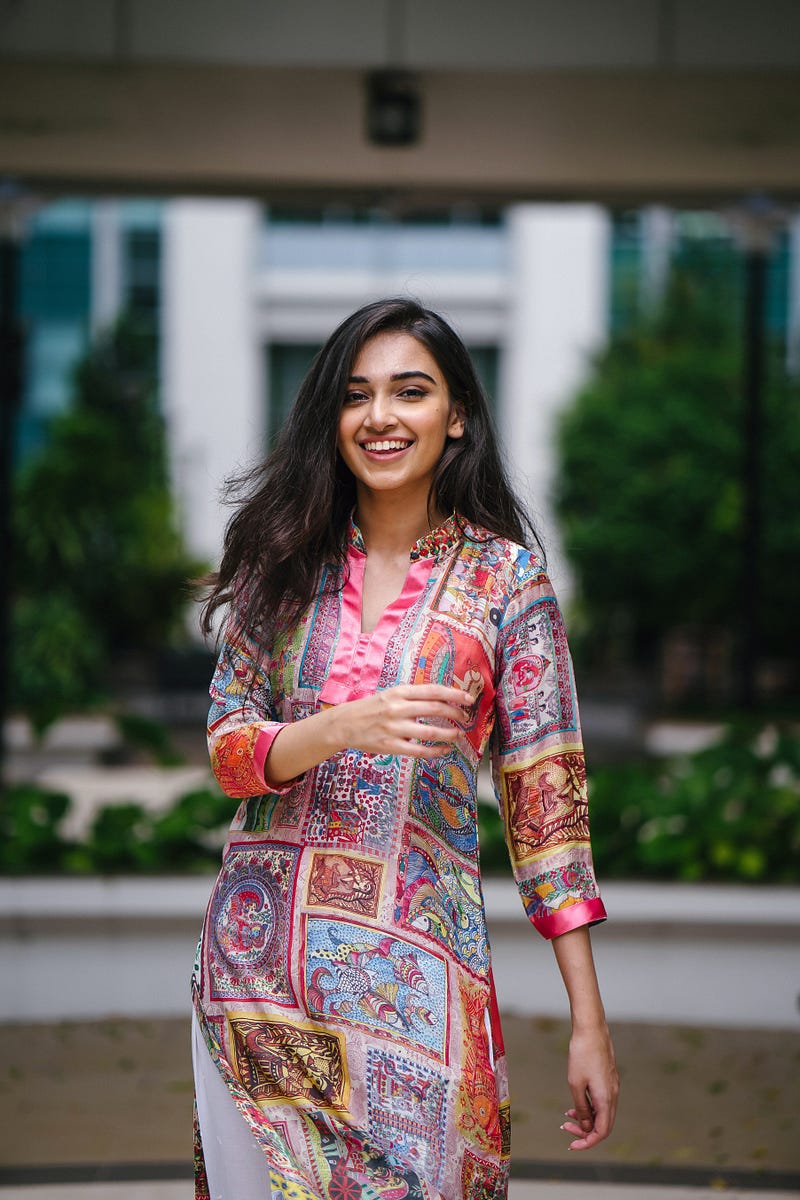
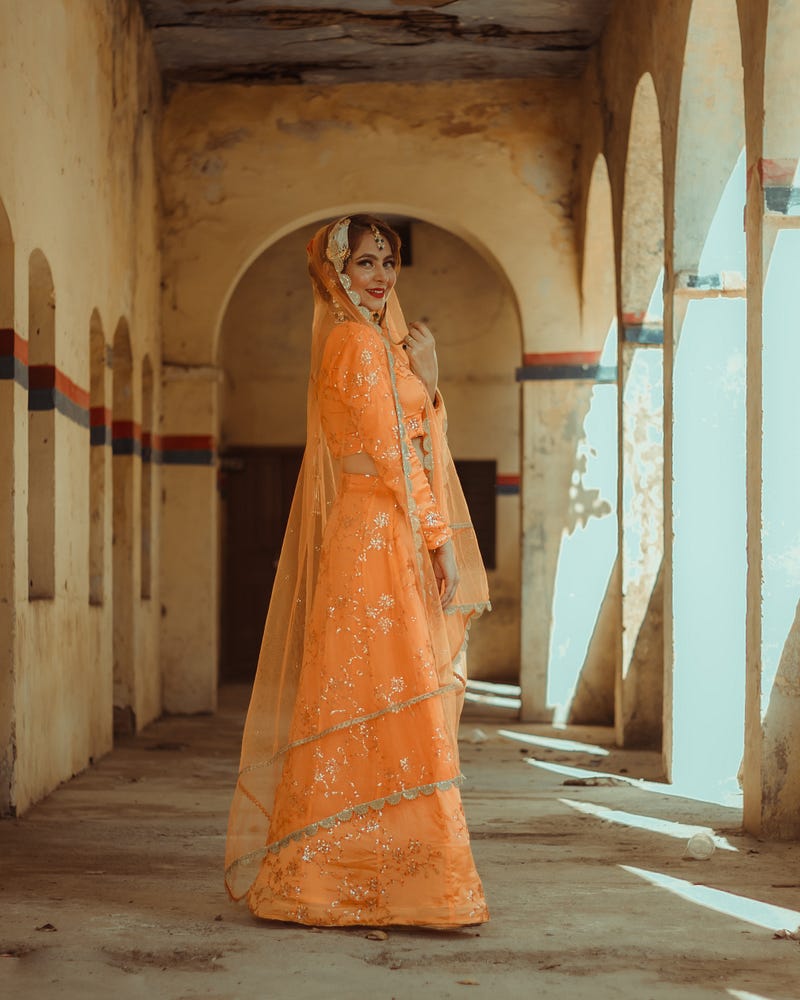
Wearing new clothes is a ubiquitous tradition for celebrating most of the festivals. Traditional wear for women comprises of sarees, salwar kameez, ghagra, lehengas etc. No Indian garb is complete without necklaces, earrings, bangles and bindis (red dots worn between the eyebrows) or nose rings. It’s more the merrier.

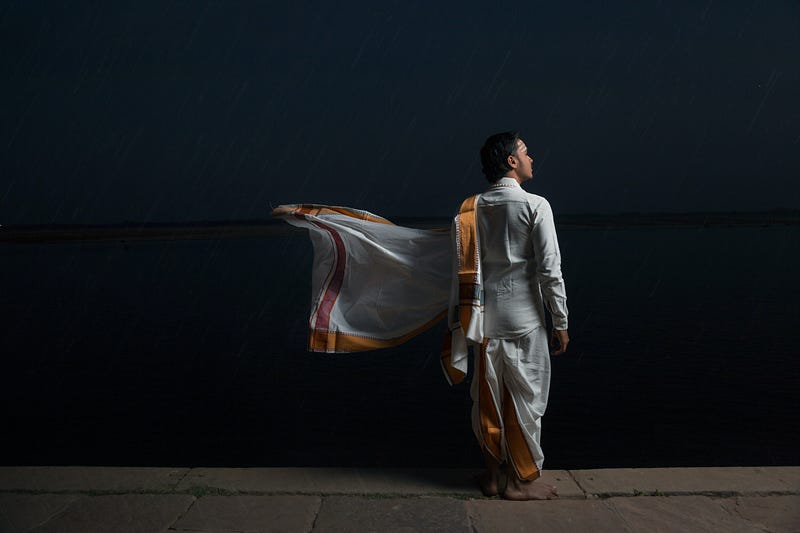
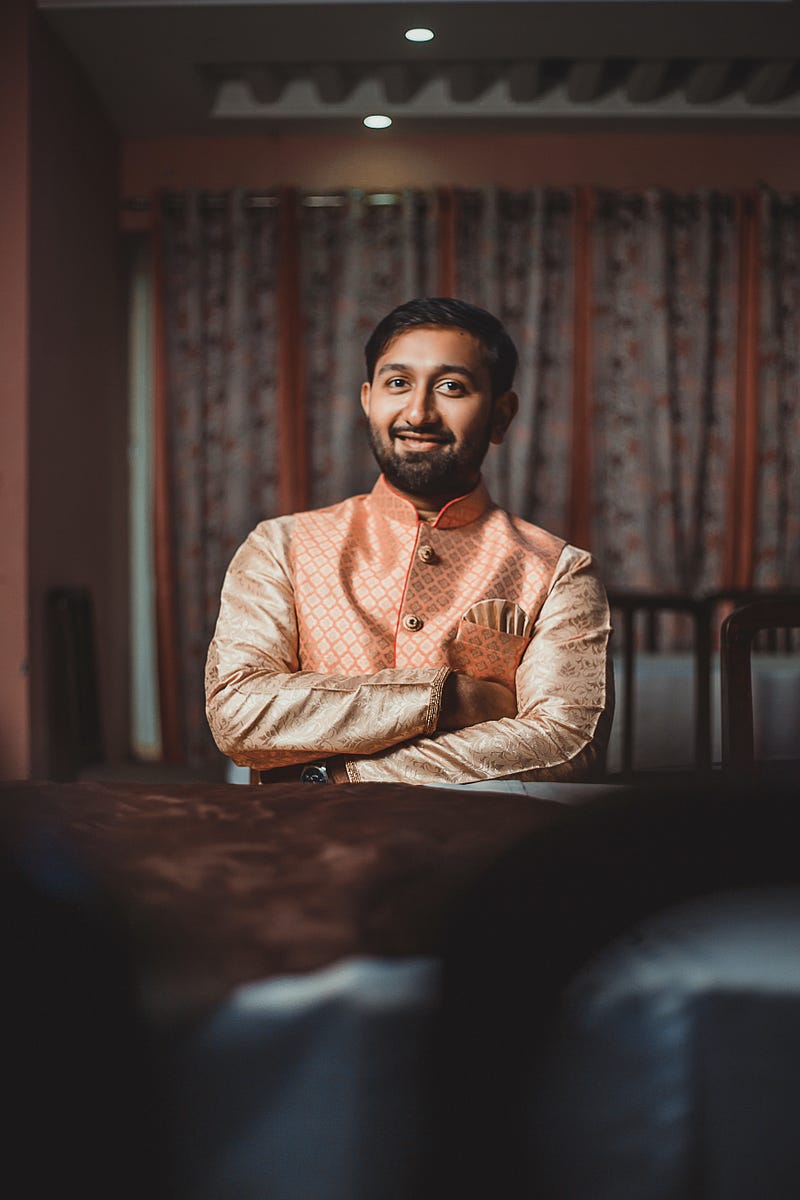
Men dorn kurta pyjamas, sherwanis, or the more archaic dhotis.
Food
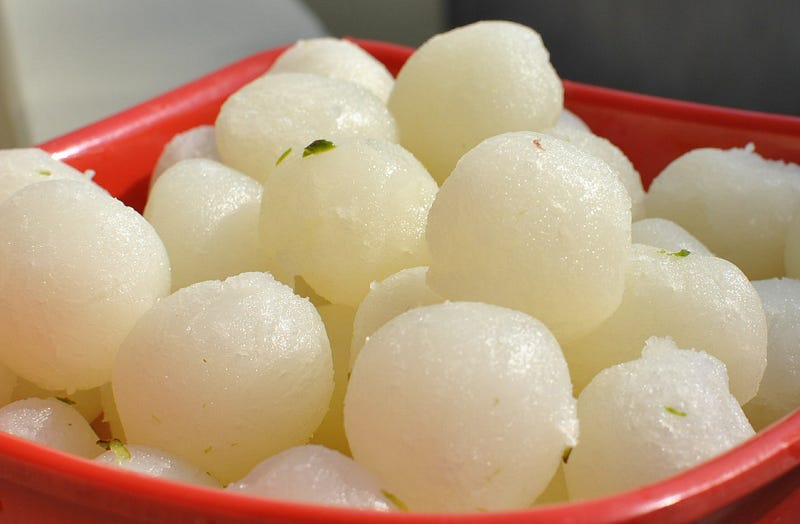
No festive celebration is complete without scrumptious food in tow. Delicacies are so synonymous with festivities that sometimes children wait all year long to enjoy their favorite sweets on certain festivals. Below are some specific sweetmeats prepared on some specific festivals.
- Gudi Padwa — Shrikhanda (sweetened thick yoghurt made in several flavors such as saffron, cardamom, pistachios, mango or strawberry)
- Ganesh Chaturthi — Modak (steamed rice dumplings filled with coconut and jaggery)
- Holi — Puranpoli (Indian wheat bread stuffed with mashed lentils and jaggery)
- Janmashtami — Milk-based sweets which were Krishna’s favorites
- Navaratri — Rasagulla or Gulab Jamun (Bengali sweets, which are variants of cottage cheese/milk powder balls dipped in sugar syrup)
- Makar Sankranti — Tilgul ladoos (Sesame and jaggery balls or cubes filled with dry fruits)
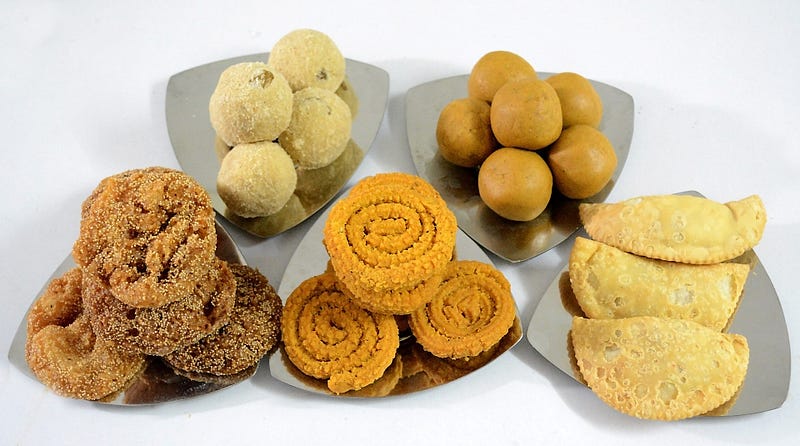

Nowadays many people celebrate festivals like “holidays” and sleep in late, binge-watch T.V. shows or go to the movies and order pizzas. This is their way of relaxing, but it defeats one of the vital purposes behind festivals which is to allow people to enjoy physical as well as spiritual rejuvenation.
We must just grab any excuse to celebrate life — celebrate life, for anything, it doesn’t matter. What happens when there is celebration? Energy levels rise and all the baggage that we carry from the past in our head drops away.
Celebrating is not just cutting cakes, bringing balloons, lighting fire crackers or opening champagne bottles, that is not celebration. Celebration is when your spirit wakes up from inside, it is when you are totally in the present moment, at peace and in love — that state is what celebration really is, and what comes out of it is creativity. — Shri Shri Ravi Shankar, Founder of Art of Living
Festivals, if celebrated in the correct scientific and spiritual way, afford a much-needed upliftment for society. So, bring out your fancy new clothes, ornaments, recipe books and spread the love in this festive season of Shravana.
If you’d like me to cover any popular festival that I might have missed, comment and let me know. I’d be happy to write about it.
Here’s where you can follow all my stories about the Festivals of India.
Manasi is a writer, poetess, practising yogi, and travel enthusiast who loves humor. You can find her on Twitter @Manasi_K99.
Appendix
- *Yoga — Yoga refers to the eight-fold path of Yoga given by Patanjali in which Hatha Yoga — the physically exacting exercises that have come be known as Yoga in the West — is only the first step towards achieving enough dexterity to command the body to sit with an erect spine in preparation for long hours of meditation.
- ^Vishnu has taken ten known avatars till date-Matsya(fish), Kurma(turtle), Varaha (boar), Narasimha(half man-half lion), Vamana(dwarf), Parashuram(warrior), Ram(King of Ayodhya and the protagonist of Ramayana, Krishna(Central character in Mahabharata and the reciter of Bhagavad Gita), Buddha(founder of Buddism), Kalki(foretold to be born at the end of Kali Yuga).
Indian Gods
- Brahma — Creator of the universe, and yet isn’t worshipped by the Hindus, due to a curse given to him by none other than Shiva.
- Vishnu^ — Preserver of the universe.
- Mahesh (Shiva ) — Destroyer of the universe, also called the Mahadev (lit. “the great God”).
- Shakti — Universal Cosmic energy, or the Divine Feminine.
- Saraswati — Wife of Brahma and a representation of Shakti, goddess of education, knowledge, learning, wisdom, speech, music and art.
- Lakshmi — Wife of Vishnu and a form of Shakti, goddess of wealth and prosperity.
- Parvati — Wife of Shiva and an avatar of Shakti representing power, energy, creativity and the motherly qualities of Shakti.
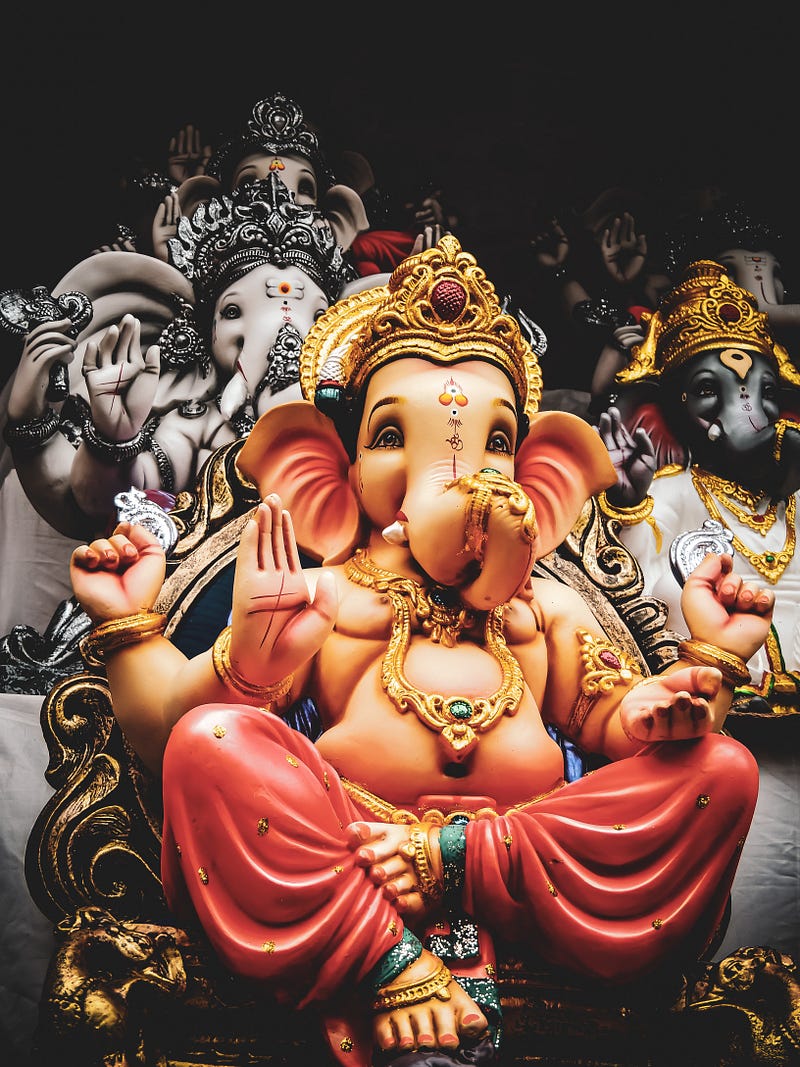
- Ganesh — Son of Shiva and Parvati, Elephant-God, the remover of any obstacles and the first deity to be worshipped before starting any new venture or rituals.
- Krishna — Eight avatar of Lord Vishnu, and a chief influencer in Mahabharat (an ancient text written by Sage Vyas about the fight between the Pandava and Kavrava brothers that led to the bloodiest battle on Indian soil).
- Rama — Seventh avatar of Vishnu, King of Ayodhya, the protagonist of Ramanyana (ancient text scripted by Sage Valmiki, depicting the battle between good Lord Rama and the evil Ravana, who had kidnapped Rama’s wife, Sita)
- Hanuman — Foremost devotee of Lord Rama and a brahmachari (a male who’s taken a vow of celibacy). One of the pivotal characters of Ramayana who helped Rama immensely in rescuing Sita from Ravana’s clutches.
- Buddha — Ninth avatar of Vishnu, and the founder of Buddhism.
- Indra-King of the Heavens and God of lightning, thunder, storms, rains, river flows, and war.
- Navagrahas- Navagrahas are the nine heavenly bodies (also considered as deities) that affect life on our planet — seven of them have a particular day of the week associated with them. The other two are called Rahu and Ketu — the north and the south lunar nodes respectively.