
British Network Television
‘Father Brown’: S03.E05. “The Last Man”
The new captain being arrested causes some issues for Kembleford’s cricket team
Opening with a scene depicting the most quintessential of English sports, cricket, memories of playing an all-rounder on a team came back to me like it was yesterday. Whilst cricket isn’t a sport typically seen in these United States, located in only a few areas of the country, it might be considered a tad too slow for Americans. Despite this point, noting the slowness of both baseball and American football, cricket seems relatively fast paced.
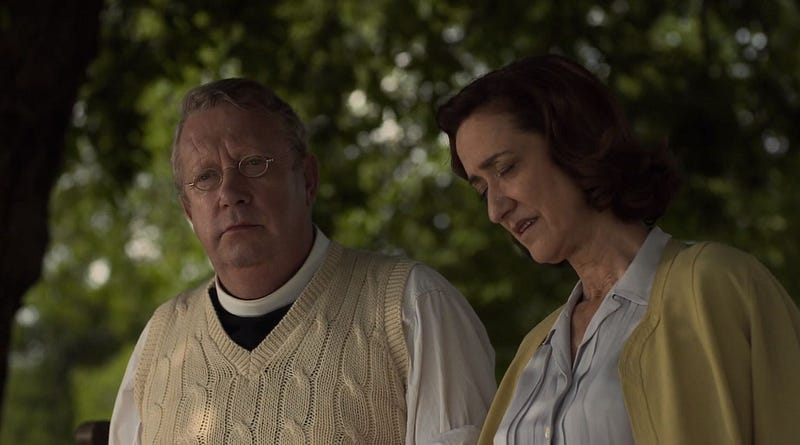
Shortly after one of the players returns to the cricket pavilion, noting a sudden gunshot sound emanating from the building, there is obviously something seriously wrong. Father Brown (Mark Williams) stops Professor Jane Milton (Haydn Gwynne) from entering because he is fearful of what she might find.
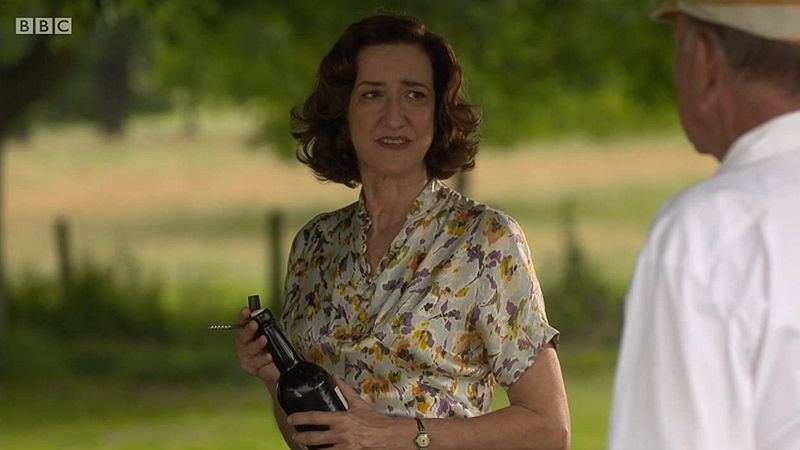
The episode, immediately after the opening credits, jumps a year. There is a memorial bench in honour of Charles Milton at the cricket ground. Charles, an avid cricket player, was the captain of the Kembleford Cricket Club. Father Brown offers a prayer. Professor Milton, noting how her brother was a devout Atheist, immediately stops the Catholic priest in his tracks and offers a bottle of Chateau La Pointe as an acceptable substitute.
The state of the cricket team, as Major Peter Wallander (Tom Chadbon) sees it is problematic. There is no captain and the chairman is AWOL. Momentarily, in the background, Professor Milton witnesses an uncomfortable exchange of words between Vince Lennon (Robbie O’Neill) and Daphne Wallander (Perdita Avery). Mr Lennon’s tone suggests he wants more than good luck wishes from Major Wallander’s young wife.
Even though Father Brown tells everyone he did some wicket keeping in his seminary days, recognising the lack of a positive response, it doesn’t look like the offer to play was taken seriously. With Lord Montague being away, not pleasing Major Wallander, Professor Milton suggests that Lady Felicia Montague (Nancy Carroll) step in as chairwoman.
Major Wallander, expressing a clearly misogynistic view, doesn’t seem to think a woman can do the job. What could Lady Felicia possibly know about cricket? She obviously knows more about the sport than the retired major.
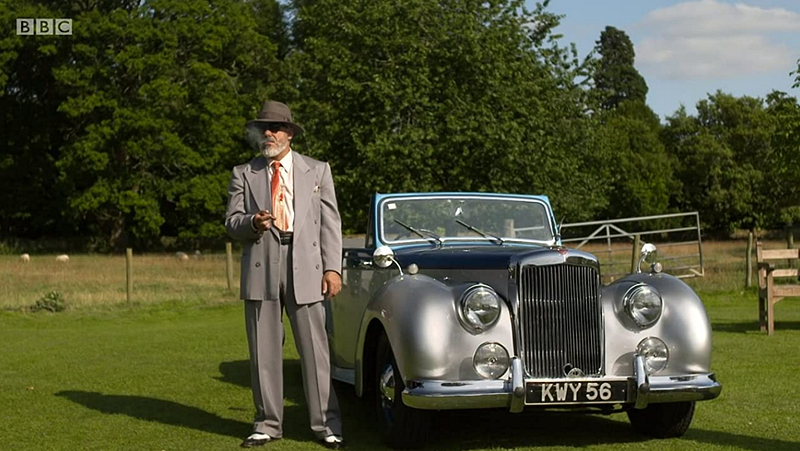
The arrival of a brand new high end car should, noting the driver is Max Scullion (Darrell D’Silva), should be cause for concern for the Kembleford Cricket Club. The Kembleford Cricket Club is playing against his team.
Inspector Sullivan (Tom Chambers), no stranger to a good game of cricket, asks Professor Milton why it is the cricket ground is named Hambleston CC when it is clearly geographically in Kembleford. The land where the cricket ground sits, according to the professor, was once the site of a boundary dispute between Kembleford and Hambleston.
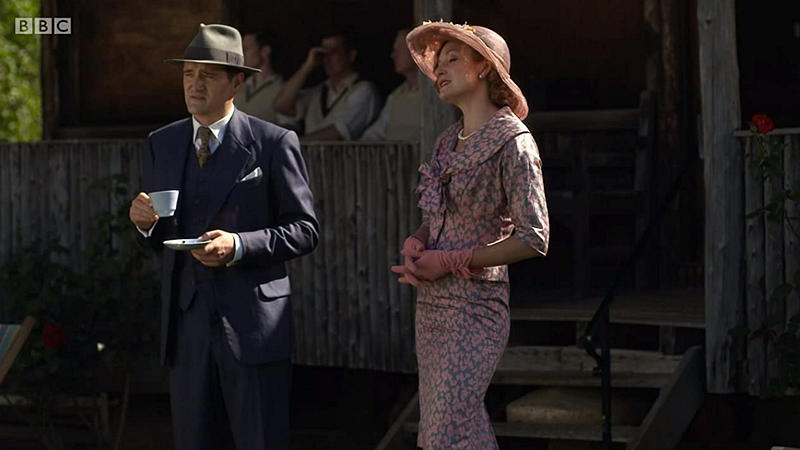
Generations of infighting, Lady Felicia notes, resulted in both sides reaching a gentleman’s agreement where the winning cricket team would take ownership of the land for the following year. Each year, as Lady Felicia correctly observes, the winning team would be responsible for the ground.
Noting how no comment made in a Father Brown episode is either accidental or a throwaway line, when Mr Scullion references the Hambleston Cricket Club having beaten Kembleford nine years running, there must be a reason for it. The comment regarding the Kembleford team playing badly, compared to his own men, is also cause for concern. Even though Mr Scullion isn’t a cricketer, noting the talent on his team, questions should be asked about the legitimacy of his so-called non-professional team.
Later, a visit that doesn’t go unnoticed by Major Wallander, Mr Lennon briefly visits with Mrs Wallander. Even though what was said isn’t heard by the major, noting how Mr Lennon holds Mrs Wallander’s hand, there is the suggestion of intimacy between them. This intimacy is quickly established as being one sided as Mrs Wallander doesn’t want anything to do with the young cricketer.
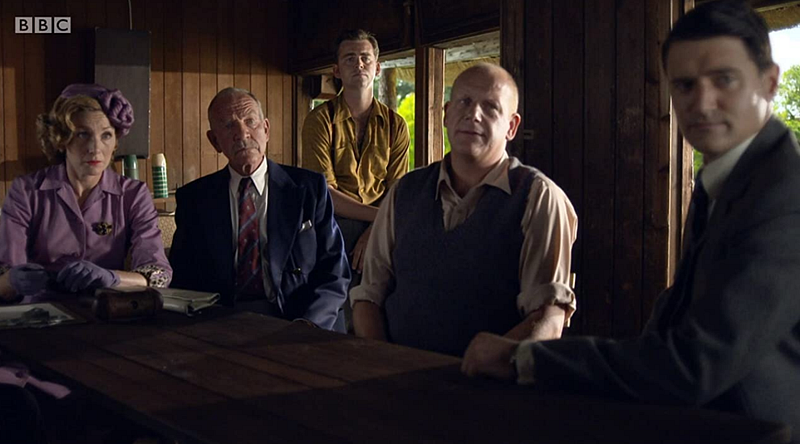
At the cricket pavilion, with the Kembleford team down to eight men, Father Brown once again offers his services. Facial expressions, especially from Inspector Sullivan, Sergeant Daniel Goodfellow (John Burton), and Lady Felicia, suggest more than a lack of interest.
Dr Raj Chandraty (Abhin Galeya), Doctor Fairfax’s locum arrives, and introduces himself to Lady Felicia. Mrs Bridgette McCarthy (Sorcha Cusack) had apparently told the doctor Lady Felicia was looking for cricketers for the team. Major Wallander questions Dr Raj Chandraty’s suitability to play with the team. Inspector Sullivan, immediately noting more than a hint of racial bias in Major Wallander’s voice, jumps to the doctor’s defence.
Lady Felicia recognises Dr Raj Chandraty, with him having previously captained the University of Calcutta 11, ability to lead her team and gives him the captaincy. Major Wallander, noting how he previously expressed misogynistic views, can add racist to his descriptor.
Not wanting Dr Chandraty as captain, continuing his earlier tone, Major Wallander suggests Inspector Sullivan for the post. With a modicum of annoyance in his voice, because he knows a racist when he sees one, the police inspector seconds Lady Felicia’s proposal.
Major Wallander, rather than shake Dr Raj Chandraty leaves the pavilion without a word said to anyone. This unacceptable display doesn’t go unnoticed by Lady Felicia or the doctor.
Soon thereafter, with Mr Lennon arriving at the pavilion late, Major Wallander has sharp words with him regarding his tardiness. Major Wallander, remembering what he saw earlier with his wife and Mr Lennon, fires the young cricketer as he doesn’t want him sniffing around the house.
It quickly turns out, when Mr Lennon makes an unacceptable comment, Major Wallander isn’t the only racist in Kembleford. Whilst Mr Lennon states there was no offence intended, if that was the case, he wouldn’t have made the comment. Inspector Sullivan confirms his position on racism when he challenges the young man to watch his lip.
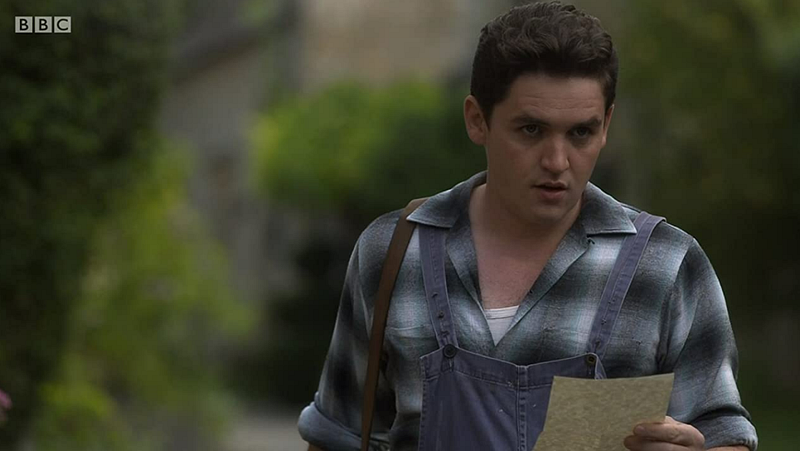
Later, somewhere in Kembleford, Mr Lennon finds left on his bicycle a typed letter telling him to be at the cricket pavilion so he can collect £500. The letter doesn’t directly address what the matter is that is being settled. It also doesn’t show the name of the sender.
That night, when Mr Lennon arrives at the cricket pavilion, he finds everything very quiet. According to the clock on the wall, near the trophy display cabinet, the time is approaching midnight. It is possibly one minute before midnight. Behind Mr Lennon, in the darkness, we catch sight of a gun with a compressor attachment. Mr Lennon is shot in the back. There is no sight of the shooter.
The following morning, with Mrs McCarthy leading the way to the cricket pavilion, Mr Lennon’s body is discovered. On a side note, not that it matters, one must ask if Mrs McCarthy knows how to make anything other than her award winning strawberry scones. That is the only thing she ever seems to make.
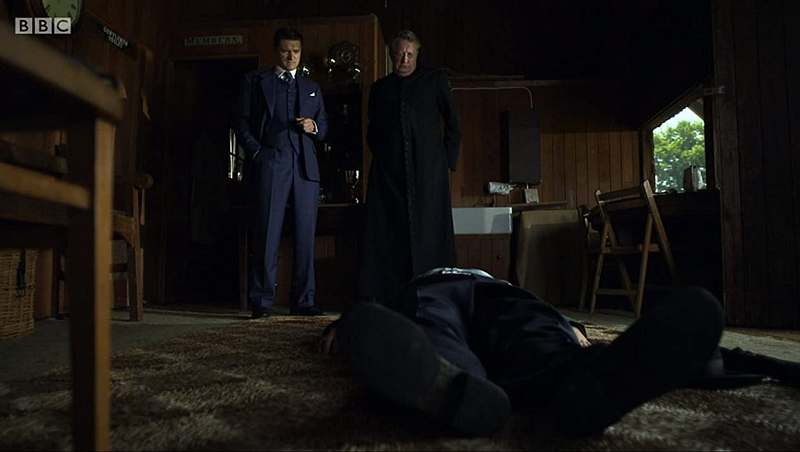
The next time we find Father Brown and Inspector Sullivan in the same room, the Catholic priest has just finished last rites. Noting Inspector Sullivan is starring directly at the wound, Father Brown tells the police inspector he was thinking the same thing.
Recognising the body had been turned over, ignoring Inspector Sullivan’s sarcasm, Father Brown correctly notes it is an exit wound they can see on Mr Lennon. The police inspector, after telling the Catholic priest he wants to draw his won conclusions, is surprised to learn from Father Brown that Mr Lennon’s next of kin is Professor Milton.
At the Milton residence, as tea is being poured for Inspector Sullivan and Sergeant Goodfellow, Professor Milton tells them how Mr Lennon came into her life as a war evacuee. He was apparently eight-years-old when the professor took him in to her home. The police inspector, even though he observes something physically wrong with the professor, doesn’t speak of his observation.
Professor Milton and her brother adopted him after his parents died in a bombing raid. As a child, because of the abuse suffered, Professor Milton believes Mr Lennon was damaged. She hoped that nurture could somehow triumph over nature.
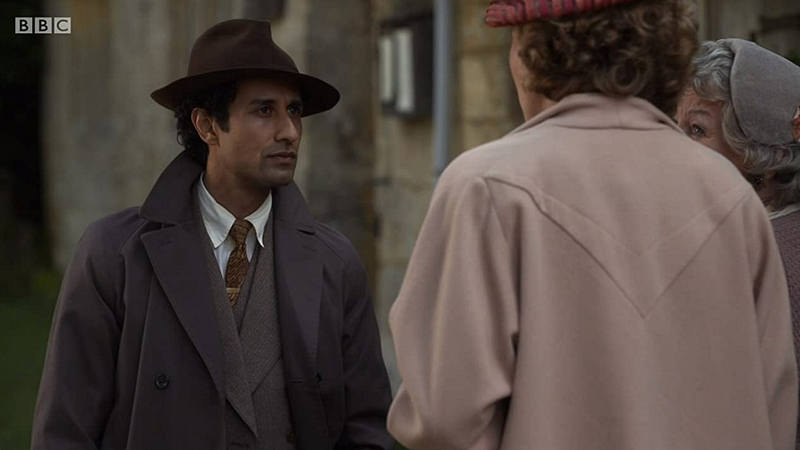
Elsewhere, speaking with Lady Felicia and Dr Chandraty, Mrs McCarthy suggests that Mr Lennon collected enemies like other people collect stamps. Personally, having grown up collecting stamps, I can see what Mrs McCarthy means. Lady Felicia, noting how the team’s fast bowler is dead, looks to Dr Chandraty and Inspector Sullivan for that extra bit of pace.
Father Brown assists Professor Milton with arranging Mr Lennon’s funeral. The catholic priest correctly observes that the professor isn’t the type of person that cares for contemporary convention. Father Brown is curious why Mr Lennon owned a missal when he hadn’t celebrated mass since he was 16-years-old.
The professor, not having an answer, also finds it perplexing. A list hidden inside the book, noting the presence of initials and monetary amounts, suggests Mr Lennon was involved in something duplicitous. Blackmail is the only possible answer. The letter Mr Lennon received is also there. Father Brown, speaking of a specialist, references the professor’s declining health.
Professor Milton would rather not give the list or the letter to the police because, even if one of the blackmailed victims is the murderer, the other people on the list will see their personal lives investigated. There are many secrets which these people would rather kept hidden from the world. It would mean, as the professor sees it, ruined lives. Father Brown, not having a response, clearly sees the professor’s perspective.
Later, at batting practice, we find Lady Felicia conversing with Sidney “Sid” Carter (Alex Price) regarding the coming match against Hambleston Cricket Club. The men practising their cricket skills are part of Mr Scullion’s new team.
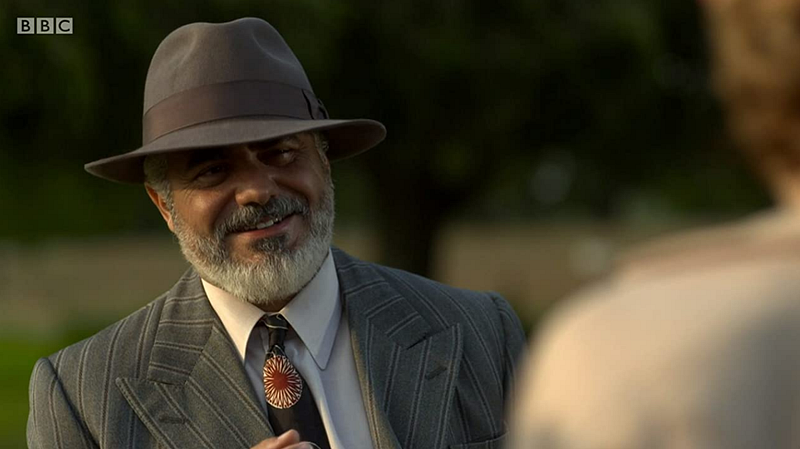
When Lady Felicia asks if his cricketers are local men, without missing a beat, the newcomer reveals they are Australian cattlemen that had been hired to work on his estate. It doesn’t take long for Lady Felicia to remember Mr Scullion doesn’t have any cattle on his estate. When Lady Felicia introduces the new captain, Dr Chandraty, Mr Scullion notes he’s not the only one with a foreigner on his team.
The scene transitions to Montague Hall. Father Brown, noting how Mr Scullion has Australian ringers on his team, is curious why it is he would go to so much effort to win a local village cricket match. At supper, seemingly interested in the murder investigation, Mr Scullion asks Inspector Sullivan if the weapon had been located. It is here that Mr Scullion makes a second remark regarding the Kembleford team having lost nine consecutive matches to Hambleston.
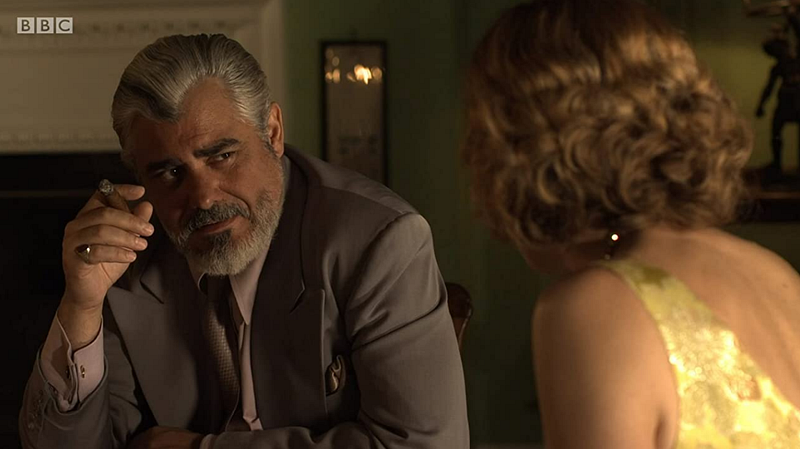
Mr Scullion, referencing the original articles of 1783, suggests to the professor and Lady Felicia that they do a little light reading. A tenth defeat to Hambleston would mean that the Kembleford team would lose the cricket ground in perpetuity. The articles, with both villages having shared the cricket ground for centuries, has been recognised by both sides as a gentleman’s agreement. Mr Scullion doesn’t regard himself a gentleman.
Major Wallander, obviously not knowing that he’s talking about, is dismissive of his wife as he believes she had been carrying on an affair with the late Mr Lennon. The retired major refers to the evidence of his own eyes as if it means something. Jumping to conclusions based on a partial observation isn’t evidence of anything.
The retired major, noting his reaction to seeing the Catholic priest, obviously doesn’t care for Father Brown. Major Wallander, commenting on Lady Felicia and Dr Chandraty, once again expresses his misogynistic and racist views. No one in polite conversation refers to anyone as being a “darkie.”
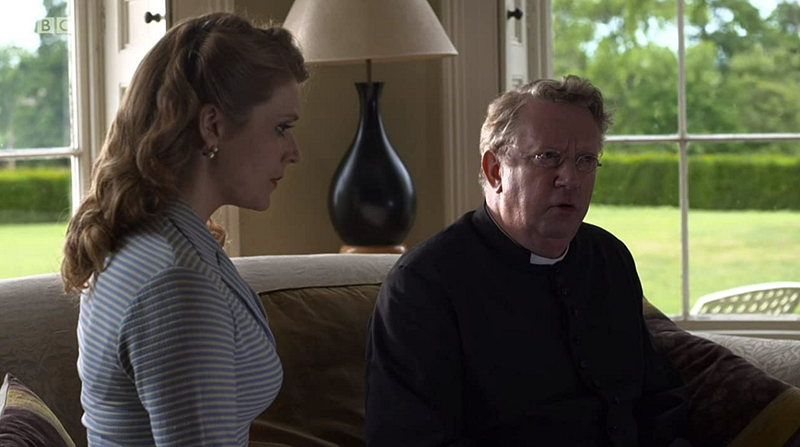
Father Brown tells Major Wallander that Mr Lennon was blackmailing people in and around the village. This information doesn’t surprise the retired major as he always believed Mr Lennon was crooked. It quickly occurs to Father Brown that one of the person Mr Lennon was blackmailing before his death was Mrs Wallander.
Out of earshot of Major Wallander, Father Brown abruptly asks Mrs Wallander how long Mr Lennon had been blackmailing her. The Catholic priest, having heard Mrs Wallander refer to herself as being Little Bear, figures out the initials found in Mr Lennon’s list pertain to nicknames.
Mr Lennon, because Mrs Wallander had a certain sexual history, saw her as a prime target. She tells Father Brown that her first husband died during the war. Major Wallander, having no idea about her past, rescued her and brought her to the village.
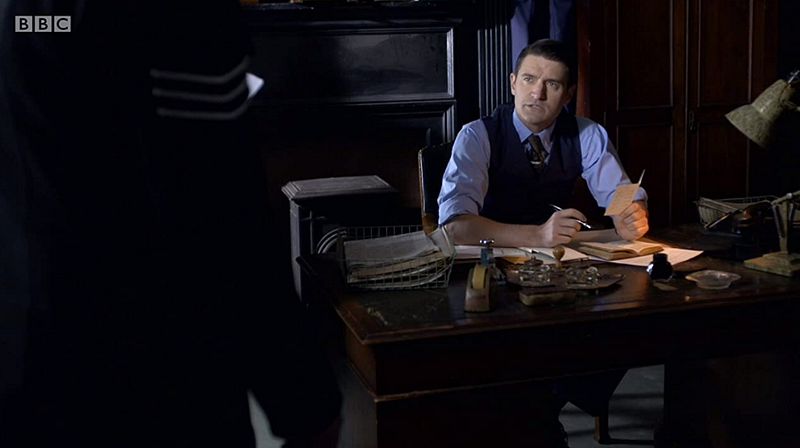
Inspector Sullivan, at Kembleford Police Station, is reviewing Mr Lennon’s list when Sergeant Goodfellow enters the office. The sergeant received an anonymous tip pointing towards the doctor as being the possible murderer. The racist tone of the massage, whilst it initially points towards Major Wallander, suggests different person entirely. Which person would benefit from Dr Chandraty being arrested?
That’s an easy question. With the new Kembleford Cricket Club captain in a cell, there is no way for Lady Felicia to field a full team against Hambleston. That narrows the list down to Mr Scullion.
Father Brown, outside the Red Lion, crosses paths with the professor. The Catholic priest enquires to the book. Professor Milton had turned the book in moments earlier. The professor’s health, not what it once was, is much worse than it was earlier in the episode. Whilst this doesn’t escape Father Brown’s attention, the Catholic priest keeps his observations to himself.
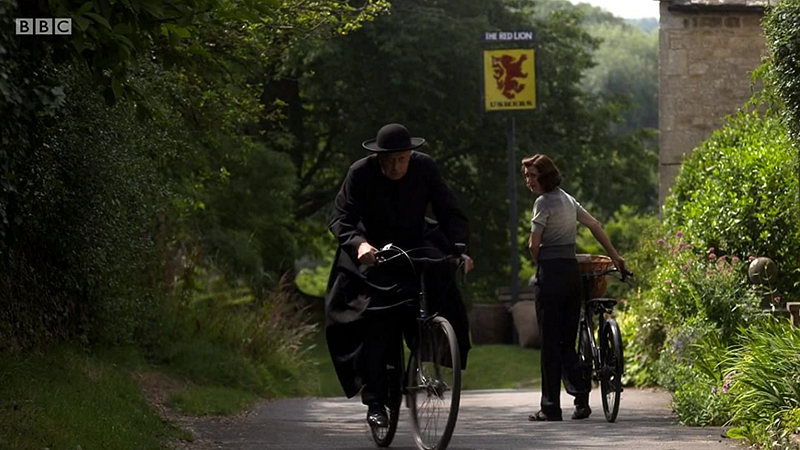
Referring to the list, Professor Milton asks Father Brown if he has been sleuthing. Not wanting to give too much away, something which is characteristic of Father Brown, he does reveal the initials in the list are references to nicknames. Father Brown, not telling the professor, makes an educated guess that PW is Dr Chandraty.
Inspector Sullivan arrives at the doctor’s residence shortly after Father Brown. Whilst it is obvious the anonymous tip brought the police to the doctor’s door, it is also clear Inspector Sullivan has yet to crack the initial code. Sergeant Goodfellow soon locates a gun hidden in the garden.
Elsewhere, walking towards the cricket pavilion, Sid observes Mr Scullion with two men. There behaviour is more than a tad suspicious. This doesn’t look remotely good for Kembleford or the cricket team.
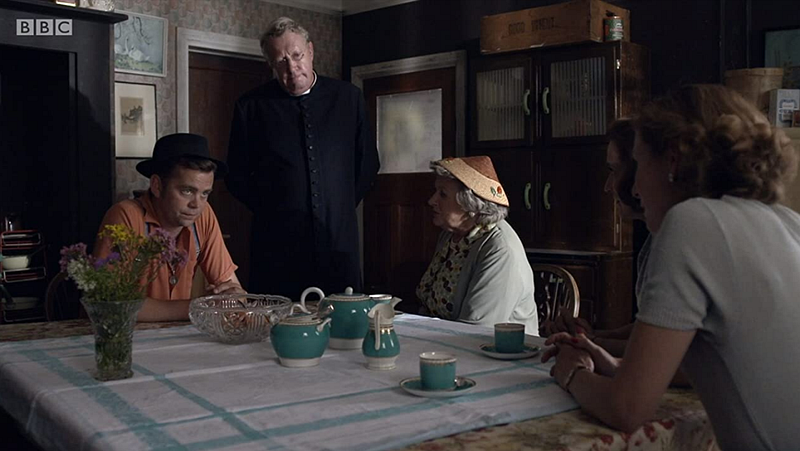
Back at the presbytery, noting how Mr Scullion is doing something duplicitous, Sid is in the process of informing Mrs McCarthy, Lady Felicia, and the professor what he discovered when Father Brown arrives. It turns out the men Mr Scullion were with when Sid saw them all together were land surveyors with the Ministry of Transport.
Mr Scullion is apparently selling off his land for a dual carriageway. The only obstacle between Mr Scullion and his plans is the land he doesn’t own. The only real hope Kembleford has left is the good doctor. Before Father Brown can reveal Inspector Sullivan arrested Dr Chandraty, the scene cuts to the police inspector questioning that same doctor.
Sergeant Goodfellow, interrupting the interview, has a message for Inspector Sullivan from from Father Brown. The police inspector, seeing no alternative, pauses the interview and takes it off the record. Father Brown’s message obviously pertains to Mr Scullion’s deal with the Ministry of Transport.
The police inspector, recognising Mr Scullion having a lot of money riding on the coming cricket match, notes how convenient it was that a gun was found in the doctor’s garden. Until the ballistics report comes back on the gun, with no other option, the doctor must stay at the police station.
The next time we return to the cricket pavilion, with the notable absence of Father Brown, most of Kembleford’s cricket team is assembled. No one is happy about the circumstances surrounding the match. Lady Felicia places Monty on the list of cricketers because he is there is spirit.
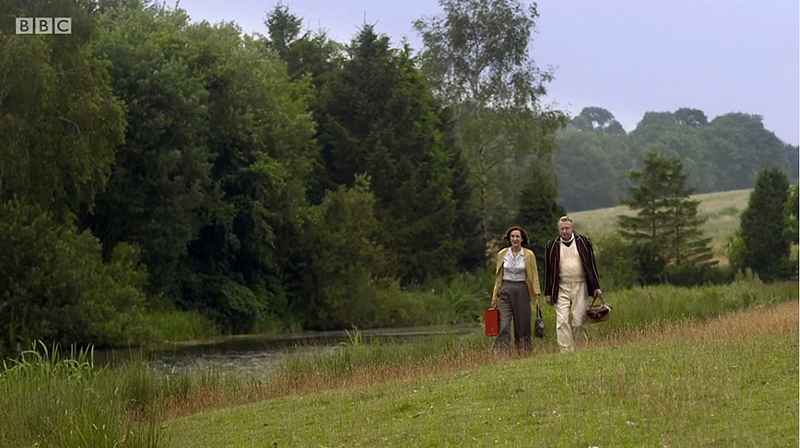
Nearby, walking towards the cricket ground from river’s end, we find the professor and Father Brown conversing. Needing to stop because of an apparent stone in her shoe, as they continue their conversation, Father Brown notices something odd near the river. It’s Mr Lennon’s scarf and hidden within it is a gun and compressor. This is the weapon that was used to kill Mr Lennon.
The cricket match between Kembleford and Hambleston has begun. The uniforms used for the cricket match are period specific. The match doesn’t look like it is going Kembleford’s way. When Father Brown arrives, needing to speak with Inspector Sullivan, the police inspector leaves shortly thereafter. Father Brown is left in the captain’s spot.
With the team needing to make at least 196 runs and it being down to eight men, Lady Felicia is fearful there is no way back. Elsehwhere, at Kembleford Police Station, Inspector Sullivan arrives with a fresh cricket uniform for the doctor.
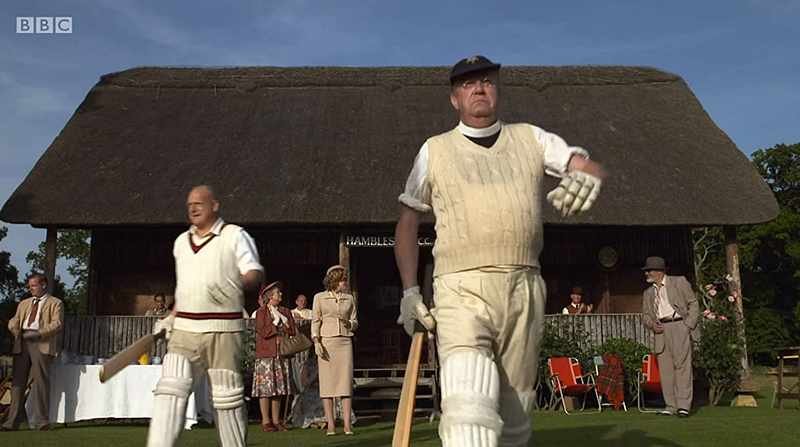
Father Brown, accompanied by Sergeant Goodfellow, walks out onto the cricket ground as if he means business. There is something about his stride that suggests an abundance of confidence. Father Brown is caught out with the first bowl.
With the Catholic priest having returned to the pavilion, with Scullion having commented “bad luck old man,” Father Brown suddenly realises the OM in Mr Lennon’s list is a reference to Charles Milton. Did Professor Milton know Mr Lennon had been blackmailing her brother?
Professor Milton, seated on her brother’s memorial bench, is watching the match when Father Brown approaches her. Father Brown realises that the stone in the shoe trick was merely Professor Milton giving him away to find the gun without her pointing out the obvious. It is here that the Catholic priest reveals he figured out Mr Milton was OM.
The payments from OM to Mr Lennon stopped around the same time Mr Milton took his own life. It’s remarkable how Father Brown didn’t make that connection earlier. Professor Milton hoped it wouldn’t come out. Mr Milton, a very private person, was hiding a secret from the rest of the village. That secret, as Professor Milton worded it, was that “he loved other men.” Faced with living his life as a lie, Mr Milton chose death.
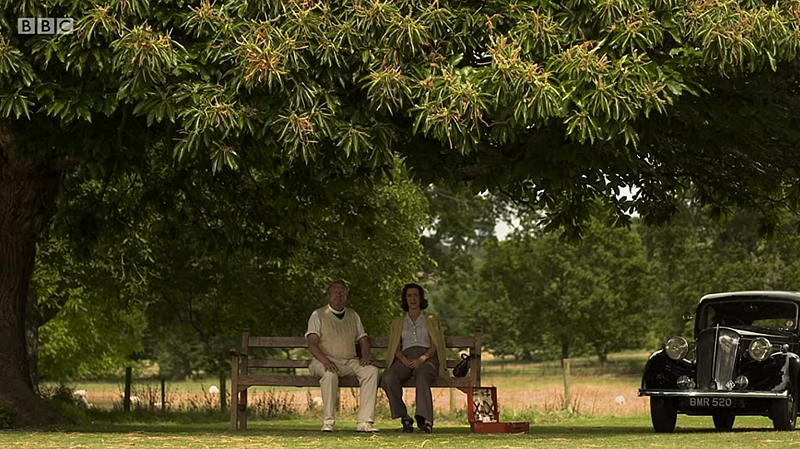
Professor Milton wanted to believe Mr Lennon was sorry for his actions. It was Mr Lennon’s blackmailing of her brother that drove Mr Milton to suicide. Mr Lennon had returned to his old tricks in a matter of weeks. He saw the fear in everyone’s eyes. Professor Milton justifies killing Mr Lennon with a reference to Father Brown’s G-d sacrificing his own son for the greater good.
The professor believes her health, because of a weak heart, will fail her long before the long arm of the law catches up with her. Professor Milton notes that she’s already on borrowed time.
Understanding the Catholic priest can’t endorse what she did, as her most valued friend, the professor hopes there could be at least a modicum of understanding. Mr Lennon was a rotten apple that would have contaminated the entire orchard.
The professor reveals, in her will, she is leaving Father Brown her last bottle of Chateau La Pointe. Father Brown, as we call know, loves a good glass of wine.
With Sergeant Goodfellow having been caught out, even though Mr Scullion notes the team seems out of players, Inspector Sullivan arrives at the cricket ground with the team’s captain. Dr Chandraty, against the Australian ringers, does remarkably well.
Seeing the metaphorical tide turn against his team, Mr Scullion directs his bowler to target the doctor. Interestingly, recalling how Australians feel about the practice of Leg Theory, it is remarkable the bowler complied with the order. The ball hits the doctor squarely in the face. This vile act doesn’t escape anyone’s attention.
Remembering Monty is listed as a player for the team, given no choice, not wanting to throw the match away without a decent fight, Lady Felicia is the last man for the team. Lady Felicia, not intending to run anywhere, scores a six and wins the match for the team.
Professor Milton, seated next to Father Brown, passes away. Knowing the professor has breathed her last breathe, Father Brown paraphrases Psalm 22:14 ….
My heart is poured out like water. My bones are scattered. My heart, like wax, is melted.
Mrs Wallander finally tells her husband that Mr Lennon was blackmailing her. There was no affair.
One month later, with the name of the cricket pavilion changed to Kembleford CC, the doctor awards Lady Felicia the “Man of the Match.” Major Wallander, in a distinctly different tone than we saw previously, refers to Dr Chandraty as being a “gentleman and a player.”
Father Brown, with everyone else in the cricket pavilion, takes a moment alone to enjoy a glass of wine. The bench is a memorial to both Charles Milton and Professor Jane Milton. The wording Cor Cordium means Heart of Hearts.