
British Network Television
‘Father Brown’: S02.E10. “The Laws of Motion”
Ruthless businesswoman Audrey McMurray, a rally driver and property owner, is murdered
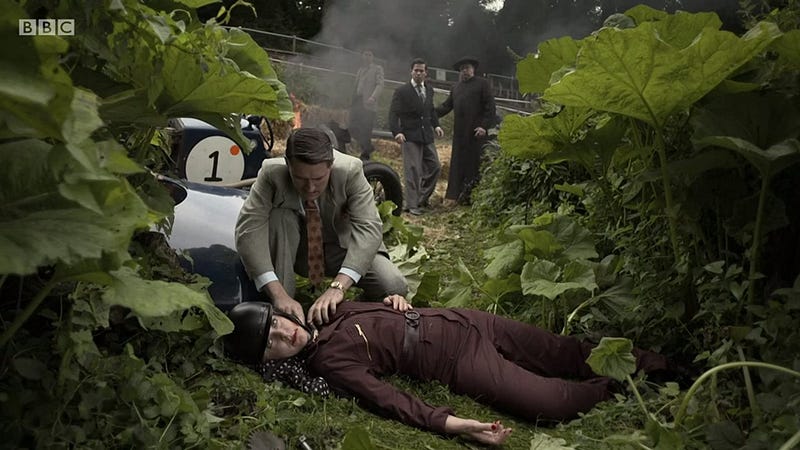
This second series finale, The Laws of Motion, with a scene featuring what can now be described as vintage race cars. The vintage cars, as we can see from the scenes, are bring driven to the top of a nearby hill. Each driver competing in the event, since they all don’t take to the track at the same time, is required to attain the best time possible. The fastest time wins.
Not long after the second car is scene racing away from the starting point, nearby, we hear the unmistakable voice that is Mrs Bridgette McCarthy (Sorcha Cusack). Mrs McCarthy, not remotely amused with Father Brown (Mark Williams), was thinking they would be attending the local horse race track.
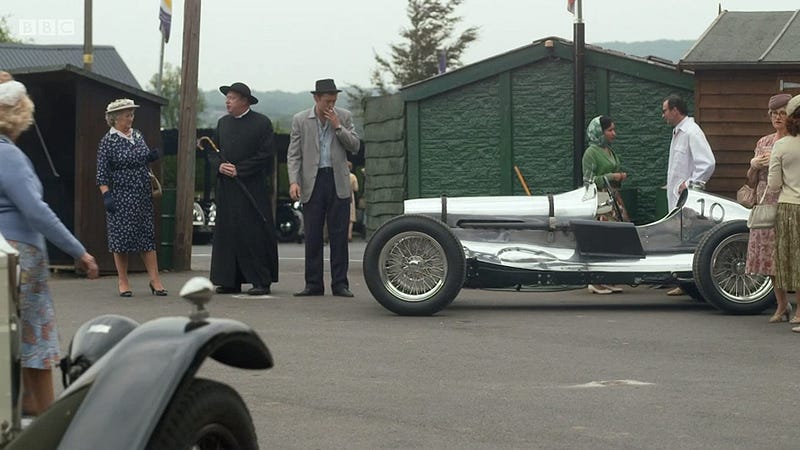
Whilst horsepower is involved, noting the presence of race cars, that is not the kind of race Father Brown was referencing when he invited the parish secretary.
Lady Felicia Montague (Nancy Carroll), not exactly a motoring aficionado, is at the event because she had been asked to take over hosting duties. Mrs McCarthy, noting the presence of an off-duty Inspector Sullivan (Tom Chambers) with a glass of Champagne in his had, quickly draws her own conclusions.
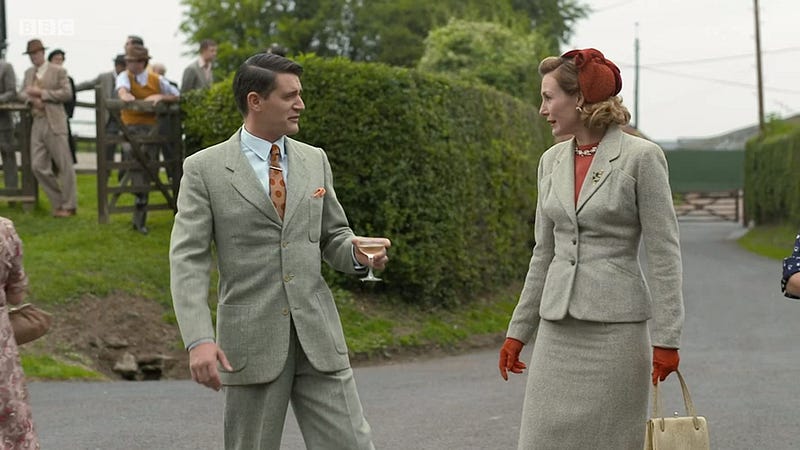
Is anyone else curious about why it is both Inspector Sullivan and Lady Felicia are colour coordinated perfectly? Do they attend the same tailor?
Their garments do not appear prêt-à-porter. Consequently, with apparent made-to-measure clothing, one can’t help but wonder how much Inspector Sullivan makes working for the Gloucestershire Constabulary. It’s not as if Kembleford is a major city.
The parish secretary isn’t amused by how giddy the men are when around cars. Mrs McCarthy doesn’t understand what it is about cars that turns grown men into little boys. For once, not that this is a regular occurrence, I’m on the same page as the parish secretary. I have just as much fascination with cars as Mrs McCarthy.
It is here that Lady Felicia introduces everyone to Audrey MacMurray (Tracy Ann Oberman). Mrs MacMurray, an accomplished rally driver, property owner, and philanthropist, is a seriously ruthless businesswoman that knows her own mind. Her immediate attraction to Sidney “Sid” Carter (Alex Price) is obvious to anyone that bothers to open their eyes.
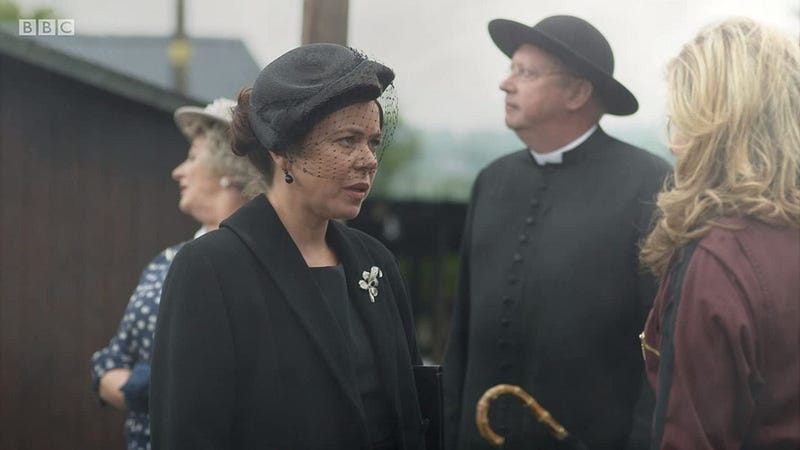
Harriet Welsby (Amelia Lowdell), angry with the businesswoman, slaps Mrs MacMurray across the face in plane view of Lady Felicia, Mrs McCarthy, Father Brown, the off-duty police inspector, and Sid. Mrs Welsby believes Mrs MacMurray’s ruthless treatment of her husband and other tenants caused him to to kill himself.
Mrs McCarthy, not one for keeping he nose out of someone else’s business, wants to know why it is Mrs Welsby would think Mrs McMurray killed her husband. Lady Felicia, not happy with how Mrs McCarthy speaks with her friend, tells the parish secretary that it is hardly any of her business.
Sid suggests to Mrs McCarthy that Mrs Welsby. Father Brown, with a better understanding of human nature, reminds Sid that people in grief rarely are all there. Inspector Sullivan, even though he is off-duty, took a moment to look for Mrs Welsby. She disappeared into the crowd.
Mrs McCarthy tells engineer Gary Bakewell (Cian Barry) there is something wrong with her car and that she needs him to take a look at it.
Walter MacMurray (Oliver Mellor), frustrated with his wife, notes that the practice runs had started before he had had a chance to run the safety car. Acting as the clerk of the course, something he makes painfully clear, he is only interested in the safety of everyone involved in the race.
Mr MacMurray, a former footballer, had to give up his chosen career after he suffered a knee injury. Lady Felicia suggests to Mrs MacMurray that her husband looks like the type of man that performs very well in the sack. Rarely does Lady Felicia not think of sex in one capacity or another and this is no exception.
Father Brown, nearby, quickly picks up on Mrs McCarthy’s scandalised facial expression. Mrs McCarthy, clearly unable to comprehend why it is Mr and Mrs MacMurray are a married couple, notes she is old enough to be his mother. Does Mrs McCarthy not realise it is the 1950’s not the 1850's?
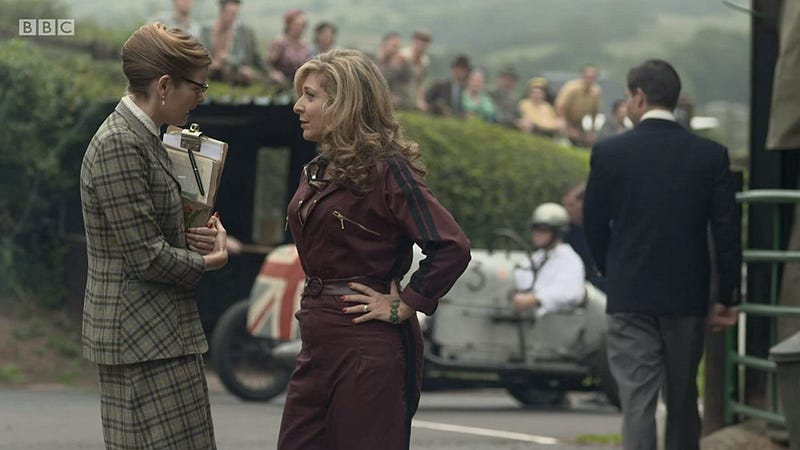
Mr MacMurray wants his wife to follow the rules. Mrs MacMurray, as we soon come to realise, never follows the rules. Phyllis Stanwyck (Lisa Jackson), Mrs MacMurray’s assistant, catches her boss’s attention and tells her about various phone messages that have accumulated.
Mrs MacMurray tells Miss Stanwyck if she wants to succeed in business, something which she has learned, there is no room for sentimentality. When Mrs MacMurray inquires about a Welsby being on her books, after Miss Stanwyck references an Aleister Welsby, she doesn’t broach the subject again.
There is an obvious glance between Sid and Mrs MacMurray which suggests a certain direction and it isn’t something Mrs McCarthy would approve of. Soon thereafter, seconds after seeing a driver taking a practice run at the track, we find Sid paying a visit to the Men’s Room.
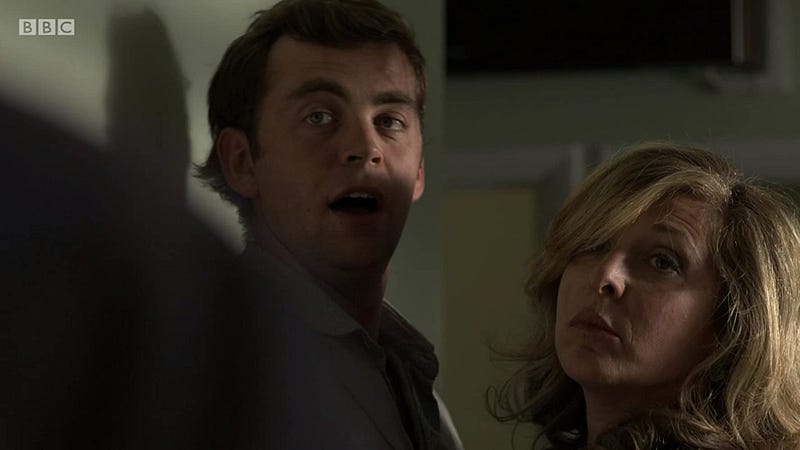
It doesn’t take long for Mrs MacMurray to arrive and start in on her latest conquest. If they hadn’t been disturbed by Mr Bakewell, noting how close she was Mrs MacMurray to Sid, there is a good chance she would have gotten into the chauffeur’s trousers.
Mr Bakewell, not happy with what he found in the Men’s Room, apparently thought there was something more to his sexual relationship with Mrs MacMurray. For something, not that Mr Bakewell understands this, sex is just sex. There is no emotional attachments.
Not long thereafter, at the car, Mr Bakewell confronts Mrs MacMurray. Mrs MacMurray makes up some excuse to fire Mr Bakewell. Mr MacMurray, naturally taking his wife’s side, seemingly as a similar archaic view of women to Mr Bakewell.
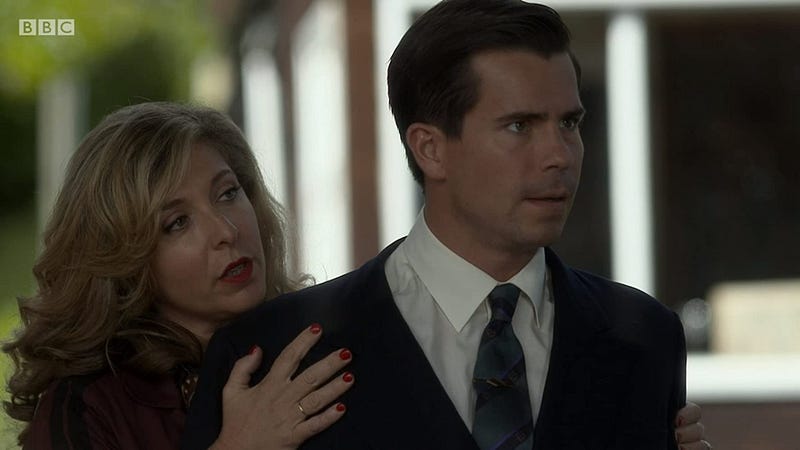
Mrs McMurray, referencing Mr Bakewell being possibly a few inches bigger than her husband, was obviously not referring to Mr McMurray’s height. Lady Felicia, if she had have had an opportunity with Mr McMurray in the sack, might have found him lacking in that department.
Miss Stanwyck, needing Mrs McMurray to apparently take a telephone call, speak of a Mr Baxter threatening legal action. Mrs Welsby, watching Mrs McMurray’s every move, doesn’t go unnoticed.
Mr McMurray, as Lady Felicia begins her announcements as host, is seen driving up the hill in the safety car. Lady Felicia, not remotely a car aficionado, makes this obvious to everyone there when she tries to bluff her way though the job.
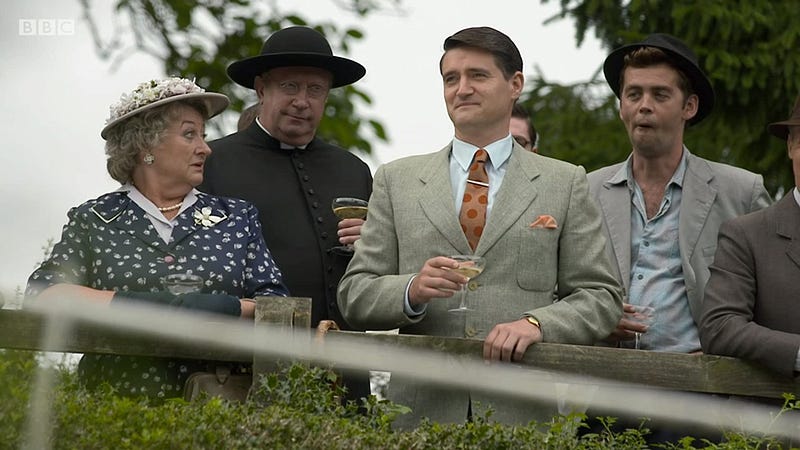
Facial expressions clearly suggest they know she doesn’t understand anything about cars. Her inexperience, clearly mocking her choice of words, doesn’t escape the attention of either Inspector Sullivan or Father Brown.
Something else that doesn’t escape Father Brown’s attention, noting the red lipstick smudge on Sid’s shirt collar, the Catholic priest suggests the chauffeur has been getting busy. Sid doesn’t confirm or deny Father Brown’s suspicions.
Elsewhere, in reference to Mrs McMurray, we see a break cable cut. If you’re interested, relatively to how Lady Felicia would view the situation, that would be the blue car. Mrs McCarthy, not remotely understanding the event, suggests to Inspector Sullivan it all seems rather dull.
The police inspector, assuring the parish secretary there is nothing dull about it, explains the event perfectly. Inspector Sullivan’s reference to there being not a single cream tea in sight seemingly doesn’t please Mrs McCarthy.
Neither Lady Felicia nor Sid seem to know as much about cars as Inspector Sullivan. In contrast, as the police inspector correctly observes, Lady Felicia seems to knows more about fashion than Inspector Sullivan knows about cars. The police inspector didn’t attend the event so that he could be told about clothes.
A crash causes significant shock to permeate throughout the crowd. If there is one thing Lady Felicia knows how to do, considering how often she does it during the first few series, it’s scream. Mrs McMurray crashes her car. Everyone is concerned for her safety.
When we finally see the crash site, nothing how odd everything appears, Mrs McMurray was apparently thrown from the vehicle. There is something seriously strange about the entire setup.
Father Brown notes the presence of a piece of fabric caught on Mrs McMurray’s bracelet. The police inspector doesn’t seem interested in the Catholic priest’s discovery.
Interestingly, possibly because they weren’t paying attention, neither Inspector Sullivan nor Father Brown noticed Mrs McMurray wasn’t wearing her bracelet when she was at the starting line. Something that does interest the police inspector is the cut break cable. This tells us there was no accident.
Father Brown, taking a moment to address the lipstick on Sid’s shirt collar, asks the chauffeur about himself and Mrs McMurray. The episode doesn’t return to this conversation on camera.
Inspector Sullivan and Sergeant Daniel Goodfellow (John Burton), with Miss Stanwyck’s help, track down Mrs Welsby at her residence. Mrs Welsby blames Mrs McMurray for her husband’s heart attack.
There is a comical moment where Mrs Welsby offers Inspector Sullivan and Sergeant Goodfellow tea. Whilst the police inspector initially declines the offer, noting the sergeant never turns down a good cup of tea, requests three sugars. Inspector Sullivan, not amused Sergeant Goodfellow would want tea, cancels the refreshment.
Inspector Sullivan soon finds a pair of wire cutters in one of Mrs Welsby. This discovery causes the police inspector to arrest Mrs Welsby and have her taken to the police station.
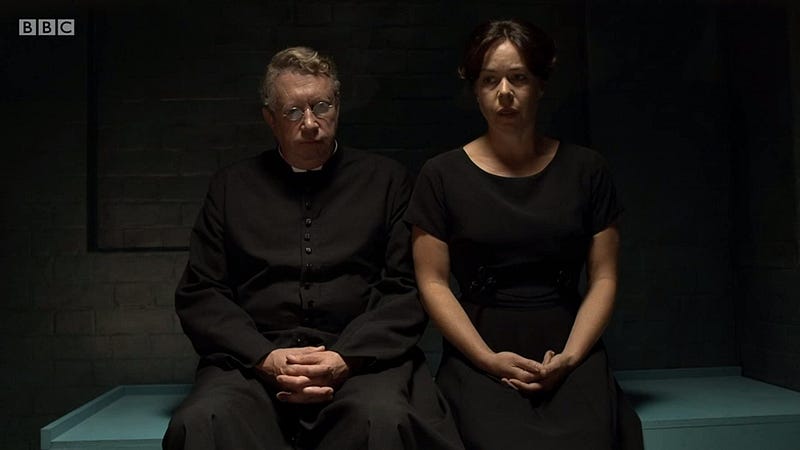
The next time we see Father Brown, at the police station, Inspector Sullivan is directing the Catholic priest to concern himself with spiritual guidance only. Mrs Welsby, with her being a lapsed Catholic, is surprised Father Brown would concern himself with her wellbeing.
Even though Mrs Welsby is obviously glad Mrs McMurray is dead, something that can be seen in her tone, she didn’t kill the woman. Mrs Welsby wanted to cut the break cables but found, when she got there, she knew next to nothing about cars. She left the event when she heard someone in close vicinity of the vehicle. Father Brown tells Mrs Welsby he intends to investigate the matter further.
If she still had the cable cutters in her hand when she got home, noting the sound of something dropping, we have to ask what that was she dropped to the ground.
The following morning, as we see Father Brown approaching Mr Bakewell’s business, we know there is something afoot. The Catholic priest suggests there is something wrong with his front bicycle tire. This is merely away from him to start a conversation with Mr Bakewell. The conversation doesn’t get the Catholic priest very far because the engineer is in no mood to talk about anything.
Mr Bakewell, having something he wants to say, gatecrashes Mrs McMurray’s funeral. Father Brown, even though he doesn’t want the engineer to speak, finds it impossible stopping Mr Bakewell saying what he wants.
With motive, means, opportunity, and a confession, Inspector Sullivan closes the case. There is clear frustration in the police inspector’s words as he as obviously grown exceedingly tired of Father Brown.
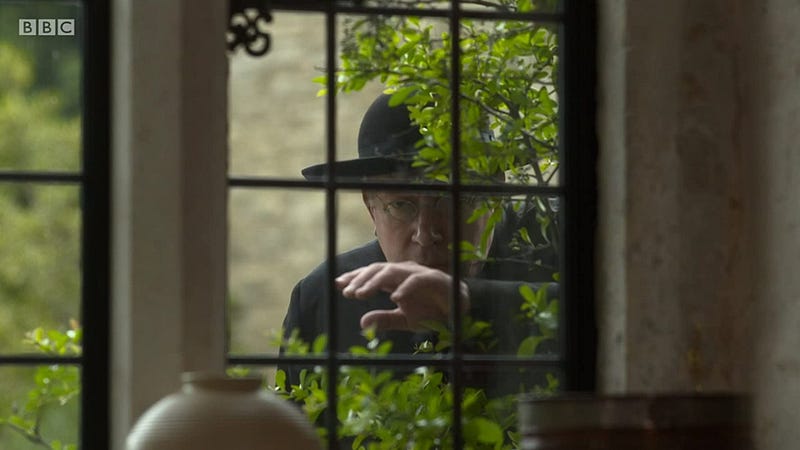
Father Brown, at the McMurray residence, observes Miss Stanwyck and Mr McMurray in a compromising position. The Catholic priest’s presence doesn’t go unnoticed for long. Miss Stanwyck insists Mr McMurray call the police. Father Brown concurs with the request.
Inspector Sullivan, mainly because the police inspector has become tired of the Catholic priest’s meddling, arrests Father Brown for a breach of the peace. The police inspector, ever since he got to Kembleford, has considered Father Brown a thorn in his side.
It seems Chief Inspector Valentine never took the time to speak with Inspector Sullivan before leaving the village for his new London job. With the Catholic priest placed in a cell at the police station, not willing to listen to anything Father Brown has to say, Inspector Sullivan returns to his office.
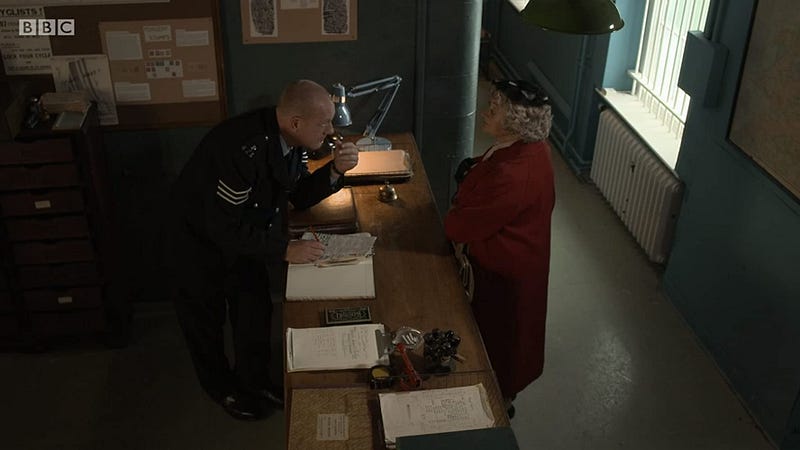
Father Brown, needing his one telephone call, places it to Mrs McCarthy at the presbytery. The parish secretary arrives at the police station with a cake for Father Brown. Mrs McCarthy comically suggests to Sergeant Goodfellow that he might want to cut into the cake. He oddly takes her up on the offer and leaves the front desk so that he could retrieve a knife from the kitchen.
It is here that Sid enters the police station, takes the keys to the cells, releases Father Brown, and exits the building without Sergeant Goodfellow being any the wiser. Mrs McCarthy, frustrated with Sergeant Goodfellow, causes a scene and the cake is tossed to the floor. The parish secretary leaves the police station without having met with Father Brown.
Father Brown, with Sid’s help, look for clues at the McMurray residence, The best place for them to find anything concrete is the safety car that was used in the event. Father Brown matches the piece of fabric found on Mrs McMurray’s bracelet to the material found in the back of Mr McMurray’s car.
Miss Stanwyck and Mr McMurray discover Father Brown and Sid snooping. All the dots are soon connected. Miss Stanwyck killed Mrs McMurray moments after speaking with her about a telephone call from Mr Baxter. This was merely away for her to get Mrs McMurray into the office. Out of sight, with a blunt instrument in hand, Miss Stanwyck hits Mrs McMurray over the back of the head. This is a decisive blow.
It was Miss Stanwyck driving the car when everyone thought it was Mrs McMurray. Mrs McMurray’s body was in the back of the safety car when it was driven up the hill by her husband. The only person to notice Mrs McMurray wasn’t wearing her bracelet at the beginning of the race, the person that gave it to her, was Mr Bakewell.
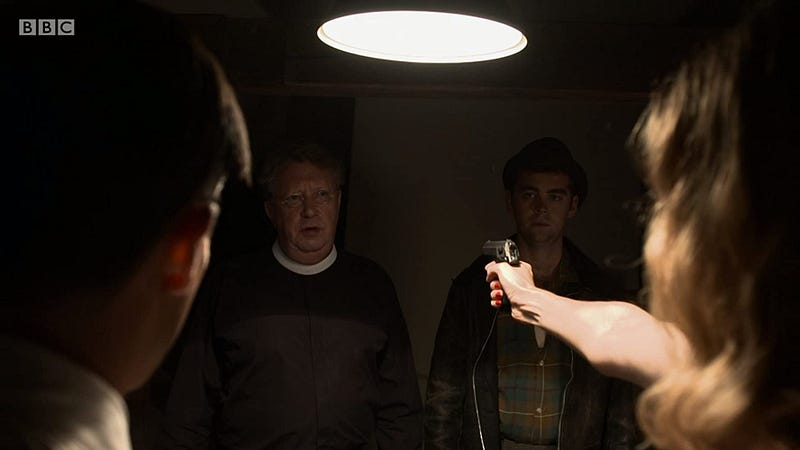
Soon thereafter, not know what else to do with either Father Brown or Sid, Miss Stanwyck draws a gun on them. It is her intent to kill them and escape with Mr McMurray. Mr McMurray is clearly starting to have second thoughts. Miss Stanwyck senses weakness and has Mr McMurray join Father Brown and Sid. There is a scuffle. The gun fires. Not wanting to hang around, leaving the gun behind, Miss Stanwyck locks them in the room and runs from the house.
Meanwhile, back at the police station, Inspector Sullivan wants to know about the mess on the floor. Sergeant Goodfellow explains what happened with Mrs McCarthy’s cake. The very mention of Mrs McCarthy’s name causes the police inspector to run to the cells. He soon finds Father Brown isn’t there. Inspector Sullivan asks Mr Bakewell where Father Brown went. There is no on screen answer to his question.
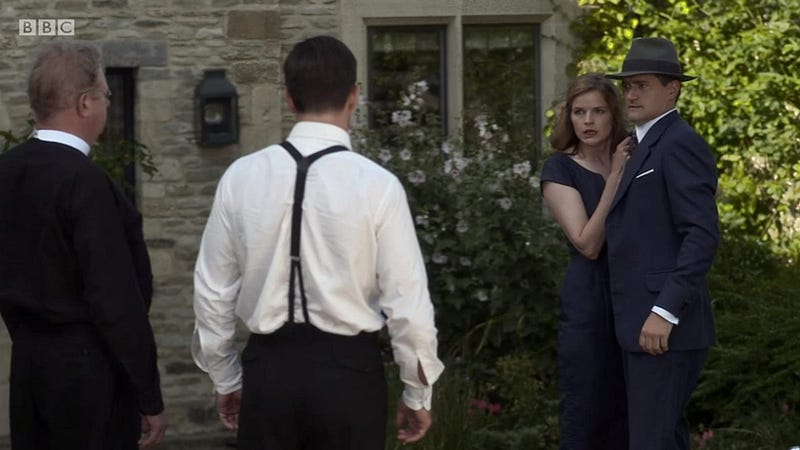
It doesn’t take Mr McMurray long to recognise Miss Stanwyck’s true nature. She is every bit as ruthless as Mrs McMurray. Father Brown talks Mr McMurray out of shooting Miss Stanwyck. When Inspector Sullivan arrives at the residence, with Mr McMurray disarmed, Miss Stanwyck fakes being a victim. It is clear Inspector Sullivan doesn’t buy the victim act.
The episode closes with Father Brown, at a church fundraising event, being visited by Inspector Sullivan. The police inspector, visibly uncomfortable being there, informs the Catholic priest everyone is where they belong.
Mr Bakewell’s charges were downgraded to attempted murder. Miss Stanwyck, recognised by Inspector Sullivan as being a terrible actress, is going down for murder. Mr McMurray was charged with conspiracy to commit murder. There are no charges for Father Brown, Mrs McCarthy, or Sid.
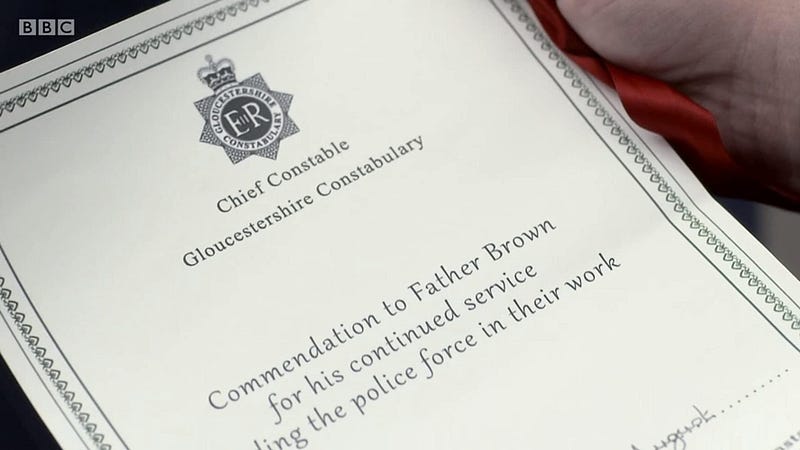
Further, since the Gloucestershire Constabulary Chief Constable has heard of Father Brown’s continued help with police matters, the Catholic priest receives a commendation. Mrs McCarthy correctly observes it has been a long time coming.