
CLIMATE FINANCE
Farmers and Ranchers Are Getting Absolutely Destroyed
Their misfortune will cause food prices to spike.
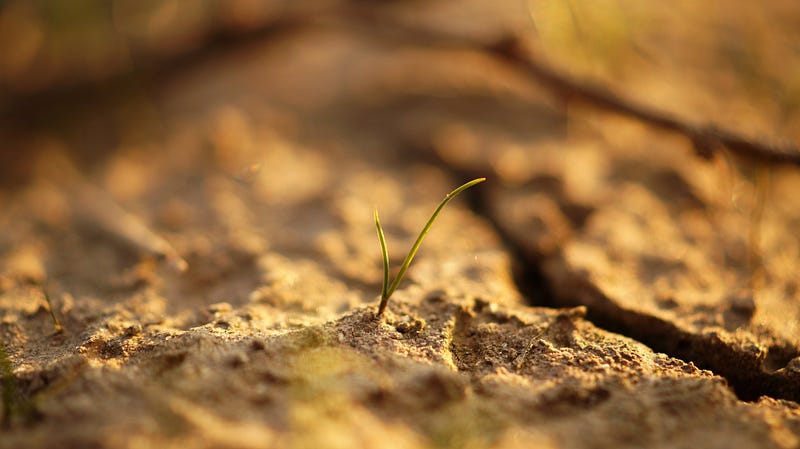
Farming has always been a difficult job, but the past several years have been an absolute nightmare.
Even before the pandemic, the industry endured a three-year trade war with China that depressed commodity prices and drove many farmers to unsustainable levels of debt, forcing them to go bankrupt.
The pandemic hit at the tail-end of that saga, shutting down restaurants and cafeterias, and spiking food demand at grocery stores. The agricultural supply chain couldn’t pivot fast enough, and vegetables were left to rot in fields across the country.
There was a brief respite this spring, when China once again opened its doors to US farm products. The record exports cast a hopeful light on an otherwise dire situation, albeit one with much hand wringing about being overly dependent on a single customer.
That hope, however, was dashed as the spring turned to summer, intensifying the relentless megadrought plaguing most of the western United States.
California’s Water Woes Are Just Beginning
California is Exhibit A (or more appropriately, Patient 0), showing just how bad farmers are getting hit. But first, let’s take a look at how much of our food comes from the Golden State.
California produces a sizable majority of many American fruits, vegetables, and nuts: 99 percent of artichokes, 99 percent of walnuts, 97 percent of kiwis, 97 percent of plums, 95 percent of celery, 95 percent of garlic, 89 percent of cauliflower, 71 percent of spinach, and 69 percent of carrots (and the list goes on and on).
So what happens when a state that produces this much food has 100% of its land area under some form of drought?
The answer is “expensive and grainy”.
Rising prices would force Americans to consume more grains, which are locked in a complicated price-dependent relationship with fresh fruits, vegetables, and meats.The result is a diet that relies much more heavily on grains
But now that surface water is scarce due to the megadrought, California’s farmers are increasingly using groundwater. Unsurprisingly, they are using more than can be replenished, which is forcing the state to enact restrictions.
One study, backed by the agricultural industry, predicts that a million acres, or 20 percent of the fields in the San Joaquin Valley, will be taken out of production. Other researchers think it will be half that much.
We are already in an inflationary environment. If the nation’s largest producer of non-grain edible plants cuts its production by 20%, you can be guaranteed higher food prices.
And this is only one state. The entire west is under drought conditions, so imagine when these numbers are 10 times bigger.
We can blame human-induced climate change for the drought, but the water issues would have been there regardless.
“Politicians have overpromised how much water could be developed in the basin since the 1920s,” said Eric Kuhn, who coauthored a book chronicling how policymakers have ignored scientific assessments of the Colorado River when findings did not support proposed development projects. “This is a crisis that would have happened without climate change — climate change is just adding insult to the injury.”
Grain is Skyrocketing, Which is Bad News for Ranchers
California isn’t the only state that is experiencing a horrendous summer. Almost half the country is experiencing some form of drought, and that it impacting all sorts of agricultural production.
From a recent USDA report, here are the percentages of certain products that are being grown in drought conditions.
- 87% of barley
- 37% of corn
- 20% of rice
- 31% of soybeans
- 87% of sunflowers
- 100% of durum wheat
- 99% of spring wheat
- 32% of winter wheat
- 36% of hay
- 64% of alfalfa
As many of you have experienced in your backyard gardens, plants grow much more slowly and with much lower production in dry soil. One thing to keep in mind: most of our grain production goes to feed animals. So it’s not only your bag of rice that will cost more, but also that steak you’re cooking as the main dish.
The hay shortage is having a particularly hard impact on cattle ranchers, as they culling their herds in record numbers.
As the drought worsens across the West and ushers in an early fire season, cattle ranchers are among those feeling the pain. Their hay yields are down, leading some to make the hard decision to sell off animals. To avoid the high cost of feed, many ranchers grow hay to nourish their herds through the winter when snow blankets the grass they normally graze.
But this year, [rancher Jim] Stanko’s hay harvest so far is even worse than it was last year. One field produced just 10 bales, down from 30 last year, amid heat waves and historically low water levels in the Yampa River, his irrigation source.
Some hay fields are down 75% from 2020.
It’s not only grains that will have an impact on prices. Here are the numbers for the national livestock inventory that is under drought.
- 43% of hogs
- 32% of cattle
- 47% of milk cows
- 53% of sheep
Just like plants, animals are much less productive in drier conditions. The cattle might produce 20 fewer pounds than the rancher was expecting, driving supply down and prices up.
To combat the low production of hay, ranchers are turning to the failed crop fields of farmers, begging (and paying) them for permission to graze their livestock on the ruined plants.
“Producers have chosen to cut small grain fields for hay versus harvesting them for grain as there just isn’t enough forage to bale,” Schafer said. Grains that should be “armpit high” are “boot-high at best and typically you can see a gopher run in front of your cutter bar,” he said. Many fields didn’t turn green, so cows were on brown grass in June.
It’s not great, but it’s better than the alternative. Down in Mexico, cattle are starving to death by the thousands.
People Are Waking Up to the Fact that Industrial Agriculture Outright Sucks
Industrial agriculture exacts a horrific toll on the people who actually do the work (farmers, laborers, and processors) while degrading the land that is supposed to nourish and provide.
Our elected officials will claim that “industrial agriculture is the only way to feed our growing population.” But that is a completely bunk statement.
- First, our population is barely growing.
Since 40% of post harvest food is lost via transportation, distribution, and storage losses, there is actually very little need to grow more food.
The current large-scale agriculture system in the US is the legacy of the 1970’s push to “get big or get out”, but it has proven to be a disaster only covered up by government funding and cronyism at the USDA.
Scorched earth agriculture is a leading contributor to greenhouse gasses, and it’s been hypothesized that the herbicides and pesticides, while under lethal doses at the time of application, are actually building up in both the land and consumers, leading to a vast array of sickness.
The Takeaway
Food prices are going nowhere but up. From the USDA,
In 2021, food-at-home prices are expected to increase between 2.0 and 3.0 percent, and food-away-from-home prices are expected to increase between 3.0 and 4.0 percent.
In 2022, food-at-home prices are expected to increase between 1.5 and 2.5 percent and food-away-from-home prices are expected to increase between 3.0 and 4.0 percent.
We all know that government inflation statistics are way off (on purpose, it turns out), so please take these “official” numbers with a large grain of salt.
Prepare yourself for double digit inflation, especially since food production isn’t the only issue. The entire food/agriculture industry is being hit with both supply chain and labor issues, which will compound with low production.
The Latest Stories From Money. Daily.
- Layaway is Back, Baby!
- Is An Emergency Fund Really That Important?
- Mortgage Math
- Why You Can’t Afford to Buy a House
- I Betrayed My Renting Brethren and Bought a House in the Suburbs
Don’t miss my next article! Click here to get notified when I publish new material.
If you love the articles published in Money. Daily. become a member of the Medium and get full access to our full archives.
This article is for informational purposes only, it should not be considered Financial or Legal Advice. Not all information will be accurate. Consult a financial professional before making any major financial decisions.


