
FUNDAMENTAL FINANCE
Is An Emergency Fund Really That Important?
Or just another hyped up personal finance topic?
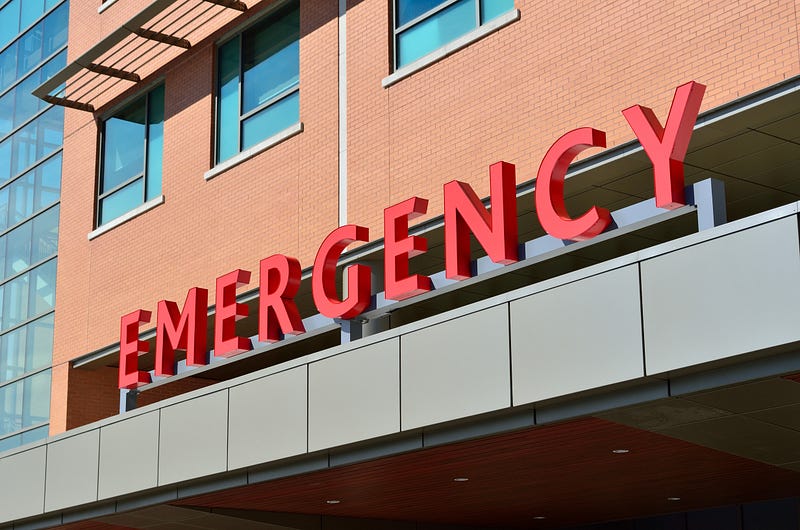
One of the most vital pieces of your personal finance journey is establishing an emergency fund.
We touched on this subject briefly when discussing savings accounts, but there is much more to discuss than simply, “save $1,000.” There are three basic questions to answer when setting up your emergency fund, and we’ll go through each one in detail.
- What is an emergency fund?
- How much do I need to save?
- Where do I save it?
What Exactly Is an Emergency Fund?
The title is pretty self explanatory, but here’s a formal definition. An emergency fund is a separate pot of money that is used exclusively for emergencies, when no other source of cash is available.
Let’s broaden that a bit.
- A separate pot of money
Your emergency fund should be completely separate from your checking, standard savings, cash, and investment accounts. While you could technically used a software like YNAB to keep it in your checking account but digitally “separated”, your brain is tempted to just look at your overall checking balance and ignore the fact that not all of it is available.
Keeping your emergency fund separate from all of your other money is a psychological trick that helps with the second clause.
- Used exclusively for emergencies
This is where most people get tripped up. You need to be able to define what is a true emergency instead of just an inconvenience.
Getting a flat tire the day before payday when your savings are depleted from paying your semi-annual car registration is an emergency. But only if the dealership doesn’t take a payment plan or you can’t find alternate transportation until you can come up with the money.
Buying a last minute present for your cousin’s surprise birthday party you forgot about is not an emergency. It’s a mistake that you forgot the party, but it’s not worthy of using up possibly your only financial cushion. Admit your forgot, eat some crow, and buy a present when you can afford it.
- When no other source of cash is available
We’ve all had times when our checking accounts are below the minimum for an ATM withdrawal, our savings have been tapped out from a large planned purchase, and our wallets haven’t seen paper money in weeks.
I’ve been there more than I’d like. I remember the week after college graduation, I rolled up $126 in change because I had not other money in my wallet or checking account, and I didn’t even have any savings, emergency or otherwise.
Those coins were the only thing that was going to fund groceries and gasoline over the next couple of weeks until my first paycheck hit. I didn’t quite make it and had to charge about $50 on my extremely low limit, high interest rate credit card.
If you ever find yourself in a similar situation, but you actually do have an emergency fund, consider this permission to forgo the credit card and use your emergency fund. The entire point of an emergency fund is not so much to pay for the emergent expense, but to avoid debt while doing so.
How Big Should Your Emergency Fund Be?
This sounds like it should be a straightforward question with a simple answer, but as with everything in personal finance, it is anything but. The vehement arguments and vitriolic responses surrounding this basic number can be intense, devolving into online flame wars between total strangers.
While I disagree Dave Ramsey on quite a few things, he is spot on when giving the initial goal of $1,000 for your emergency fund. It is big enough to satisfy your hunger for accomplishment, yet small enough to achieve within a reasonable time frame.
My emergency fund has been at $1,000 for almost a decade.
Some people feel much more comfortable with $2,000 or even $5,000. Some people have an extremely low cost of living and can get away with $500.
Either option, or anything in between, is perfectly fine. Whatever will help you sleep better at night without going to either extreme.
That being said, I would suggest keeping your fund in the $500 — $2,000 range. Much lower, and you risk not being able to afford emergencies. Regardless of your relative cost of living, there are some minimums for true emergencies, especially medical or vehicular ones.
If you go above $2,000, you risk falling into the trap of just piling all of your savings into the “emergency fund”, slowly and steadily turning it into your primary source of funding for non-emergency savings. By then, the mental split between emergency and standard savings is gone, and you end up spending everything you’ve got.
So there you have it. Hard numbers to set as a goal.
Where Do I Stash My Emergency Fund?
Expounding on the second bullet point above, your emergency fund needs to be completely separate from all of your other financial accounts. As I mentioned above, don’t even try to use YNAB to parse out the money, as your brain will subvert your intentions and ultimately spend that money.
I have my emergency fund in a second savings account specifically for my $1,000. As of this writing, the account actually has $1,300.27.
The extra $300 is because that is the minimum amount required by Chase to avoid the account fee, and I wanted the full $1,000 available.
The extra $0.27 is the interest I have earned over the years at 0.01%. I know there are better account out there, but the point here isn’t to earn money on my emergency fund; it’s to have it as liquid and accessible as possible should an actual emergency arise.
I’ve heard many people suggest that you should just keep your emergency fund in cold hard cash. Mattress money, so to speak. While this idea sounds better since you have immediate access to the funds without even doing an electronic transfer, I would avoid going this route for two reasons.
First, the money is too accessible. While you want liquidity, being able to just grab your roll of dough from under your mattress 24/7 is too tempting. Remember, this money is for emergencies only, and you need just a little bit of friction should you get an impulse to spend it.
Second, you physically risk losing your emergency fund. It could be an accident, like your bed catching fire, getting flooding, or some other freak incident. It could be forgetfulness, and you donate you mattress to Goodwill but forget to get your money. It could be malevolence, and someone could rob you.
Regardless, checking and savings account are insured by the FDIC for up to $250,000, so you don’t need to worry about the bank going under or a bank robber stealing your money.
The Takeaway
An emergency fund is your first step step to establishing better financial habits. The ability to save $1,000 allows you to realize that bigger goals are, in fact, possible.
This is your gateway goal to the broad freedoms that come with controlling your finances and telling your money where to go.
Don’t think that you have to save the full amount in a month. It took me much longer than that. I started by adding $50 every two weeks when I got paid to my savings account. Doing the math, that’s 40 weeks…almost 10 months!
Take as much time as you need. Once you’ve got your emergency fund, you’ll realize the rest of your financial journey will be easier than it looks.
The Latest Stories From Money. Daily.
- Mortgage Math
- Why You Can’t Afford to Buy a House
- I Betrayed My Renting Brethren and Bought a House in the Suburbs
- How to Attack Your Finances
- Increasing Returns with Covered Calls
Don’t miss my next article! Click here to get notified when I publish new material.
If you love the articles published in Money. Daily. become a member of the Medium and get full access to our full archives.
This article is for informational purposes only, it should not be considered Financial or Legal Advice. Not all information will be accurate. Consult a financial professional before making any major financial decisions.