
FUNDAMENTAL FINANCE
Do You Really Need a Savings Account?
The relic of a past era, or a bulwark against overspending?
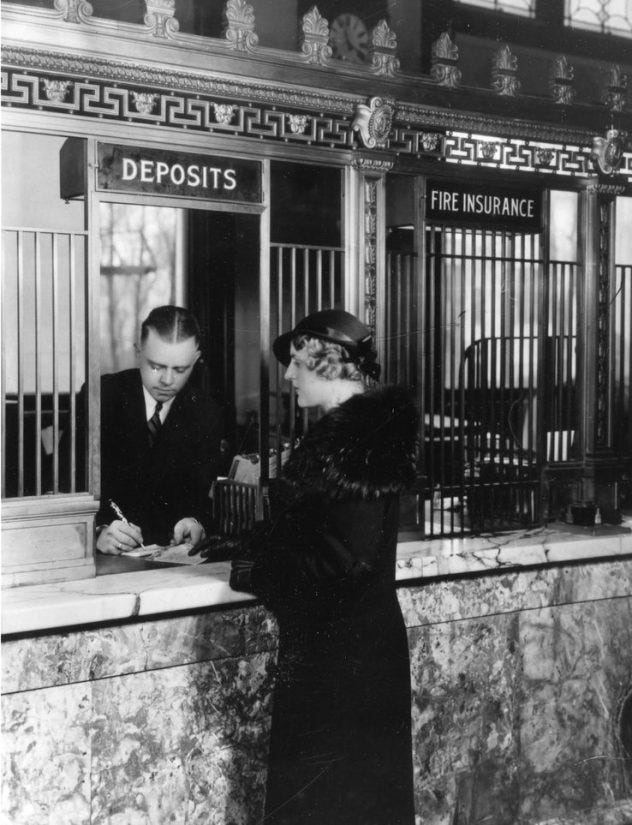
I got my first savings account when I was 14. My mom took me into the local branch of Merchant’s Bank and opened up an account in my name. Well, her name was, too, but my name was also on the account.
After the paperwork was done, I got my first savings account register, complete with 6 tear-off deposit slips and an equal number for withdrawals.
I was so proud of my savings account, even if it did only have $20 in it. For the next several years, I took careful measure to ensure my register was balanced to the penny, thinking about getting to the magical number of $1,000.
However, the onslaught of puberty brought with it more expensive interests than just savings for the next Lego set, and my focus on savings dwindled along with the account balance.
Life went and does go on, but I still remember the feeling of having that first account. I was SAVING for something. Something special.
I wasn’t quite sure what, but I was sure it would be great.
When you think of adult savings accounts, we often hark back to the middle of the 20th century. Y
ou would cash your paycheck on Friday and use that paycheck for groceries, bills, and entertainment over the week. If you had $10 or $20 left over, you would go back to the bank and make a deposit into your savings account.
What was that savings for? Emergencies, mostly. Maybe a vacation.
Even the presence a savings account was rare, signaling either affluence or discipline. But in the 21st century, with our money distilled into ones and zeroes, are savings accounts even worth it?
Savings Account Options
There are two basic avenues to track leftover money.
- A savings account, separate from your checking account
- No savings account, but assigning money as “savings”
The Standard Model
This is the traditional setup of having a completely separate savings account. You deposit your income into a checking account, then move money over to your savings.
The biggest benefit of a separate savings account is that the money your are saving is completely separate from your operational funds in your checking account.
If you want to access your savings, you will need to manually move the money, and most savings accounts have a limit on withdrawals. (I currently bank with Chase, and my savings account has a limit of six withdrawals every month.)
This manual transaction adds some friction into spending your hard-earned savings, resulting in fewer withdrawals and less impulsive spending.
The Zero-Based Model
The zero-based budget system assigns each and every dollar in your checking account to a specific category, or “job”. This is very similar to the envelope method of budgeting but goes further since you can have dozens of digital envelopes for a single account.
The idea is that since you create various categories for your money, you don’t need to have a savings account. This sounds good in theory but gets messy in practice.
Say you have $1,000 in your checking account, of which $50 is for some sort of savings goal. You technically only have $950 for your budget, but in the back of your head, you’re thinking about that “extra” $50 that’s just sitting in your checking account, fully liquid and ready to spend.
It doesn’t matter that it’s assigned to something already. It’s available now, so it’s hard not to spend it now.
Software has made this method much earlier recently, with YNAB (You Need a Budget) leading the pack.
How to Use Your Savings
Regardless of the which method you use, having some form of savings process is essential to healthy finances.
The next question is: What do I do with my savings?
There are two basic varieties of savings categories, and they are used in very different circumstances.
- Emergency savings
- Financial “storage”
Emergency Savings
This account is for when you are in dire straights and have no other option outside of going into debt to pay a bill.
- You get a flat tire and it damages the rim.
- You need to visit your out-of-town mother who is having an emergency medical procedure.
- You need to post bail for your down-and-out brother.
These are actual emergencies that the emergency fund was designed for.
While how much you save is up to you, the most famous suggestion is Dave Ramsey’s Baby Step #1: Save $1,000.
The $1,000 amount is completely arbitrary. It is small enough to be achievable in a relatively short amount of time for most anyone, but large enough (4 figures!) to supply confidence that the saver can, in fact, achieve larger financial goals.
- If you are on a super low income and only need $500, then do that.
- If you or your spouse would sleep more comfortably with $3,000 in the emergency fund, then get to that level first.
Once you have the money saved, you need to treat it as a cash option of last resort.
Your emergency savings is not there to fund a night out with coworkers in hopes of making inroads with the boss or even just replace a flat tire. Find the money in your checking account and make it work.
Your emergency savings is there to prevent you from going into debt when there are no other options. Period.
Financial Storage
You have to take most financial advice with a grain of salt (yes, even mine), but casting a wide net for information is always a good thing.
For instance, Grant Cardone is oftentimes loud, obnoxious, and grating, but he had a good insight into how to treat your savings account.
Don’t think of savings as savings.
Rather, think of savings as financial storage. You are storing up a resource to be used in the near-term; think 1–3 years.
There are two parts to that path.
- short timeline
- defined goal, both in money saved and what to spend it on
This is where many people get tripped up. They know they need to save money, but they don’t know what for or how much they want to save.
If you don’t define your savings goals (or any financial goals, for that matter), things get hazy and you backslide. You either use your savings for things you want now rather than the things you want most, or you just save and save and save, never spending it on anything that will allow you to reach your life goals.
Women seem to take the latter path more often, to the point where Barbara Corcoran has extolled women to spend their money “as fast as they can.” Again, take that with a grain of salt and figure out if it applies to your own life.
If you have money leftover after saving for your short-term savings goals, then it’s time to invest. We’ll cover that in future articles.
My Own Savings Setup
I use a hybrid of the two setup options mentioned earlier. I have two savings accounts in addition to, and completely separate from, my checking account. But I also use YNAB and apply zero-based budgeting to those accounts.
Side note: My wife and I have combined all of our finances, so when I say “I, me, or mine”, I mean “we, us, and ours”.
My emergency savings account has $1,300 in it. $1,000 is for actual emergencies. $300 is for the minimum required to even open a savings account at Chase, so I don’t count it as actual money I can spend.
My standard savings account is where I have all my annual or longer term goals stored. Line items include
- Registrations for both cars
- Costco, Amazon, and YNAB annual subscriptions
- Auto maintenance
- Home repairs, both scheduled and unscheduled
- Annual summer camp for my daughter
Your list may look completely different.
The Takeaway
Saving money is good thing.
It’s great to have a buffer that can prevent you from going into debt that can also be used as a vehicle to help achieve your goals.
The idea that savings should be viewed as “financial storage” is spot-on. Warren Buffet is a fan of saying Berkshire-Hathaway’s billion in cash (i.e. savings) is “dry powder” to use when the pull the trigger on an acquisition.
While our personal lives aren’t as exciting as purchasing entire companies, we should look at savings through a similar lens.
Save your money, but save it for a purpose. When the time arrives, don’t be scared to spend what you have diligently set aside.
The Latest Stories From Money. Daily.
- The Simple and Shocking Truth About Climate Change
- The Linguistic Bait and Switch of Climate Change
- There Is No Labor Shortage
- The Necessity of a Checking Account
- Stop Dreaming About Student Loan Cancellation.
Don’t miss my next article! Click here to get notified when I publish new material.
If you love the articles published in Money. Daily. become a member of the Medium and get full access to our full archives.
This article is for informational purposes only, it should not be considered Financial or Legal Advice. Not all information will be accurate. Consult a financial professional before making any major financial decisions.


