
Entrepreneurship is All About Solving People’s Problems

What do some of the greatest and most prominent entrepreneurs and companies have in common? I’ll give you a few clues:
- Amazon solves our need for a convenient delivery service whereby goods are delivered straight to our door
- Tesla solves our need for a cool-looking electrical car that will help save the environment
- Walmart solves our need for an all-in-one store where almost everything you need to buy in your weekly shop is all in one place
In case you hadn’t gotten the gist by now, the greatest entrepreneurs and companies around us SOLVE PROBLEMS.
This theory underpins the key point to success as an entrepreneur:
People buy a product or service because it solves their problems, and it solves them quickly and properly
They do this because they are willing to exchange their money for a product that will provide a solution to an issue that they experience.
For example, you need to use transport to get to work. Therefore you exchange your hard-earned cash for a new car or for a season ticket to a bus service.
Paying for one of these modes of transport now solves your problem of finding an effective way to get to work.
This is just one key example of how being an entrepreneur is all about solving problems.
But as business people, we often overlook this. We may get bogged down in the minutiae of running the business or designing a flashy new product when actually we should be concentrating on solving someone else’s problem.
Apparently, only 50% of all small businesses last more than 5 years, according to the U.S Small Business Administration. Perhaps this can be partly attributed to failing to build a product or service that solves a specific problem or for losing focus on why the business exists and who the business is providing a service or product for.
This is why it is important to remain true to why you are starting up a business, service or product and what audience it is for.
You should never use your business to focus on you or to build up your ego.
If you design an overcomplicated product that fails to meet the demands of the consumer then your business will fail before you’ve even properly started
What you need to do is remain rational and focused on designing a product that just solves a problem. The issue doesn’t have to be massive or expensive, it can just be an issue that somebody is looking for a solution to.
Heck, the solution doesn’t even have to be national or international. Targeting a niche area of the market can be more than enough for you to get started with.
In this article, I will be giving you some actionable tips on how to do this, all while helping to keep you focused.
As sort of a case study, I will be using my newly-launched photography blog, Photoaspire, to help you follow along.
I will be breaking down this article into 3 key sections:
- Identifying a problem you can solve and identify your target audience
- Producing a product or service that can solve that problem
- Test, Test, Test
Now I have explained to you the basic theory behind entrepreneurship, let’s get into the fun part!
Identifying a problem you can solve and identify your target audience
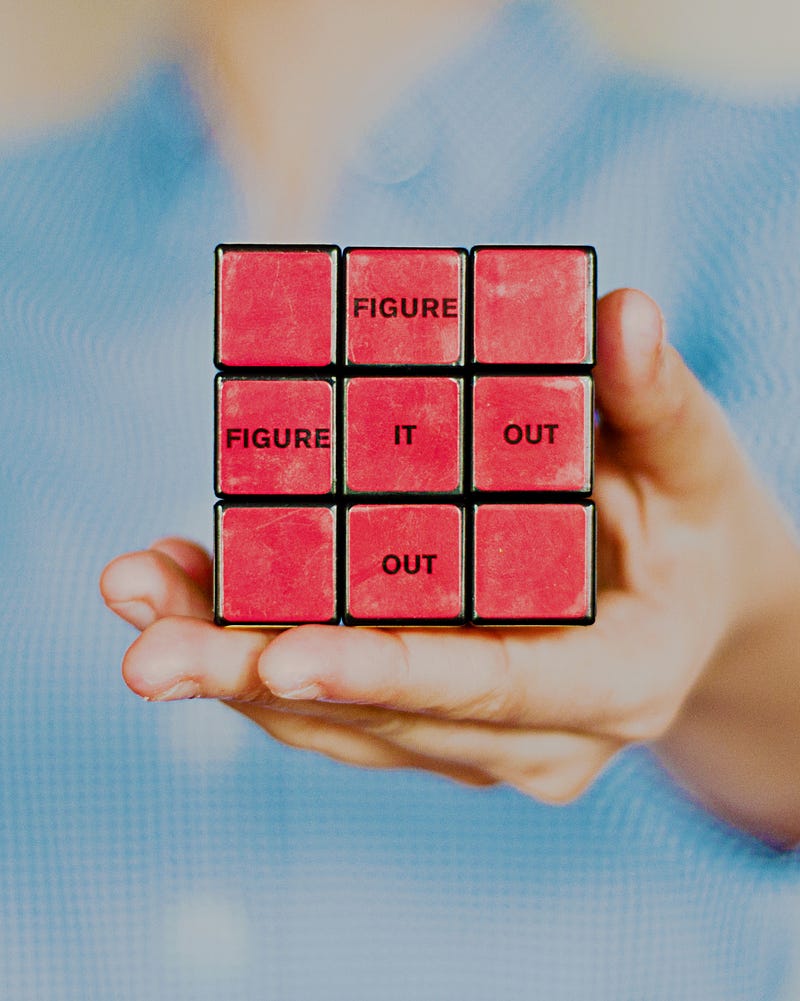
First and foremost, don’t jump the gun. As exciting as it is to be making a new product or service, we need to remain focused.
What you need to do first is to identify a problem that people want solving.
“We cannot solve our problems with the same thinking we used when we created them.” — Albert Einstein
For example, my website Photoaspire is a photography blog. My blog provides regular articles on how to improve photography. For example:
- An article giving people ideas on how to create a portfolio
- An article explaining the benefits of a 50mm lens
- An article explaining some of the biggest mistakes some photographers make
This solves the problem of not knowing the basics of photography!
Take the first article for example!
People who are struggling to create an album/portfolio for their work will most likely click on this link from Google and they will be taken to this article. Once they have read my blog post they will understand how to create a portfolio and how to go about doing this. This article is intended to solve the problem and empower people to make the right decision for them.
However, when creating a product or service to solve a problem we need to consider the audience we are writing for as well.
In this case, my primary audience will typically relate to one of these characteristics:
- They are new to photography and they want to understand the basics
- They want to learn how to become more creative with their photography
- They may not have a lot of money to spend on photography gear
- They have a busy lifestyle and because of this, they may not have the time to take an in-depth photography course. My articles are convenient and simple to read as they break down information into chunks
What I have been able to learn from all of this information is that my audience will typically be less experienced with photography and they will want to learn the basics. Now that I am aware of this I can fine-tune my content specifically for my audience.
You need to take this into account also. If your product solves a problem but it doesn’t resonate with your audience, you will fail.
Not only do you need to design a good product but it needs to appeal to the needs of an audience. This is why it can be handy to conduct some market research. Whether through primary or secondary data you will start to really understand the needs and wants of your target audience once you interact with them.
Here are some quick pointers on how you can fine-tune your target audience:
- Age: Younger generations are more likely to use the internet. They are also more likely to trust reviews from their peers and those around them. They are also more likely to engage with content in the form of videos rather than large amounts of text. They are also likely to have very different needs and wants compared to previous generations.
- Income: When creating a product or service that solves a specific problem you need to think about the level of disposable income the target buyer will have. If they have a lower level of disposable income, you will need to make sure your product will be at a price point where they will be happy to buy your product. If they have a higher level of disposable income you will want to make sure the product is made to high enough standard that will justify the customer spending a lot of money in order for you to solve their problem.
- Marketing: Your marketing needs to appeal to your target demographic. Younger audiences will be more likely to use social and as such, you will need to promote there in order to get eyeballs on your product. Older audiences are less likely to be brought in with jargon or slang. They will want clear and concise information that properly outlines what your service or product is about and how it will solve their problem.
These are just a couple of the ways you can fine-tune your audience. Demographics and understanding your audiences needs and wants will stand you in good stead for when you produce your product. Once you have nailed these down, you are ready to start thinking about producing your product or service.
ACTION POINT: Identify a problem that needs solving and make sure that it is realistically possible for you to create a solution. Next conduct some market research on your target audience. This can be primary or secondary research. Once you have done that use all of the information you have gathered to start narrowing down your target demographic. Think about age, gender, income bracket etc.
Producing a product or service that will solve the problem

Ok. So by now, you should have an idea of the product or service you will create, your target market and exactly what demographic you will target with your product.
Now you will need to start thinking about your product/service and the product experience.
Let’s quickly use my website Photoaspire as an example again. As we already know, my website is in the photography niche. It is a ‘product’ that provides a solution to my reader's problem in the form of information (that is, an article).
“Problems are nothing but wake-up calls for creativity” — Gerhard Gschwandtner
Say you were creating a physical product so solve a problem. You need to think not only about the creation and manufacture of the product itself but also the overall experience. Here are some pointers I suggest you take into account when developing your product:
- Packaging: Is the packaging high-quality, easy-to-open and does it provide enough information on the front for the customer?
- Materials: Are the materials high-quality? Will the product be durable and last for years to come? Do the physical design and use of materials make it easy and accessible to the customer so that they can use the product with ease?
- Pricing: You need to make sure that the price range of the product is affordable. Make sure your target customer has the means to buy your product.
- Customer Service and Support: Products are not perfect. Nothing is. If a customer buys your product they may struggle to initially use your product. They could end up with a defective product. How will you provide adequate support for customers after they have purchased the product? Phone calls, email, demonstration, live chat etc.
In the case of my website, I have done my best to take these points into consideration.
My website has no packaging as it is an online service. However, the homepage gives my visitor adequate information so that they can quickly have a gist of who I am, what my website is about and how my articles will help them.
There are no materials however I have taken design and user experience into consideration. My branding is red, white and blue. I use a lot of white space in my articles and this makes it easier for my visitors to read my content and understand it. I do not want my website to be overwhelming to the viewer.
In terms of pricing, I am not currently selling any services. If I do create a service, such as a photography course, in the future I will consider the pricing and making sure that my readers will have enough money to buy the product.
Writing During a Pandemic: My First 7 Days on Medium
What an amazing journey it has been!
medium.com
In terms of support, I have a contact page where people can send me a message if they need any help. I will usually respond within a few days. This is enough or me now however I may need to add more options should my website and business grow.
Once you have taken all of this into account, you can start developing your product. However, you may not get it just right the first time.
ACTION POINT: Now you have gotten all of your market research and initial planning in order, you can start making your product. Building upon the initial market research, try and think about the product experience. How would you ideal customer interact with the product? Think about materials, pricing and support? What would you do if something went wrong?
And finally… TEST! TEST! TEST!

If you get the product right the first time and you are able to successfully solve a problem, congratulations!
Give yourself a pat on the back!
If you don’t quite get it then don’t worry. What you can do now is think about what went wrong and improve from there:
- Design: Did you get the design wrong? Try and look at where it can be improved? Did you use the right materials? Is your product ergonomically designed?
- Price: Was the price too high? Was it too low for customers to believe that your product would be high-quality? Could you target a different part of the market that would be willing to pay more for your product?
- Information: Did you give the prospective customer enough information about the product?
Unfortunately, there is no ‘easy’ way to fix your product if this is the case. Just like with all things in life, you need to work hard to see results.
So, this is a lot of information to take in, I get that. So, here is a short summary of what this article covers:
- Firstly, identify a problem you are able to fix and conduct some research. Make sure your audience is willing and able to purchase a solution to your problem
- Next, think about the product and the product experience. How will the customer interact with your product? What happens if it goes wrong?
- Thirdly, test test test. If at first, you don’t succeed, try try again!
I hope you enjoyed reading this article! If you want to stay updated with my entrepreneurship and photography journey, please take a minute to give me a follow. Feel free to share your thoughts in the responses section below.
Thank you:)


