

Emotional healing is done in a relationship
…because the trauma was caused by a systemic relationship to begin with. The role of meaningful connection is to provide a safe space to begin healing the deeper wounds.
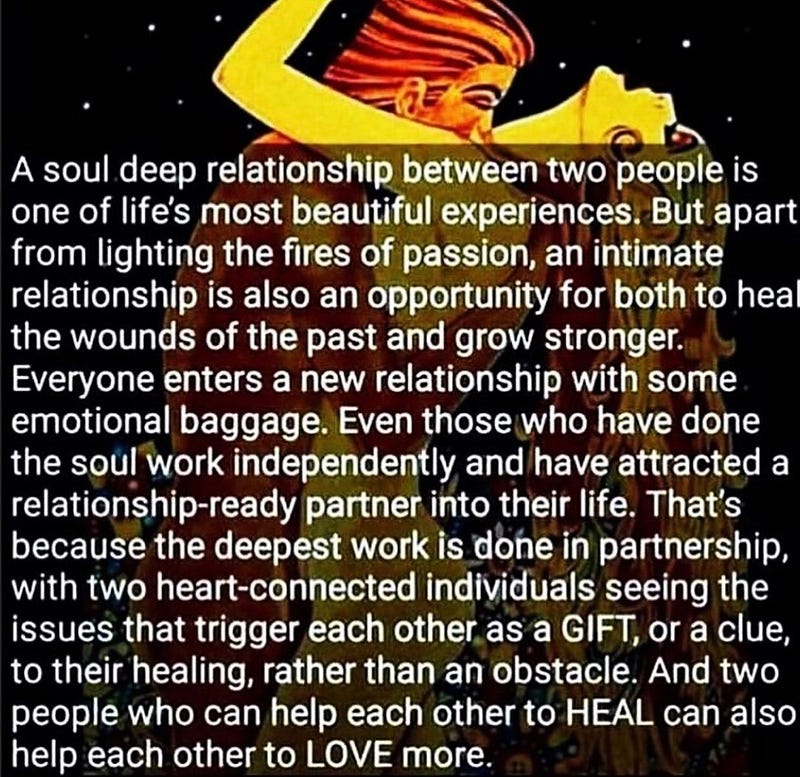
This inspired me today to start on a new topic that I’ve been circling for some time.
First of all, let me tell you that I am one of those people who really wants and craves deeper conversations and connections. That’s of course because of my childhood trauma when I was deprived of such a connection with my parents who despite being brilliant parents with a very high IQ, were not nurturing the development of my EQ. I talked in a previous article about the importance of emotional intelligence in the context of the gig economy which is also the professional paradigm where I am operating. But now I want to focus on emotional intelligence in relationships.
Intellectual understanding vs emotional understanding
In my last relationship where only a few months back I was praising my generously loving boyfriend, I was attracted to him due to his spiritual nature and his understanding of the world through the lenses of his feelings. He is one of the few people I met in my life so far who is able to really dive deep into his emotions and still be a very strong man with a strong career and his head on his shoulders. I was on the opposite side. I was understanding things intellectually, but when it came to feelings, I was struggling. My traumas blocked this core part of my being in order for me not to suffer all the time. But every day I was making small progress. Both in therapy and in the relationship. I also do a lot of yoga so I started spending more time in my body and slowing down the pace of my life to really have time to process everything from an emotional perspective. But .. I was cut off. Right when I was about to say I finally found the space where I can be myself and feel everything without being judged and allow healing to happen, I was again thrown in the deep dark and locked myself back in the ice tower where no emotions can touch me.
Despite being able to understand intellectually that a breakup is not the end of the world and that I will meet other people and life goes on and I can let go and all that very rational processing, the emotional processing does not mean the same deal.
Let me explain why.
Last year, when I met B, he was coming after a breakup from a girl who was with him for 12 years he spends some time alone before going on other dates. And he said he was over her. He was on a rational level. Of course, he knew he could not want her back and that things were not going to be fixed. But on an emotional level, he was still not ok. The way we spend our time together revealed that he was trying to tick the boxes with me of what didn’t work with her. He wasn’t even paying attention to who I really was and to genuinely get to know me. He was just making sure I was not going to fail his expectations the way she did. To give some examples:
- „she did not like my smoking so if you don’t like it either, then we have a problem”
- „she was into rooftops and pictures but she completely ignored me when we’d go visiting a new city so if you will also pay attention to the landscape more than me, it means you don’t really love me”
- „she was always blaming others for things and never taking responsibility for her own shit so if you will also prove to do that, it will be a deal-breaker”
Ok, maybe I exaggerate a bit because he didn’t express these things this way, but still, the idea was the same. He was triggered by me doing things like his ex-girlfriend and he was starting to relive those feelings.
That’s what emotional healing is all about. You are supposed to help your partner understand where the trigger you caused has nothing to do with you being the wrong person for him/ her and where you can support the other to reframe his/ her view about the situation. But the big problem here is the level of awareness that you are going through a healing process in a romantic relationship. Basically, when you go to therapy, you „feel” in a contained space. You know for sure that the therapist is going to help contain your feelings and that what you feel has nothing to do with this person but only with yourself.
But what happens when you are feeling all the shit storm in a romantic relationship and you want to blame your partner for triggering that?
This is where my experience has brought me most times in all my relationships in the last 7 years since I started this new stage of my life. My „awakening” started after the breakup from a relationship that lasted 4 years and was full of toxic shit. We were both very young and didn’t know better intellectually, but I started developing more emotional intelligence as a consequence of this relationship. Since then, I dated no more than 4–5 months and started healing stuff from my past in every relationship. With every breakup, I was more me and in my essence and in control of my feelings and my energy. However, the older I got and the more knowledgeable in psychology, I started to want to look at my partner's traumas as well and help them heal because otherwise, I will never find a perfect guy and „enter” a perfectly healthy relationship.
Relationships are never something perfect in which we „enter” but instead are safe spaces that we „form” and allow a balanced exchange of energy in order to heal and feel loved.
The next step after starting to look into the needs and feelings of my partners was to understand their family dynamics, their traumas, their biggest triggers, and no-gos. Needless to say, you can’t properly do this in a 3–4–5 months relationship. Exactly the moment it started to get hard, they withdraw-ed. They caved and I was left alone again reliving my own abandonment trauma and feeling like this is just me again doing the wrong thing.
My biggest AHA moment was this year when I read the letter I sent last year to my ex after we broke up. It was so full of guilt. I was really living in the guilt of having traumatized him with my past wounds and with my „darkness” because I was healing with his love and help. And at times, I was projecting stuff and that was abusive and not ok for the relationship, but still… a partnership is based on the two, helping each other through the good and the bad. And as soon as it got a bit bad, his own triggers were alerted and he bailed out.
One year fast forward, I was not projecting anymore. The guilt feeling was treated in therapy, I was much more aware of the moments when my partner would trigger me for my past wounds and I was communicating how I feel and how I associate that and how my mind makes assumptions that might not be true and working through validating that with my partner if I was really meant to be scared that my nightmares will come true or not. And for a while, this worked fine. I haven’t had one single conflict with him in 3 months about anything I created discomfort within the relationship. That was until I triggered him emotionally with something very deeply buried from his past. I never meant to trigger it. On the contrary, I was even aware that it might be a big issue and I was being preventive about the situation. However, some things don’t depend on us anymore. That’s where I realized that there’s a deeper meaning to emotional healing than I thought.
Despite being spiritual and staying in the feelings, taking the shit storm was something new to him as well. And unlike me, he did not have another safe environment to heal those things as I had with therapy. He only had me. And I am also a human so I might have thought that if he is blaming me for it, it means it really is my fault. And I took it personally. I am stormed out the door leaving him alone when he needed me most. I bailed without even knowing because I had not realized that he was finally beginning to heal in the relationship. It was my first time getting to this point of connection with anyone so how could I have recognized the signs better?
Here are some tips to know when it’s not about you and your partner needs you to be there for him/ her and resist the shit storm together:
- You need to zoom out of your conflict and try to see the larger picture. The way I do this in other relationships than in romantic ones is by checking the basics. Is he/she well-fed, slept, safe financially, etc? Does my partner have the basics of what he/she needs to be able to function properly in the context of our relationship or is he/ she irritated from something external from our relationship that I might not even know about and is just projecting that on me? If I practice this exercise in my mind before answering the complaints of my partner, I can see his shouting as a cry for help instead of a blaming engagement. It’s a lot easier to do it and remember these rules when you are not so strongly attached to this person and if the person is someone close but not the closest. I often see how easy it is to navigate this emotional intelligence at work vs at home where I am emotionally involved with the person and my hopes and dreams are so deeply entangled with the other one.
- Make sure you are well connected to your own feelings before you reply to an attack. This part is a lot harder to do than we think. Most of us will just puff at this one saying „oh, how is this not obvious already?!”. In my experience and despite my intellectual self-awareness, most people will not be able to truly get out of their heads and into their emotions for this step. I also hear a lot of people saying „but I am very emotional”. Yet, that does not mean the same thing. My own experience with talking to emotional people was that the moment they try to connect where their emotions are coming from, they cannot distinguish between their ego ( which is usually hurt and needs to be healed to not take over all the time) and their soul which is their essence and had no intention of doing any harm. And sometimes, even the most innocent people have hurt egos that have stronger voices than the soul. That’s when it needs to be worked on. Our human nature is wildly gifted with emotions, but mastering and controlling our feelings is what makes the difference between disciplined minds and untamed ones who live more or less like mammals but call themselves free spirits because they don’t intellectualize their feelings at all. By this point, you know that connecting to your feelings before responding to an attack means checking with your rational brain whether the feelings you have come from ego or soul and make sure you check your intention before responding. That brings me to the next point.
- Intention checking. Why do I want to reply to my partner this way? What is it benefiting the relationship? What is it benefiting me? How will he/she use the information? It’s often an exercise that takes a bit of time. But I follow the same principle as the previous one with checking your feelings. This time is about checking your intention in the response you give.
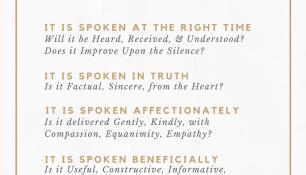
4. Check how your partner is able to handle the response you give and make sure you support him through the impact it has on him. Obviously, even the more kind and affectionate words will still hurt if what he/she needs to heal is very deep and painful. It will not be anymore about measuring your words as it will be about offering emotional assistance and space to process that. But when I say space, I mean an environment where he/she still feels protected, contained, not judged and loved in order for him/her to heal. In my Romanian culture, there’s a saying that goes like this „what you don’t like, you won’t do to others” and it feels like this is really capturing the essence of what it means to be able to help someone heal in a relationship.
5. Allow more than 21 days for the emotions to be processed. This was a powerful lesson I had to also learn for myself. While most intellectual processing can happen on the spot, emotional healing takes time. With B, I was always impatient. I never had enough trust that if I allow him the time he will ever come back. It was of course coming from my unhealed trauma of being abandoned. People don’t always come back, but some do. And if they do, we get to heal some of that trauma. But regardless of that, we should be able to allow the brain chemistry to work its magic. Our brains are triggered in the deepest layers of our subconscious and might even alert our reptilian brain of surviving if we are really uncovering a big trauma when we have the fight with our partner. It might be that we think we can go over that in a few days and return to „business as usual”, but that might not be the case in some situations. It takes around 21 days ( which is also the time-proven to help form new habits and routines) before they can think again clearly with their rational brain and can control again their feelings like an evolved emotionally mature person.
To summarize, whatever the trauma was, it was done in one of your primary relationships with your caretakers which then lead to a series of patterns repeated with your romantic partners following the same systemic dynamics you saw in your primary relationship. The more complex the trauma, the more difficult to spot it and claim the space and time to heal it in your current relationship.
There’s a lot of very good advice for relationships in the work of Sue Johnson with her book „Hold me tight” which I wholeheartedly recommend, but I have also gone to the next level in my research by reading Mark Wolynn, Frank Ruppert and Bert Hellinger. They all talk about systemic relationships, constellations, and healing in the context of a relationship more than outside. That’s also one of the reasons I felt like writing this piece because I see a lot of psychotherapists and people who are „emotionally strong” who never admit the power of a healing relationship and don’t want to admit that true vulnerability is achieved by sharing these pains and part of our past with our partner. They fear it will break the current relationship and they don’t act on it. But in the end, they are still restless and endlessly looking for answers outside of the emotional realm of the relationship and never really heal. That’s just sad.
So I hope more people have the strength to „burden” their partners with who they really are, what they really need from the relationship and can maturely talk about how to deal with these things when they start unfolding because we can also use phasing of the relationship in stages where we both first heal what’s blocking us from really feeling whole and being able to love ourselves and then start building together.
Most couples start building because they fear they will lose too much time by trying to uncover the past and if they start doing that it won’t be of any relevance to the present. Others just do it incrementally and have a lot of fights in their younger times and end up divorcing after some decades because they want to be happy with someone who does not remind them of all the sorrow they had to go through to heal. They „used” a relationship just like a washing machine and then moved on to live their happy life with someone who will only benefit from them being healed but will not do the work of healing. That’s also nice, but the true connecting is really formed with those who helped us heal! And we don’t heal alone!


