
Co-Dependent Relationship
The Road From Co-Dependency to Trust and Vulnerability for the Hard Conversations
It’s been over 9 months since the start of my journey from co-dependency to independence and autonomy which leads to forming trustful and secure relationships.
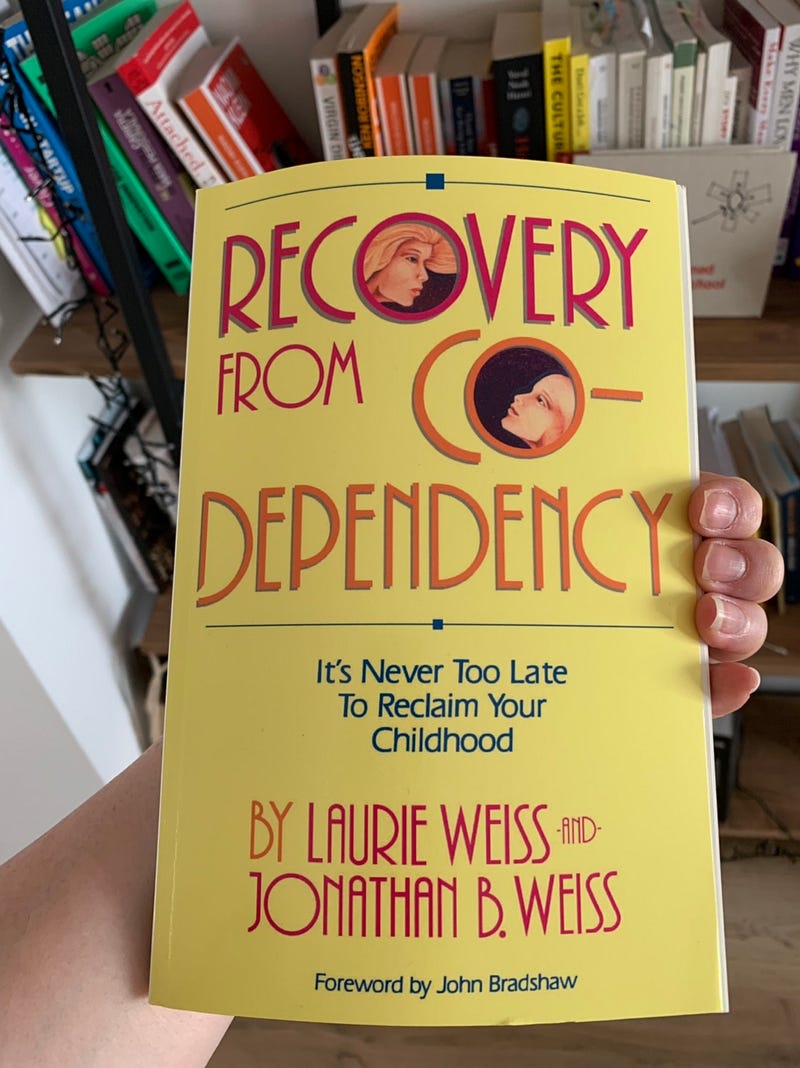
During the last months since my former partner broke up with me due to the intense nature of our codependent relationship, I’ve started documenting what initially came as a strange term in our last conversation: codependency.
While he just used the term because he heard it from his best friend who was calling him out on his mistakes in the relationship telling him he is too co-dependent and that’s why everything plays out this way, for me, this term became the center of my research. The first book was also the foundation of over 100 books more on psychology and neuroscience.
The work on the inner child revealed the following:
- Your current behavior is hardwired from a young age as a mechanism of response in different circumstances. If you come across a behavior that brings you unhappiness or keeps repeating itself in a pattern that leads to discomfort, then you must be able to identify which period of your child development it belongs to and how that initial behavior was formed to be able to work out on its change.
- You never work in isolation. You’re always bound to work on behavior in a system and to produce change, you must understand what type of need does that behavior stands for.
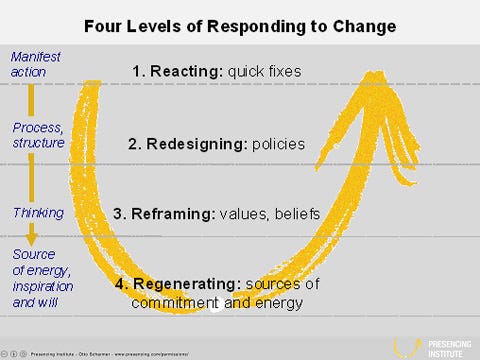
3. Your current reactions are not as much a response of the initial trauma which might make it harder to recognize the pattern, however, looking at the vicious circles will help you identify the types of complex patterns you’ve formed to protect yourself from uncovering the initial trauma.
4. While defense mechanisms are useful for helping you automate processes and create healthy boundaries sometimes and not lead to bad coping mechanisms, having them in the wrong circumstances like in the therapy process of healing your inner child, you won’t be able to efficiently work on the deeper traumas and you’ll simply scratch the surface for a long time going in circles about your true liberation from these walls that keep you locked in or stuck.
5. Coping mechanisms also serve a purpose and were formed as a surviving mechanism. Replacing them will also come at the cost of feeling more vulnerable and that can lead to losing the ability to function properly, go into a deep depression or even give up life completely. Having a serious conversation with a therapist about how to work on removing bad coping mechanisms is something most of us avoid doing out of shame or fear or simply because they gave up on the hope that they can do something with their life.
6. Since any change doesn’t come in isolation, the holistic approach of problems will help come up with a plan for change in a sustainable way, however, only prioritizing the steps of the change will help sustainably achieve results. What does sustainable mean? It means correctly managing the resources you have to operate on change.
These are some of the main ideas extracted from the first book along with many others following. However, nothing sends a message about how to implement these steps better than storytelling. So here’s the story of my recovery from codependency.
Since an early stage of my life ( estimated around 2–3 years old), I’ve developed an anxious attachment style. My mother, despite being a loving mother, was inconsistent about providing attention. Her struggles and challenges of our family at that point in the cultural and political times that created the context for my upbringing in Bucharest, Romania of the early 90’ right after the Communist regime was removed, made it a very difficult time for me as well. Looking at the types of traumas connected to this stage of development, a child can easily develop abandonment issues. Moreover, trusting the mother is something hard to achieve if she was herself inconsistent in her behavior of giving love and affection which are the primary resources a child needs at this stage.
Later in life, abandonment issues became a theme of my relationships with both romantic experiences and social circles. Whenever I would encounter situations that would trigger this trauma, despite all the defense mechanisms developed to avoid the pain of abandonment, I would get stuck in a vicious circle of overcompensating behaviors to make sure I won’t be abandoned. In time this started to affect my life to the point that at 29 when facing a breakup, I collapsed completely into a deep depression. After months of not being able to function properly, my other coping mechanism for this trauma which was a good coping mechanism despite becoming obsessive, helped me pull myself out of the darkness. Reading was my coping style developed when my mom would not come to help me with my homework and I felt she was abandoning me over and over again. I read so much as a way to avoid having to ask for her help for anything because that would cause more trauma seeing that she is not willing to give me the attention I was craving.
From this life story to the codependent relationships there’s only one step. Once you find someone that will give you the attention you need, you’ll develop a deep sense of dependency on the relationship with the source of your validation, attention, love and care that you were craving as a baby from the mother. Being able to trust another person will not leave you again like the mother is something that becomes almost impossible to do unless you take all measurements to make sure you won’t be hurt again.
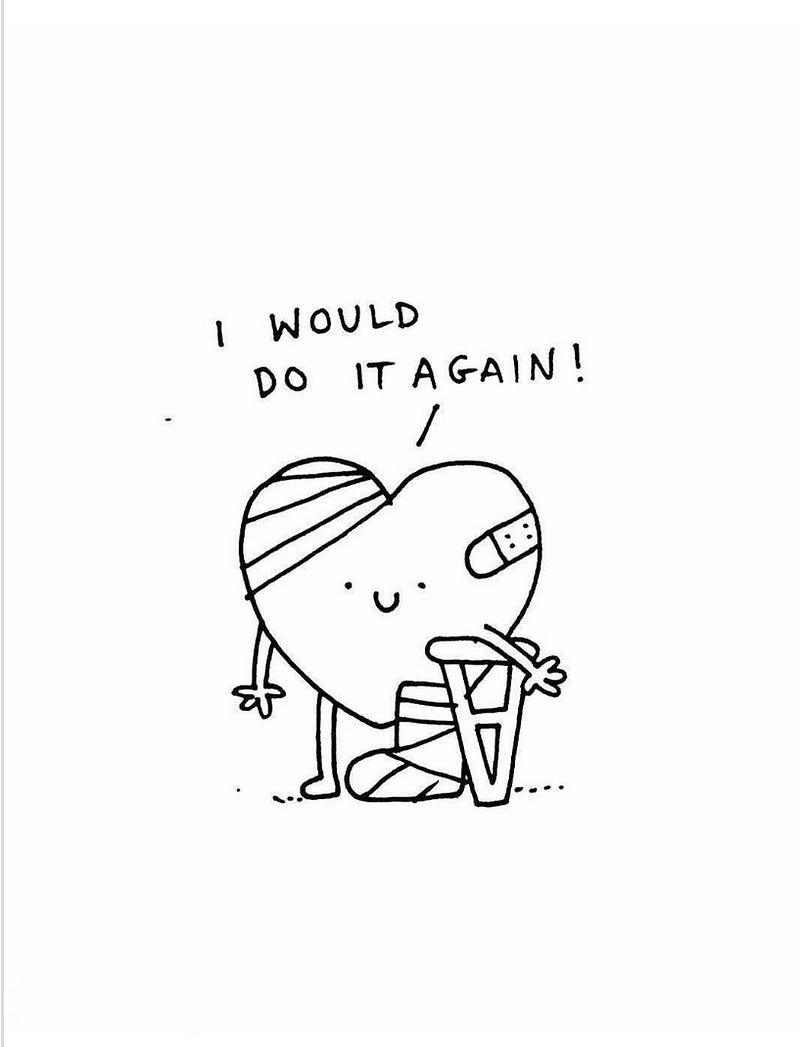
This inability drags along other issues which ultimately will stop you from having healthy relationships.
The road to recovery goes through hell.
Although I don’t want to make this dramatic, it seems that the only way to work with the trauma is to go back to the initial trauma and relive it so you can heal from it. That means also being able to stay with that pain now as an adult and with enough resources to help you deal with it in a different way than when you didn’t know better.
For me, the abandonment was so tough to deal with that I did everything I could to escape it. I cried, I begged him to come back, I waited for months. Nothing worked to lower the pain. It wasn’t until I could let go that I could heal from the pain.
It took 4 months to start thinking of letting go. Then another 4 to work out the pain of having to let go. That was all the part of the immature ego that had to reframe beliefs and values. My process is called “brain rewiring”. I’ve spent over 4 months working out the ways of reparenting myself to be able to change why my ego was aiming at obtaining a certain result instead of settling with the outcome for whatever it was. The whole process was also documented in my yoga classes as I was working out poses inflow and then not being able to hold them long enough in the perfect pose in yin. I’ve learned how to let go of the ego of keeping things perfect in the long run. Finally, after years of being able to function “perfectly” for short term sprints, I could see how the long marathon works like and how I can achieve long term calmness and balance instead of a perfect moment that doesn’t last long enough.
Currently dating the most amazing man who is both spiritual and rational and helps me explore my evolution and growth in a secure relationship rather than in the isolation of my rational processes surrounded by books and organized by my yoga practice. I would have never reached this point without being able to fully let go of the “need” I thought I had about the list of “features” I expected in a partner and reflecting on why I wanted those things in the first place. Holding on to things because of your uncovered trauma only keeps you in the vicious circles and doesn’t allow you to explore your full potential which I am not learning to nourish.
The problem with the current pop culture of self-help books teaching us to “let go” and be stronger is that it comes with a very big flaw. It missed out on the point of what letting go means. It teaches us to be “strong” and become more self-confident by setting walls of protection and set more and more boundaries and standards that ultimately isolate us from true connections and meaningful relationships.
I hope this culture of “strong women” who have everything they need except a man in their life will make people think of what it means to have deeper conversations and how to build the strength together as a couple rather than independently and in isolation from real connections. Strength is not a glass wall you put around you to protect yourself from critics. Strength is the courage to be vulnerable and open when you might get hurt but still do it because that’s the only way to stay authentic to who you are!
My 10 steps from Co-dependency to Independence and Autonomy are the following:
- Getting an awareness of my vicious circles
- Spending time observing rather than judging my patterns
- Looking at the needs that I had in my childhood that formed trauma and needed closure to properly let go of those needs in my adult life
- Reframing my needs and wants from a more mature ego perspective
- Looking at ways to heal my immature ego in other ways than my old patterns
- Cultivating my new autonomy and new reframed ego positions so I can get more confidence in this new type of skill and make more conscious and informed choices
- Loving the results of every choice for their lessons rather than outcomes
- Cultivating contexts where my energy is not drained and I can sustain long term investments ( finding the passion and purpose)
- Learning to read the energy flows of others and how that affects me
- Observing my body reactions and my feelings and emotions and going from my mind to my heart to become a full potential human ( read more about this in the article of my friend here).
I will continue to write more articles on how to have difficult conversations and to tackle the root of what kills relationships today. If you enjoyed my post, sign up for getting updates and drop me a text via Linkedin or in the comments below to tell me what other topics you’d like to read about.