
Day 22 : 60 days of Data Science and Machine Learning Series
All the Important ML algorithms with projects…
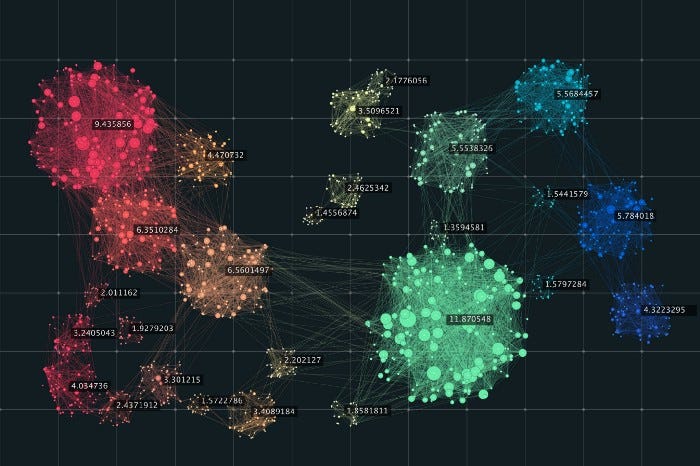
In this ( very) short post we will cover some of the most important ML algorithms you should know and going forward will explore each of these ML algorithms with a project.
Some of the other best Series —
100 days : Your Data Science and Machine Learning Degree Series with projects
Complete Data Visualization and Pre-processing Series with projects
Projects Videos —
All the projects, data structures, SQL, algorithms, system design, Data Science and ML , Data Analytics, Data Engineering, , Implemented Data Science and ML projects, Implemented Data Engineering Projects, Implemented Deep Learning Projects, Implemented Machine Learning Ops Projects, Implemented Time Series Analysis and Forecasting Projects, Implemented Applied Machine Learning Projects, Implemented Tensorflow and Keras Projects, Implemented PyTorch Projects, Implemented Scikit Learn Projects, Implemented Big Data Projects, Implemented Cloud Machine Learning Projects, Implemented Neural Networks Projects, Implemented OpenCV Projects,Complete ML Research Papers Summarized, Implemented Data Analytics projects, Implemented Data Visualization Projects, Implemented Data Mining Projects, Implemented Natural Leaning Processing Projects, MLOps and Deep Learning, Applied Machine Learning with Projects Series, PyTorch with Projects Series, Tensorflow and Keras with Projects Series, Scikit Learn Series with Projects, Time Series Analysis and Forecasting with Projects Series, ML System Design Case Studies Series videos will be published on our youtube channel ( just launched).
Subscribe today!
Tech Newsletter —
If you are interested, you can join my newsletter through which I send tech interview tips, techniques, patterns, hacks — Software Development, ML, Data Science, Startups and Technology projects to more than 30K readers. You can subscribe to Tech Brew :
ML algorithms can be classified as follows —
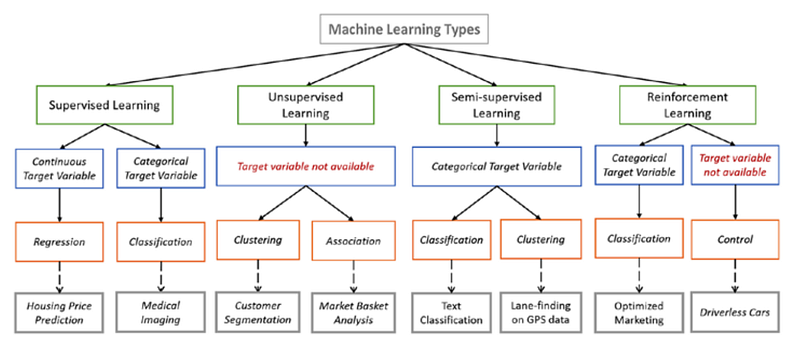
Regression
Used to model the relationship between a dependent (target) and independent (predictor) variables with one or more independent variables which helps us to understand how the value of the dependent variable is changing corresponding to the independent variables.
For this we will be covering algorithms as listed below —
- Linear Regression
- Decision Tree
- Support Vector Regression
- Lasso Regression
- Random Forest
Classification
Classification algorithms are used for predictive modeling problem where input training data is used to predict the probability that future data will fall into one of the predetermined/labelled categories.
For this we will be covering algorithms as listed below —
- Logistic Regression
- Naive Bayes
- K-Nearest Neighbors
- Decision Tree
- Support Vector Machines
Want to read ( quick recap of 60 days of Data Science and ML) :
Clustering
Clustering is a technique of dividing the population or data points, grouping them into different clusters on the basis of similarity and dissimilarity between them. It helps in determining the intrinsic group among the unlabeled data points.
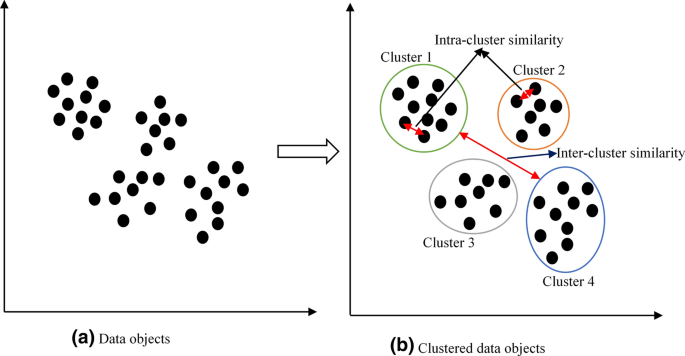
For this we will be covering —
- Affinity Propagation
- Agglomerative Clustering
- BIRCH
- DBSCAN
- K-Means
- Mini-Batch K-Means
- Mean Shift
- OPTICS
- Spectral Clustering
Day 23 : Classification with a project
Stay Tuned.
For other projects, tune to —
Build Machine Learning Pipelines( With Code)
Recurrent Neural Network with Keras
Clustering Geolocation Data in Python using DBSCAN and K-Means
Facial Expression Recognition using Keras
Hyperparameter Tuning with Keras Tuner
Custom Layers in Keras
That’s it fellas. Peace out and keep coding :)
Stay Tuned and of-course let me end this post with a quote by Avicii
Figure out what you’re most passionate about in life and what you’re good at. And the mixture between those two and then you should give it your all, all the time


