CEO Content Series: Howard Buffet & Fertilizer Producers On Restarting Ukraine’s Agiculture Production For Global Food Security
This is the fourth part of a content series on CEOs
The first part of the CEO content series is about the divergence between American foreign policy and business interests as national security concerns remain sky-high in the face of China’s rise.
In the second part, I illustrated the role of advanced technologies in the Russia-Ukraine conflict and some of the ongoing dynamics at play.
I then analyzed some renewable and clean energy investments trends from CEOs and the world’s biggest producers in the third part of the content series.
Now, I’m going back to look at some of the CEOs whose companies are deeply embedded to developments in the Russia-Ukraine conflict. Specifically looking at how the Black Sea Grain Deal is pivotal to global food security.
Back in October 2022, I posed a serious question to readers:
Does the newly proposed deal by the United Nations give hope for the success of the Grain Export Corridor (Black Sea Grain Deal) or is it just another act of Fertilizer Diplomacy for Russia?
This was my initial thought when writing about Fertilizer Diplomacy 2.0.
As the world focused on what I’ve been writing about extensively since I joined Medium: global commodities are playing a much greater role in how countries are formulating industrial policies under the backdrop of Environmental, Social, Governance (ESG) frameworks and geopolitical trends.
The proposed Black Sea Grain Deal is seen by many international companies and organizations as a necessity for combatting the global food crisis.
According to CEO of Trammo, Ed Weiner: “The absence from the market of ammonia formerly shipped through Ukraine has caused substantial hardship in countries dependent on that product. We believe that resumption of shipments will help to stabilize fertilizer prices worldwide and to avoid a global food crisis.”
Speaking on behalf of the World Food Programme (WFP), George Fominyen said: “We are currently seeing a global food crisis that is largely due to high prices … But without fertilizer in 2022, the current crisis could grow into one of food availability in 2023, as harvest yields decrease.”
However, since this proposed deal in September 2022, the conflict between Russia and Ukraine has intensified on both sides of the fighting. BBC
In May 2023, the world has reached a climactic point in the Black Sea Grain Deal, since talks between Russia, Turkey and the United Nations (UN) are being held on how to safely export grain and ammonia from Ukrainian ports on the Black Sea. A potential deal — or no deal — will have drastic effects on global food security.

Putting politics aside for a moment, one of the biggest players in the area of providing for global food security is Howard Buffet, Chairmand and CEO of The Howard G. Buffet Foundation.
According to the foundation’s official website, it’s “mission is to catalyze transformational change to improve the standard of living and quality of life, particularly for the world’s most impoverished and marginalized populations.” The company notes that it invests in three primary areas: food security, conflict mitigation and public safety.
Howard Buffet is a former farmer and sheriff from Midwest America. He currently sits on the board of Warren Buffet’s Berkshire Hathaway — read more about this company’s investments in renewable and clean energy in the third part of this CEO content series.
He is also a staunch supporter of Ukraine, alongside Virgin Group founder Richard Branson, in their mutual views on how the conflict with Russia has raised issues on global justice, democracy, and the rule of law.
Howard Buffet spoke to Bloomberg on Wall Street Week about how the company’s working on the frontlines of Ukraine’s farming industry, in addition to his meetings with Ukrainian people and President Zelensky.
When asked about the Black Sea Grain Deal, he said: “If you did not have the Black Sea Grain Initiative still operating, which it’s sluggish, but it’s operating, you’d see a lot bigger problems than what we’re seeing today.”
He quickly shifted the discussion to how one aspect of the war itself is the greatest risk to rebuilding Ukraine’s agriculture production: land mines. Forbes published a report about the land mines why they are threatening the philanthropy work being carried out in the country by Buffet’s foundation.
Buffet also mentions how much damage has been done to Ukraine’s agriculture industry by shelling, which is one of the factors that must be taken into consideration when investing in Ukraine’s rebuilding.
Regardless of what officials and diplomats are doing or saying — or not doing and saying — it’s clear to me that Geopolitics are playing a much greater role in industrial policies around fertilizer and food.
The Odessa Journal reported that Ukraine was able to export 20.2 million tons of grain crops from January-August 2022. These figures are down considerably yoy while China continues to be Ukraine’s main food importer at $749 million (14.4%). The Ukrainian Agrarian Business Club (UCAB) association claimed that much of the success in Ukraine’s agriculture products exports in September 2022 were due to the Istanbul Grain Agreements, which allowed food exports from three Black Sea ports.
From the industry perspective, Yara President & CEO Svein Tore Holsether noted that although Yara International delivered strong results in Q3 2022 that “we remain deeply concerned about the food and fertilizer supply situation in Europe and globally, and repeat our call for urgent action to reduce dependency on Russia.”
Thus, energy security and dependence shall play another big role in global fertilizer prices and supplies going into the long-term rebuilding of Ukraine’s agriculture production for global food security.
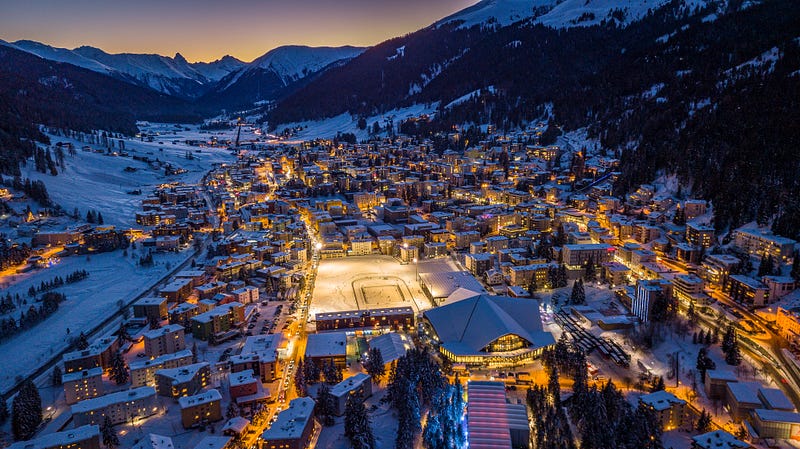
The World Economic Form (WEF) Annual Meeting 2023 was held in Davos, Switzerland, from 16 January to 20 January 2023.
There are a variety of issues and challenges addressed at Davos. I want to focus here on the global fertilizer industry and agricultural commodities. It was indeed a big theme for this year’s forum — ‘To Transform Food Systems, Give Small Farmers Irrigation, Fertilizers and Secure Market — At Lower Cost’.
One of the biggest voices of the global fertilizer industry at the WEF Annual Meeting this year was Norweigan fertilizer producer Yara International.
During the panel session with other corporate, government and philanthropic leaders, they collectively spoke about the issues facing the global fertilizer industry in the future, such as soil health concerns and climate change scenarios. This put into perspective how crucial it is for fertilizer producers to commit to carbon emissions reduction in their supply chains, as well as in non-energy emissions, such as methane.
Moreover, Holsether has been very vocal about the global food crisis as a result of disruptions from the war in Ukraine since May 2022, when he told reporters at BBC World News, “Russia plays a large role both in food production but also in fertilizer production, indirectly through natural gas that is a vital part of using fertilizers, but also key nutrients like nitrogen, potash and phosphates.”
Crop nutrients rely on sources of energy, and in the case of many fertilizer producers, natural gas is the key element for production. The geopolitical scenarios are proving to have a massive effect on fertilizer production, supplies, as well as the whole global import-export scenario. On this situation, Holsether said: “The supply chains are significantly disrupted, both directly from the sanctions and indirect effects from the situation [in Ukraine]. And also the risk of Russia holding back the exports.”
In this context he is speaking about how holding back the exports would be detrimental to global food supplies, particularly grain and wheat, both of which have been politicized over the war in Ukraine with devestating impacts to food importers in developing countries.
The world’s largest fertilizer producer is Canada’s Nutrien Ltd.
CEO Ken Seitz spoke to Wall Street Journal reporters during the WEF Annual Meeting. He noted that fertilizer prices will continue to be problematic for farmers and producers in 2023. Because of price volatility for agricultural commodities, which he attributed to the war in Ukraine, fertilizer prices are likely to remain on an uncertain trajectory as the year goes on.
Sanctions on Russia and Belarus are one part of the story. Seitz pointed out that potash exports from Russia and Belarus were once one of the biggest suppliers to global markets, and now they have been effectively reduced to 20% and 50%, resepectively, according to figures in 2022.
Nutrien Ltd. had already announced that it would increase output of its potash fertilizer capabilities from approximately 14 million tonnes to 15 million tonnes in response to the ongoing global fertilizer shortage and supply crisis in 2022. It seems that the company has enough production capacity to increase its output even more in 2023. But even increasing production capacity of potash will not be the one and only solution to alleviating global food security, especially in the hardest-hit areas of the Middle East and North Africa (MENA) and Sub-Saharan Africa regions.
Morocco’s OCP Group chairman and CEO, Mostafa Terrab, addressed the WEF 2023 Annual Meeting in Davos in a blog post about How Africa can help feed the world with this opening line, “We meet at a defining moment for humanity.”
As an African country, Morocco faces similar issues to other countries on the continent in terms of demographics and climate change. That’s why Terrab called the transition to sustainable, smarter farming an urgent concern for the world’s food systems, but particularly in Africa where fertilizer application is significantly lower than the global average.
To effectively solve these problems in Africa’s agriculture industry, OCP Group seeks to help African farmers maximize crop yields by applying precision agriculture (PA) techniques that can adapt to localization of farming throughout areas of Africa. In the end, this will require access to the right inputs, supply chains, financial tools, and innovations — thus, it is a mutual issue of accessibility and sustainability.
To this end, the OCP Group CEO acknowledges that the world is becoming aware of these critical problems and solutions for global food security. At the same time, they are becoming more aware that African farmers are a key part of the solution to not only combatting food insecurity, but also climate change.
Morocco’s OCP Group is one of the world’s largest fertilizer producers, holding the world’s largest reserves of phosphates.
The company also announced on 22 January 2023 a strategic supply agreement with India to sell 1.7 million tonnes of phosphates fertilizer products over a period of one year. The significance of this deal occurs during a time when India’s largest source of fertilizer imports — Russia and China — have curtailed exports due to domestic concerns.
Besides Morocco, one of the unlikely voices to come up during the WEF Annual Meeting was Indias’ Union Minister Raj Kumar Singh. In fact, his comments were one of the headlines of this year’s forum — ‘To Transform Food Systems, Give Small Farmers Irrigation, Fertilizers and Secure Market — At Lower Cost’.
Things got more personal when Singh responded to criticism over India’s purchases of cheap Russian oil. In response, he said: “India imports less gas from Russia in a month than Europe does in a day.”
And that’s also why much of the discussion revolved around the Energy Transition, as India has been working with farmers to reduce their carbon footprint by getting more of their energy sources from renewables through solar water pumps and green ammonia. This is also relevant to a key deal signed between Morocco’s OCP Group and India on 22 January 2023 that will invest more in R&D and technology.
New technology in agriculture and food systems was the driving topic in the WEF’s Revolutionizing Food Security held at Davos on 23 January 2023.
Gro Intelligence is a data and analytics company assessing the impact of climate change and how it illuminates the interrelationships between our earth’s ecology and human economy to help see the big picture and act on the small details. WEF
Gro Intelligence founder and CEO Sara Menker was on the panel of the WEF’s Revolutionizing Food Security at Davos. Menker has been talking about Climate Change and Food Security as the world’s biggest threats since September 2022. She is definitely one of the leading voices on how technology investments, particularly using data and analytics, are the practical solutions to tackling climate change and food security.
When she spoke at the United Nations Security Council, Menker used the company’s approach to data and analytics to explain a potentially bleak future of the world: “there is no version of the world where every country has all the natural resources it needs to survive and thrive. One key takeaway from our data is how often we see repeated examples of cause and effect, highlighting surprising connections and interdependencies.”
Speaking to the panel at Davos, Menker pointed out how many people do not understand the critial linkages between food and energy production — “food security is energy security; energy security is food security.”
She pushes the fact that data acts like a catalyst to solve the biggest problems there world is facing in terms of energy and food. “Data becomes that infrastructure that allows that risk-sharing and risk-taking to happen; it sort of facilitates different players — banks, companies, governments, etc — to play their role. But it sets a baseline by which people use to make those decisions.”
Therefore, data and analytics is growing solution in how businesses can make decisions about their carbon footprint and bottom lines going forward. This, in my view, will require deeper investments in R&D as well as massive efforts to recruit different types of talent in the job marketplace. By satisfying those two conditions — and I’m open to other possibilities — is a way to increase effeciencies in technology for the food and energy sectors, which can open up a toolbox of solutions to combat climate change and food security.

Curious About Culture, Intellectual About The World. Discover this publication’s content writers explaining scenarios/shifts related to geopolitics, future industrial policies and advanced technologies.
Sign up for The Weekend Brief (TWB) newsletter to stay on top of what’s happening with publicly-traded companies operating in global markets (including stock markets) at the nexus of tech, industrials and global commodities.
The latest TWB: Labor Was The Case That They Gave Schultz — Starbucks Takes On Union-Busting Accusations Against The Company’s Generational Employees.


