CEO Content Series: Denver-Based Palantir Technologies & Washington DC Law Firm Covington-Burling On Russia’s War Crimes
This is the second part of a content series on American CEOs.

The first part of the CEO content series is about the divergence between American foreign policy and business interests as national security concerns remain sky-high in the face of China’s rise.
In this second part, I will focus on the Russia-Ukraine conflict and some of the ongoing dynamics at play. It’s unfortunate that we live in this hyped-up world where international conflict gets so much attention — as with what’s happening in Sudan now — but, what’s worse, is how media and advanced technologies are playing a deadly role in the outcomes of domestic conflicts. That’s what I want to focus on in this second part of the content series.
Palantir Technologies is a data company based in Denver, Colorado. The company, led by renowned invester Peter Thiel and CEO Alex Karp, has been called a “controversial data company” for the company’s views on international politics and how it conducts business around the world.
Palantir also made headlines on Wall Street when the company went public in September 2020, filing its initial public offering (IPO) during the global covid-19 pandemic under the ticker PLTR.
At Davos 2023, CEO Alex Karp spoke with CNBC reporters about how software tipped the balance in the conflict between Russia and Ukraine.
About the company’s purpose, Karp said: “We built our company, and I believe in adressing the world as it is…I’m pessimistic of the near-future; very optimistic about what we can do to help that.”
The company is certainly doing its part by assisting Ukraine with advanced capabilities in collecting data for humanitarian purposes. And in this case, it is vital to the case being built against Russian president Vladimir Putin for committing alleged war crimes in the country’s “special military operation” against Ukraine.
According to a latest report by CNBC, Palantir is supplying some of Ukraine’s most advanced software capabilities with the intent to gather evidence for the prosecution of Russia’s alleged war crimes. What exactly is Palantir supplying Ukraine? Well, only the most advanced modern technologies in today’s changing landscape of international conflict, such as satellite imagery and IT solutions. Satelittle imagery has been a controversial topic in its own right, as the technology has been used to investigate China for its alleged human rights abuses in Xinjiang.
As for the war in Ukraine, Andriy Kostin, the prosecutor general for Ukraine, said: “Analyzing this amount of evidence would be virtually impossible without modern IT solutions.”
While modern IT has become crucial to the international judiciary process, and apparently for waging war, there are still many hurdles to overcome for the ICC’s case against president Putn. In order for Vladimir Putin to be charged with war crimes against humanity, there has to be an arrest made in a country that belongs under international criminal court (ICC) jurisdiction. So while the data is supposedly capturing the right evidence, the jurisdictional issues are going to be key to any of the possible outcomes for successful prosecution. Just remember that this is an ICC case, which means that rules in international law courts — The Hauge — will prevail.
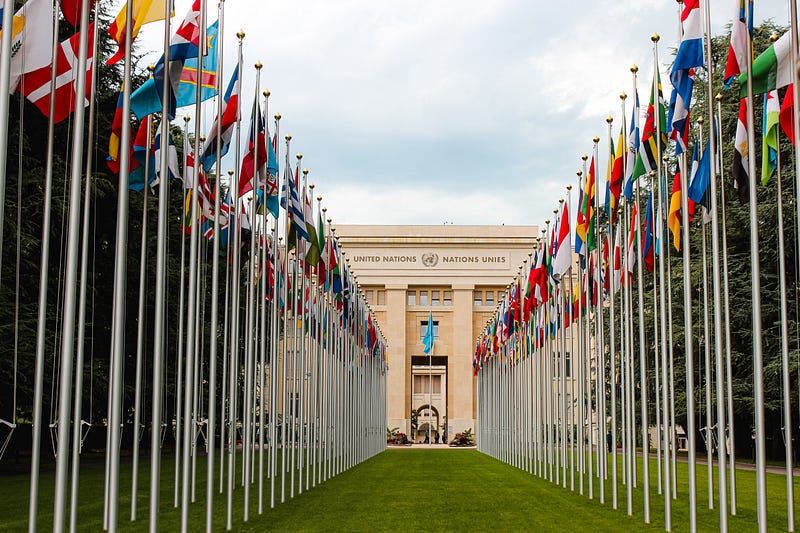
On March 3, 2022, the ICC began their investigation into the alleged war crimes committed by the Russian Federation against “civilians” or “civilian objects” in Ukraine. This implies that Russia’s ongoing military invasion of Ukraine is being targeted with International Humanitarin Law, which shall apply to all actions committed in light of events dating back to Feburary 24, 2022.
Since the ICC’s investigation, there have been numerous reports about how a trial against president Putin could be carried out at the international level.
The James Town Foundation published an in-depth look at how president Putin could be eventually arrested outside of Russia’s and the post-Soviet Union countries’ borders. For instance, when Putin travels to South Africa to attend a BRICS meeting in August 2023 — this could be an opportunity for the ICC to have him offically arrested for the alleged war crimes against Ukraine.
Drawing parallels to the Nuremberg Trials, where former leaders of the Nazi Germany’s Third Reich were prosecuted for war crimes in 1945, James Town offers that the concept of “might makes right” in the system of international relations and governance should not hold up any longer.
That’s why the case against Putin is being held to the highest standards of international law practice in the 21st century. The outcome of this case — if there is one — will absolutely set a new standard for international conflict in the decades ahead.

Time published an article about the war crimes investigation against Russia and Vladimir Putin a few months after the initial invasion on Feburary 24, 2022, which sets out to explain how both Russia and Ukraine are adopting historical andecdotes from the Nuremburg Trials to justify their positions.
For example, a lawyer of the former Soviet Union, Aron Trainin, is credited for the term “crimes against peace” which came out of the initial proceedings against Nazi war criminals of the era. But more importantly, the Time piece — Ukraine and Russia Are Both Looking to the Nuremberg Trials — But Finding Different Lessons in the History — goes into a lengthy discussion on how the meaning of words, in the context of this war crimes case, has deeply affected both Russia’s and Ukraine’s stance on their respective histories.
On this topic, I want to point your attention to a discussion I had with another member of the Medium community. In response to What did the Chinese Ambassador to France really mean? I noted that by putting this diplomatic debacle in the context of liguistics, the writer has opened my mind to a completely new understanding on the Chinese ambassador’s comments about Post-Soviet Union countries. Here was the writer’s response:
As for diplomatic language, it’s what it’s all about — everything these guys say is measured on how it will be reacted to, I personally think AMb Lu knew exactly what he was saying and it leads Ukraine to a point where they can redraw their boundaries in an acceptable way and finally get some peace. If Russia keeps the ground its taken there won’t be peace, itf Russia withdraws all the way back to their original borders, there won’t be peace. If new borders are redrawn, lodged with the UN there could be a lasting settlement.
Although I did not touch on any diplomatic examples from the Chinese side, I did include some of China’s media narratives on US secretary Yellen’s recent speech on US foreign policy objectives and doing future business in PRC in the first part of this CEO content series.
Now back to Nuremberg Trials. The Guardian recently published its piece after the US intelligence leak incident revealed new problems for he ICC case. John Kampfner of The Guardian frames the discussion on how American government leaders, citing former US president Donald Trump, have changed the international picture tremendously, asserting the “blithe indifference” from the American and British sides toward international law leading up to the ICC case being made against president Putin.
In my opinion, the ICC case being built against Russia for its alleged war crimes in Ukraine is a paradigm in question, not a paradigm as a solution; and this is the key issue, because historical interpretations cannot be the rhyme or reason for a sucessful prosecution. That’s already been proven with China’s case on the maritime territorial disputes in the South China Sea.

Does this mean that the ICC case against Russia is an example of a paradigm shift? Not at all. Though I would argue that this is a great example of how strategic foresight is applied to internatonal relations (IR).
Aside from international and domestic conflicts, I have applied a similiar concept to understand how international business disputes revolve around geopolitical and industry trends in global fertilizer market scenarios.
But first, I want to bring your attention back to another discussion with a Medium community member. In the first part of this CEO content series, I posed a question about Ameican CEOs doing future business with China: Who will control and profit the most from surging imports [of electronic products] to the United States?
In response, Sorin Dumitrascu said:
Some claim that many foreign companies are using their economic power to control the US market and extract profits at the expense of American workers and businesses. They argue that this could lead to a situation where American consumers become overly reliant on foreign goods, while domestic firms struggle to compete with overseas rivals.
I completely aree with him. I already wrote about this issue, explaining how legal case outcomes at the international levels (i.e. USTIC and ICJ) affect industry trends that are concurrently altered by geopolitical forces — in other words, a paradigm shift in understanding global market scenarios.
I argue the best way to unpack this paradigm shift is to use a strategic foresight framework. According to Dr. Amy Zalman when companies act on scenarios they will be inclined to act on the ones with preferred outcomes for the company — a “preferred future”:
“You find some space in that wide realm of the possible that you’ve identified and you say, ‘You know what? We want to go there. That’s where we want to be in 2030. We want to be in that market’”.
Washington DC-based international law firm Covington & Burling is representing Ukraine against the Russian Federation at the International Court of Justice (ICJ) and World Court, whereby Russia’s alleged claims of “genocide” and “racial discrimination” towards people of the Donetsk and Luhansk territories of Ukraine is at issue.
In defending their positions, Russia has went as far as declaring these Ukrainian territories as “The People’s Republic of Donetsk” and “The People’s Republic of Luhansk”, which would be a major geopolitical shift in itself.
The upcoming international legal cases, for which Ukraine is being represented by Washington D.C.-based law firm Covington & Burling, means a great deal of significance for how the whole conflict between Russia and Ukraine is going to play out, because now the stakes of the conflict have been raised to higher levels of international court systems.
Both the cases of American fertilizer producer The Mosaic Company and Covington-Burling equally demonstrate how legal case outcomes could affect industry trends, in which a pardigm shift in understanding global market scenarios could be exlained by geopolitical trends.
Looking at the crisis response from all actors, while assessing the global market factors and evaluting the impact on imports and exports, could provide insights on how future events would disrupt and change global markets. For Russia’s war crimes case, it’s about how the case against Putin would be carried out as the conflict with Ukraine impact important industries — such as Ukraine’s agriculture industry — for the global economy.
Moreover, Covington & Burling wrote as one of the main pillars of the firm’s practice: Strategic Foresight at the Intersection of Law and Policy. This means that one of the world’s largest international law firms are operating in countries where strategic foresight capabilities are essential to the company’s effective practice strategies and legal case outcomes.
With a solid strategic foresight framework, companies should be able to understand how global events and geopolitical forces affect their bottom lines, and how to properly manage paradigm shifts into the planning process for business outcomes of all shapes and sizes.

Curious About Culture, Intellectual About The World. Discover this publication’s content writers explaining scenarios/shifts related to geopolitics, future industrial policies and advanced technologies.
Sign up for The Weekend Brief (TWB) newsletter to stay on top of what’s happening with publicly-traded companies operating in global markets (including stock markets) at the nexus of tech, industrials and global commodities.
The latest TWB: Labor Was The Case That They Gave Schultz — Starbucks Takes On Union-Busting Accusations Against The Company’s Generational Employees.


