The World Economic Forum (WEF) Addresses Agriculture, Energy & Food Systems At Davos 2023
The World Economic Form (WEF) Annual Meeting 2023 was held in Davos, Switzerland, from 16 January to 20 January 2023.
There are a variety of issues and challenges addressed at Davos. I want to focus here on the global fertilizer industry and agricultural commodities. It was indeed a big theme for this year’s forum — ‘To Transform Food Systems, Give Small Farmers Irrigation, Fertilizers and Secure Market — At Lower Cost’.

Morocco’s OCP Group chairman and CEO, Mostafa Terrab, addressed the WEF in a blog post about How Africa can help feed the world with this opening line, “We meet at a defining moment for humanity.”
As an African country, Morocco faces similar issues to other countries on the continent in terms of demographics and climate change. That’s why Terrab called the transition to sustainable, smarter farming an urgent concern for the world’s food systems, but particularly in Africa where fertilizer application is significantly lower than the global average.
To effectively solve these problems in Africa’s agriculture industry, OCP Group seeks to help African farmers maximize crop yields by applying precision agriculture (PA) techniques that can adapt to localization of farming throughout areas of Africa. In the end, this will require access to the right inputs, supply chains, financial tools, and innovations — thus, it is a mutual issue of accessibility and sustainability.
To this end, the OCP Group CEO acknowledges that the world is becoming aware of these critical problems and solutions for global food security. At the same time, they are becoming more aware that African farmers are a key part of the solution to not only combatting food insecurity, but also climate change.
Morocco’s OCP Group is one of the world’s largest fertilizer producers, holding the world’s largest reserves of phosphates. The company also announced on 22 January 2023 a strategic supply agreement with India to sell 1.7 million tonnes of phosphates fertilizer products over a period of one year. The significance of this deal occurs during a time when India’s largest source of fertilizer imports — Russia and China — have curtailed exports due to domestic concerns. To read more about the global fertilizer industry and geopolitical scenarios, here’s everything you need to know in Fertilizer Diplomacy 2.0.
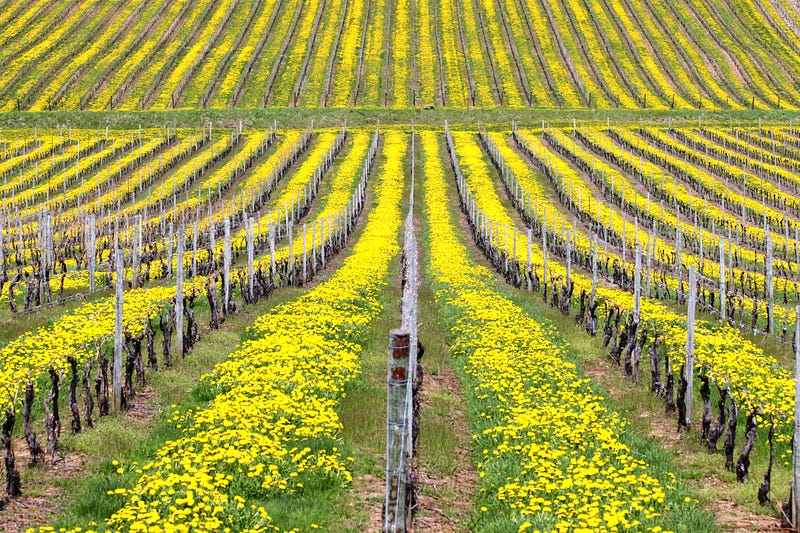
Nutrien Ltd. CEO Ken Seitz spoke to Wall Street Journal reporters during the WEF Annual Meeting. He noted that fertilizer prices will continue to be problematic for farmers and producers in 2023. Because of price volatility for agricultural commodities, which he attributed to the war in Ukraine, fertilizer prices are likely to remain on an uncertain trajectory as the year goes on.
Sanctions on Russia and Belarus are one part of the story. Seitz pointed out that potash exports from Russia and Belarus were once one of the biggest suppliers to global markets, and now they have been effectively reduced to 20% and 50%, resepectively, according to figures in 2022.
Nutrien Ltd. had already announced that it would increase output of its potash fertilizer capabilities from approximately 14 million tonnes to 15 million tonnes in response to the ongoing global fertilizer shortage and supply crisis in 2022. It seems that the company has enough production capacity to increase its output even more in 2023. To know more about Nutrien Ltd and CEO Ken Seitz, read this story about The CEOs Leading in the Transition to Future Facing Commodities.
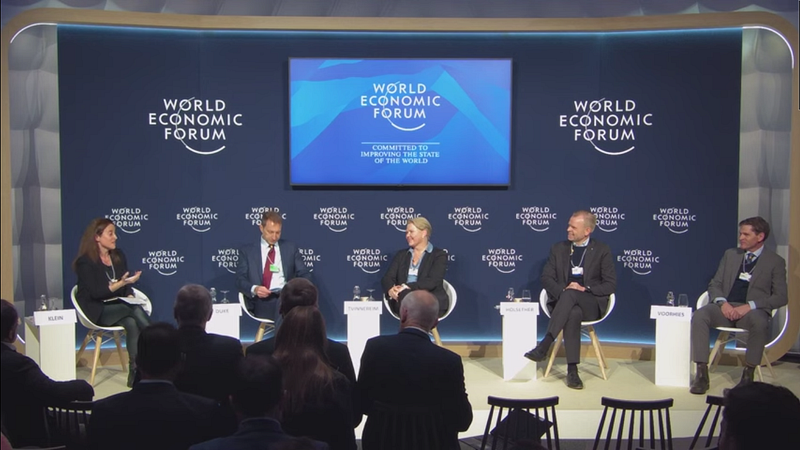
One of the biggest voices of the global fertilizer industry at the WEF Annual Meeting this year was Norweigan fertilizer producer Yara International.
During the panel session with other corporate, government and philanthropic leaders, they collectively spoke about the issues facing the global fertilizer industry in the future, such as soil health concerns and climate change scenarios. This put into perspective how crucial it is for fertilizer producers to commit to carbon emissions reduction in their supply chains, as well as in non-energy emissions, such as methane.
Moreover, Holsether has been very vocal about the global food crisis as a result of disruptions from the war in Ukraine since May 2022, when he told reporters at BBC World News, “Russia plays a large role both in food production but also in fertilizer production, indirectly through natural gas that is a vital part of using fertilizers, but also key nutrients like nitrogen, potash and phosphates.”
Crop nutrients rely on sources of energy, and in the case of many fertilizer producers, natural gas is the key element for production. The geopolitical scenarios are proving to have a massive effect on fertilizer production, supplies, as well as the whole global import-export scenario. On this situation, Holsether said: “The supply chains are significantly disrupted, both directly from the sanctions and indirect effects from the situation [in Ukraine]. And also the risk of Russia holding back the exports.”
In this context he is speaking about how holding back the exports would be detrimental to global food supplies, particularly grain and wheat, both of which have been politicized over the war in Ukraine with devestating impacts to food importers in developing countries. Read all about this situation in what I wrote at the end of the year in 2022 about Grain Markets & Natural Gas Production Explain Key Trends Going Into 2023.

One of the unlikely voices to come up during the WEF Annual Meeting was Indias’ Union Minister Raj Kumar Singh. In fact, his comments were one of the headlines of this year’s forum — ‘To Transform Food Systems, Give Small Farmers Irrigation, Fertilizers and Secure Market — At Lower Cost’.
Things got more personal when Singh responded to criticism over India’s purchases of cheap Russian oil. In response, he said: “India imports less gas from Russia in a month than Europe does in a day.”
And that’s also why much of the discussion revolved around the Energy Transition, as India has been working with farmers to reduce their carbon footprint by getting more of their energy sources from renewables through solar water pumps and green ammonia. This is also relevant to a key deal signed between Morocco’s OCP Group and India on 22 January 2023 that will invest more in R&D and technology.
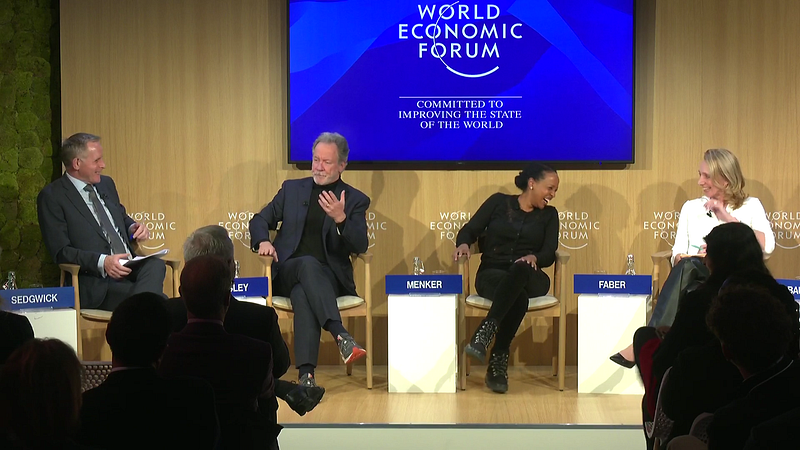
Gro Intelligence is a data and analytics company assessing the impact of climate change and how it illuminates the interrelationships between our earth’s ecology and human economy to help see the big picture and act on the small details. WEF
Gro Intelligence founder and CEO Sara Menker was on the panel of the WEF’s Revolutionizing Food Security at Davos. Menker has been talking about Climate Change and Food Security as the world’s biggest threats since September 2022. She is definitely one of the leading voices on how technology investments, particularly using data and analytics, are the practical solutions to tackling climate change and food security.
When she spoke at the United Nations Security Council, Menker used the company’s approach to data and analytics to explain a potentially bleak future of the world: “there is no version of the world where every country has all the natural resources it needs to survive and thrive. One key takeaway from our data is how often we see repeated examples of cause and effect, highlighting surprising connections and interdependencies.”
Speaking to the panel at Davos, Menker pointed out how many people do not understand the critial linkages between food and energy production — “food security is energy security; energy security is food security.”
She pushes the fact that data acts like a catalyst to solve the biggest problems there world is facing in terms of energy and food. “Data becomes that infrastructure that allows that risk-sharing and risk-taking to happen; it sort of facilitates different players — banks, companies, governments, etc — to play their role. But it sets a baseline by which people use to make those decisions.”
Therefore, data and analytics is growing solution in how businesses can make decisions about their carbon footprint and bottom lines going forward. This, in my view, will require deeper investments in R&D as well as massive efforts to recruit different types of talent in the job marketplace. By satisfying those two conditions — and I’m open to other possibilities — is a way to increase effeciencies in technology for the food and energy sectors, which can open up a toolbox of solutions to combat climate change and food security.
I’ll be publishing The Weekend Brief (TWB) regularly touching on aspects of the global markets (including stock markets) which are at the nexus of tech, industrials and global commodities. Please follow the publication Areas & Producers to read more content about the future of core areas and critical producers of the global economy.
Sign up for TWB newsletter here to read about how publicly-traded companies, like Tesla & Stellantis, are competing in the long game for global markets.


