Tesla & Stellantis Go All The Way With Partnerships In Battery, Electrification and Mobility
The Weekend Brief (TWB) is inspired by 1970’s era American rock-pop band The Raspberries. A Cleveland-based band, they were known for being one of the American success stories of the British Wave during the ’70s golden era of music. I suggest listening to a Sunset Strip-recorded live version of the song Go All The Way as you read TWB.
Press Play: https://www.youtube.com/watch?v=6kY3ITqAAm8
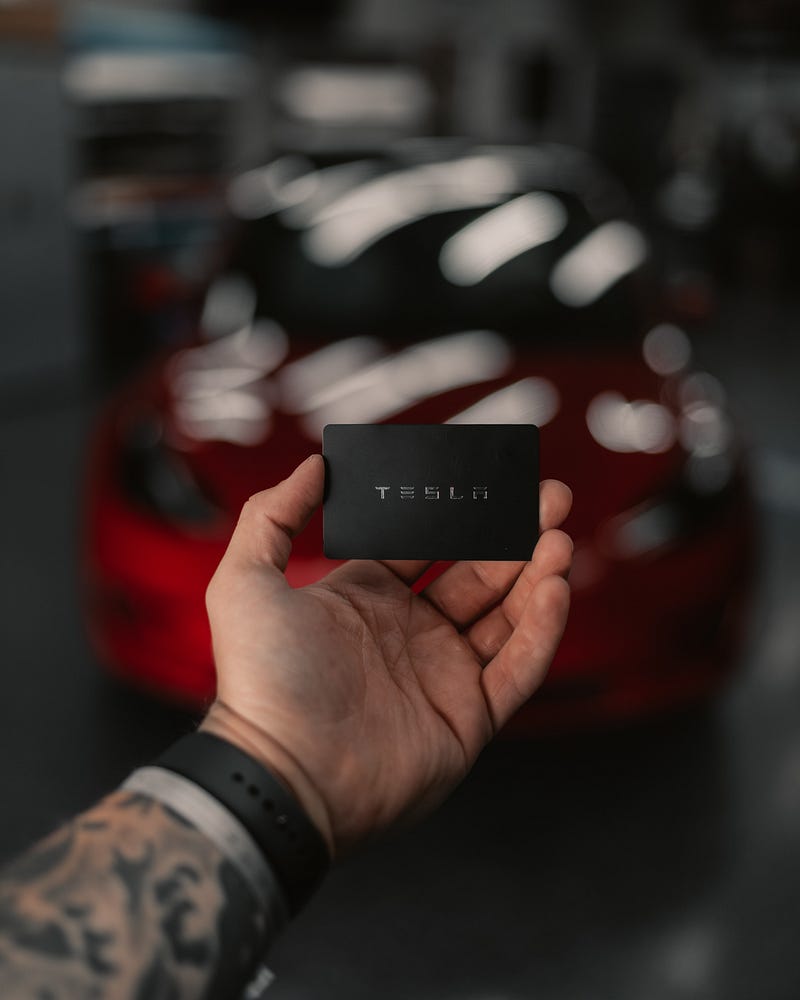
On the news of Elon Musk’s Twitter fiasco, people are losing sight of what’s happening with Tesla in the Global Economy. Tesla’s market share of Electric Vehicles (EV) comes down to technological superiority and first-mover advantage. Elon Musk hasn’t been shy about the raw materials needed for producing the batteries: nickel, copper, cobalt and lithium. He has been warning the world about global shortages of critical metals since May 2019.
According to Tesla’s global supply manager for battery metals, Sarah Maryssael, Tesla would take necessary measures to ensure key supply of nickel and cut down on the use of cobalt for the company’s EV production — citing a “huge potential” to increase supply of nickel from Australia and United States.
Under the backdrop of underinvestment in the raw materials needed for an industry that depends on critical metals for the so-called electric revolution, the shortages were certainly exacerbated by the global outbreak of COVID-19. Back in 2019, however, Elon Musk already pointed out an essential truth for Tesla: “There’s not much point in adding product complexity if we don’t have enough batteries.”
https://www.youtube.com/watch?v=vpNZhKSfrKE
It’s well-known among industry insiders that Tesla has sought to produce its own vehicle components ever since rolling out EVs. But the supply of raw materials, such as nickel, must be procured from areas outside of Tesla’s geographic and market reach. The company simply does not have the capability to mine its own raw materials.
In January 2020, Tesla began negotiations with Switzerland-based Glencore plc to purchase long-term supplies of cobalt at its Shanghai Gigafactory.
One of Tesla’s most important lithium suppliers is a Chinese company, Contemporary Amperex Technology (CATL). The two companies partnered up on a deal for CATL to supply Tesla with lithium-ion batteries from 2022–2025. This is possibly the most important partnership in the EV sector, as far as raw materials procurement is concerned.
This was soon followed up by Elon Musk’s famous quote to global metal miners: “Any mining companies out there … wherever you are in the world, please mine more nickel…Tesla will give you a giant contract for a long period of time if you mine nickel efficiently and in an environmentally sensitive way.”
On July 21, 2021, BHP Group answered the call by signing a deal with Tesla to sustainably produce and supply battery metals from its Nickel West project in Western Australia. This was followed by another deal with USA-based Talon Metals to secure nickel supplies for a mine projected to begin production in 2026.
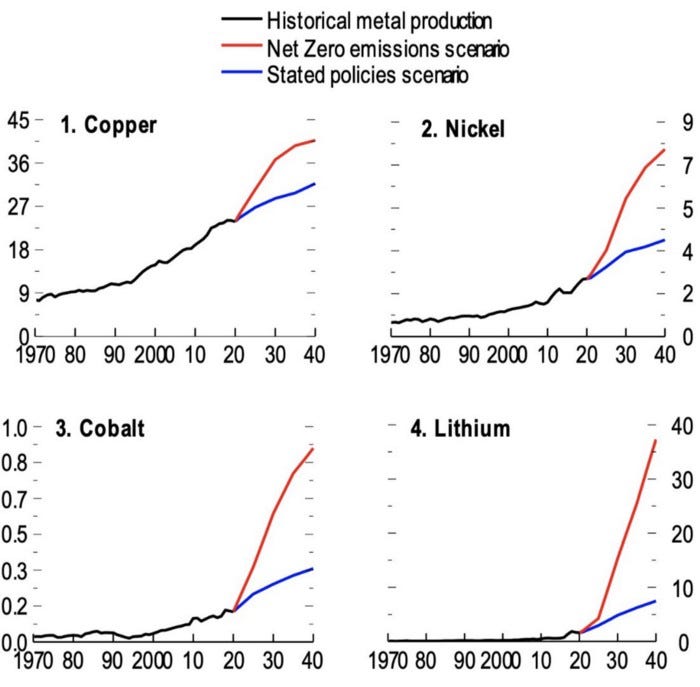
All of these developments in the critical metals space can’t be overstated for Tesla’s success as the world’s largest EV producer — the continuation of procuring raw materials will be the highest priority for the company going forward as new companies expand production and new partnerships emerge. It’s already been reported that automakers Ford and GM have secured lithium and cobalt supplies to enhance EV battery production.
While other news surrounds product launches. Nissan and NASA teamed up to develop an all-solid-state battery that intends to replace lithium-ion batteries. And surprisingly, GM and Honda will jointly produce EVs based on a new global platform that will allow the companies to sell at a more affordable price in the American market.
Now that we’ve entered the 2022 era, the EV consumer market it projected to become a much more competitive sector. One of Tesla’s rivals, Rivian, announced on March 10, 2022, it would follow suit with the world’s biggest EV producer and seller by adopting lithium iron phosphate (LFP) batteries.
On the legislative front, California regulatory bodies proposed to ban the sale of new gasoline-fueled vehicles by 2035. I argue that, if this proposal is passed by relevant legal authorities, it would be a major boon for the rollout of EVs and clean energy products in USA.
With some analysts calling the this era “a gold rush to metals” the world is headed for a revolutionary expansion of renewable energy power and clean energy technologies that pass off on the fossil-fuels industry. That’s why metals are so critical to the world’s Net Zero ambitions. And to get there, Elon Musk is going to need more critical metals; while Mike Henry is going to have to prove that BHP Group is taking its ESG leadership to the next level.
It’s no secret that Chinese EV producers have an edge over their American and European counterparts. Read more about this dilemma in Electric Vehicle Markets & Future Breakthroughs in E-Mobility Trends. In a report by Channel News Asia (CNA), it was revealed that the average price of a EV in the Chinese market had dropped to €31,829. This figure was provided from a study conducted by JATO Dynamics. In fact, the overall Asia-Pacific market is critical to the success of global EV production and battery production markets. Just look at Automotive Cells Company (ACC).
The 2023 Consumer Electronics Show (CES) was held in Las Vegas, United States.
To get the show started Stellantis came out with a bang as it unveiled the concept for the company’s latest Dodge Ram electric pick-up truck, which is going to hit the market along with other full-size trucks competing for market share of electric vehicles (EV). This EV is called the Ram 1500 Revolution; it is a battery-powered production truck.
In 2020, a new partnership emerged in the form of a joint-venture to design and produce electric vehicle (EV) batteries. Led by TotalEnergies and Stellantis, the Automotive Cells Company (ACC) brought on a new partner, Mercedes-Benz, in 2021 to become an equal shareholder in the venture. To produce top-grade battery cells and modules, they agreed to increase industrial capacity to approximately 120 GWh by 2030.
According to the CEO of Saft (a subsidiary of TotalEnergies),
ACC is a joint venture between TotalEnergies and Stellantis to design and produce automotive batteries, and to become a leader in Europe and an international groundbreaker in its field.
Prior to co-establishing ACC, TotalEnergies’ electric mobility (e-mobility) strategy was laid out in 2019 with the goal to operate more than 150,000 EV charge points throughout European cities by 2025 — including 22,000 in Amsterdam, 3,000 in Antwerp, 1,700 in London, and 2,300 in Paris.
In addition, TotalEnergies has taken its commitments outside of the European continent by establishing joint ventures with China’s largest clean energy company, China Three Gorges (CTG), operator of the China Three Gorges Dam, to expand on initiatives for e-mobility in Asia.
The ACC seeks to ensure that battery design is efficient and that battery demand is met for EVs as well as other transport modes such as satellites, trains and planes. Research and Development (R&D) centers have been set up Bruges, France, to design the latest battery cell technologies, while a pilot line at Nersac, France, is being launched as a battery production site.
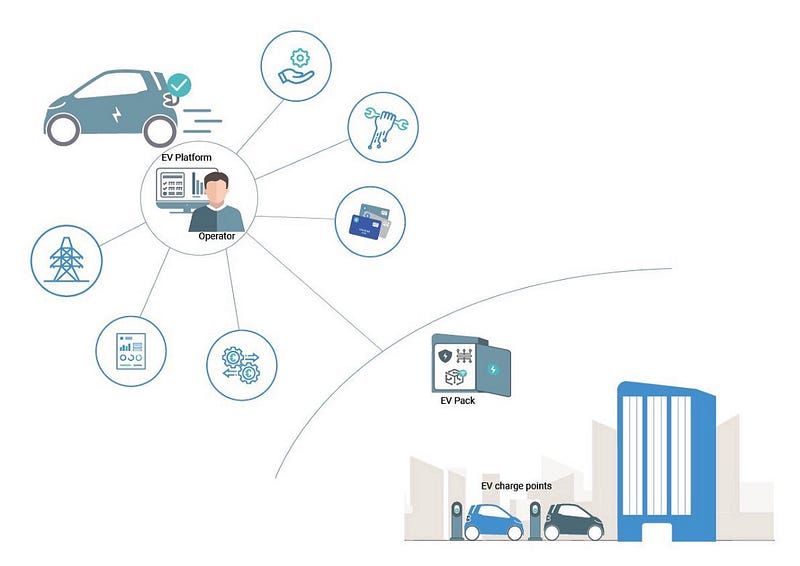
The ACC has been spearheaded under the backdrop of many automakers’ and energy companies’ push to become bigger players in EV markets by partnering with others for electric and sustainable mobility strategies.
This began in November 2020 with TotalEnergies’ acquisition of 2,000 EV charge points from Viessmann group of Charging Solution in Germany, giving it one of the most significant e-mobility markets in Europe.
The company then made a deal with Singapore’s Bollore Group in July 2021 to acquire more than 1,500 EV charge points, making TotalEnergies the owner and operator of Singapore’s largest EV charging network: Blue Charge.
After the deal was made, President of Marketing & Services at TotalEnergies said:
With this acquisition, TotalEnergies is pursuing its transformation and adds a new name on the list of global cities, such as Paris, Amsterdam, London and Brussels, where the Company is already developing its EV charge points installing and operating activities.
On 27 April 2022, ACC agreed to a supply agreement with Umicore — a Belgium-based global materials company — for the company’s offtake supply of next-generation high nickel cathode materials.
Upon signing the offtake agreement, ACC spokesperson, Yann Vincent, said:
With this important agreement, which secures the supply of a key component for the battery industry, ACC confirms its ambition to become a European leader for car batteries that allow clean and efficient mobility for all.
What’s more important is that the Umicore-supplied batteries will be recyled at the ACC’s testing facilities in France. This means that the companies are taking into consideration how to develop recycling methods and procedures for the future of EV batteries in manufacturing. This could have a positive effect on the future of EV market share and e-mobility trends.
Futhermore, the solid-state battery is a top concern for the future of EV production markets. ACC and ProLogium Technology signed a memorandum of understanding (MOU) to develop a solid-state battery for EVs on 19 October 2022.
This is another key agreement for ACC, as it seeks to overcome current obstables in the industrial supply chains of battery materials throughout Asia, Europe and the United States. The results of this partnership could lead to a potential breakthrough in how companies solve issues related to supply chain inefficiencies; therefore, getting EVs to market much faster.

On 28 October 2022, the European Union’s (EU) European Council and European Parliament passed an agreement to cut down on the sale of new diesel and gasoline vehicles by 2035, as part of the “zero-emission road mobility by 2035” plan. The plan seeks to cut CO2 emissions from new diesel and gasoline vehicles by 100% compared with 2021 levels.
This would effectively put a ban on new production and sales of diesel and gasoline vehicles that would reach such levels of CO2 emissions.
There are other regulations and exemptions in place to protect smaller automakers in the EU, though the agreement signaled a big win for large campaigning groups, such as Brussels-based Transport & Environment, who have been working toward a nations-wide ban on fossil-fuel vehicles in the EU.
According to Euronews, the deal to phase out diesel and gasoline vehicles by 2035 was made under the Fit for 55 framework to reduce green house gas (GHG) emissions by 55% by 2030.
After the deal was announced, many of the legislation’s biggest supporters within the EU establishment celebrated online with their own comments and praise.
Jan Huitema, a Dutch MEP, said:
With these targets, we create clarity for the car industry and stimulate innovation and investments for car manufacturers. In addition, purchasing and driving zero-emission cars will become cheaper for consumers.
Josef Síkela, minister of trade and industry of the Czech Republic, said:
The world is changing, and we must remain at the forefront of innovation. I believe we can take advantage of this technological transition. The envisaged timeline also makes the goals achievable for car manufacturers.
However, the most notable player in this scenario is the L’Association des constructeurs européens d’automobiles (ACEA). European Automobile Manufacturers’ Association (ACEA)
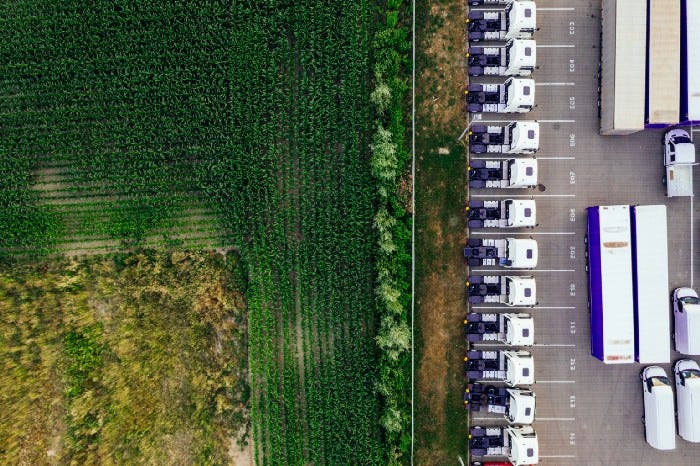
The ACEA has been striving to get more producers and suppliers on the right path towad reducing GHG emissions throughout their supply chains, by investing in more renewable sources of energy production that promote the concept of “climate-neutral road transport.” The association has called on transport manufacturers operators, particularly for heavy trucks (trucking), to embrace the future of Zero-Emission Trucks.
In conclusion, these trends in EV battery supplies and production markets reveal certain kinds of patterns in how companies are collaborating to gain market share. On the one hand, creating industry partnerships, like the one described here with ACC, is critical to getting access to raw materials and much-needed results from R&D and testing.
On the other hand, regulations by government bodies and industry associations — in this case, the European Automobile Manufacturers’ Association — are an important part of the strategic planning process.
In order for EV markets to gain share, regulations must be put in place that give those producers an edge over traditional automobile makers in a competitive global marketplace. That’s why R&D funds are crucial to the success of EVs going forward.
I wanted to share the United Nations Environment Programme’s The Future of Electric Vehicles and Material Resources: A Foresight Brief. It’s not only prescient but essential to understand how lithium-ion batteries will impact the future of the EV marketplace. The issues related to climate change are relevant to EVs in many ways, though the electrification and mining trends stand out as the production of more EVs requires higher levels of mining for energy-intensive metals and rare earths.
I’ve been writing extensively about the electrification and mining trends in the publication Areas & Producers. Please follow and let me know if you want to join the publication as a writer or content-creator.

I’ll be publishing The Weekend Brief (TWB) regularly touching on aspects of the global markets (including stock markets) which are at the nexus of tech, industrials and global commodities. Please follow the publication Areas & Producers to read more content about the future of core areas and critical producers of the global economy.
Sign up for TWB newsletter here to read about how publicly-traded companies, like Nestle & Starbucks, are competing in the long game for global markets.


