avatarWorld As One 4PEACE

Free AI web copilot to create summaries, insights and extended knowledge, download it at here

6640

Abstract

ong that many repeat them to this day, being in full confidence that if once, for example, computers were so expensive that only very cool research institutes of especially cool people could afford them. countries, it will always be so, and therefore personal computers in mass use simply cannot be.</i></p><p id="2cd9">Yury’s analysis in <a href="https://readmedium.com/about-renewable-energy-d6e35a092e08"><b>About “renewable energy”</b></a><b> </b>lays out all of the past, present and future issues pertaining to wind and solar energy as the main source of power generation. Writing about these issues in the context of United States and EU: “Technology, all of a sudden, is always implemented first in technologically advanced nations first…renewable energy makes up a small part of the energy consumed by the entire world, but not all countries in the world are equally developed, and therefore not everyone can suddenly start producing complex things from the cutting edge of technology.”</p><p id="448a">This instantly makes me think of the problematique in African countries.</p><p id="4004">Speaking at <a href="https://mobile.ghanaweb.com/GhanaHomePage/business/Africa-must-define-unique-path-in-energy-transition-agenda-GNPC-CEO-1758038"><b>2023 Africa Development Conference</b></a>, Ghana National Petroleum Corporation CEO O-A Danquah made it clear to the audience that Africa cannot pursure investments in renewable and clean energy sources in the same way as the United States and EU. Specifially speaking, he pointed out that natural gas as an energy source could not be called a “transition fuel” in the context of Africa’s energy security dilemmas; he offered that natural gas should be called a “destination fuel”.</p><p id="e775">This is not likely to be the consensus among all African countries, but I suspect that this will indeed become the trend in the near-term. Although countries in the North African region, such as Morocco and Egypt, possess great potential for renewable energy production, those countries are also more likely to recieve the critical investmetnts needed to turn those renewable sources into a reality commercial proposition.</p><p id="a161">Just look at Brazil.</p><p id="3705">The United Arab Emirate’s (UAE) energy investment arm, Mubadala Capital, and one of the giant global steel producers, ArcelorMittal, are both investing in Brazil’s renewables and clean energy production capacity. Through its clean energy subsidiary, Acelen, the UAE will invest<a href="https://www.thenationalnews.com/business/aviation/2023/04/17/mubadala-capital-unit-to-invest-25bn-to-produce-renewable-fuel-in-brazil/"><b> 2.5 billion over a period of ten years</b></a> to enhance production of renewable diesel and sustainable aviation kerosene at the Bahia refinery.</p><p id="d324">ArcelorMittal Brazil formed a joint-venture with Brazil’s Casa dos Ventos to build a wind and solar power generation project in Babilonia. Projecting to invest around 800 million, the companies expect to start commerical operations for the <a href="https://renewablesnow.com/news/arcelormittal-forms-brazilian-jv-to-add-554-mw-of-wind-820419/"><b>Babilonia wind park</b></a> in 2025.</p><p id="5947">These are two clear examples of how renewable and clean energy projects are launching irrespective of American politics around the world. Decarbonization is really happening, especially in the countries that have heavily-industrialized areas, like Brazil and China.</p><p id="9393">While right now the big talk around <a href="https://readmedium.com/bow-down-the-us-dollar-collapse-is-a-political-hoax-d64fc8210b3a"><b>BRICS is the adoption of its own currency</b></a>, I think after the 2024 American political elections that the renewable and clean energy discussions will be having a heavier hand in the discussion of a BRICS future.</p><p id="817d">To know more about BRICS and the US Dollar scenarios, read the full story from <a href="undefined">Nima Asgari</a> about <a href="https://readmedium.com/bow-down-the-us-dollar-collapse-is-a-political-hoax-d64fc8210b3a"><b>Bow Down — The US Dollar Collapse Is A Political Hoax!</b></a></p><figure id="bdb6"><img src="https://cdn-images-1.readmedium.com/v2/resize:fit:800/0*3VEDStN9Y8X9jrE0"><figcaption>Photo by <a href="https://unsplash.com/fr/@lucs45?utm_source=medium&amp;utm_medium=referral">Luc Santeramo</a> on <a href="https://unsplash.com?utm_source=medium&amp;utm_medium=referral">Unsplash</a></figcaption></figure><p id="74b3">Back to the United States and their story on renewable and clean energy investments. None other than the Oracle of Ohama — Warren Buffet — himself is taking theinvestments in Berkshire Hathaway toward a renewable energy future.</p><p id="6de6">According to a report by <a href="https://www.cnbc.com/2023/04/21/berkshire-hathaway-is-about-to-hit-a-big-renewable-energy-milestone.html?__source=androidappshare"><b>CNBC</b></a>, the company’s utilities provider is investing in more renewable power projects that are “on track to double the recent national average of electricity generation from renewable sources, and its revenue from coal shipping has moved steadily lower over the past decade.”</p><p id="7080">Berkshire Hathaway’s substantial energy investments include Chevron. While its increasing stakes in Occidental Petroleum was one of the biggest news stories in the investing world as <a href="https://readmedium.com/esg-stories-global-mining-projects-a4fc3058865e"><b>environment, social, governance (ESG) frameworks</b></a> have been shaking up so-called activist investors and shareholders in the United States, putting global energy and mining projects at even greater risk.</p><p id="e63e">Not only is ESG a driving force of concern for energy producers, however, since geopolitical trends are equally — if not more so — dangerous to energy production investments in natural gas, oil an coal.</p><p id="1b02">First, the G-7 announced an oil price cap on Russian oil, which went into effect on December 5, 2022. Then, OPEC+ announced that it would cut its oil production output by 2 million bpd in October 2022. This news came on the heels of United States President Biden’s visit to Saudi Arabia to try to amend differences in the future relations between the US and Saudi Arabia. The meeting was denounced as a failed attempt by the Biden Administration.</p><p id="cd04">Another point of contention is in shale oil production in the US. According to Hess CEO,<b> <a href="https://www.reuters.com/business/energy/hess-ceo-says-opec-back-drivers-seat-us-shale-growth-slows-2022-11-17/">John Hess</a></b>, “OPEC is back i

Options

n the driver’s seat.” He framed this statement under the backdrop of declining shale oil production in the US, which, according to <a href="https://www.reuters.com/markets/commodities/is-us-shale-oil-revolution-over-kemp-2022-11-22/"><b>John Kemp</b></a>, had transformed the availability and price of oil in global markets from 2009–2019.</p><p id="e9c7">Energy experts wholly agree with CEOs that <a href="https://www.reuters.com/business/energy/energy-hungry-europe-cant-look-us-shale-fill-any-opec-gap-2022-12-02/"><b>OPEC</b></a> is back in the driver’s seat in terms of the global oil supplies and energy market prices linked to OPEC production capacity.</p><p id="0b4f">While other companies seek to profit handsomely from the G7’s oil price cap of Russian seaborne exports of oil and the <a href="https://eur-lex.europa.eu/legal-content/EN/TXT/?uri=uriserv%3AOJ.LI.2022.311.01.0008.01.ENG"><b>European Union’s embargo</b></a> of Russian crude oil and petroleum products, such as <a href="https://seekingalpha.com/article/4562200-exxon-mobil-russian-blackmail-backfires?mailingid=29894854&amp;messageid=must_reads&amp;serial=29894854.3529091&amp;utm_campaign=Must%2BReads%2BDecember%2B5%2C%2B2022&amp;utm_content=seeking_alpha&amp;utm_medium=email&amp;utm_source=seeking_alpha&amp;utm_term=must_reads"><b>ExxonMobil</b></a>, as the giant U.S. oil and gas producer and retailer now wants to lean on the risks associated with European dependency on Russia for its vital natural gas imports.</p><p id="e03c">For British Petroleum (BP) the world is headed for a sustainable energy future that should be affordable and secure — known as the <a href="https://www.upstreamonline.com/finance/bp-makes-a-mighty-profit-and-will-produce-more-oil-and-gas-for-longer/2-1-1399960"><b>energy trilemma</b></a>.</p><p id="9987">BP CEO Bernard Looney has been very vocal about the company’s enhanced view of the Energy Transition on the company’s future outlook on oil and gas investments. According to figures reported by Upstream, the company’s capex of 16.3 billion comes with a 30% share in so-called transition growth engines. This percentage comes dangerously close to the company’s massive increase in the tax rate from the UK’s EU’s windfall taxes.</p><p id="78c8">At a rate of 34%, the company had to pay <a href="https://www.upstreamonline.com/finance/bp-makes-a-mighty-profit-and-will-produce-more-oil-and-gas-for-longer/2-1-1399960"><b>15.1 billion</b></a> on the company’s global operations in the oil and gas sector. This includes <a href="https://www.bbc.com/news/business-60295177"><b>700 million</b></a> in windfall taxes paid for its North Sea operations alone. It’s no wonder that UK’s biggest energy company is seeking to invest <a href="https://www.upstreamonline.com/finance/equinor-firm-on-renewables-but-oil-and-gas-are-driving-better-market-showing/2-1-1404122"><b>60 billion</b></a> in its energy transition over the next six year. It’s clear that the company’s oil and gas operations simply would not be able to thrive under the new windfall tax regulations in the UK and EU.</p><p id="5bb5">One way to successfully track the company’s progress on Environment, Social, Governance (ESG) frameworks, would be to look at how those investments in renewable and clean energy technologies are being spread out for domestic production (in the U.K.) versus other global energy production investments.</p><p id="96aa">For example, Shell found that its <a href="https://www.upstreamonline.com/exploration/shell-relinquishes-prime-pre-salt-exploration-area-offshore-brazil/2-1-1402594"><b>offshore discovery in Brazil</b></a> was not commerically viable. Because of the failure in locating hopeful oil and gas deposits, the company <a href="https://www.energyintel.com/00000186-5186-d910-af96-5b8f12340000"><b>returned the Saturno production area</b></a>, located in Brazil’s lucrative Santos Basin Pre-Salt Block.</p><p id="891a">This circumstance highlights the ongoing risks associated with oil and gas drilling, not only because of external factors like the ones mentioned in TotalEnergies’ African projects, but also because of issues related to commercial interests. In this case, Brazil’s Floating, Production, Storage and Offloading (FPSO) market is a tremendous attraction to the world’s biggest energy producers. This means that hitting discoveries in offshore Brazil has a promising return on investment (ROI) because of the country’s developed FPSO market.</p><p id="b4af">Equinor’s plan to invest €1 bn to upgrade the gas infrastructure in its North Sea Field operations, on the other hand, is seen as a lower risk for the European supermajor to explore and produce more oil and gas reserves that can be recovered for export markets.</p><p id="9f01">These are the high-low risk scenarios to consider going forward for energy production investments around the globe. If the world is headed toward a more sustainable energy future, then European oil and gas supermajors are operating on the precipice of climate change action and shareholder values.</p><p id="a37a">Please follow the publication <a href="https://medium.com/areas-producers"><b>Areas & Producers</b></a> to read more from these content writers. If you are an interested writer, then please let me know!</p><figure id="6b6d"><img src="https://cdn-images-1.readmedium.com/v2/resize:fit:800/0*jpNQFjeduUz5n81L"><figcaption>Photo by <a href="https://unsplash.com/@ffrige?utm_source=medium&amp;utm_medium=referral">Fabrizio Frigeni</a> on <a href="https://unsplash.com?utm_source=medium&amp;utm_medium=referral">Unsplash</a></figcaption></figure><p id="680a"><a href="https://medium.com/areas-producers"><b>Curious About Culture, Intellectual About The World</b></a>. Discover this publication’s content writers explaining scenarios/shifts related to geopolitics, future industrial policies and advanced technologies.</p><p id="bbdb"><a href="https://medium.com/areas-producers/newsletters/the-weekend-brief-twb?source=collection_about-------------------------------------"><b>Sign up for The Weekend Brief (TWB)</b></a> newsletter to stay on top of what’s happening with publicly-traded companies operating in global markets (including stock markets) at the nexus of tech, industrials and global commodities.</p><p id="3c87">The latest TWB: <a href="https://readmedium.com/labor-was-the-case-that-they-gave-schultz-starbucks-takes-on-union-busting-accusations-against-a27b433f9549"><b>Labor Was The Case That They Gave Schultz — Starbucks Takes On Union-Busting Accusations Against The Company’s Generational Employees</b></a><b>.</b></p></article></body>

CEO Content Series: Renewable & Clean Energy Investments Trends From CEOs Around The Globe

This is a third part of a content series on CEOs
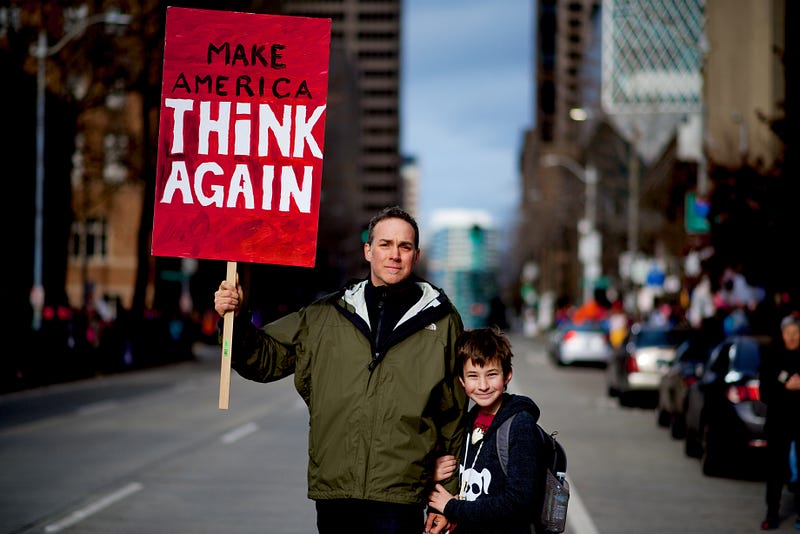
Photo by Jose M on Unsplash

The first part of the CEO content series is about the divergence between American foreign policy and business interests as national security concerns remain sky-high in the face of China’s rise.

In the second part, I illustrated the role of advanced technologies in the Russia-Ukraine conflict and some of the ongoing dynamics at play.

I will focus on renewable and clean energy investments trends from the CEOs and the world’s biggest producers in this third part of the CEO content series.

If we’re going to mention “world’s biggest producers” then it’s only right to start off with ExxonMobil and Chevron. According to a Reuters report, the two energy giants are mutually working on commercial project that will offer alternative fuels to the so-called electric vehicle (EV) revolution that promotes electrification as the main energy source of the future.

For instance, both companies are pursuing renewable fuel sources for light duty vehicles that will adopt renewable gasoline at scale for a wide array of automobile platforms and vehicle fleets. On this news, Chevron was adamant to share with the public its views on potential of a EV future. Chevron President of Americas Products Andy Walz told Reuters, “Electrification is not the only answer.” While Balaji Krishnamurthy, Chevron’s vice president of strategy and sustainability, told them, “The most efficient way to bring scale to renewable gasoline would be through a carbon price, but not all jurisdictions are ready for it.”

Electrification belongs to a combination of mega-trends in battery, electrification, mining and mobility.

But there are different sides to the story other than just what the producers think about trends in electrification and alternative fuel sources.

Like American politics, for example. The inflation reduction act (IRA) has been hailed as the $750 billion legislation by the Biden Administration that is the United States’ largest climate bill ever. West Virginia’s democratic senator Joe Manchin has played a big role in the legislation’s passing.

But now the IRA bill has become a flashpoint in the run-up to 2024 American presidental elections, which have basically put renewable and clean energy investment trends at the top of the political agenda for how the United States is thinking again about the country’s energy security.

To know more about the IRA bill and what it means for American democracy, read the full story from Steven Bretherick about The Inflation Reduction Act: Who Won the War?

‘Photo by Nils Rasmusson on Unsplash

But not even the 2024 American presidential race will stop the momentum in how other countries pursue renewable and clean energy investments to maintian their own energy security. A deal between BP and Shell was recently announced for the sale of Australia’s Browse gas field project — a joint venture between BP, Shell, Woodise, Mitsui and Mitsubishi.

The Browse gas field project is considered to be largest untapped gas project in Australia. It will enchance liquified natural gas production (LNG) in Australia’s North West Shelf LNG plant. However, the project is mainly being revived due to the anticipated demand for LNG across the Asia-Pacific region. Time will tell whether this demand for LNG translates into a big success for those energy producers. There have been several reports as of late about the declining demand for LNG in Asian countries, particularly Japan and China.

That’s why it is important to frame the discussion around all possibilities for renewable and clean energy sources. It has already been reported by Euronews.green that the European Union (EU) has successfully weaned off fossil fuel energy sources, such as coal and gas, by switching to renewables.

According to Yury Erofeev it is the concept of “renewable energy” that should be taken into consideration as individuals, investors and politicians alike discuss the merits and profitability scenarios. Comparing renewable production to the beginning of the computer market:

Thirty or forty years have passed since thirty or forty years ago. However, the arguments of the aforementioned reasonable people, apparently, turned out to be so strong that many repeat them to this day, being in full confidence that if once, for example, computers were so expensive that only very cool research institutes of especially cool people could afford them. countries, it will always be so, and therefore personal computers in mass use simply cannot be.

Yury’s analysis in About “renewable energy” lays out all of the past, present and future issues pertaining to wind and solar energy as the main source of power generation. Writing about these issues in the context of United States and EU: “Technology, all of a sudden, is always implemented first in technologically advanced nations first…renewable energy makes up a small part of the energy consumed by the entire world, but not all countries in the world are equally developed, and therefore not everyone can suddenly start producing complex things from the cutting edge of technology.”

This instantly makes me think of the problematique in African countries.

Speaking at 2023 Africa Development Conference, Ghana National Petroleum Corporation CEO O-A Danquah made it clear to the audience that Africa cannot pursure investments in renewable and clean energy sources in the same way as the United States and EU. Specifially speaking, he pointed out that natural gas as an energy source could not be called a “transition fuel” in the context of Africa’s energy security dilemmas; he offered that natural gas should be called a “destination fuel”.

This is not likely to be the consensus among all African countries, but I suspect that this will indeed become the trend in the near-term. Although countries in the North African region, such as Morocco and Egypt, possess great potential for renewable energy production, those countries are also more likely to recieve the critical investmetnts needed to turn those renewable sources into a reality commercial proposition.

Just look at Brazil.

The United Arab Emirate’s (UAE) energy investment arm, Mubadala Capital, and one of the giant global steel producers, ArcelorMittal, are both investing in Brazil’s renewables and clean energy production capacity. Through its clean energy subsidiary, Acelen, the UAE will invest $2.5 billion over a period of ten years to enhance production of renewable diesel and sustainable aviation kerosene at the Bahia refinery.

ArcelorMittal Brazil formed a joint-venture with Brazil’s Casa dos Ventos to build a wind and solar power generation project in Babilonia. Projecting to invest around $800 million, the companies expect to start commerical operations for the Babilonia wind park in 2025.

These are two clear examples of how renewable and clean energy projects are launching irrespective of American politics around the world. Decarbonization is really happening, especially in the countries that have heavily-industrialized areas, like Brazil and China.

While right now the big talk around BRICS is the adoption of its own currency, I think after the 2024 American political elections that the renewable and clean energy discussions will be having a heavier hand in the discussion of a BRICS future.

To know more about BRICS and the US Dollar scenarios, read the full story from Nima Asgari about Bow Down — The US Dollar Collapse Is A Political Hoax!

Photo by Luc Santeramo on Unsplash

Back to the United States and their story on renewable and clean energy investments. None other than the Oracle of Ohama — Warren Buffet — himself is taking theinvestments in Berkshire Hathaway toward a renewable energy future.

According to a report by CNBC, the company’s utilities provider is investing in more renewable power projects that are “on track to double the recent national average of electricity generation from renewable sources, and its revenue from coal shipping has moved steadily lower over the past decade.”

Berkshire Hathaway’s substantial energy investments include Chevron. While its increasing stakes in Occidental Petroleum was one of the biggest news stories in the investing world as environment, social, governance (ESG) frameworks have been shaking up so-called activist investors and shareholders in the United States, putting global energy and mining projects at even greater risk.

Not only is ESG a driving force of concern for energy producers, however, since geopolitical trends are equally — if not more so — dangerous to energy production investments in natural gas, oil an coal.

First, the G-7 announced an oil price cap on Russian oil, which went into effect on December 5, 2022. Then, OPEC+ announced that it would cut its oil production output by 2 million bpd in October 2022. This news came on the heels of United States President Biden’s visit to Saudi Arabia to try to amend differences in the future relations between the US and Saudi Arabia. The meeting was denounced as a failed attempt by the Biden Administration.

Another point of contention is in shale oil production in the US. According to Hess CEO, John Hess, “OPEC is back in the driver’s seat.” He framed this statement under the backdrop of declining shale oil production in the US, which, according to John Kemp, had transformed the availability and price of oil in global markets from 2009–2019.

Energy experts wholly agree with CEOs that OPEC is back in the driver’s seat in terms of the global oil supplies and energy market prices linked to OPEC production capacity.

While other companies seek to profit handsomely from the G7’s oil price cap of Russian seaborne exports of oil and the European Union’s embargo of Russian crude oil and petroleum products, such as ExxonMobil, as the giant U.S. oil and gas producer and retailer now wants to lean on the risks associated with European dependency on Russia for its vital natural gas imports.

For British Petroleum (BP) the world is headed for a sustainable energy future that should be affordable and secure — known as the energy trilemma.

BP CEO Bernard Looney has been very vocal about the company’s enhanced view of the Energy Transition on the company’s future outlook on oil and gas investments. According to figures reported by Upstream, the company’s capex of $16.3 billion comes with a 30% share in so-called transition growth engines. This percentage comes dangerously close to the company’s massive increase in the tax rate from the UK’s EU’s windfall taxes.

At a rate of 34%, the company had to pay $15.1 billion on the company’s global operations in the oil and gas sector. This includes $700 million in windfall taxes paid for its North Sea operations alone. It’s no wonder that UK’s biggest energy company is seeking to invest $60 billion in its energy transition over the next six year. It’s clear that the company’s oil and gas operations simply would not be able to thrive under the new windfall tax regulations in the UK and EU.

One way to successfully track the company’s progress on Environment, Social, Governance (ESG) frameworks, would be to look at how those investments in renewable and clean energy technologies are being spread out for domestic production (in the U.K.) versus other global energy production investments.

For example, Shell found that its offshore discovery in Brazil was not commerically viable. Because of the failure in locating hopeful oil and gas deposits, the company returned the Saturno production area, located in Brazil’s lucrative Santos Basin Pre-Salt Block.

This circumstance highlights the ongoing risks associated with oil and gas drilling, not only because of external factors like the ones mentioned in TotalEnergies’ African projects, but also because of issues related to commercial interests. In this case, Brazil’s Floating, Production, Storage and Offloading (FPSO) market is a tremendous attraction to the world’s biggest energy producers. This means that hitting discoveries in offshore Brazil has a promising return on investment (ROI) because of the country’s developed FPSO market.

Equinor’s plan to invest €1 bn to upgrade the gas infrastructure in its North Sea Field operations, on the other hand, is seen as a lower risk for the European supermajor to explore and produce more oil and gas reserves that can be recovered for export markets.

These are the high-low risk scenarios to consider going forward for energy production investments around the globe. If the world is headed toward a more sustainable energy future, then European oil and gas supermajors are operating on the precipice of climate change action and shareholder values.

Please follow the publication Areas & Producers to read more from these content writers. If you are an interested writer, then please let me know!

Photo by Fabrizio Frigeni on Unsplash

Curious About Culture, Intellectual About The World. Discover this publication’s content writers explaining scenarios/shifts related to geopolitics, future industrial policies and advanced technologies.

Sign up for The Weekend Brief (TWB) newsletter to stay on top of what’s happening with publicly-traded companies operating in global markets (including stock markets) at the nexus of tech, industrials and global commodities.

The latest TWB: Labor Was The Case That They Gave Schultz — Starbucks Takes On Union-Busting Accusations Against The Company’s Generational Employees.

Energy
World
Business
Food
Climate Change
Recommended from ReadMedium