After CES 2023, We Should Be Thinking More About Batteries, Electrification, Mining & Mobility

It’s no secret that Chinese EV producers have an edge over their American and European counterparts. In a report by Channel News Asia (CNA), it was revealed that the average price of a EV in the Chinese market had dropped to €31,829. This figure was provided from a study conducted by JATO Dynamics. In fact, the overall Asia-Pacific market is critical to the success of global EV production and battery production markets. Just look at what happened at the 2022 Paris Auto Show to see how BYD and others are grabbing EV market share in Europe.
With some analysts calling the this era “a gold rush to metals” the world is headed for a revolutionary expansion of renewable energy power and clean energy technologies that pass off on the fossil-fuels industry. That’s why metals are so critical to the world’s Net Zero ambitions.
The 2023 Consumer Electronics Show (CES) was held in Las Vegas, United States. In this first part, I have compiled some of the technologies showcased at CES 2023 to look forward to for Electric Vehicles (EV) and farming equipment.
To get the show started Stellantis came out with a bang as it unveiled the concept for the company’s latest Dodge Ram electric pick-up truck, which is going to hit the market alogn with other full-size trucks competing for market share of electric vehicles (EV). This EV is called the Ram 1500 Revolution; it is a battery-powered production truck.
On one of the most disputed topics related to EVs and the related marketplace, EV charging networks are redefining transportation and mobility — in this case, electric mobility (e-mobility) trends. That’s why everyone was happy to hear about Mercedes-Benz new plan to roll out an EV charging network for North American EV markets by 2027.
Another internationally-recognized French automobile brand, Peugot, announced its new concept car at CES 2023 called Inception. The Peugot car brand is owned by Stellantis after the Fiat Chrysler and PSA Group brands merged in January 2021. The name Inception was inspired from the Latin root word “Inceptio” and was built on one of Stellantis’ future battery electric vehicle (BEV) platforms. It will be powered by an 800-volt, 100kWh battery and comes with a four-wheel drive component that allows for induction — eliminating the need to recharge by electric power cables.
Lastly, I’m happy to share with you the latest ag-technology from American agricultural giant, John Deere, who announced a new toy for farmers, ranchers and planters — a sensor-driving robotics ag-tech platform called ExactShot. The purpose of the new ag-tech platform is to assist farmers to more accurately plant fertilizer seeds; this is also referred to as precision agriculture (PA) farming techniques. But also read about the lastest update to right to repair (R2R) laws for John Deere farm equiment and technology. The news on 9 January 2022 was a big win for American farmers, but also calls into question future regulatory barriers that could prevent John Deere from following through on the deal. Read my legal analysis about John Deere’s R2R agreement with this story about John Deere Is Searchin’ For A Better Way To Let Farmers Have Access To Equipment Repairs, Services and Tech.

The 2023 Consumer Electronics Show (CES) was held in Las Vegas, United States. In contrast with the first look at CES 2023, I have compiled some of the reports on other announcements and concerns about the future of Artifical Intelligence (AI) applications and global competition in the electric battery marketplaces.
Writing for Interesting Engineering, Christopher McFadden compiled 9 of the best AI applications from CES 2023. The first one on the list got my attention the most: The Machine Vision Bedsore Management Mat. Based on a machine-learning (ML) algorithim, the AI device analyzes lying posture and position data to prevent patients from getting bedsores. If you’re not familiar with bedsores, you should know that it is a common problem for people who are immobile or need assistance with moving.
In the lead up to the event, it was reported by CNN on 4 January 2023 that Apple would be raising the price for iPhone battery replacements. For example, the company will charge $89 for those who wish to replace batteries for the models iPhone X through iPhone13. There will also be a $20 raise in the price of battery replacements for models iPhone SE and iPhone 8. And that’s not at all — battery replacements for new iPad models, MacBook Air and Macbook Pro are all going up to the tune of $20, $30 and $50 more, respectively.
In a surprising turn of events, South Korea’s SK On Co. announced on 9 Janurary 2023 that the company would no longer take part in a memorandum of understanding (MOU) signed with Ford Motor Co. and Koc Holding AS to build a EV battery factory in Turkey. This plan was initially focused on producing batteries for the European market. In a related story, Hungary has been successful at attracting investments from German automakers and South Korean battery suppliers.
It’s no secret that Chinese EV producers have an edge over their American and European counterparts. In a report by Channel News Asia (CNA), it was revealed that the average price of a EV in the Chinese market had dropped to €31,829. This figure was provided from a study conducted by JATO Dynamics. In fact, the overall Asia-Pacific market is critical to the success of global EV production and battery production markets. Just look at Automotive Cells Company (ACC).

The 2023 Consumer Electronics Show (CES) was held in Las Vegas, United States. In contrast with the first and second look at CES 2023, this third and final look is a preview of future trends that will be important for the companies seeking to grab market share in the consumer electronics space.
Undoubtedly we should start with the information technology and communications (ICT) sector. In an interview with CNBC, Qualcomm CEO Cristiano Amon spoke from Las Vegas about the issues with China’s lockdown and how the company is making automated driving systems for the growing demand for Electric Vehicles (EV). The company unveiled a concept car along with its lastest Snapdragon chip designs, which include advanced digital interactions through customer relations management (CRM) platforms that are in partnership with SalesForce.
Michigan’s automotive legacy is coming back in a big way with electrification trends. According to a report by Michigan Local News, the state is positioned to benefit handsomely from a total amount of $14 billion in investments for EV production and battery manufacturing. The report also noted that the Strategic Outreach and Attraction Reserve (SOAR) fund has generated around $1 billion for the state’s automotive sector.
Ars Technica is fantastic source for all things related to technology, future and society. As a follow up to CES 2023, Jonathan M. Gitlin wrote about How many electric car chargers is enough? Read more about the problems associated with EV charging networks and infrastructure spending. There’s some politics involved, but it all boils down to rapid developments in technologies that enable EV charging networks to expand throughout American cities and beyond.
Finally, I wanted to share the United Nations Environment Programme’s The Future of Electric Vehicles and Material Resources: A Foresight Brief. It’s not only prescient but essential to understand how lithium-ion batteries will impact the future of the EV marketplace. The issues related to climate change are relevant to EVs in many ways, though the electrification and mining trends stand out as the production of more EVs requires higher levels of mining for energy-intensive metals and rare earths. I’ve been writing extensively about the electrification and mining trends in the publication Areas & Producers.
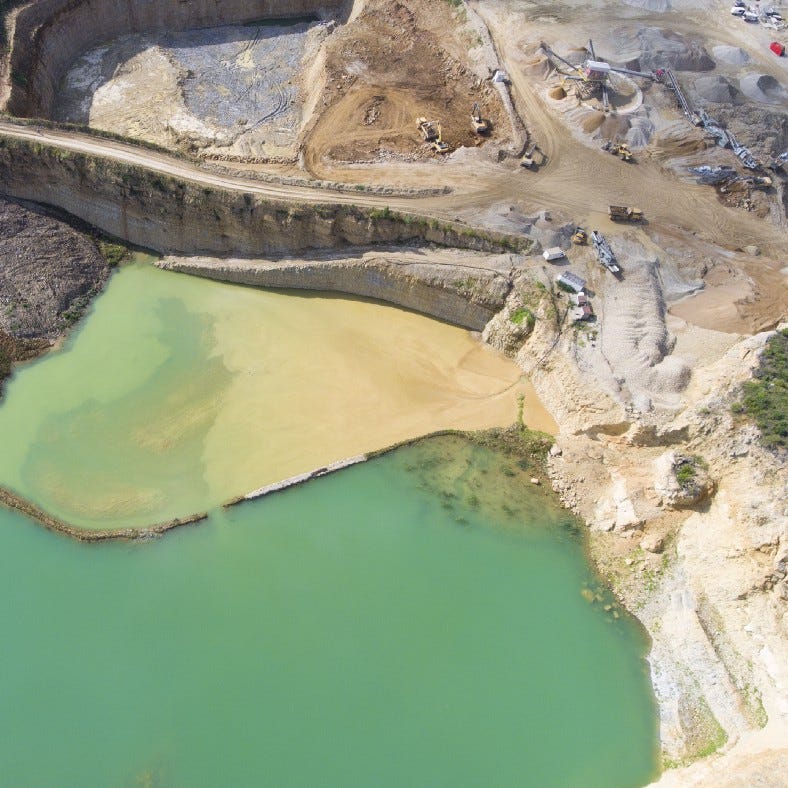
Many of the global mining projects, especially the ones for copper and nickel, are critical to achieving progress on the Energy Transition, most notably for renewable energy installations and EV market share.
The world’s largest metal miner BHP group plans to source and produce metals while taking a more sustainable and environmental focus on their operations globally. There are basically three main commodities in this future facing commodities space: copper, nickel and potash. The former two are both metals directly related to metal mining and stainless steel production, while the latter is primarily used as a source of fertilizer.
It’s true that BHP has been divesting its oil and gas assets for “future facing commodities” such as copper, nickel and potash.
The concept of future facing commodities is still new to many people. It has already become synonomous in global business news with “tougher jurisdictions” that are associated with vulnerable areas of political control and regulatory corruption.
This implies that that the company will have to venture out to new areas — i.e. “tougher jurisdictions” — containing the high-grade copper, nickel and potash production capabilities desired for such results. CEO Mike Henry also announced at the FT Mining Summit in 2021 that BHP Group wants half of its revenues to come from the production and exports of these future facing commodities by 2030.
The example of BHP Group’s sustainable mining practices are in line with the narratives from a variety of CEOs on Future-Facing Commodities.
Goldman Sachs predicts automakers will find some relief from metal shortages in the near term, but with the global consumption of battery metals continuing in the long term, that demand is likely to catch up with supply and send metal prices soaring in the future.
The most commonly produced battery metals are nickel, cobalt and lithium. Read more about them in this story about The Politicization of Copper, Nickel, Lithium & Iron-Ore Is Playing a Greater Role in Industrial Policies and Global Mining Projects.

My objective in this writing was to share some ideals about the future direction of industrial policies under the backdrop of increasing market share for Electric Vehicles (EVs), and how the geopolitical trends would have an effect on electric mobility (E-Mobility).
I offer three potential breakthroughs:
1.) EV Charging Networks are likely to redefine how transportation and mobility will be viewed as a mode of industrial production on a global scale ushering in the new era of Industry 4.0 at the consumer level;
2.) Raw Materials are already taking on a more prescient position in how EVs are produced as the regulatory environment puts a high degree of attention on when and if China and Russia seek to take market share for industrial prodution of critical metals;
3.) Battery Investments will force producers to ensure supply security in some of the world most vulnerable areas, as EV batteries are evolving into a large-scale industry putting an emphasis on miners’ Environment, Socal, Governance (ESG) frameworks as a means of carrying out corporate strategies in line with shareholder values.
I’ll be publishing The Weekend Brief (TWB) regularly touching on aspects of the global markets (including stock markets) which are at the nexus of tech, industrials and global commodities. Please follow the publication Areas & Producers to read more content about the future of core areas and critical producers of the global economy.
Sign up for TWB newsletter here to read about how publicly-traded companies, like Tesla & Stellantis, are competing in the long game for global markets.


