Paradigm Shifts: Indigenous Groups & Future Facing Commodities During Global Commodity Supercycle
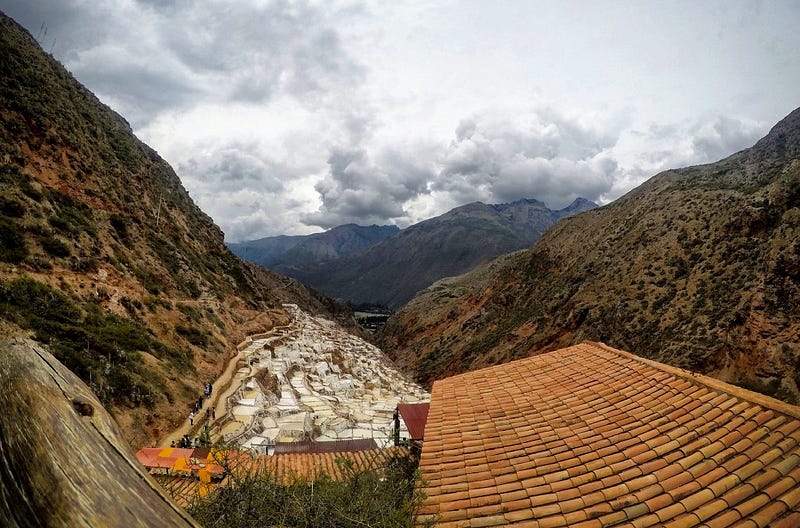
Indigenous groups are coming out in opposition as more and more mining projects are being planned by coroporations and governments to spur economic activity during the Global Commodity Supercycle.
I define the Paradigm Shift here:
The aspects of producer economies, the areas where they operate and the indigenous groups’ issues that are specific to their communities, all of which are at the nexus of commodities and geopolitics in the future.
As the world is grappling with the global food crisis governments want Brazil to produce more food, because it is already one of the world’s largest food-producing countries along with Ukraine.
These trends are part of the much larger geopolitical trends that have been kickstarted by the global COVID-19 pandemic. The global pandemic has caused several countries to unravel, with socio-political instability that was building up for decades, and causing the global economy to be shaken up with uncertainties, putting the world’s largest companies in some of the most vulnerable areas.
I argue that these issues about geopolitical trends and producer economies commodities are defined by a new Paradigm Shift.
All of these trends, including the references and stories I’ve included here about Brazil, should give us a broader understanding of what’s happening in geopolitics and the global economy after the COVID-19 pandemic.
Whether or not we can overcome our pre-conceived ideas about energy and commodities is going to be a key problem facing the world’s population after the global pandemic. We need to get more serious about Climate Change, but also look at how the world’s most valuable commodities are going to be needed and secured in the future.
I argue that these issues about geopolitical trends and producer economies are defined by a new Paradigm Shift.
Take Brazil as an example.
On 18 June 2022 it was reported that two men were found dead in the Amazon Rainforest. One of them was a British journalist who was working on a book about the Amazon Rainforest and some of the indigenous groups in the area. The man’s remains were found by Brazilian federal police.
According to Reuters, the two men had not been seen since 5 June, where they were known to be working in the Javari Valley — on the border of Peru and Columbia.
One of the indigenous groups in the Amazon has been very active on the case. The group is called Univaja, who claim that there is a organized crime group currently operating in Javari Valley.
According to Ned Price of the U.S. State Department, the murders of those two individuals were linked to their conservation efforts in the Amazon Rainforest:
“Our condolences to the families of Dom Phillips and Bruno Pereira… We must collectively strengthen efforts to protect environmental defenders and journalists”
Brazil’s President Jair Bolsonaro issued decrees aimed at prospecting in the Amazon Rainforest on February 14, 2022. There’s tremendous pushback from a variety of actors about mining in the Amazon Rainforest but the decrees fit into Bolsonaro’s vision to improve Brazil’s national fertilizer industry.
Bolsonaro’s vision is laid out in accordance with Brazil’s National Fertilizer Plan. It was reported by Argus Media that Brazil intends to cut down on fertilizer import dependency — from 85% of consumption to 60% of consumption from fertilizer imports by 2025. Brazil imports all three of the major fertlizer commodities: nitrogen (95.7% reliance on imports), phosphate (72% reliance on imports) and potash (96.4% reliance on imports).
The National Fertilizer Plan got a boost in support from Canada after the escalation of the Russia-Ukraine conflict. According to Director of Programs at the Ministry of Agriculture, Luis Rangel, “The national fertilizer plan is a long-term plan, a 30-year infrastructure transformation plan […] we intend to reduce the national dependence on imported fertilizers from 85% to around 50% or 55%.”
Therefore, following the crisis and conflict in Ukraine the consumption percentage from imports would be further cut down to 50%. Moreover, the strategic objectives for the plan were announced, with specific figures and targets for how Brazil intends to reach its goal of 50% import dependency for fertilizers. It was also announced that “promoting the creation of a South American fertilizer industry council within Mercosur” would provide the solution to Brazil’s natural gas dilemma.
Access to natural gas is key to achieving Brazil’s fertilizer industry production ambitions.
But looking elsewhere in the fertilizer scenario puts a spotlight on potash. Russia stopped exporting potash due to the conflict in Ukraine. Brazil acted quickly on this circumstane by pushing ahead with one of the key strategic advancements in the National Fertilizer Plan: mining for large reserves of potash underground in the Amazon Rainforest.
Potash reserves lie within lands owned by indigenous peoples of Brazil. And it’s the reason for why an indigenous mining bill has been held up in the Congress. A crowd gathered for the “Earth Event” during which legendary Brazilian musician and artist Caetano Veloso led the protest against the mining bill. It was reported that Veloso met with the Senate to plead for not letting the bill pass.
“Brazil is at a crossroads. Amazon deforestation is out of control, violence against indigenous people has increased and environmental protections have been undermined.”
Labeled as “the package of destruction” non-profit organization Amazon Watch has been objecting to the President Bolsarno’s fertilizer plan since the mining bill on indigenous peoples’ lands was presented in 2020, citing “its anti-environmentalist agenda” as the leading factor.
It’s significant that Brazil was one of the countries that abstained from the UN General Assembly vote to suspend Russia from the Human Rights Council in the aftermath of the war in Ukraine.
The geopolitical trends point to this conclusion: the future of global economic development is going to depend heavily on the effective production and supply of global commodities around the world. That’s why one of the biggest industrial trends for global mining projects is related to Environment, Social, Governance (ESG) frameworks.
The aspects of producer economy areas and indigenous groups’ issues play a big role in this phenomenon — and rightly so in my view. These trends are part of the much larger geopolitical trends that have been kickstarted by the global COVID-19 pandemic. The global pandemic has caused several countries to unravel, with socio-political instability that was building up for decades, and causing the global economy to be shaken up with uncertainties, putting the world’s largest companies in some of the most vulnerable areas.
Many of these mining projects, especially the ones for copper and nickel, are critical to achieving both the Energy Transition, most notably for renewable energy installations and Electric Vehicles (EV) production rollout.
The world’s largest metal miner BHP group plans to source and produce metals while taking a more sustainable and environmental focus on their operations globally. There are basically three main commodities in this future facing commodities space: copper, nickel and potash. The former two are both metals directly related to metal mining and stainless steel production, while the latter is primarily used as a source of fertilizer.
It’s true that BHP has been divesting its oil and gas assets for “future facing commodities” such as copper, nickel and potash.
The concept of future facing commodities is still new to many people. It has already become synonomous in global business news with “tougher jurisdictions” that are associated with vulnerable areas of political control and regulatory corruption. Read more about the Glencore case below.
This implies that that the company will have to venture out to new areas — i.e. “tougher jurisdictions” — containing the high-grade copper, nickel and potash production capabilities desired for such results. CEO Mike Henry also announced atthe FT Mining Summit in 2021 that BHP Group wants half of its revenues to come from the production and exports of these future facing commodities by 2030.
I argue that these issues about future facing commodities and global mining projects, as well as how indigenous groups and governments are responding to the Global Commodity Supercycle, are defined by a new paradigm shift: The aspects of producer economies, the areas where they operate and the indigenous groups’ issues that are specific to their communities, all of which are at the nexus of commodities and geopolitics in the future.
Whether or not we can overcome our pre-conceived ideas about energy and commodities is going to be a key problem facing the world. We need to get more serious about Climate Change, but also look at how the world’s most valuable commodities are going to be needed and secured in the future — hence, the critical nature of the future facing commodities.

Summary — The Key Issues Going Forward
- As the world is grappling with the global food crisis governments are hoping that needs that Brazil would produce more food, because it is already one of the world’s largest food-producing countries along with Ukraine. Governments need more cooperation on food and energy, though this seems to be very unlikely, as Brazil certainly cannot take the lead here. Dealing with indigenous groups’ issues in vulnerable areas of political control will be paramount to the future supply of raw materials and food production around the globe.
- The vitality of global economic growth depends on futre facing commodities, especially those for producing fertilizers and metals which are energy-intensive. The goal of Net Zero 2050 is to produce these commodities with less energy intensity, not get rid of them completely, which is a key point that people seem to not take into consideration in these discussions about the Energy Transition.
- Cybersecurity is not only a symptom of these issues; it is a core problem to be dealt with in respect to industrial policies accross the board. One way to take down bad actors in cyberspace is for countries to cooperate more throroughly on issues pertaining to maritime shipping and transportation. That’s why the maritime domain is crucial to our well-being in the future: food exports depend on shipping lanes and access to ports.


