How Russia’s Actions Raised the Stakes of Brazil’s Fertilizer Strategy
I decided to write about Brazil due to it being one of the countries abstaining from the UN General Assembly vote to suspend Russia from the Human Rights Council. I originally received news about the abstentions from a writing on Medium by Annalisa Vibio (Annalisa Vibio) who wrote about the voting results’ consequences for Russia and the international system.
Read her article on Medium.
Bolsarno’s National Fertilizer Plan
I begin this story on February 7, 2022, when Brazil’s largest state-owned company Petrobras agreed to sell its National Fertilizer Unit III (UFN III) plant to Russia’s Acron Group. The deal was approved by Brazil’s Agriculture Minister Tereza Cristina Dias. (It was recently announced that Dias would be stepping down from her role.)
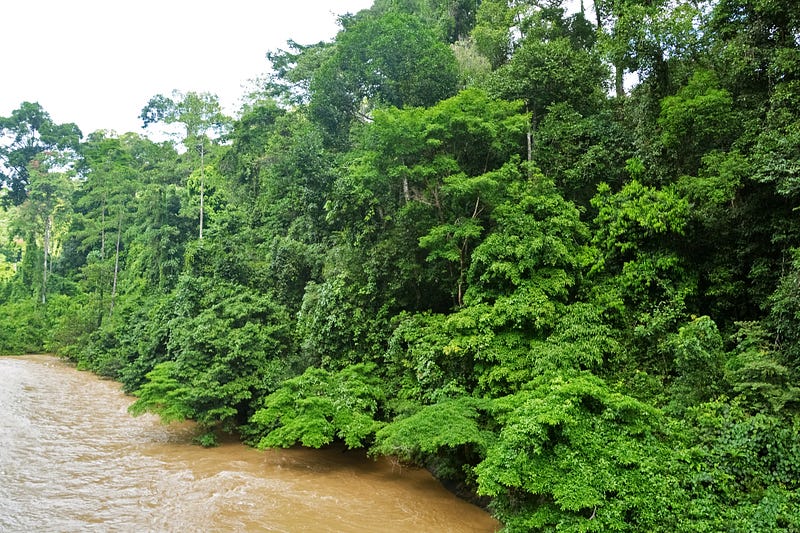
A week later, President Jair Bolsarno issued decrees aimed at prospecting in the Amazon Rainforest on February 14, 2022. While there’s going to be pushback from a variety of actors about mining in the Amazon Rainforest (more on this later), the decrees fit into Bolsarno’s vision to improve Brazil’s national fertilizer industry .
Bolsarno’s vision is laid out in accordance with Brazil’s National Fertilizer Plan. It was reported by Argus Media that Brazil intends to cut down on fertilizer import dependency — from 85% of consumption to 60% of consumption from fertilizer imports by 2025. Brazil imports all three of the major fertlizer commodities: nitrogen (95.7% reliance on imports), phosphate (72% reliance on imports) and potash (96.4% reliance on imports).
The National Fertilizer Plan got a boost in support from Canada after the escalation of the Russia-Ukraine conflict. According to Director of Programs at the Ministry of Agriculture, Luis Rangel, “The national fertilizer plan is a long-term plan, a 30-year infrastructure transformation plan […] we intend to reduce the national dependence on imported fertilizers from 85% to around 50% or 55%.”
Therefore, following the crisis and conflict in Ukraine the consumption percentage from imports would be further cut down to 50%. Moreover, the strategic objectives for the plan were announced, with specific figures and targets for how Brazil intends to reach its goal of 50% import dependency for fertilizers. It was also announced that “promoting the creation of a South American fertilizer industry council within Mercosur” would provide the solution to Brazil’s natural gas dilemma. Access to natural gas is key to achieving Brazil’s fertilizer industry production ambitions.
Russia’s Key Position in Brazil
This story couldn’t continue on without talking about Russia’s prior dominance in Brazil’s fertilizer market.
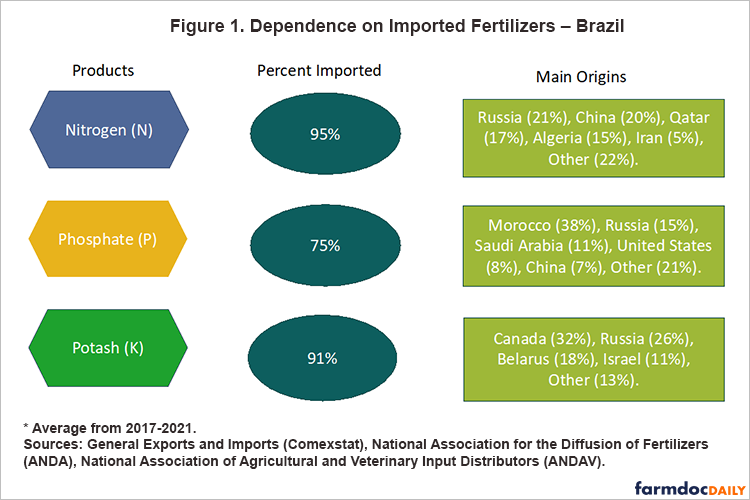
Russia pops up at the top of all three categories — 21% of Nitrogen exports, 15% of Phosphate exports and 26% of Potash exports. It’s also important to point out here that both China and Belarus have been struggling to meet the needs of Brazil’s fertilizer consumption. China restricted exports in 2021 and Belarus’s potash industry has been the target of USA and European sanctions.
Read more about what’s happening in the global fertilizer industry with this story I published on Medium about Nutrien Ltd.’s CEO transition: https://readmedium.com/what-went-down-at-the-worlds-largest-potash-producer-nutrien-ltd-c174d19e403d
It shows in the diagram that Russia leads over all other countries in Brazil’s nitrogen (N) fertilizer import dependency. With China’s fertilizer currently out of the picture, this scenario is likely to see more Russian imports.
As mentioned earlier, Russia’s Acron Group has been the target of a Countervailing Duties (CVD) dispute at the United States International Trade Court. The United States’ largest nitrogen and ammonia producer, CF Industries, petitioned the court alleging that Russia’s subsidies of urea ammonium nitrate solutions (UAN) put Amercian producers and exports at an unfair advantage in the marketplace.
It’s likely that Russia will lose the case, because the preliminary determination was already ruled in favor of CF Industries. This effectively will put Acron Group out of the American UAN marketplace, where it was one of the leaders. Russia probably intends to continue exporting as much nitrogen fertilizer as it can to countries who need it. Brazil will be one of its main targets.
Read more about CVD cases with a legal analysis about The Mosaic Company’s petition to the US ITC against Morocco’s OCP in the American phosphate fertilizer market with this story I published on Medium: https://readmedium.com/big-year-for-d-c-62a64978a5cf
Potash Production and Amazon Rainforest
But looking elsewhere in the fertilizer scenario puts a spotlight on potash. Russia stopped exporting potash due to the conflict in Ukraine. Brazil acted quickly on this circumstance by pushing ahead with one of the key strategic advancements in the National Fertilizer Plan: mining for large reserves of potash underground in the Amazon Rainforest.
It’s a fact that Brazil’s potash reserves lie within lands owned by indigenous peoples. And it’s the reason for why an indigenous mining bill has been held up in the Congress. A crowd gathered for the “Earth Event” during which legendary Brazilian musician and artist Caetano Veloso led the protest against the mining bill. It was reported that Veloso met with the Senate to plead for not letting the bill pass.
I wrote about the response from Brazil’s indigenous groups and environmental activists with this story on Medium: https://readmedium.com/indigenous-groups-vehemently-oppose-bolsarnos-national-fertilizer-plan-e4aef667f4c7
Global Fertilizer Scenario
Where will Brazil fit into this future global fertilizer scenario? According to the USDA, a report compiled on March 6, 2022, outlines the following data about the outlook for Brazil’s National Fertilizer Plan.
- For Nitrogen Production: 1) increase nitrogen capacity to 2.8mnt by 2050; 2) attract 2 nitrogen producers to Brazil by 20230; 3) attract an additional 4 producers by 2050; 4) allocate $10 billion for nitrogen production and output by 2030; 5) allocate $10 billion for nitrogen production and output for 2030–2040 and 2040–2050.
- For Phosphate Production: 1) 5 auctions to be held for phosphate mining areas; 2) add 2 phosphate producers to new mining areas by 2030; 3) increase the number of phosphate producers to 10 by 2040; 4) increase phosphate rock exploration by 3% annually through 2030 and 2% annually from 2030–2050; 5) enhance phosphate rock production at 27mnt annually by 2050.
- For Potash Production: 1) 5 auctions to be held for potash mining areas; 2) raise national potash production to 6mnt by 2050; 3) increase the number of potash producers to 10 by 2030; 4) add an additional 10 potash producers by 2040.
Key Points: For nitrogen production the words increase, attract and allocate should mean that international investors and companies are welcomed to set up shop in Brazil’s fertilizer industry. For phospate production the words add, increase and enhance standout as if phosphates are in high demand for Brazil’s crops, so getting more of it is beneficial to short-term demand. For potash production the words raise, increase and add are necessary for the National Fertlizer Plan, because, as I’ve already mentioned before, potash production in Brazil is in high demand due to problems with Russia and Belarus imports to Brazil; it is possibly the biggest concern for long-term industry planning.
The current global fertilizer scenario reveals some intriguing data points about production and supply. Companies like Morocco’s OCP are expanding into Africa to solve many of the countries’ food problems. USA is restricting access to its fertilizer markets, while China looks to shut down many of its export operations for domestic supply and Russia uses its fertilizer diplomacy to achieve political ends.
Voting matters.
Whether at the UNGA or in Brazil’s Congress, votes are made that have far-reaching consequences. It’s votes like these that allow countries to push their strategies, such as Brazil’s abstention from the vote to suspend Russia from the Human Rights Council. In addition, countries from the Middle East and North Africa — Morocco, Qatar, Oman, Saudi Arabia and Algeria — have stepped in to fill the void of Brazil’s fertilizer import dilemma. While Jordan hopes to keep its potash fertilizer exports, valued at $70 million in 2021, replacing Russian exports for the forseeable future.