
What does the latest UN vote show us?
The UN General Assembly has approved the request to suspend Russia from the Human Rights Council in Geneva
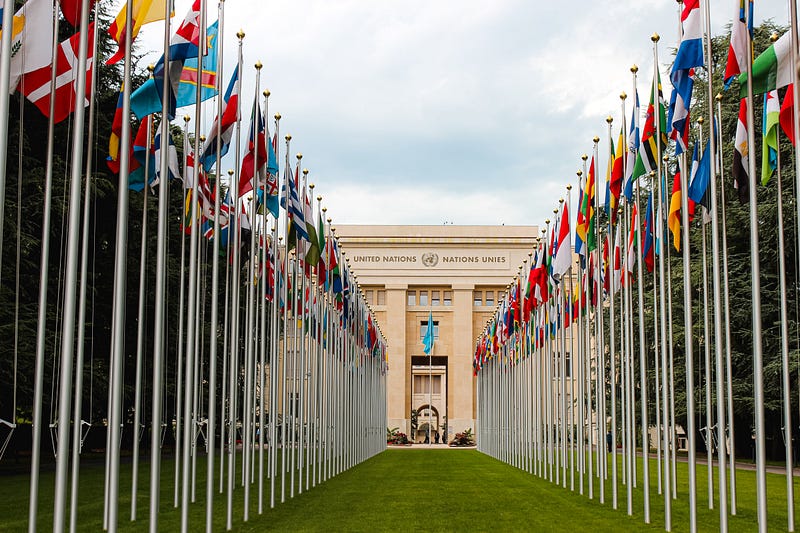
On April 7 a very important news has arrived: the UN General Assembly approved the request of the US, promoters of the initiative, to suspend Russia from the Human Rights Council in Geneva. It is actually the third resolution promoted by the West and approved by the United Nations since the occupation of Ukraine. Indeed, on the occasion of the first vote on 2 March the assembly condemned the Russian invasion, while during the second one on 24 March it called for an immediate cessation of hostilities.
The Human Rights Council is a body with 47 members based in Switzerland. After the “serious and systematic violations and abuses of human rights” committed by the Kremlin army during the war, the suspension of Moscow from it seemed almost mandatory. Yet, compared to previous votes, it seems that the the group of states opposed to Putin’s policies has been greatly reduced. The resolution called in fact for a two-thirds majority and was adopted with 93 in favour, 24 against, but also 58 abstentions.
Russia has thus become the first permanent member of the Security Council suspended by a UN body. However, the result has shown how much the Kremlin’s efforts to create an anti-Western alliance are gaining ground. For now, failures prevail, but Western democracies are becoming more aware of how dangerous this war at the gates of Europe is and what consequences it may have on international structures. The vote at the General Assembly has then today a moral, but mainly geopolitical value.
Countries that announced themselves against the resolution were therefore Kazakhstan, Venezuela, North Korea, Iran, Syria, Cuba, China and Belarus, followed by Algeria, Bolivia, Burundi, Central African Republic, Congo, Eritrea, Ethiopia, Gabon, Kyrgyzstan, Laos, Mali, Nicaragua, Tajikistan, Uzbekistan, Vietnam and Zimbabwe. Among the abstentions, India stood out, which still tries to remain neutral in the light of possible trade relations, but also the presence of Brazil, Egypt, Mexico, which in the past had always voted together with the West, raise concerns
The text of the resolution was presented to the assembly by the Ukrainian ambassador himself at the Glass Palace, accompanied by his incisive words “If someone votes against, he will become accomplice to the deaths of our citizens”. Significant were also the words of the American Secretary of State, Antony Blinken, who announced that “a country that continually violates rights cannot sit in an organ that has the task of protecting the rights themselves. A roundabout had to be corrected”. It is impossible indeed to remain silent after the terrible images from Bucha, Irpin, Dymerka or other cities destroyed by the Russian offensive, which showed the terrible war crimes that humans were once again able to commit.
However, one by one, Putin’s closest allies spoke out, repeating Moscow’s arguments and stressing how the West is trying to impose its own will to the rest of the world. “Dialogue and negotiation are the only way out of the crisis in Ukraine. We strongly oppose the politicisation of human rights issues”, said Chinese ambassador at the UN asembly Zhang Jun at the time of the explanations of Beijing’s stance.
As a consequence, from this recent result what really emerged was the political unity of the Western states and of Europe, as even Hungary decided eventually to vote in favour of the resolution (President Orban, who has just been re-elected, is known for his proximity to the Kremlin). Yet, the UN is far from being really united against Putin. This is what we must think about in the future, in order to find a solution before it is too late.
Sources I was inspired by to write this article:
- Guerra in Ucraina, l’Onu sospende Mosca dal Consiglio dei diritti umani, published by Il Fatto Quotidiano
- Onu: Russia fuori dal consiglio dei diritti umani, published by La Repubblica
- L’Assemblea generale Onu sospende la Russia dal Consiglio per i diritti umani, published by Rai News
I am an Italian student who tries every day to improve her English. I really like writing and studying in this language, also to be able to reach more people. However, I still often run into mistakes. So, if while reading my article you have found some, do not hesitate to contact me, either though a comment or private note!