Metals 2.0: The Game-Changers in Geopolitics
Nickel & Lithium — Electric Vehicle (EV) Batteries
The Tesla Case
On the news of Elon Musk’s Twitter fiasco, people are losing sight of what’s happening with Tesla in the Global Economy. Tesla’s market share of Electric Vehicles (EV) comes down to technological superiority and first-mover advantage. Elon Musk hasn’t been shy about the raw materials needed for producing the batteries: nickel, copper, cobalt and lithium. He has been warning the world about global shortages of critical metals since May 2019.
According to Tesla’s global supply manager for battery metals, Sarah Maryssael, Tesla would take necessary measures to ensure key supply of nickel and cut down on the use of cobalt for the company’s EV production — citing a “huge potential” to increase supply of nickel from Australia and United States.
Under the backdrop of underinvestment in the raw materials needed for an industry that depends on critical metals for the so-called electric revolution, the shortages were certainly exacerbated by the global outbreak of COVID-19. Back in 2019, however, Elon Musk already pointed out an essential truth for Tesla: “There’s not much point in adding product complexity if we don’t have enough batteries.”
https://www.youtube.com/watch?v=vpNZhKSfrKE
It’s well-known among industry insiders that Tesla has sought to produce its own vehicle components ever since rolling out EVs. But the supply of raw materials, such as nickel, must be procured from areas outside of Tesla’s geographic and market reach. The company simply does not have the capability to mine its own raw materials.
Where does Tesla get these critical metals from?
In Janurary 2020, Tesla began negotiations with Switzerland-based Glencore plc to purchase long-term supplies of cobalt at its Shanghai Gigafactory.
One of Tesla’s most important lithium suppliers is a Chinese company, Contemporary Amperex Technology (CATL). The two companies partnered up on a deal for CATL to supply Tesla with lithium-ion batteries from 2022–2025. This is possibly the most important partnership in the EV sector, as far as raw materials procurement is concerned.
This was soon followed up by Elon Musk’s famous quote to global metal miners: “Any mining companies out there … wherever you are in the world, please mine more nickel…Tesla will give you a giant contract for a long period of time if you mine nickel efficiently and in an environmentally sensitive way.”
On July 21, 2021, BHP Group answered the call by signing a deal with Tesla to sustainably produce and supply battery metals from its Nickel West project in Western Australia. This was followed by another deal with USA-based Talon Metals to secure nickel supplies for a mine projected to begin production in 2026.
All of these developments in the critical metals space can’t be overstated for Tesla’s success as the world’s largest EV producer — the continuation of procuring raw materials will be the highest priority for the company going forward as new companies expand production and new partnerships emerge. It’s already been reported that automakers Ford and GM have secured lithium and coblat supplies to enhance EV production.
While other news surrounds product launches. Nissan and NASA teamed up to develop an all-solid-state battery that intends to replace lithium-ion batteries. And surprisingly, GM and Honda will jointly produce EVs based on a new global platform that will allow the companies to sell at a more affordable price in the American market.
Now that we’ve entered the 2022 era, the EV consumer market it projected to become a much more competitive sector. One of Tesla’s rivals, Rivian, announced on March 10, 2022, it would follow suit with the world’s biggest EV producer and seller by adopting lithium iron phosphate (LFP) batteries.
On the legislative front, California regulatory bodies proposed to ban the sale of new gasolne-fueled vehicles by 2035. I argue that, if this proposal is passed by relevant legal authorities, it would be a major boon for the rollout of EVs and clean energy products in USA.
With some analysts calling the this era “a gold rush to metals” the world is headed for a revolutionary expansion of renewable energy power and clean energy technologies that pass off on the fossil-fuels industry. That’s why metals are so critical to the world’s Net Zero ambitions. And to get there, Elon Musk is going to need more critical metals; while Mike Henry is going to have to prove that BHP Group is taking its ESG leadership to the next level.
The China and Australia Case
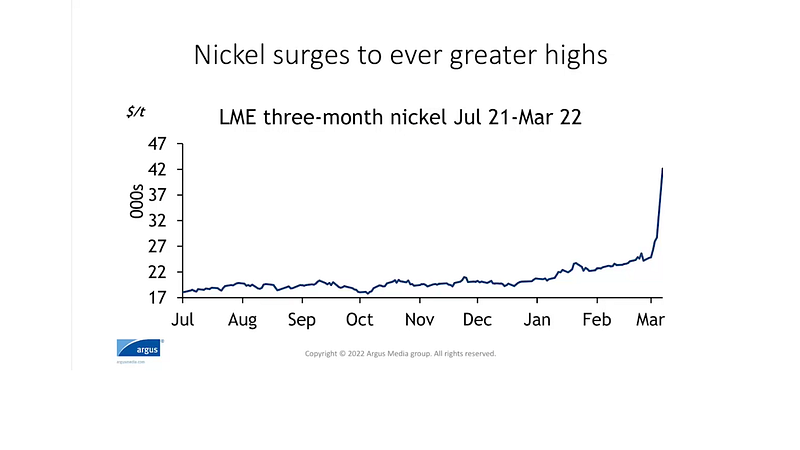
In March 2022, there was a substantial crisis for China’s nickel trading giant — Tsingshan Holding Group — led by Chinese Wenzhounese billonaire Xiang Guangda who bet zealously on the growth of nickel production and supply this year at the London Metals Exchange (LME). When the price of nickel surpassed $100,000 per tonne the LME had to stop nickel trading at an instant.
In response to the EV battery production shortages, Tsingshan Holding Group devised a strategy that would keep prices lower, and thus allow for cheaper production of battery ingredients, especially from areas of Southeast Asia like Indonesia. But unfortuantely the events in Ukraine have caused the markets to act in an extraordinary way — a way that was adverse to Tsingshan’s nickel production investment strategy.
Since March 8, 2022, international investors and bankers have been awaiting Tsingshan’s response. It wasn’t until March 15, 2022, that they finally announced an agreement with bank creditors, such as JP Morgan and CCBI Global Markets, to discuss a “standby secured liquidity facility” arrangement to solve the company’s problems. This agreement is being referred to by most sources as a standstill agreement for which it is expected that the haphazard nickel trading will once again stabilize.
The company released a statement, saying:
“As an integral feature of the agreement, there is provision for the existing hedge positions to be reduced by the Tsingshan group in a fair and orderly manner as abnormal market conditions subside.”
Any new rules will be applied by regulatory authorties in Great Britain: the Financial Conduct Authority (FCA) and the Bank of England.
This story about China’s Tsingshan Holdings Group sheds light on how critical the metals markets are becoming for global finance and investment banks.
With China’s capabilities to produce cheaply in Indonesia, and raise capital from the world’s largest international banks and financial institutions, I’d call this a recipe for stability and disaster offset by the production and supply of metals. This essential truth is even hidden within this story about the nickel industry: the whole point of the standstill agreement was to stabilize pricing and trading mechanisms to prevent a disaster in global markets.
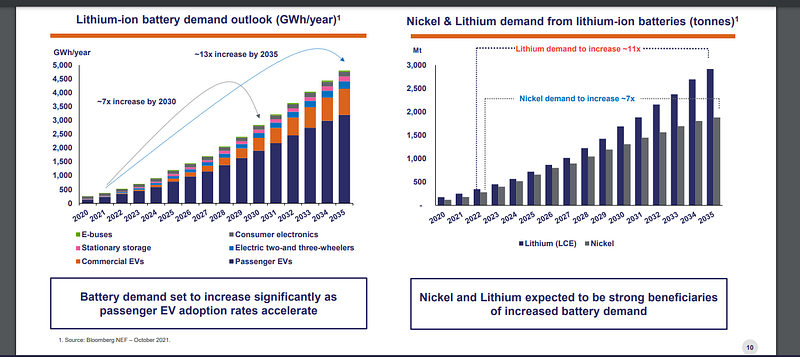
Next, this story continues with a scheme implementation deed (SID) agreed to in December 2021 when Australia’s IGO Ltd sought to acquire another Australian metals miner outfit, Western Areas Ltd, to boost its nickel and lithium portfolio. By adding some of the highest-grade nickel and lithium mines that Western Australia has to offer, IGO would be able to significantly take on the metal production base that is crucial to Electric Vehicles (EV) and Clean Energy Technologies.
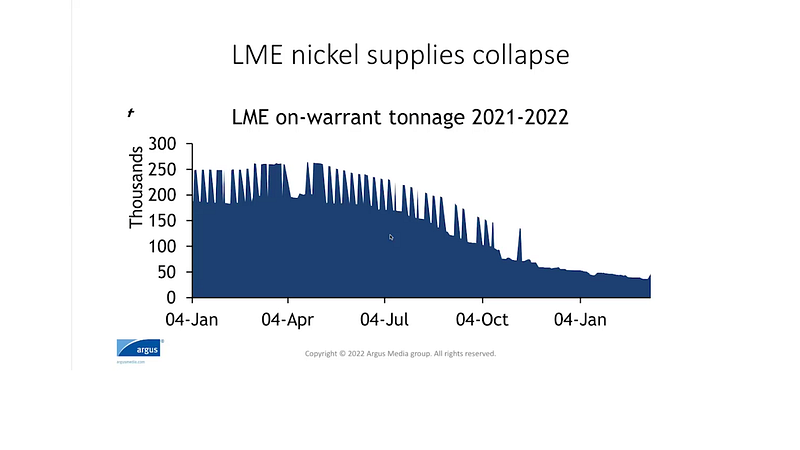
Originally valued at A$1.096 billion, IGO would takeover Western Areas Ltd assets with a 100% interest in the mines in Western Australia. IGO appeared to be on its way to a massive acquisition that would put it at the top of Western Australia’s nickel production capacity. Until recently when the nickel trading mechanisms on the London Metals Exchange (LME) got out of control, causing China’s Tsingshan Holdings Group to hedge production against a surging nickel price that hit a whopping $100,000 a tonne.
Due to the events on LME the company was expecting only a “relatively short delay” for the takeover deal at first. It was then reported on April 5, 2022, that IGO would completely back out of the deal to acquire Western Areas — citing only an independent expert report as the rationale for foregoing the acquisition.
Iron-Ore & Steel — Construction/Building
The Kazakhstan Case
On 18 May 2022 Kazakhstan’s largest iron-ore exporter and enricher, Sokolov-Sarybai Mining Production Association (SSGPO), decided to temporarily stop supplying Russia’s Magnitogorsk Iron and Steelworks (MMK) located in Siberia.
Russia’s MMK responded by blaming the situation on USA and Western sanctions.
Although the World Steel Association has projected low growth for steel demand, ~0.4% in 2022 with a rise of ~2.2% in 2023, the Short Range Outlook was compiled in response to an uncertain atmosphere as a result of geopolitcal tensions and China’s recovery from Covid-19 lockdowns in Shanghai.
Meanwhile, energy has taken the center stage over Europe’s dependency for Russian natural gas. Gazprom reduced natural gas supplies to Germany by 33% while also disrupting supplies to Italy’s Eni via the Nord Stream pipeline. It was reported that this was due to operational issues with some of the pipeline’s turbines at the Portovaya compressor station in the Baltic Sea, and, due to the maintanence issues, Gazprom blamed Siemens Energy for withdrawing its services to the pipeline in response to Western sanctions.
Iron-ore mining projects in Guinea (more on this case next) reveal that strong demand for metals is going to see an upside during the global commodity supercycle, irrespective of geopolitics, as countries like China and Australia compete for supply and demand of iron-ore and other metals.
That’s why this most recent situation between Kazakhstan and Russia should not be taken lightly. Just look at what happend on the Caspian Pipeline Consortium to understand the geopolitical nature of energy and commodities right now.
Due to Russia-Ukraine war, energy and commodities are the biggest concerns of the global economy. Germany is now firing up coal plants, Canada’s mining company issued a preliminary economic assessment (PEA) for its Copper World Complex located in Arizona of the United States, and France’s President Macron is in talks with Romania to revive an old railroad transportation route from Odesa to the Danube River to increase grain exports from Ukraine to international markets.
All of this economic activity is occuring under the backdrop of USA and European sanctions on Russia’s critical LNG industry, such as Novatek’s Arctic LNG 2 project.
The St. Petersburg International Economic Forum is being used as a stage for Russia to show the world how it is commited to its political agenda.
In the words of Russia President Vladimir Putin:
The Forum’s anniversary is taking place at a difficult time for the entire international community. The mistakes of Western countries in economic policy over many years and illegitimate sanctions have led to a wave of global inflation, the disruption of usual supply chains, and a sharp increase in poverty and food shortages. Yet, as can be the case, along with these challenges, new prospects are emerging. This is why the Forum’s slogan — New Opportunities in a New World — seems so relevant.
“New Opportunities in a New World” sounds like classic revisionism, but it also indicates how important Russia is — or at least thinks it is — to the global commodity supercycle. For instance, China’s President and Chairman Xi Jin Ping stood by Russia at the St. Petersburg Forum in claiming that “the era of the unipolar world” being led by the United States was over.
While most people will understandably focus on the inhumane war effort launched by Russia against Ukraine, with the surge of international refugees and internally displaced peoples (IDPs) all over the world, the global commodity supercyle is driving the economic power of countries like Russia.
This allows Russua to revise the whole situation in the post-Soviet territories of Central Asia. Kazakhstan is worried — extremely. It has had to use the St. Petersburg Forum as a way to committ to the world its territorial integrity in the face of looming Russia threat on its border.
This is in many ways of desperate plea to the world — The United States? — for promoting the cause of Kazakhstan’s sovereignty for a country that has much to lose from USA and European sanctions on Russia’s oil and gas industries.
The Guinea Case
Iron ore production at the Simadou mine in southeast Guinea began in 2015. It is being developed by Rio Tinto, Aluminum Corporation of China, the government of Guinea and the International Finance Corporation (IFC).
The Simandou project demands increased investments in Guinea’s infrastructure development as the production takes place in a distant, mountainous region. The new trans-Guinean railway was propsed to link up Simandou to the coastal parts of Guinea. Since then, the Winning Consortium Simandou (WCS) was formed to build the railway and port. WCS hired China Railway 18th Bureau Group Co Ltd for the work.
Ecological issues with a critically endangered chimpanzee have raised concerns about the railway and port building projects, but it seems that the government of Guinea was not happy with the terms of the agreement with Rio Tinto and Chinalco all along.
A significant development to this story was the military coup carried out in Guinea on 5 September 2021. Read about it here: https://www.bbc.com/news/world-africa-58461971
New terms of the agreement were established on 28 March 2022 whereby the government of Guinea would take full control of the railway and port after the project was completed. It was later announced that the government of Guinea reserved the right to cancel mining licenses if the iron-ore project was not completed by 2024–2025.
David Thomas, writing for African Business, claims that one of the key reasons for the Simandou iron-ore project’s delay is because of a lack of agreement on the trans-Guinean railway between Rio Tinto and the government in Guinea. Thomas indicates that the main purpose of the project is to mine iron-ore, that is then to be sold to China in an effort for the country to decrease exposure to Australia’s massive iron-ore exports.
Thus, the Simandou iron-ore project has major geopolitical implications — not only for the entire region of Africa, but also for the growing tensions between China and Australia.
Another issue was put into focus by Diawo Barry of The Africa Report of which Rio Tinto has run into investor fears over ESG concerns in developing the iron-ore project. The inability to get funds for building the railway and ports will have an effect on the company’s timeline to complete the project.
ExxonMobil and Rio Tinto are two of the world’s largest companies. The examples of Guyana and Guinea reveal how each company is dealing with ESG concerns.
The Greater Guyana Initiative was established by ExxonMobil, Hess and CNOOC to commit funds to projects that contribute to the sustainable development of Guyana’s economy and people, including regional initiatives that suppoer development work in the country’s modern agriculture and health.
ExxonMobil’s offshore discoveries are also going to provide jobs for 3,500 Guyanese people while directly working with a number of local suppliers on the projects.
Rio Tinto, on the other hand, can’t seem to get anything right for the local governments and population in regards to mining projects abroad — Papua New Guinea, Mongolia and Guinea (West Africa) are all cases that have caused Rio Tinto to take major losses. It’s even plausible to say that all of the cases have destroyed Rio Tinto’s image and put it on the forefront of ESG corporate accountability for mining activities around the world.
Concluding Thoughts
The examples of China and Russia do indeed prove how crucial commodites are becoming to geopolitics. One aspect of the China-Russia relationship depends on how much damage the sanctions from the United States and European Union will cause to the global metals industries.
The world has seen numerous export bans on critical inputs to fertilizer and food production since the outbreak of Covid-19 in 2020. This circumstance has created a massive ripple effect on economies of the underdeveloped and undeveloped worlds, where civil unrest has become a source of tension for government stability in many countries of Middle East, Sub-Saharan Africa and South Asia.
Ukraine’s agriculture production has had an impact on the world’s food supply, notably due to wheat cultivation and production. Sanctions on China would only exacerbate the ongoing global food crisis which has seen significant strain to economic production all over the world, including in developing economies, where the historical highs in fertilizer prices has led to high crop prices and thus higher consumer prices at the wholesale and broader marketplace levels.
Imagine if the same tactics were applied by countries to target China’s metals production and supply? It would be disastorous for the Global Economy, as the massive rollout of EVs, renewable energy installations and more construction projects require massive amounts of copper and nickel — among other metals.
As the world is grappling with the global food crisis the world needs Brazil to produce more food, because it is already one of the world’s largest food-producing countries along with Ukraine.
These trends are part of the much larger geopolitical trends that have been kickstarted by the global COVID-19 pandemic. The global pandemic has caused several countries to unravel, with socio-political instability that was building up for decades, and causing the global economy to be shaken up with uncertainties, putting the world’s largest companies in some of the most vulnerable areas.
I argue that these issues about ESG and global mining projects, as well as how indigenous groups and governments are responding to the Global Commodity Supercycle, are defined by a new paradigm shift. All of these trends, including the references and stories I’ve included here, should give us a broader understanding of what’s happening in geopolitics and the global economy after the COVID-19 pandemic.
Whether or not we can overcome our pre-conceived ideas about Energy and Commodities is going to be a key problem facing the world’s population after the global pandemic. We need to get more serious about Climate Change, but also look at how the world’s most valuable commodities are going to be needed and secured in the future.
New to trading? Try crypto trading bots or copy trading


