Russia’s and China’s Nickel Strategy— A “National Champion” To Stabilize Sanctions?
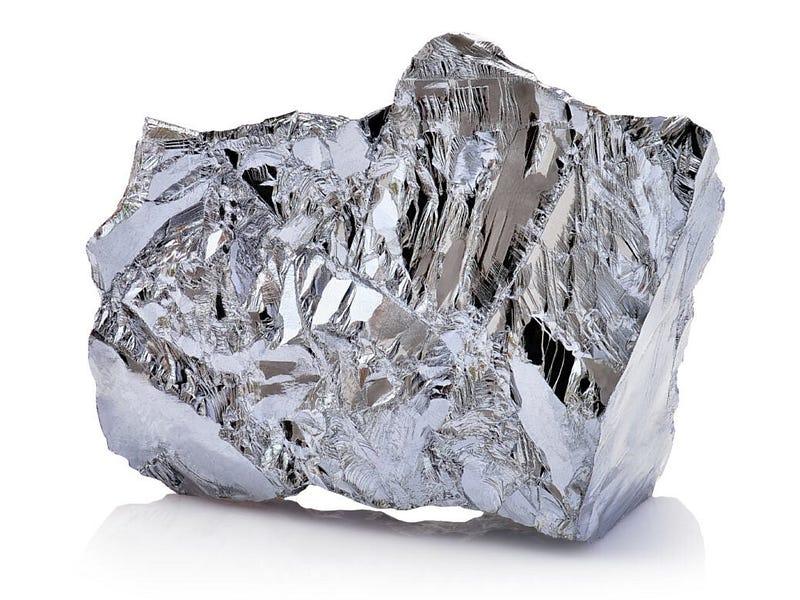
To understand what is happening more broadly in the metals industries, I suggest reading this piece I wrote about the nickel trading crisis on the London Metals Exchange (LME) in March 2022. It includes information about China, Indonesia, Australia and Tesla. My overall opinion in this writing is that the metals industries will become a bigger factor in a country’s strategy in the future, while companies such as Tesla and BHP are bearing the burden of the geopolitical crosshairs, especially in the aftermath of Russia’s invasion of Ukraine.
Russia Sanctions and Booming Metals
The war in Ukraine has led to a higher degree of sanctions against Russia from the United States and European Union. I’m writing this story in response to what is being heralded as a “national champion” to defend Russia’s nickel industry against the economic impact of sanctions as a result of its invasion of Ukraine. It was reported by several sources that a sanctioned Russian businessman, Vladimir Potanin, has called for a $60 billion merger between two of Russia’s largest metal producers — Nornickel and Rusal.
According to Reuters, this proposed metal merger has the potential to reach a revenue of $30 billion due to the two companies’ exposure to palladium, nickel and aluminum. These three metals are crucial to the global economy as the world strives for Energy Transition and a more commodity-centric investor marketplace.
Mining.com then reported on 22 July 2022 that the London Metals Exchange (LME) announced publicly that it would not immediately ban the prosposed metal merger.
In order to understand the significance of Russia’s metal merger, however, requires an in-depth look at how geopolitics and commodities coalesce into a country’s overall strategy.
In the case of Russia, combating sanctions is a key part of the country’s economic development in the future. This metal merger intends to succeed in the strategy of combining to large (national) companies into one massive entity controlled by the Russian state itself.
Again, metals are becoming so valuable to the global economy that Russia must carefully consider how its industries will avoid sanctions. If they pull it off, avoiding the massive blow from sanctions due to its invasion of Ukraine, then it would be a high achievement in their overral strategy to defend Russia from the threat of USA and Europe.
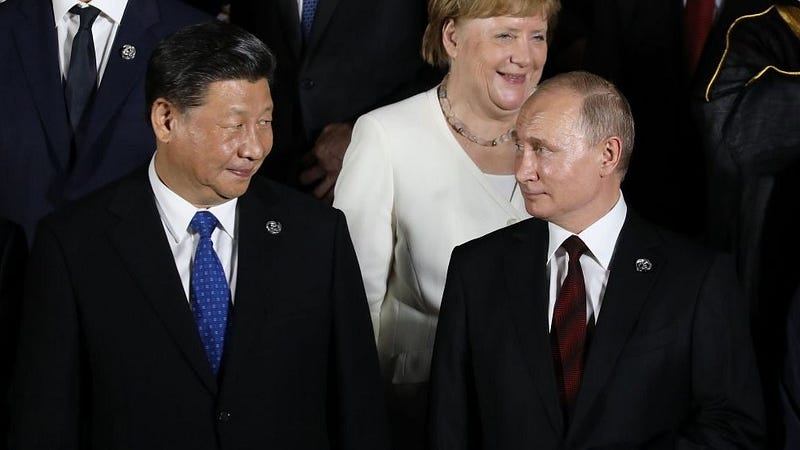
Whatever happens with Russia’s commodities and the impact brought on by related industries from sanctons by USA and European Union, will have an effect on the relationship between Russia and China, which will also cause great concern to the USA and European Union. The fact is that the Russia-China strategy is still very uncertain to how far it will go, though China’s Chairman and President Xi Jin Ping did stand by Vladimir Putin’s side irrespective of the war in Ukraine, which in my view shows a lot about the direction of the two countries common interests in world politics. The Olympics is certainly one of the largest stages to make such a statement.
I argue that China is likely to face tough decisions in the future about the consequences from increasing exposure to Russian commodities, particularly metals such as copper and nickel, for which Russia has production capacity and strategic reserves to keep supplying China with these critical metals in the future.
China is also less likely to get tangled up in the ESG Paradigm Shift and the related issues to their economic projects abroad with a dependence on these vital commodity exports from Russia. This would be an advantage to China’s strategic dilemmas in the future.
I conclude by saying that the demand for commodities and energy are producing effects in the foreign policy area of many countries today, especially in USA and European Union. Just look at an example of an American fertilizer producer’s petition to USA courts against Russia’s and Morocco’s phosphate exports into American fertilizer markets.
New to trading? Try crypto trading bots or copy trading