Crude Oil & Iron Ore are signaling a reboot in the Global Commodity Supercycle
Nowadays the global economy is going through what many experts are calling a “commodity supercycle” which has been exacerbated by the Russia-Ukraine conflict.
Here’s two examples of the trends in global commodities from two of the world’s largest companies: ExxonMobil and Rio Tinto. The offshore oil discovery in Guyana and iron-ore mining project in Guinea are both classic examples of Environment, Social, Governance (ESG) and how geopolitical trends play a role in the production aspects.
ExxonMobil in Guyana
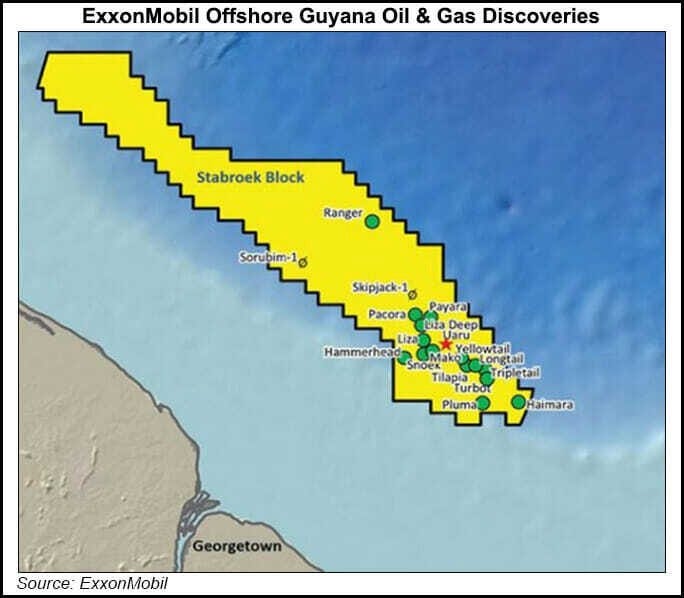
Speaking to a reporter about Guyana’s oil & gas industry, the Managing Director of Guyana Logistics Services Inc. (GLASS) said:
“It is really an exciting time to be a Guyanese and to be living in Guyana!”
That’s because on 5 June 2022 the American energy giant ExxonMobil made two new offshore discoveries in Guyana said to be capable of producing ~10 million oil-equivalent barrels. Referred to as Fangtooth and Lau Lau, these two new discoveries add to the Stabroek block which began producing crude oil in 2019. With stakes from offshore companies Hess (30%) and CNOOC (25%), the Liza Unity FPSO vessel began operating in offshore Guyana in October 2021 after ExxonMobil raised estimates for crude production by 1 billion oil-equivalent barrels.
For more specific details about ExxonMobil’s crude oil production at the Stabroek block and the Liza Unity FPSO, read here: https://www.naturalgasintel.com/exxonmobil-building-plethora-of-oil-natural-gas-prospects-in-stabroek-offshore-guyana/
The initial offshore discoveries at offshore Guyana in October 2021 has led to a flurry of investments from some of the world’s largest companies to date. BHP Group got approval to conduct 3D seismic surveys at the offshore blocks. ExxonMobil also plans to increase production at offshore Guyana with four FPSOs capable of producing 800,000 barrel per day (bpd) by 2025. Because of these reasons Hess CEO, John Hess, said:
“[Offshore Guyana] one of the [oil] industry’s best investments.”
With a 25% stake in the offshore Stabroek Block, China’s largest offshore oil & gas producer — China National Offshore Oil Corporation (CNOOC) — notes that crude oil production in offshore Guayana is the company’s most valuable international investment for crude oil production. It was also reported that CNOOC intends to raise its oil and gas production by more than 6 percent each year from 2022–2024.
This means that offshore Guyana is a critical part of China’s energy security strategy, for which crude oil production is the major factor to secure a diversified and stable energy mix for the world’s largest manufacturing country and second largest economy.
Rio Tinto in Guinea
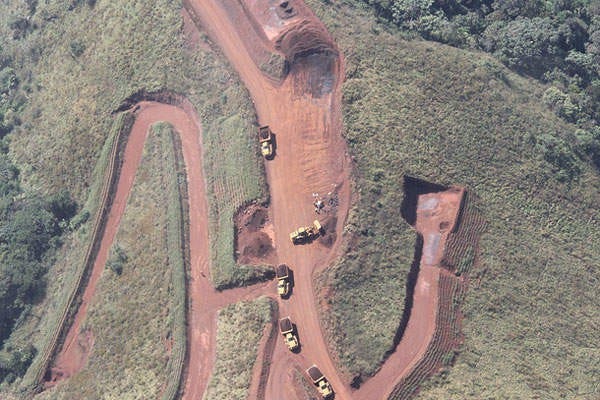
Iron ore production at the Simadou mine in southeast Guinea began in 2015. It is being developed by Rio Tinto, Aluminum Corporation of China, the government of Guinea and the International Finance Corporation (IFC).
The Simandou project demands increased investments in Guinea’s infrastructure development as the production takes place in a distant, mountainous region. The new trans-Guinean railway was propsed to link up Simandou to the coastal parts of Guinea. Since then, the Winning Consortium Simandou (WCS) was formed to build the railway and port. WCS hired China Railway 18th Bureau Group Co Ltd for the work.
Ecological issues with a critically endangered chimpanzee have raised concerns about the railway and port building projects, but it seems that the government of Guinea was not happy with the terms of the agreement with Rio Tinto and Chinalco all along.
A significant development to this story was the military coup carried out in Guinea on 5 September 2021. Read about it here: https://www.bbc.com/news/world-africa-58461971
New terms of the agreement were established on 28 March 2022 whereby the government of Guinea would take full control of the railway and port after the project was completed. It was later announced that the government of Guinea reserved the right to cancel mining licenses if the iron-ore project was not completed by 2024–2025.
David Thomas, writing for African Business, claims that one of the key reasons for the Simandou iron-ore project’s delay is because of a lack of agreement on the trans-Guinean railway between Rio Tinto and the government in Guinea. Thomas indicates that the main purpose of the project is to mine iron-ore, that is then to be sold to China in an effort for the country to decrease exposure to Australia’s massive iron-ore exports.
Thus, the Simandou iron-ore project has major geopolitical implications — not only for the entire region of Africa, but also for the growing tensions between China and Australia.
Another issue was put into focus by Diawo Barry of The Africa Report of which Rio Tinto has run into investor fears over ESG concerns in developing the iron-ore project. The inability to get funds for building the railway and ports will have an effect on the company’s timeline to complete the project.
Why It Matters
ExxonMobil and Rio Tinto are two of the world’s largest companies. The examples of Guyana and Guinea reveal how each company is dealing with ESG concerns.
The Greater Guyana Initiative was established by ExxonMobil, Hess and CNOOC to commit funds to projects that contribute to the sustainable development of Guyana’s economy and people, including regional initiatives that suppoer development work in the country’s modern agriculture and health.
ExxonMobil’s offshore discoveries are also going to provide jobs for 3,500 Guyanese people while directly working with a number of local suppliers on the projects.
Rio Tinto, on the other hand, can’t seem to get anything right for the local governments and population in regards to mining projects abroad — Papua New Guinea, Mongolia and Guinea (West Africa) are all cases that have caused Rio Tinto to take major losses. It’s even plausible to say that all of the cases have destroyed Rio Tinto’s image and put it on the forefront of ESG corporate accountability for mining activities around the world.
The examples of Guyana and Guinea do indeed prove how crucial commodites are becoming to geopolitics. One aspect of the offshore Guyana project is that it has increased tensions over a historical border dispute with Venezuela.
Read more about Global Commodities and Geopolitics:
Join Coinmonks Telegram Channel and Youtube Channel learn about crypto trading and investing


