Indigenous Groups Fight Back in Brazil, Peru Over Potash & Copper Mines
Indigenous Groups Vehemently Oppose Bolsarno’s National Fertilizer Plan in Brazil
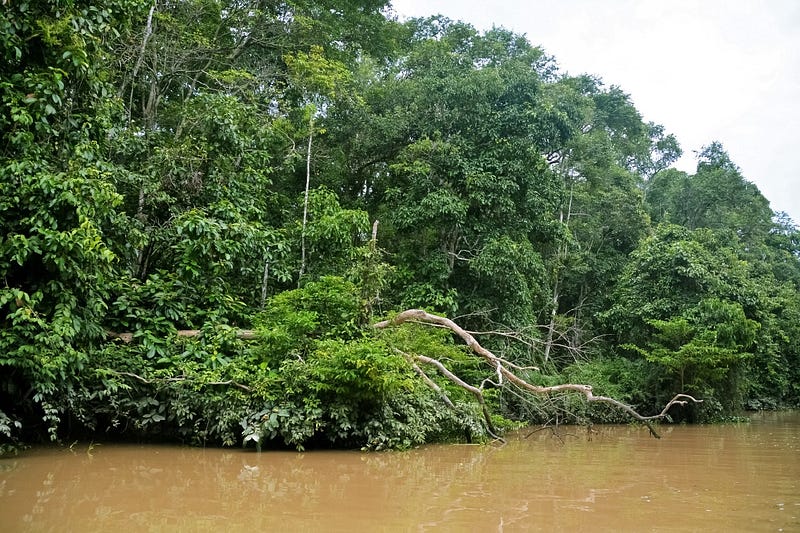
Brazil’s President Jair Bolsarno issued decrees aimed at prospecting in the Amazon Rainforest on February 14, 2022. While there’s going to be pushback from a variety of actors about mining in the Amazon Rainforest (more on this later), the decrees fit into Bolsarno’s vision to improve Brazil’s national fertilizer industry .
Bolsarno’s vision is laid out in accordance with Brazil’s National Fertilizer Plan. It was reported by Argus Media that Brazil intends to cut down on fertilizer import dependency — from 85% of consumption to 60% of consumption from fertilizer imports by 2025. Brazil imports all three of the major fertlizer commodities: nitrogen (95.7% reliance on imports), phosphate (72% reliance on imports) and potash (96.4% reliance on imports).
The National Fertilizer Plan got a boost in support from Canada after the escalation of the Russia-Ukraine conflict. According to Director of Programs at the Ministry of Agriculture, Luis Rangel, “The national fertilizer plan is a long-term plan, a 30-year infrastructure transformation plan […] we intend to reduce the national dependence on imported fertilizers from 85% to around 50% or 55%.”
Therefore, following the crisis and conflict in Ukraine the consumption percentage from imports would be further cut down to 50%. Moreover, the strategic objectives for the plan were announced, with specific figures and targets for how Brazil intends to reach its goal of 50% import dependency for fertilizers. It was also announced that “promoting the creation of a South American fertilizer industry council within Mercosur” would provide the solution to Brazil’s natural gas dilemma. Access to natural gas is key to achieving Brazil’s fertilizer industry production ambitions.
But looking elsewhere in the fertilizer scenario puts a spotlight on potash. Russia stopped exporting potash due to the conflict in Ukraine. Brazil acted quickly on this circumstane by pushing ahead with one of the key strategic advancements in the National Fertilizer Plan: mining for large reserves of potash underground in the Amazon Rainforest.
It’s a fact that Brazil’s potash reserves lie within lands owned by indigenous peoples. And it’s the reason for why an indigenous mining bill has been held up in the Congress. A crowd gathered for the “Earth Event” during which legendary Brazilian musician and artist Caetano Veloso led the protest against the mining bill. It was reported that Veloso met with the Senate to plead for not letting the bill pass.
Caetano Veloso: “Brazil is at a crossroads. Amazon deforestation is out of control, violence against indigenous people has increased and environmental protections have been undermined”.
Labeled as “the package of destruction” non-profit organization Amazon Watch has been objecting to the President Bolsarno’s fertilizer plan since the mining bill on indigenous peoples’ lands was presented in 2020, citing “its anti-environmentalist agenda” as the leading factor.
Indigenous Groups Obstruct China MMG’s Copper Mine at Las Bambas, Peru
The People’s Republic of China (PRC) has tremendous political and economic interests to maintain the strong momentum of the copper industry both now and in the future. With copper prices hitting an all-time high in 2020 the world’s largest consumer of copper raised the level of its production activity to its highest levels since 2011, while importing 656,483 tonnes in June 2020.
These numbers are generally going to get higher and higher as the world turns to “future facing commodities” as a result of growing demand for Energy Transition and Electric Vehicles (EVs).
In addition to the expansion of its domestic copper production, China’s international influence over metals can be seen from in Africa (cobalt and lithium), Southeast Asia (nickel) and South America (copper).
The Las Bambas mine in Peru is a case in point. Already in 2022 China’s MMG is facing restraint from the local indigenous population in Las Bambas.
The history of this relationship between the People’s Republic of China (PRC) and Peru’s indigenous groups is very relevant to the copper industry.
Ever since China’s MMG bought the Las Bambas mine from Glencore for $5.85 billion in April 2014 the mining company has faced continuous opposition from Peruvian indigenous groups over the control status of the mine’s production — e.g. force majeure declared in 2019 and roadblock obstruction in 2021 — that has devestated output for a country who consumes over half of the world’s copper.
There have been many reasons cited for why Las Bambas’ indigenous groups have put up a struggle against China’s mining activities and businesses, such as labor and payment concerns; environmental issues and local grievances toward the destruction of the mine itself.
But China’s MMG has stated that it wants to take this opportunity to contribute to Peru’s economy. They have strived to give the indigenous groups ample reasons to cooperate. They were consequently invited to have talks with the company on May 6, 2022.
Concluding Thoughts
In conclusion, I hope that Brazil’s indigenous peoples’ lands are not destroyed or illegally taken away from their rightful ownership as a result of Bolsarno’s National Fertilizer Plan. I also hope that the conflict in Ukraine will end before the end of this year. The stress these events are putting on the global fertilizer supply could be detrimental to the world’s food crisis. I’m not advocating that fertilizer is the only solution to the food problem; but it is a viable solution to growing more food in parts of the world where food scarcity is at its worst.
Just look at the problems Brazil is facing due to the country’s reliance on fertilizer imports for its thriving agriculture industry, and how many countires depend on them for their food imports, not to mention the countries who struggle to import food to begin with.
What’s uknown at this point is how Brazil will fit into the global fertilizer scenario.
The current situation is like this: USA is restricting access to its fertilizer markets, while China looks to shut down many of its export operations for domestic supply stability and Russia uses its fertilizer diplomacy to achieve political ends.
In addition, countries from the Middle East and North Africa — Morocco, Qatar, Oman, Saudi Arabia and Algeria — have stepped in to fill the void of Brazil’s fertilizer import dilemma. While Jordan hopes to keep its potash fertilizer exports, valued at $70 million in 2021, replacing Russian exports for the forseeable future.That’s why I highlight companies like Morocco’s OCP that are expanding into Africa to solve many of those countries’ food problems.
Domestically, most of the copper is being dug out of extremely politically sensitive areas on the Chinese Mainland — Tibet, Xinjiang, Inner Mongolia — so the political costs to the Chinese Communist Party (CCP) are tremendous. Not to mention the metals being extracted out of risky countries such as Guinea & Democractic Republic of Congo (DRC).
If you’re a geopolitical expert or global business strategist, then you should view China’s activities in the metals space very carefully. That’s because the PRC keeps, and will keep, the future of global metals production and markets in their pockets for the foreseeable future.
Deep pockets come with high political costs. The PRC also doesn’t want to give this advantage up to the USA or any other country. But the backlash we’ve seen from the oil and gas industry against Russia’s actions in Ukraine, prompts a new discussion about global metal miners and producers and to what extent the PRC has influence over critical metals.
Join Coinmonks Telegram Channel and Youtube Channel learn about crypto trading and investing