
About “renewable energy”
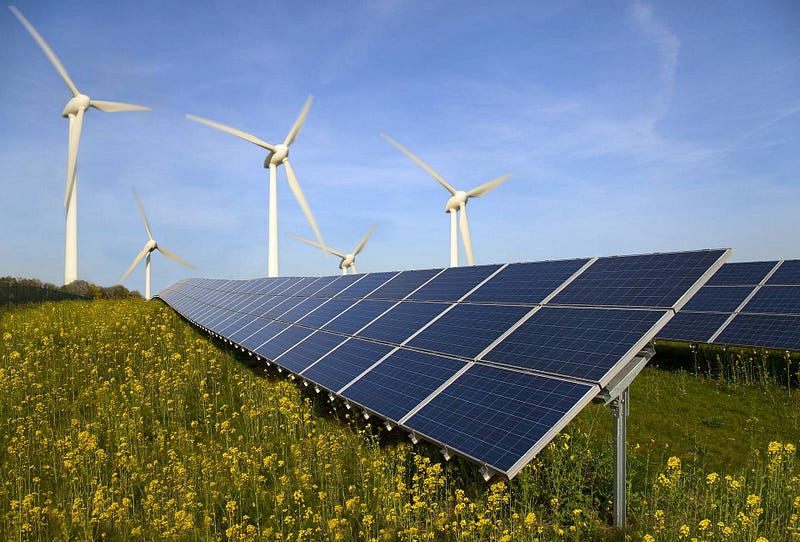
Compared to electricity from thermal and nuclear power plants, electricity from solar and wind power plants was awfully expensive, so it was economically justified to build them only in relatively isolated places for local power supply since it was expensive to pull wires from the power grid there. Yes, and energy is lost in fair quantities when delivered by wire, and therefore even “expensive” solar energy turned out to be more profitable than seemingly cheap thermal and nuclear energy.
Thirty or forty years have passed since thirty or forty years ago. However, the arguments of the aforementioned reasonable people, apparently, turned out to be so strong that many repeat them to this day, being in full confidence that if once, for example, computers were so expensive that only very cool research institutes of especially cool people could afford them. countries, it will always be so, and therefore personal computers in mass use simply cannot be.
So, over these thirty or forty years, solar electricity has fallen in price by about 50 times, and when compared with 1977, by 250 times (from $76 to $0.3 per watt).
Here, of course, inflation should also be taken into account, but even without taking it into account, the scale is impressive.
For wind energy, the ratio is less impressive (primarily because it was initially less expensive), but it is also quite noticeable.
Moreover, this price includes not only direct production and maintenance, but also the cost of building structures and equipment, including, of course, the profits of manufacturers.
The same thing that “the production of a solar power plant in terms of energy consumption is equal to what it will produce in its entire existence” is a bike. Basically based on people’s belief in the thesis “distant ancestors are always smarter than their descendants”: like, “they, here, built coal-fired power plants but almost never built solar ones, so coal ones are definitely cooler.”
Of course, the black PR of the oil and coal industry lobbyists also contributes to some extent. But it is not the main thing here — on a global scale, PR is rather sluggish (although it is noticeably stronger in the domestic media).
The main thing here is the erroneous extrapolation of a certain state to the entire future of mankind.
The first solar power plants were, of course, experimental. The technology is still not developed. The production of their components is still piece, not mass-produced. Related technologies are still fifty years old. Yes, and the stations themselves are built primarily for the experiment and development of technologies, and not for commercial profit. Because, yes, it can turn out so that its construction will never pay off.
However, today a solar panel or a windmill consumes such an insignificant part of their future output during production that it makes as much sense to consider this an obstacle to the introduction of renewable energy production means as to say that it is not necessary to build a brick factory since bricks will also be spent on its construction, and if so, then “it will never pay off.”
All these sources of electricity, of course, have been paying off for a relatively long time. Since the production of their components has become much cheaper, their efficiency has greatly increased.
For solar and wind energy, there were a number of additional problems. The fact is that solar energy, suddenly, is produced only when the sun is shining, and wind energy is produced when the wind is blowing. But people want to consume electricity at other times too.
The same is true for thermal power plants: they also generate electricity only when something burns there in hellish furnaces. However, you can throw “firewood” into them as needed, but people have not yet learned how to make the sunshine as needed.
For the first instances of wind and sunlight power plants, this was a noticeable problem.
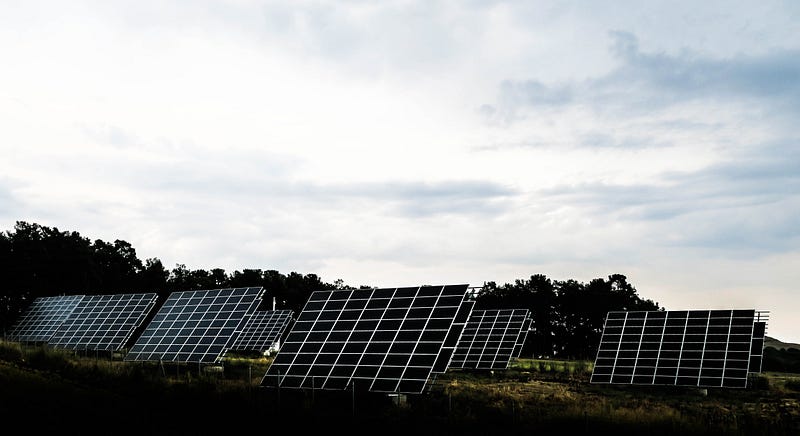
First, they — due to their experimental nature — were not always included in a single network. Secondly, the batteries in those days were also significantly worse than the current ones.
Now power plants are often linked into a single network covering exceptionally large areas (one of the pioneers in building such networks, by the way, was the USSR), and therefore they can “insure” each other.
Moreover, local sources of renewable energy are also linked to a single network. In some countries, in particular, it is allowed to run excess energy from solar panels on your roof or in your garden back into the public grid and even get paid for it.
At the same time, thanks to the improvement in batteries, local energy can be stored relatively efficiently. Because of this, it is now quite possible to make houses on energy self-sufficiency.
By the way, it is worth noting that for a long time there has been a way to store electricity in a very original form: its surplus can be spent on pumping water to a height in the reservoir, and if there is a shortage, this water can be drained by turning turbines for it.
This method is not know-how, it was invented back in the middle of the twentieth century. However, it is still quite usable.
Moreover, the extrapolation of energy consumption for an arbitrary period into the future is also false. One cannot simply take and extend the existing curve to infinity: in many processes, there is, for example, the effect of “saturation”. And in other processes, even a decline may begin.
In the process of interest to us, the reasons for a possible decline are obvious: the efficiency of all kinds of devices also changes with the growth of technology.
For example, energy-saving light bulbs are now in use, which consume 10–30 times less energy than incandescent lamps. But — for us it is important — they shine just as brightly.
A decline in energy consumption is not necessarily a limitation of oneself in everything. This, among other things, is a more efficient use of what is available. Welfare levels can rise even when actual costs fall: simply because efficiency increases and less and less goes to waste as a by-product.
Incandescent lamps, for example, simply warmed the air more than energy-saving ones. They didn’t “shine better”, they “warmed more strongly”.
The computers of the sixties behaved in much the same way: they were much slower than modern ones, but they consumed more energy and were more expensive to manufacture.
Interestingly, even processes associated with seemingly “irreducibly large energy costs” also demonstrate an increase in efficiency — that is, a decrease in the required amount of energy for the same end result.
For example, the smelting of metal by the “ancestral method” — using wood energy, is much more energy-consuming than in a modern, for example, induction furnace. And even the “modern stoves” themselves have changed considerably since the nineteenth century in terms of energy consumption.
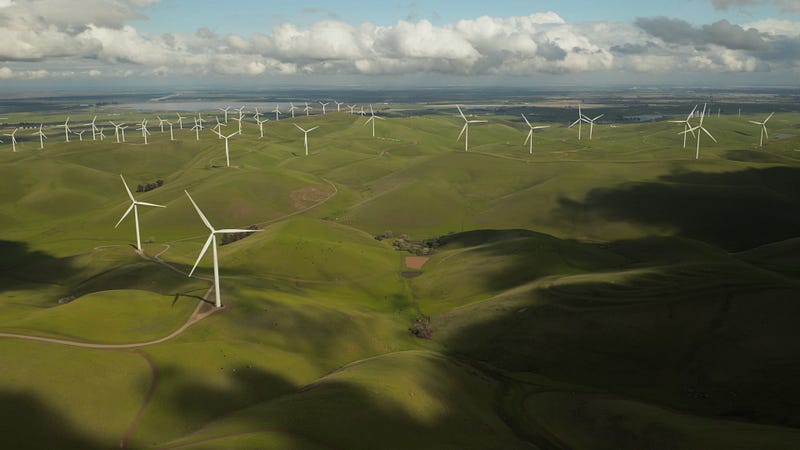
In other words, the increase in efficiency may well not only stop the growth of energy consumption but even lead to its decline with the continued growth of well-being.
In general, everything has changed. A mobile phone is no longer a sign of belonging to the rich.
Awesomely powerful by the standards of the 1960s, the computer can already be carried in your pocket, having bought it for thirty dollars at the collapse. We can already imagine tasks for which 640 kilobytes of memory is not enough. And kerosene lamps are no longer the pinnacle of technology.
Arguments that were absolutely correct in the 1980s may well cease to be true in 2018. Simply because progress is being made.
One can still hear that the main evidence of the failure of renewable energy sources is that “only a small fraction of electricity is produced in this way.”
However, my friends, when blast furnaces were built in England, only a small part of the metal was smelted in this way. Very many peoples of the world in those days continued to smelt metal in raw furnaces, some others — generally strictly at the stake (iron cannot be processed in this way, but copper can), and even more, some did not even know how to smelt metal at all.
Technology, all of a sudden, is always implemented first in technologically advanced nations first.
This is exactly what is happening now: renewable energy makes up a small part of the energy consumed by the entire world, but not all countries in the world are equally developed, and therefore not everyone can suddenly start producing complex things from the cutting edge of technology.
At the same time, the share of such energy is growing very rapidly. Even in global consumption.
Since the year 2000, the production of wind energy has grown 30 times, and solar — by 300 times.
However, if we make a selection of the most developed countries, then the situation there is even steeper.
Germany, for example, has now reached 49% of its electricity consumption from renewable sources, up from 3.4% in 1990. And, apparently, it exceed 40% in 2020.
Well, okay, Germany, like the United States, where the share of renewable energy is also growing rapidly, is “damned imperialists who oppress the whole world and live off it.” They probably have it because they are mad with fat.
But what about the fact that the country in which the number of renewable energy sources is growing fastest and at the same time the world’s largest investment in this area is China? Are these also the type of everyone who oppresses and rages with fat?
After all, there is a more likely explanation for such intense pressure on the “impossibility of transition” from the outside.
Therefore, it is beneficial for some to pretend that this will always be the case. Oil and gas will always be needed. You cannot change anything, because it is still impossible to change anything. All the way.
The situation is rapidly changing and, generally speaking, has already changed noticeably.

This is a co-production in the publication Areas & Producers.
Please join as a writer for Future Concepts! See more co-productions below.


