The Boys Are Back In Town At Walt Disney & Nutrien Ltd After CEO Transition Failures Reveal Future Company Strategies
The Weekend Brief (TWB) newsletter is inspired by legendary rock band Thin Lizzy. Check out their classic hit “The Boys Are Back In Town” while reading TWB. The band also recently released Whiskey in the jar as a whiskey brand in partnership with West Cork Distillers.
Press Play: https://youtu.be/hq9qy6TDlq8?t=1466

On March 19, 2022, it was reported on The Globe and Mail that former Nutrien Ltd CEO Mayo Schmidt was asked to step down by the Board of Directors due to both cultural and strategic issues facing the future of Nutrien Ltd.’s leadership in the global fertilizer market.
In a press release on April 18, 2021, Nutrien officially announced Mayo Schmidt would become the new CEO of “the world’s largest provider of crop inputs and services” and that “Mr. Schmidt brings over 30 years of agricultural business experience to his leadership of Nutrien.”
https://www.youtube.com/watch?v=UUmWrXYE9v0
But as the piece from The Globe and Mail indicates Schmidt was only expected to serve as CEO for two years — an order that wasn’t fulfilled.
During the time of Schmidt’s transition to CEO there was high speculation among reporting agencies and commodity analysts about a Nutrien Ltd.-BHP Group partnership for the development of a potash mine in Jansen, Saskatchewan, Canada.
It’s true that BHP has been divesting its oil and gas assets for “future facing commodities” such as potash.
In a statement to The Financial Post the company said “Potash provides BHP with increased leverage to key global mega-trends, including rising population, changing diets, decarbonization and improving environmental stewardship.” However, most of the talk about a proposed partnership or joint-venture has died down since sanctions were targeted at Belarus’ potash industry and largest producer and exporter in December 2021.

This bring us back to the question: What went down at the world’s largest potash producer, Nutrien Ltd.?
Even though the story is being thoroughly analyzed and reported on we still can’t be sure what actually caused the fall out. According to Brian Madden, Senior Vice President of Goodreid Investment Council, “with the resources companies in particular…the leaders can’t add a single ounce, pound or tonne to the resource in the ground…they can only manage it more or less efficiently and effectively…” which means that the abrupt CEO transition announced for Nutrien “is very unusual” for these type of industries.
Although there was no specific reason given for Schmidt’s departure to date, a spokesperson for Nutrien told CBC on January 4, 2022, “This change will not impact the strategic direction of the company. We will continue to advance our strategy of helping growers sustainability feed a growing population by leveraging the competitive advantages of our integrated business model.” Thus Madden’s comments about the regularities facing resource companies, such as Nutrien in the fertilizer industry, holds true to their value as global suppliers of key crop inputs for modern agricultural production.
In other words, leadership changes at these companies have generally been viewed as an issue of strategy and development for profitable natural resources — not value-creation over time. Companies such as Nutrien and BHP have led in their specific market segments based on this ethos. That’s why in hindsight a joint venture between Nutrien and BHP seems like a perfect fit.
But is it really?
No. It’s not. There’s already major pushback from American farmers about the fertilizer industry’s alleged consolidation and monopolistic tactics to make farmers pay more for fertilizer.
Read the full stories about legal cases revolving around fertilizer supplies and food security with these two American companies: The Mosaic Company and CF Industries.
On the International Fertilizer Association’s (IFA) new sustainability series “A Minute With A CEO” former Nutrien CEO Mayo Schmidt spoke on behalf of the company’s sustainability and ESG strategy. About the company’s purpose to ensure farmers around the world grow crops more sustainably, he noted that “intital pilot targets of 100,000 acres is now at more than 200,000 acres.”
https://www.youtube.com/watch?v=yJKopBVHhpo
The key to this interview came in at Question 3: Nutrien is moving toward low carbon fertilizers to create a low carbon process through the production of ammonia: What’s the opportunity here? In order to meet Nutrien’s 2030 strategy of reducing GHG emssions by 30%, Schmidt announced the building of a Department of Energy Partnership which aims to create a small-to-medium sclae Ammonia Plant. The plant is intended to increase energy-efficent production and eliminate carbon footprint — with less capital. As energy prices are skyrocketing, the new ammonia plant could be a boon or a disaster for Nutrien’s bottom line.
Former CEO Chuck Magro told BNN Bloomberg on September 29, 2020 that Nutrien’s stance on climate change perspectives in agriculture is to be produce fertilizer more efficently and roll out new technologies such as Precision Rate Variable Technology.
According to what both former Nutrien CEOs offered about sustainbility plans and climate change it’s plausible to view this latest CEO transition from two angles: 1.) Nutrien’s Board of Directors are looking for a leader to take on what Chuck Magro has been pushing for since 2020; or 2.) Due to recent international events Nutrien might be changing its direction on how to operate the company’s sustainability-oriented agenda under what appears to be a very capital-intensive fertilizer production scenario going foward.
I think there’s a bigger story behind all of the uncertainties over Mayo Schmidt’s resignation; this is a story about a search for a new leader who will not only lead on Nutrien’s strategy and development, but also create value in a global fertilizer market that is expanding more than ever before.
A novel approach to the market is needed for one of the global fertilizer industry’s biggest and most profitable companies. While searching for a new leader, the public should start looking to answers from interim CEO Ken Seitz.
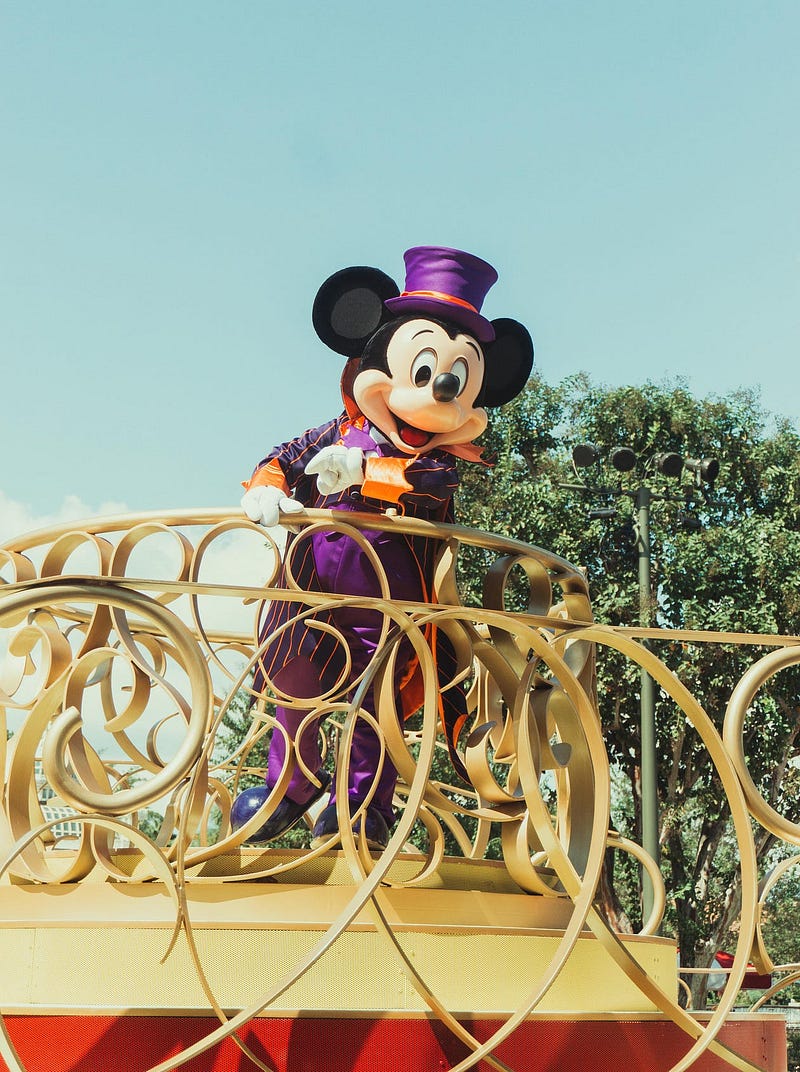
Asad Ayaz is The Walt Disney Company’s first-ever Chief Brand Officer. According to his profile on the official Walt Disney website, the responsibility of the Chief Brand Officer is to manage the global presence of the Disney brand, across the company’s entire ecosystem of touchpoints and consumer experiences, including: creating holistic brand marketing campaigns, activating the brand internally and externally, setting corporate synergy and franchise priorities and leading global consumer research and analytics for Disney’s brands and franchises.
The reason this new executive position should be getting people’s attention is because it comes at a crucial juncture of the Walt Disney Company’s legacy: the Disney100 campaign.
This campaign celebrates the company’s 100th year anniversary as an entertainment and media giant around the globe, for which Asad Ayaz will be responsible for overseeing its success.
His success has already been mentioned in numerous ways, just look at the 2023 Super Bowl commercial celebrating Disney’s 100 years.
At the end of the commercial it says: “you helped made this dream come true”. And that couldn’t be overstated in regards to what Asad has achieved for the company in the role as President of Marketing.
Don’t just take my word for it. The Hollywood Reporter deemed him to be “Hollywood’s Top 25 Marketing Masterminds of 2019” for the marketing campaigns of Frozen 2, which dismantled pre-sale records. But also the remakes of the famous Disney animation classics turned into live-action films like Jungle Book, Beauty and the Beast, etc.
What’s more, Fast Company called Asad a “jedi-level marketer” while giving him the title of “Most Creative People in Business 2022” for the success of Disney’ original series and films that were mostly distributed through the new streaming platform, Disney+. According to their findings, thanks to the Disney+ platform and other marketing campaigns for Star Wars and the Marvel Universe, his efforts led to $2.2 billion in box office sales and 64 million new Disney+ subscribers.
There’s been some controversy over Bob Iger’s return to CEO of The Walt Disney Company in November 2022. He replaced Bob Chapek who had been leading the company as CEO since Feburary 2020. Nevertheless, Iger was eager to promote Asad in his new role and position as Chief Brand Officer and President of Marketing at The Walt Disney Company.
CNBC noted that the new responsibility “will require the Disney vet to create a singular vision of the company for marketing campaigns.” While Iger did not shy away from how important his leadership skills were during the company’s 100th anniversary.
Before we take off into Disney’s 100th Anniversary and what this means for Iger’s and Asad’s executive leadership. Let’s take a look back at what Chapek was doing during his time as CEO. One word: Metaverse.
On 15 Feburary 2022 Chapek officially appointed an executive at Disney to lead the company’s metaverse strategy, Mike White. Chapek specifically said that White would be in charge of the “next generation of storytelling.” As a new concept, for the entertainment industry the metaverse is known or virtual reality (VR) devices mixing with e-commerce and online businesses. In an interview with CNBC, Chapek elaborated on his ideals for the company’s metaverse strategy by telling reporters: “We’re in this for the long-term, this is a long-term game, not really a quater-to-quarter type of proposition. And I think the long-term health of Disney content really drives the day.”
He wasn’t the only one working toward a metaverse strategy for the company. Bob Iger had already been working on a strategy as one of the boardmembers of a metaverse startup called Genies.
According to Voicebot.ai, Genies is a startup producing non-fungible tokens (NFTs) that illuminate characters from popular celebrities and people, of which Iger’s “involvement is likely tied to Genies’ success in scoring deals with major entertainment firms to create celebrity avatars.”
However, Chapek was the one to appoint a metaverse head of the company, which is likely to not have been influenced by Iger at the time. Chapek even took this moment to illustrate how profound the metaverse would become for Disney’s 100th anniversary:
“For nearly 100 years, our company has defined and re-defined entertainment by leveraging technology to bring stories to life in deeper, more impactful ways. Today, we have an opportunity to connect those universes and create an entirely new paradigm for how audiences experience and engage with our stories. This is the so-called metaverse, which I believe is the next great storytelling frontier and the perfect place to pursue our strategic pillars of Storytelling Excellence, Innovation, and Audience Focus.”
From the quote above, one can draw some conclusions about how important the metaverse strategy was becoming to Disney’s growth in the entertainment and media business under the leadership of Bob Chapek. While Iger was the one sitting on the board watching the results from other startups and leaders in the metaverse space.
That’s why I believe that Iger’s appointing of Ayaz Asad to Chief Branding Officer was also meant to overshadow, or downplay, the role of the company’s metaverse strategy under Bob Chapek.
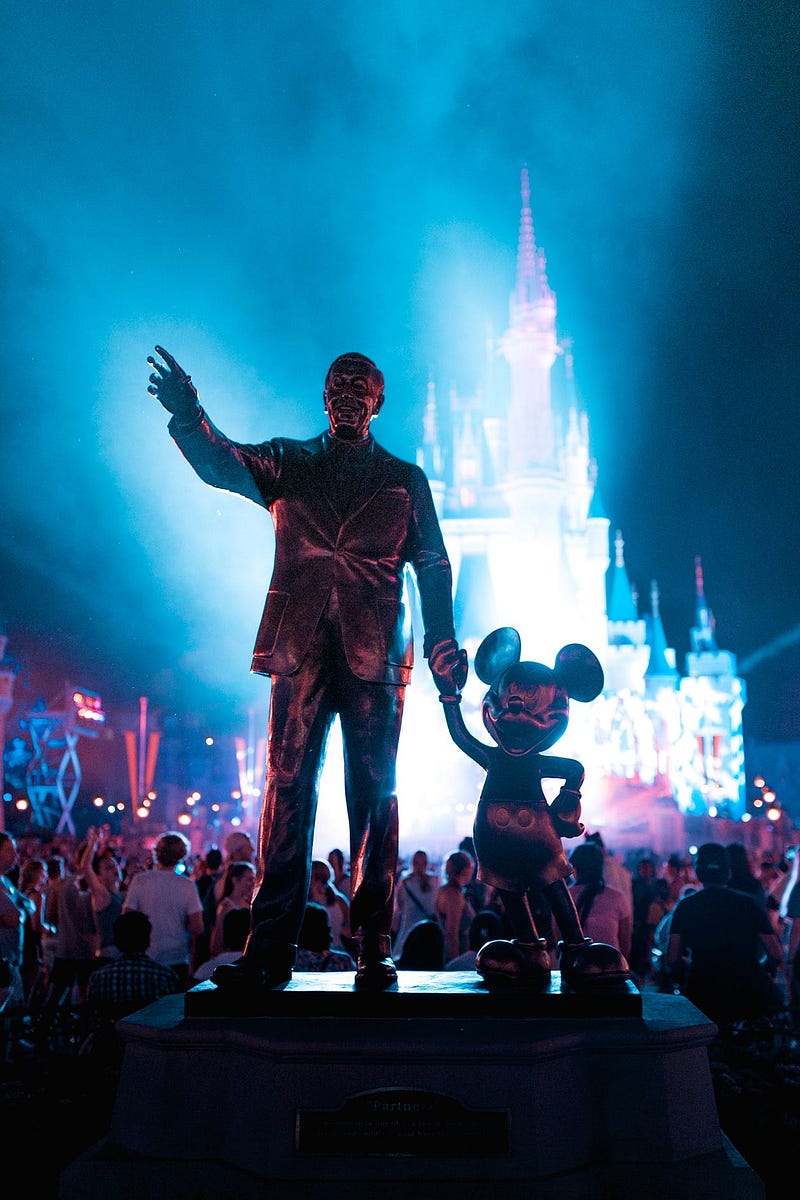
Whether we are going to talk about Disney’s future marketing campagins or metaverse strategy, one thing is clear about the storytelling entertainment of the future — the integration of Artificial Intelligence (AI) and AI applications for understanding consumer behaviors with data and analytics.
For instance, Harvard students of the Technology and Operations Management department wrote about “A Whole New World” of Machine Learning at Disney. Their research claims that Disney has been adopting AI applications since at least 2017 to analyze audience behavior and consumer preferences. Take machine learning (ML) as an example. The report states that, in order for Disney to remain as one the top entertainment companies around the globe, the adoption of ML techniques is not just beneficial; it is essential. Especially for Disney’s animation films, as this space starts to heat up with competitors producing their own popular animation films.
The Harvard students’ team points out that Disney created the StudioLAB, by partnering with HP Enterprises, Cisco and Accenture Interactive, to understand more about the technological features in storytelling. In this case, the critical applications of using AI for future storytelling ventures could be a game-changer for the entire entertainment industry. To know more about what Disney is going with AI, read Artificial Intelligence at Disney by Emerj.
That brings us to the inevitable discussion of ChatGPT and its place in the world of storytelling and entertainment. There’s no need to debate about this one, Seinfeld already proved its value in the utmost controversial way.
In an article prepared for digital marketers, ANA wrote about ChatGPT’s Effects on Search and Usefulness for Marketers. They said that with ChatGPT technology a marketing comapany gather data, research, use the dialogue to plan campaigns and meetings, headlines, key words, copy, and images, among other useful features from the AI application.
The above explains why Iger’s appointing a new Chief Branding Officer is a pivotal point in the company’s marketing campaign during the 100th anniverary of The Walt Disney Company. Clearly, ChatGPT has taken over; the Metaverse will have to wait for its time to shine again. This doesen’t mean that a metaverse strategy would not complement the company’s uses of generative AI, such as ChatGPT, to produce more content for a wider audience of viewers in the future.

Curious About Culture, Intellectual About The World. Discover this publication’s content writers explaining scenarios/shifts related to geopolitics, future industrial policies and advanced technologies.
Sign up for The Weekend Brief (TWB) newsletter to stay on top of what’s happening with publicly-traded companies operating in global markets (including stock markets) at the nexus of tech, industrials and global commodities.