
Building Muscle. The First Six Months and Beyond.
How to get started, and how to progress.
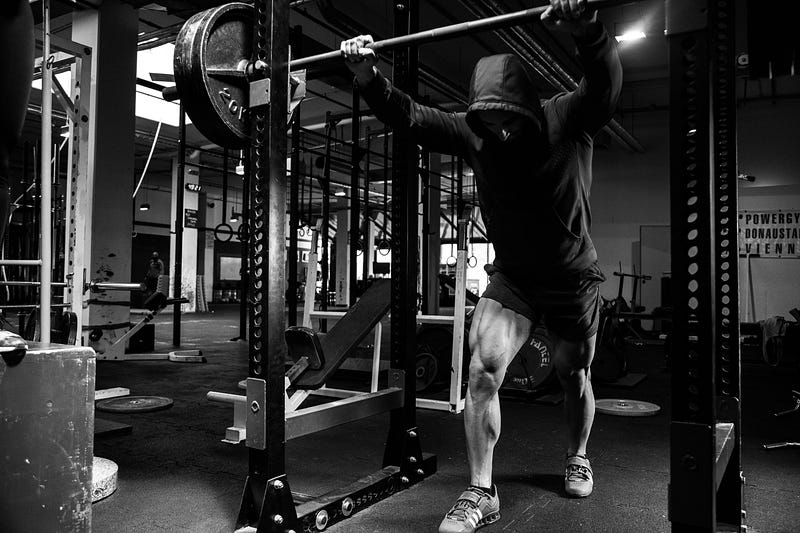
Building muscle is the single best thing you can do to improve your long-term health, period. That applies whether you’re male or female, young or old. Stronger muscles will improve your performance in all sports. Increased strength also improves confidence and libido, and guards against injury. If you care about your health and fitness, there is no good reason not to build muscle.
The correct training for increasing your muscle mass will greatly improve your cardiorespiratory function and your flexibility. Contrary to what many believe, lifting weights will not make you ‘muscle bound’ if done correctly.
In this article, I will outline the best method for new trainees looking to add muscle, and then address the adjustments that should be made as one progresses. The article starts by covering what you shouldn’t do, and the role of physical intelligence. After that it explains how many sets you should perform and why you should keep a record of your workouts. The next section discusses when you should move on to more advanced training, and how to go about it. Finally there is a look at what actually causes muscles to grow, followed by suggested workouts to get you started on your journey to a stronger, fitter, more muscular body.
Monkey see monkey do?

Here are some of the things you shouldn’t be doing if you want to start building muscle. You’ll see these things being done in just about any gym you visit. Don’t blindly follow. Use your brain before you use your muscles.
Curls, curls, curls. So many people go to the gym and train nothing but their arms. They put huge stress on one of the body’s smallest muscle groups, and ignore everything else. Yesterday I saw a group of young guys run into the gym and head straight for the cables where they spent twenty minutes doing nothing but bicep curls and tricep press downs. After that, they stood in front of a mirror posing their (invisible) arm muscles. It’s usually young guys who go totally overboard with arm training, but young women have caught up. I see groups of them doing endless variations of leg exercises, contorted into often dangerous positions which I assume are meant to place greater stress on their butt muscles. There is a current obsession with having a big arse. Training like this is idiotic and invites injury. Don’t train one muscle to the exclusion of others. Don’t do moronic things like facing the wrong way in a hack squat machine arching your back and sticking your arse out. I see it all the time. You can build much bigger arms, or glutes, by training properly.
24-7/365. Some people work out every single day. They do it without killing themselves either by training only part of their body in each workout, or training with such low intensity that there’s not really much point. If you want to build muscle in the shortest time possible, training every day is not the way to do it. Your muscles cannot grow whilst you are in the gym, lifting weights. Lifting weights (if done properly) stimulates growth. That growth can only occur whilst you are resting. Dorian Yates (six times Mr Olympia) entered his first bodybuilding contest after only 18 months of training three times a week. Most of his peers were training six days a week. Dorian was officially the best-built man on earth for most of the 1990s.
Showing off. Twenty-five years ago it was rare to see anybody performing Olympic lifting movements in a gymnasium. I’m talking about the kind of lifts you might have seen in the Olympics; movements like the clean and jerk, power clean and snatch. Apart from the squat, deadlift, and bench press, Olympic lifts involve explosive movement, enormous use of momentum to move the weight, and a lot of technique. The lifts are designed to demonstrate strength. That does not make them the best way to build strength. Once momentum comes into a movement, your muscles are no longer lifting the weight. The use of momentum makes exercises less effective when it comes to stimulating muscle growth. Momentum also greatly increases the risk of injury. A lot of weightlifters are impressively muscular, and some of the movements they perform can account for this. But one rep maximums of the type done in competitions are not especially safe or productive when it comes to building muscle.
Physical intelligence
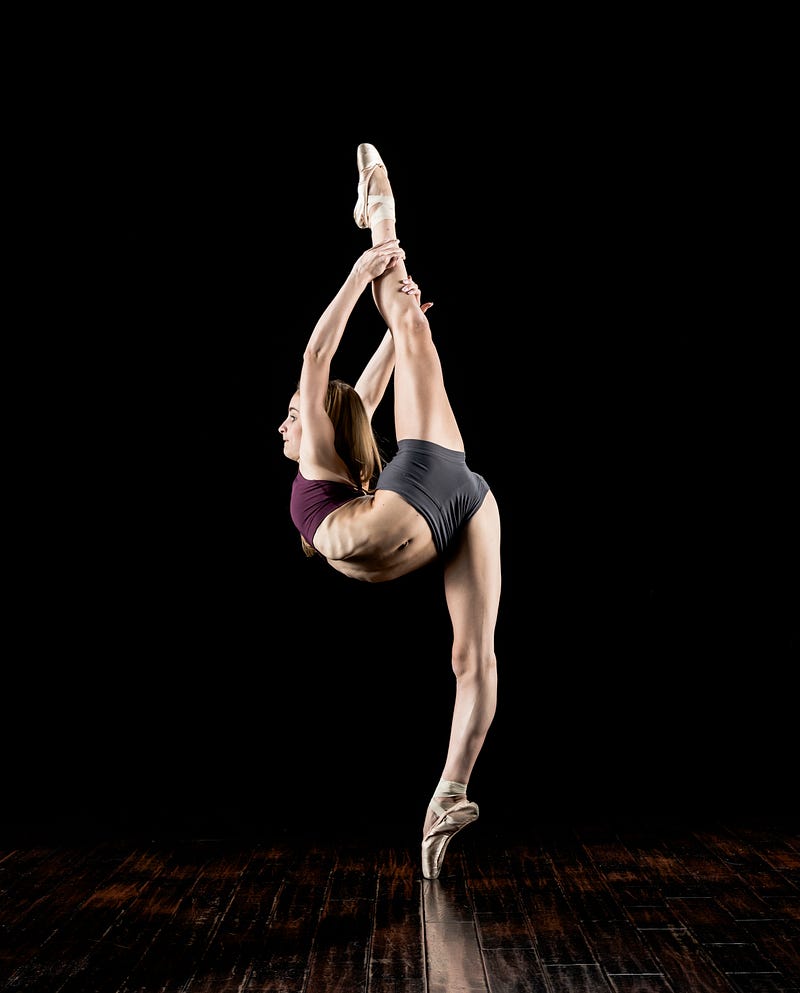
Physical intelligence varies amongst individuals just like other forms of intelligence. Some people are physically smarter than others. They’re the people you might describe as ‘good at sport.’ People with higher physical intelligence will find it easier to learn the correct form for resistance exercises.
I never understood why people I trained with weren’t able to perform certain exercises properly. It didn’t make sense to me that people could perform exercises incorrectly until I understood the concept of physical intelligence.
You may have low physical intelligence. Do not despair if you cannot immediately perform exercises correctly. The exercises can be learned, physical intelligence can be improved. Most gyms have machines that can be used in place of free weights, and you can construct an effective muscle-building routine with machines. You should work at learning the free weight exercises when you have gained some confidence, as many of them are extremely effective.
It’s not that complicated.

The fitness industry, fitness magazines, fitness influencers, and personal trainers have to keep coming up with new workouts, new ‘secret’ movements, new equipment, and new techniques to keep the tills ringing. Muscle growth is a straightforward biological process. It’s been figured out. But that’s not good for the fitness industry. In the pharmaceutical industry, there is not much benefit in producing cures because cures have very limited earning potential. If you solve the problem, you can no longer make money from the problem, so it pays to keep people confused and keep coming up with new things. The same applies to the fitness industry.
You don’t have to be confused. Building muscle is surprisingly uncomplicated, as you will learn in this article.
How many sets per exercise?

Exercises are performed in sets and reps (repetitions). If you put your hands on the floor and perform twenty push ups, you have done one set of twenty repetitions. After a brief rest, you might be able to perform another twenty push ups, in which case you will have done two sets of twenty repetitions, and so on.
When you are starting out, you should perform three sets per exercise. The rest between each set should be kept to sixty seconds. If your cardiorespiratory system is unable to cope with this, increase the rest time to seventy five seconds between each set, and as you get fitter reduce it to sixty seconds. By timing the rest periods, you can be sure that your strength increases are truly indicative of strength and muscle gains, rather than the result of having rested a few seconds longer than you did on your last workout.
For each exercise you should select a weight that allows you to perform at least eight repetitions. If you cannot get eight good reps, the weight is too heavy. Your aim is to perform twelve repetitions on each set. Logically, each set will be progressively more difficult as your muscles become fatigued. The final set is the most productive as it is the most difficult, and will therefore push your muscle closer to the limit. On your final set, if you reach twelve reps and can do more, keep going. Assuming you also performed at least twelve repetitions on the first and second set, on your next workout you should increase the weight so it brings your repetitions back down to eight.
Three sets performed in this manner gives new trainees an adequate amount of practise to properly learn each movement and establish a good mind muscle connection. The mind muscle connection is the ability to really focus on the muscle being worked, you know you have it established when you can individually contract each muscle just by thinking about it. You should aim to do twelve repetitions on each set of all exercises. (Some people will benefit ftom up to twenty repetitions for lower body exercises so you might want to give that a try, but eight to twelve reps works well for most). Do not stop a set just because you have reached twelve repetitions if you feel you can complete more. Building muscle requires you to work hard. When you can perform twelve repetitions or more on the third set of an exercise, you are ready to lift more weight the next time you do that exercise.
The importance of keeping a record
Individual genetic variation will ultimately determine how quickly a person gains strength and muscle. Most people will not see obvious and continuous visual improvements in their muscularity from the day they start working out. Therefore it is essential that you keep a record of your workouts.
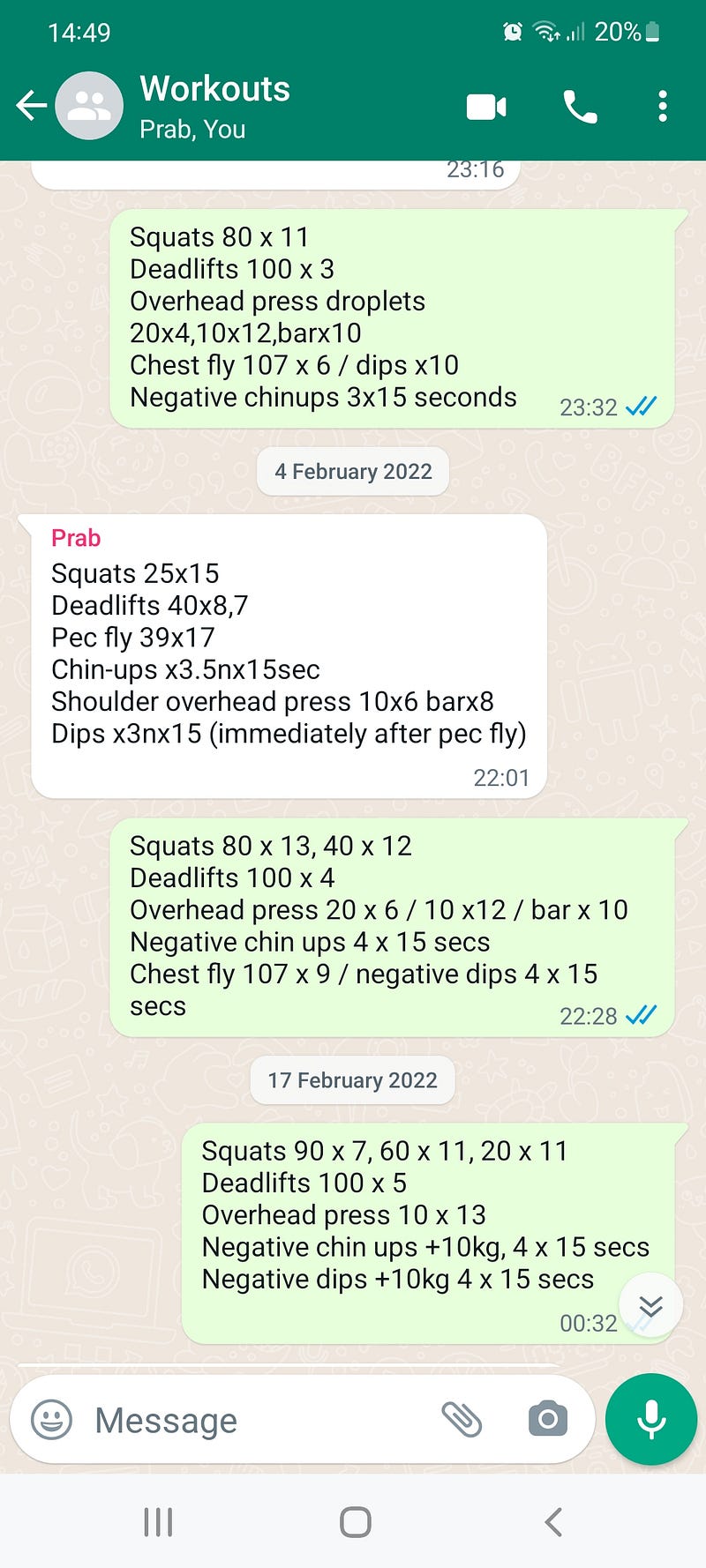
Increased muscle size is always preceded by measurable increases in strength. The only way to accurately measure your strength increases is to write down the weight used and repetitions performed for each set of every workout you do. If your workouts are effective, you will see stair step progress, expressed as more repetitions per set, on every single workout. I am used to seeing improvement on every single exercise, every single workout, and so are the people I train with.
Without a written record of your workouts you will not be able to accurately monitor their efficacy. Some people gain muscle more slowly than others, but as long as you are getting stronger on each workout, you know you are moving in the right direction. Conversely, when you stop gaining strength, your workout records will make this clear, and you can take effective remedial action to ensure continuous progress.
Your workout log can be kept on paper, or on a smartphone or any other device. My M.O. is to record my workouts as WhatsApp messages which I send to my training partner. You should make a note of how long each workout takes. If you start taking much longer than usual to complete your workouts despite your greatest efforts, you may be over trained. The remedy is to take a week off of training.
As well as being an invaluable monitoring device, a workout log can be a great motivator. If you ever find yourself lacking motivation, you only need to look back to where you started out and take stock of how far you have come. Seeing your progress written down will keep you going.
When can I move to an advanced workout?
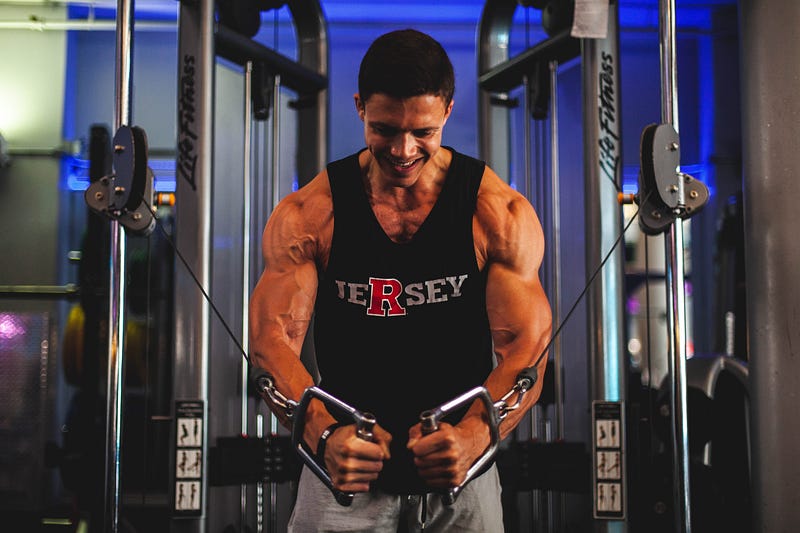
You should move from the beginners routine of doing three sets per exercise when you are no longer getting bigger and stronger on that routine. If you have three workouts in a row without measurable strength increases on the majority of movements, something needs to be changed. When and whether this occurs depends on your individual genetics. For some people it might take a few months, for some people it might take years. Stick with the beginners routine for as long as it works.
When most people move from from a beginners routine to an advanced routine, they go in the wrong direction, by increasing the volume of work they do and the regularity of their workouts. When you stop seeing strength increases, the first thing you should do it rest. Take a full week or two off of training. Don’t do any exercise. After your rest, go back to the gym and carry on with the same workout, in many cases you will be stronger because your body has had a chance to fully recuperate, repair and grow. If your progress does not resume within two or three workouts following an extended rest, you should insert an extra day of rest between workouts. In the vast majority of cases, that will solve your problem.
The difference between a beginner and an intermediate athlete is that the intermediate athlete, by virtue of being much stronger, is able to do more damage to their body in a single workout . The intermediate athlete therefore requires more rest between workouts to fully recover and grow. An advanced athlete will need even more rest between workouts to fully recover. I have no doubt that this sounds counter intuitive, but my experience has shown it to be true with myself and all of the people I have trained with. Training less often when you are stronger makes sense when you understand what causes muscle growth.
What causes muscle growth?

Muscles growth is an adaptation to stress. When your muscles are forced to work at the absolute limit of their ability, they will adapt to the stress placed on them by becoming stronger and larger. An effective workout is an attack on your muscles. If the attack is not severe enough, no adaptation will be triggered. If the attacks is too severe, or are repeated too regularly, your muscles will not be able to recuperate from the onslaught or grow in preparation for future onslaughts. As you become stronger, you are able to lift heavier weights which do more damage to your muscles than lighter weights. That is why any effective muscle building routine will eventually become ineffective; you will get so strong and so good at attacking your muscles, that your body will no longer be able to repair itself between workouts. Arthur Jones, pioneer of High Intensity Training and the inventor of Nautilus equipment, observed that an individual’s strength may increase by a a few hundred percent from the day they start training, but the ability to recover and grow between workouts may increase by only fifty percent. That is why the first thing you should do when you stop getting stronger is to take a break from training. The rest will allow your body to catch up with the workouts.
The workouts
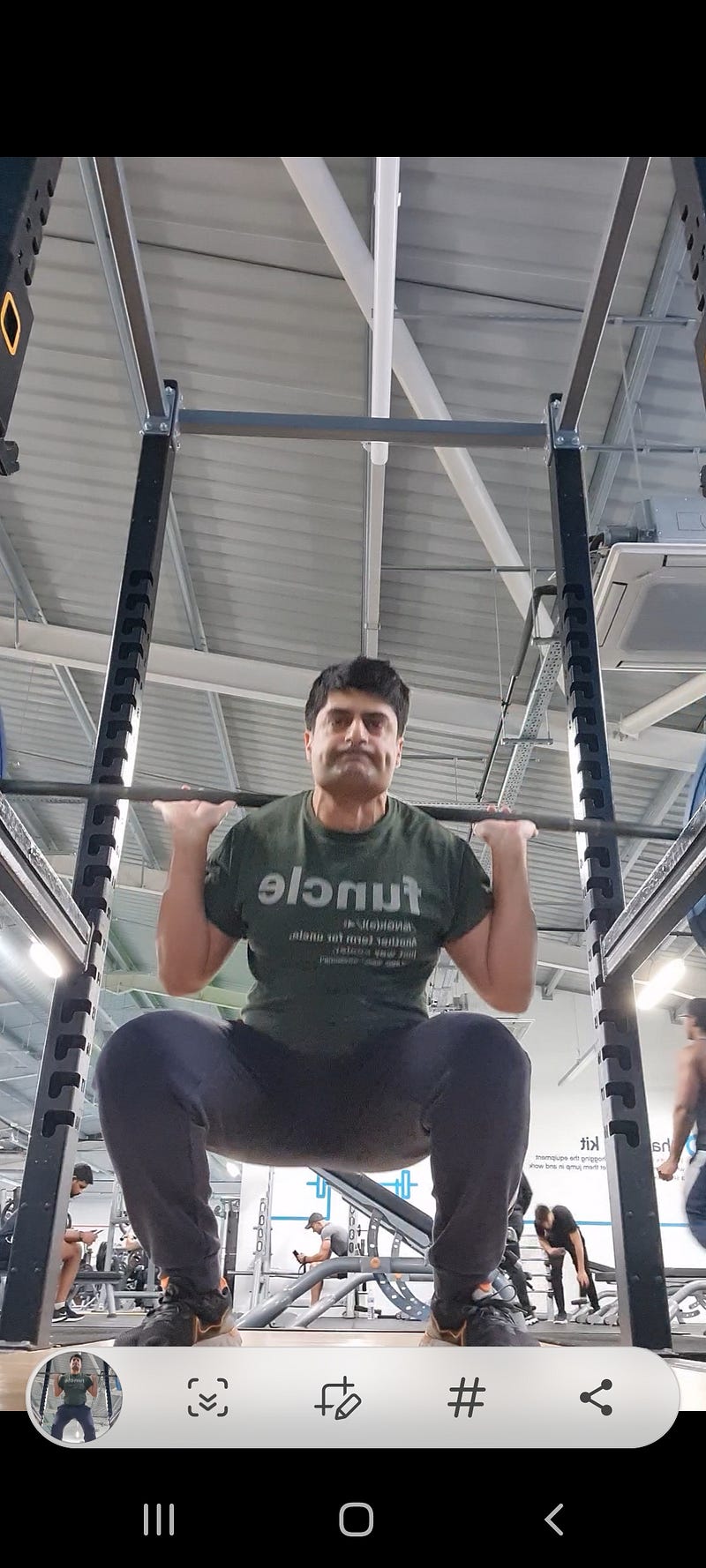
For all but the most advanced athletes, full body routines are the most effective for building muscle. Split routines which work only part of the body on each workout are immeasurably more popular than full body routines because they allow people to spend far longer training any given muscle. Doing large amounts work for each body part, usually several sets each of several exercises, is referred to as volume training. The number of sets and exercises involved means it is impossible to train the whole body in one workout.
Volume training is by far the most popular method for building muscle. But it does not take into account the body’s limited ability to recover between workouts and repair muscles. Volume trainees will often workout for five or six days a week, performing twenty or more sets for each body part. You will make much faster progress by training the whole body in briefer sessions, only a few days per week.
When you start your exercise routine, you should workout three times a week, with a day of rest between each workout. For example, you might workout on Monday, Tuesday and Wednesday, or Tuesday, Friday and Saturday. This routine fits nicely into the seven day week and allows an extra day of rest after every three workouts. If you do not see progress in the first few workouts, start resting two days between each workout. There are some beginners who cannot make progress with less than three days of rest between each workout.
You should always train your larger muscles first, as they require much more energy.
Workout 1
Squats 3 sets of 8–12 repetitions Deadlifts 3 sets of 8–12 repetitions Calf press / single legged calf raises 3 sets of 8–12 repetitions
Barbell rows 3 sets of 8–12 repetitions Chin ups with palms at shoulder width and knuckles facing forward 3 sets of 8–12 repetitions
Barbell bench press 3 sets of 8–12 repetitions Dumbell pec fly 3 sets of 8–12 repetitions
Over head press with barbell 3 sets of 8–12 repetitions Parallel bar dips 3 sets of 8–12 repetitions Barbell curls 3 sets of 8–12 repetitions
Hanging leg raises 3 sets of 8–12 repetitions
If you do not have the confidence to train with free weights (barbells and dumbells) you can use Workout 2.
Workout 2
Leg press 3 sets of 8–12 repetitions Leg extensions 3 sets of 8–12 repetitions Leg curls 3 sets of 8–12 repetitions Calf press 3 sets of 8–12 repetitions
Seated machine rows or seated cable rows 3 sets of 8–12 repetitions Pulldowns with palms shoulder width and knuckles facing forward 3 sets of 8–12 repetitions
Machine bench press 3 sets of 8–12 repetitions Machine pec fly or pec deck 3 sets of 8–12 repetitions
Over head machine press 3 sets of 8–12 repetitions Machine tricep extension / cable tricep press downs 3 sets of 8–12 repetitions Bicep curls machine 3 sets of 8–12 repetitions
Hanging leg raises 3 sets of 8–12 repetitions
A word about volume

Note that the two workouts above comprise thirty to thirty three working sets, not including warm up sets. A warm up set is a set using a lighter weight which can be done just to get the stiffness out of your joints and muscles. Each of the workouts above could easily run into forty sets, that’s a large volume of work.
If you find that you are not able to complete the workouts, or you are unable to work hard for the whole workout, you must reduce the overall amount of work performed. You can either reduce the number of exercises performed, or you reduce the number of sets per exercise, or you can do both.
From workout 1 you can eliminate barbell rows, pec fly, and barbell curls. Performing your chin ups with your knuckles facing forward is more than adequate for arm development, in fact chin ups are the best exercise for bicep growth. You can also drop the leg raises, as properly performed squats and chin ups will do a great deal to strengthen your midsection. Also, you don’t need endless sets of abdominal work to have a six pack, you just need a low bodyfat percentage.
From workout 2 you can eliminate leg extensions, leg curls, bicep curls and tricep extension or press down. Bench press and the overhead press will provide adequate tricep stimulation.
Reducing the number of sets per exercise if very straightforward. As you progress, you should ultimately reduce your volume until you are doing just one working set per exercise. In my twenties one of my most effective workout protocols was Workout 1, done with two sets per exercise. The first set would function both as a warm up set and working set. I would pick a weight that allowed me to get twenty repetitions if I kept going until I could not complete another repetition despite my absolute greatest effort. I would then perform my second set with a heavier weight that allowed up to 12 repetitions. Eventually, the heavier weight would become the warm up weight as I continued to get stronger. The rest period between the light set and the heavy set was kept to sixty seconds.
After some time you will be able to train so hard that one all out set is adequate to totally exhaust a muscle, but it takes time and perseverance to get to that level of ability. Dorian Yates, Mike Mentzer, Ray Mentzer, Arthur Jones, Casey Viator and others all trained with just one set per exercise. You may not have heard of any of those men, but you will have heard of Arnold Schwarzenegger. When Schwarzenegger (who was a volume trainee) attempted to train under the instruction of Arthur Jones, performing just one all out set per workout, he ended up running out of the gym, throwing up on the grass, and getting a plane back to California. He couldn’t take it. Training with just one set per exercise, done properly, is harder than volume training. It is also far more effective over the long term than volume training. Remember; whether you are performing one set, two sets, or three sets, you should never terminate a set (other than warm ups) just because a predetermined number of repetitions has been reached. Keep going until you just can’t move the weight another centimetre. Your workouts must force your muscles to adapt, and the only way to do that is by pushing them to their limits.
You can read more about building muscle and advanced training methods in my articles Bigger Arms in Less Time, A Bigger Chest in Lest Time, Bigger Arms in One Workout. Guaranteed, Shirt Splitting Forearms, Goodbye Bench Press, and My Wife is Going to be Stronger Than You.
If you have any specific questions or queries which have not been addressed in this article please leave a comment and I will respond.
If you’ve enjoyed reading this story and you’re not a member, you can join medium by clicking here. Membership is only $5 / month and helps to support writers, so please consider joining. You get unlimited access to read all of the stories you want. Thank you.


