Brazil’s Fertilizer Diplomacy Reveals Insights on the Global Food Crisis, Industrial Policies & Geopolitical Trends

I put together this summary of headlines and reports in response to a piece from the “Voices of the Inflated World” Sam Warain newsletter about the Global Food Crisis and the root causes that have led the world to such turmoil in food and fertilizer supplies.
This writing seeks a big objective with what would amount only to a small summary of information from key sources: connecting the production of commodities and energy with the stable supply of food — hence the value of the global economy’s efforts to ensure food security around the world — and to what effect this is going to be happening in the future as countries formulate industrial policies in accordance with geopolitical trends.
I offer here some of the most pressing cases, as well as the evidence from media and expert sources, that provide the right data to explain these trends in global commodities, energy transition and food security.
For more stories like this one, please follow the publication: Areas & Producers
I’m citing a provacative analysis from the Institute for the Study of Diplomacy at Georgetown University as the reason for my writing about Brazil’s Fertilizer Diplomacy.
Although I don’t entirely agree with the overall concept of this article’s portrayal of China’s ethnic issues in the context of Middle East geopolitics, I do think it is an effective analysis for using Defensive Realism as a case study of Middle Eastern diplomacy.
On May 3, 2022, Brazil announced that the government was taking a trip to North Africa for the purpose of engaging Jordan, Egypt and Morocco for “Fertilizer Diplomacy.”
This diplomatic engagement underscores the issues that Brazil is facing in securing fertilizer imports during the conflict with Russia and Ukraine.
Moreover, because Russia is one of the world’s largest fertilizer exporters, Brazil has doubled down on its efforts to implement a new fertilizer strategy, which was unveiled by President Bolsarno earlier this year.
Brazil’s National Fertilizer Plan even proposes to mine potash from underground reserves in the Amazon Rainforest which has caused an uproard from the indigenous communities there.
What is Fertilizer Diplomacy?
This concept has reshaped the whole narrative of the global fertilizer industry. It implies that the fertilizer markets have become susceptible to geopolitical forces. Perhaps because the world is facing an unprecendented food crisis, but mainly because of renewed conflict over geopolitics and military strategy, as evidenced by Russia and Belarus — Belarus is one of the world’s largest potash producers — and how the countries have used their influence over fertilizer supply to increase political leverage.
Read more about the importance of potash and the current global fertilizer industry dynamics with this story about Canada’s Nutrien Ltd.’s CEO transition: https://readmedium.com/what-went-down-at-the-worlds-largest-potash-producer-nutrien-ltd-c174d19e403d
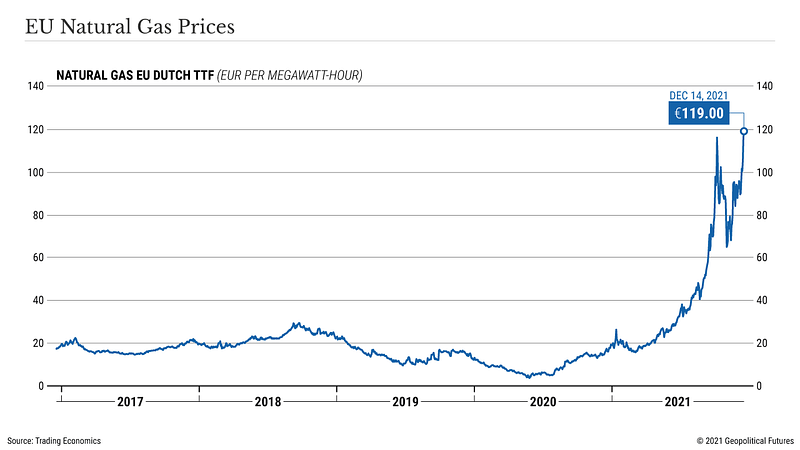
In fact, the concept of “Fertilizer Diplomacy” originated around the time that Russia began initiating countermeasures against Europe for the Nord Stream 2 pipeline. This occurred under the backdrop of extremely high natural gas prices due to the Covid-19 pandemic, hitting the European Union (EU) market extremely hard.
But in 2020, analysts from Geopolitical Futures reveal that Russia’s fertilizer production of mineral fertilizers grew at a rate of 5% hitting approximately 54.8 million tons. By comparison, the world average grew at around 2% in 2020.
Read more about prices through 2021–22 with the information below provided by the World Bank.
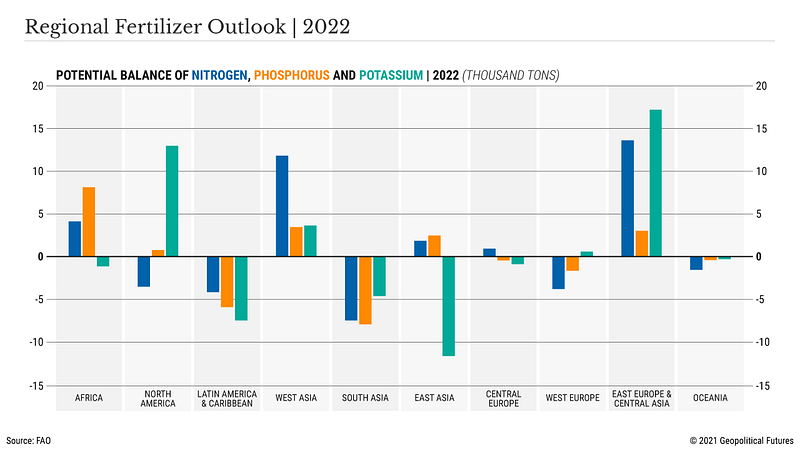
The truth is that this fertilizer diplomacy seems to be unraveling during the worst times of this century — global pandemic, food crisis, inflation — while also the Russia’s invasion of Ukraine has caused severe changes to commodities and other asepects of the global economy.
No wonder the governments of the world are already conceptualizing critical global commodities as way to engage in diplomacy. This adds a geopolitical factor to any country’s supply and production targets. As the dimensions of political leverage grow in their favor, they would continue to use fertilizer as a way to influence important political decisions.
On the other hand, when fertilizer prices subside, fertilizer diplomacy could contribute to the health of global economic recovery and help alleviate the global food crisis. Africa is a case in point, as Morocco seeks to lead the way as Africa’s main supplier to increase agricultural productivity and modernity. This would be a major boon to Africa’s growth and development.
What is Defensive Realism?
Defensive Realism is a theory of International Relations (IR) that belongs to the school of Neorealism, or Structural Realism, which says that the structural principles of the international system consist of an international order of anarchy, and thereby countries must seek to maintain their overall security while expanding on the distribution of capabilities vis-a-vis other countries in the international system. (See link in paragraph).
According to this theory, Steven E. Lobell explains that countries in the international system must seek to attain security by means of moderate and and reserved policies in order to avoid resorting to means of domination and hegemony to attain security.
Factors such as geography and rivalries (sometimes historical ones) tend to play a bigger role in this school of thought.
That’s why I believe it is the perfect way to understand Brazil’s fertilizer diplomacy. The act of touring through the Middle East and North Africa (MENA) is based around the whole geographical region; on the other hand, by ensuring fertilizer supply from many countries in MENA, this ensures Brazil that it will be dealing with similiar cultures and geographical constraints when working with producers and suppliers.
These are going to be key elements for judging the effectiveness of this fertilizer strategy. Therefore, using Defensive Realism here allows for a broader way at looking at the strategy of any given country: in this case, Brazil, and the country’s fertilizer strategy.
In the publication Fertilizer View by FShow the organization looks at Brazil’s record-breaking planting season from 2021–22 whereby projections have estimated that Brazil’s production of soybeans, corn, cotton, rice and beans — amounting to approximately 289.6 million tons — would account for 95% of its overall grain production from 2021–22.
This means that despite the global fertilizer supply shock due to higher commodity prices and fertilizer shortages, Brazil will continue to rely on imports of fertilizer from sources around the world. It is therefore a classic example of defensive realism, and why Brazil must maintain friendly relations (i.e. moderate and reserved policies) with Russia, even as the United States and European Union, including others, intend to ostracize Vladimir Putin’s regime for the war in Ukraine.
The CF Industries Case: Rethinking Industrial Policies Around Fertilizer and Food Security
In June 2021 CF Industries Holdings filed for a petition at the U.S. International Trade Court (USITC) alleging that urea ammonium nitrate (UAN) imports into the American fertilizer markets from Russia and Trinidad and Tobago were unfairly subsidized, and thus causing harm to domestic fertilizer producers in the United States.
This legal case is an antidumping and countervailing duties (CVD) complaint, brought by the lawyers of CF Industries, which would have a direct impact on fertilizer market prices and supply chains in the United States, as well as geopolitical trends, as the Middle East and North Africa (MENA) region has taken on a much more important role in the global supply of fertilizer products since the Russia-Ukraine war led to major supply chain disruptions.
The USITC ruled in favor of CF Industries’ complaint in August 2021 to continue the investigation into unfair subsidies for UAN fertilizer exports from Russia and Trinidad and Tobago. In response to the decision, CF Industries President and CEO Tony Will said:
“The preliminary ITC decision is an important step towards leveling the playing field for US UAN producers and their workers. CF Industries will continue participating actively in the ongoing investigations in order to restore fairness to our highly competitive industry and ensure that American UAN producers remain a reliable source of fertilizers for American farmers for years to come.”
This has caused quite a stir among the American farming community. For instance, during a Farmers for Free Trade meeting in August 2021, Ed Gresser, president and director for Trade and Global Markets at Progressive Policy Institute, expressed on behalf of American farmers that trade retaliation from the Trump Administrations trade war with China has also caused fertilizer prices to rise to the tune of $55 million in tarrifs annually.
As for the legal issues at stake, the USITC must judge the antidumping and CVD cases brought by CF Industries in accordance with the Tariff Act of 1930. The key issue is “to determine whether an industry in the United States is materially injured or threatened with material injury, or the establishment of an industry in the United States is materially retarded, by reason of imports of urea ammonium nitrate (UAN) solutions from Russia and Trinidad and Tobago…”
This means that the subsidies provided by the governments of Russia and Trinidad and Tobago must be judged in the context of how it disadvantages and damages the ability of American fertilizer producers (i.e. domestic industry) to sell fertilizer in the domestic markets. In this case, CF Industries claims that it cannot fairly compete in the domestic markets for UAN fertilizers due to those subsidies.
CF Industries operates the largest nitrogen fertilizer plant in the world — the CF Industries Nitrogen Complex in Donaldsonville, Lousiana — for which it invested $41.4 million in September 2020. After announcing the new capital investment to the public, CF Industries President and CEO Tony Will said:
“The capital investment we are making to enhance nitric acid production at the site will further expand Donaldsonville’s production flexibility and enable us to meet strong demand for the product, particularly from Louisiana’s strong chemicals industry.”
The Donaldsonville Complex produces a variety of fertilizer products, including Ammonia, Granular Urea, Urea Ammonium Nitrate (UAN) and Diesel Exhaust Fluid. The legal dispute revolves around UAN, a liquid fertilizer that contains a nitrogen content of 28–32% when combined with urea, nitric acid and ammonia, all of which CF Industries produces at the Donaldsonville facility.
This facility is also significant to global fertilizer markets as CF Industies boosted its fertilizer exports from Donaldsonville in response to Russia’s invasion of Ukraine, in addition to sanctions on Belarus, which severely disrupted global fertilizer supplies.
On 21 June 2022 the US Department of Commerce (DOC) issued a final determination in favor of CF Industries’ complaint. The DOC ruled that imports from Russia and Trinidad and Tobago were unfairly dumped into fertilizer markets in the United States. For Russia, the DOC found that rates ranging from 8.16% to 122.93% were being sold at less than fair value for UAN exports, while rates ranging from 6.27% to 9.66% were being unfairly subsidized by the government. For Trinidad and Tobago, UAN imports were found to be dumped at a rate of 111.71% while being unfairly subsidized at a rate of 1.83%.
In a sharp turn of events, however, the USITC issued its final ruling on the case on 18 July 2022:
A U.S. industry is not materially injured or threatened with material injury by reason of imports of urea ammonium nitrate solutions from Russia and Trinidad and Tobago that the U.S. Department of Commerce (Commerce) has determined are subsidized and sold in the United States at less than fair value.
On 19 July 2022 CF Industries retorted that the countervailing duties (CVD) imposed by the DOC on UAN imports from Russia and Trinidad and Tobago must be enforced by law in accordance with the Tarriff Act of 1930. Moreover, since USA President Joe Biden signed the Suspending Normal Trade Relations with Russian and Belarus Act on 8 April 2022, so this means that Russia is no longer entitled to certain privileges such as an “injury” test that must justify a CVD order.
In response to the final ruling, CF Industries Vice President of Corporate Planning, Christopher Bohn, issued a statement about the effects from Russia and Ukraine on the UAN fertilizer markets in the United States. In the testimony to the USITC, Bohn breaks down three elements for why the CVD rates should be applied:
1.) Russia has not and will not follow through on its so-called industrial natural gas price liberalization plan announced in 2006
2.) Ukraine received favorable treatment from Russia’s Gazprom which allowed it to produce UAN with favorable gas price reductions
3.) Russian producer EuroChem has significantly lowered shipment rates since the company entered the USA urea market in 2006; this allows buyers to seek further price reductions for UAN imports
Of course, the ruling was a big win for many American farmers who have been much against applying tarriffs to agriculture production and crop inputs. For instance, the University of Illinois published its projections for farmer net incomes to decrease by 34% due to higher fertilizer prices.
The tariffs imposed on Russia’s and Morocco’s exports of phosphate fertilizers has been a case in point for the entire farming community in the United States.
What’s Likely To Happen Next?
In July 2022, Russian Foreign Minister Sergei Lavrov began the African Tour. This tour coincided with visits from French President Emmanuel Macron and U.S. Special Envoy for the Horn of Africa Mike Hammer to the Middle East and North Africa (MENA) region.
This event is relevant to this analysis about Brazil’s fertilizer diplomacy in MENA, as many analysts claim that the main purpose of Lavrov’s tour this year revolve around Russia’s security guarantees of food and fertilizer supplies to MENA. But it was also a way for Russia to raise support from those countries in light of increased sanctions from the United States and European Union due to the war in Ukraine. For instance, Lavrov ended the tour in Ethiopia where he defended the country’s handling of the Tigray conflict since November 2020.
Moreover, Lavrov issued a statement about the current situation in world affairs where he insulted the United States’ and European Union’s efforts in MENA:
“I am sure the overwhelming majority of world countries do not want to live as if the colonial times [have] come back”
The votes in the United Nations General Assembly (UNDA) resolution on the war in Ukraine reflected this setiment, as half of all abstentions on the resolution came from African countries. However, BBC points out that while the United States and France have each offered their own aid packages to combat food security in Africa, Russia has offered nothing to those countries in support of alleviating food insecurity issues in the region.
It is clear from these most recent events that the MENA region is becoming a diplomatic showdown area between the United States and European Union and Russia. Defensive realism would point out that the 17 absentee votes on the UNGA resolution from African countries signal an opportunity for them to ensure secure supplies from Russian commodities while also benefiting from the aid packages offered by the United States and France.
These are the kind of moderate and reserved policies these countries must maintain to attain security and facilitate economic trade to their benefit. They also cannot ignore the reality that the Russia’s invasion of Ukraine is a way for Russia to seek hegemony and domination, which they must avoid to attain their own security. What happens next will be determined by the needs of MENA countries balanced with the entire region’s security framework. All of those countries will seek favorable relations with both the United States and Russia in the future.
Issues over commodities and energy will surely exacerbate the situation of geopoltical trends. What comes next will be a change in industrial polices.
For example, the case of CF Industries Holdings was about getting CVD rates applied to Russia’s and Trinidad and Tobago’s exports of UAN to fertilizer markets in the USA. The question of whether this favors domestic industries over American farmers and entities remains to be seen for the long-game strategy, irrespective of the final ruling to not impose CVD.
While farmers in the United States express an anti-monopolistic attitude toward tariffs and duties on imports, it doesen’t seem that the strategy is in their favor from the perspective of geopolitical trends and industrial policies going forward.
To protect domestic fertilizer supplies, countries like China and Russia have imposed export bans and quotas since 2021. This should have been a wake up call to the farming community in the USA. The future of fertilizer markets rest in the hands of countries with adverse geopolitical interests to the United States, of which the outbreak of COVID-19 has revealed would have drastic effects on the global economy.
If American farmers do not view fertilizer markets as a long-game problematique, then the old ways of buying fertilizer are likely to resume. But at what cost during the next fertilizer crisis? Is the fertilizer crisis even over? The issues of global food security have come to the forefront of G7 discussions in 2022, which means that commodities are going to play a bigger role in how countries formulate their strategies in the future.
Along with the effects from the Energy Transition, the stable, secure supply of these commodities is going to be a key problem for the United States’ industrial policies going forward. Many other countries would probably follow suit by initiating their own legal disputes against countries whose governments unfairly subsidize exports of key commodities such as fertilizers.


