avatarPanos Grigorakakis

Free AI web copilot to create summaries, insights and extended knowledge, download it at here

3758

Abstract

.com/v2/resize:fit:800/1*4VlHBEMyXiScaCN_5q_duA.jpeg"><figcaption>SS Imperator in 1913 / Bain News Service / <a href="https://commons.wikimedia.org/wiki/File:Imperator_LOC_ggbain_13359u.jpg">Wikimedia Commons</a></figcaption></figure><p id="60b7">Being HAPAG’s new flagship and the namesake of her class, the SS Imperator was launched on 23 May 1912. At the time of her completion in June 1913, Imperator held the title of the largest ocean liner in the world. At 52,117 gross register tons, she surpassed White Star’s Olympic-class giants, <a href="https://readmedium.com/the-story-of-titanics-unsinkable-sister-24c0a2a6ffbb">the Olympic</a>, (45,324 tons), and the ill-fated Titanic (46,328 tons).</p><p id="3226">During the First World War, the ship was laid up in Hamburg, falling into dilapidation. The vessel remained inactive for over four years until the US Navy commissioned her to transport returning American troops from Europe.</p><p id="a606">As part of the war reparations, the SS Imperator was handed over to Cunard Line to replace the RMS Lusitania, which was tragically lost during the war. The Imperator was renamed<b> RMS Berengaria</b> and served under Cunard’s flag for the final decade of her career.</p><p id="a1bf">The company opted to retire the vessel in 1938 after the ship had suffered several electrical fires by aging wiring. Because of the size of the ship and the outbreak of the Second World War, the Imperator was not completely scrapped until 1946.</p><h1 id="b236">SS Vaterland (1914–1937)</h1><figure id="cd81"><img src="https://cdn-images-1.readmedium.com/v2/resize:fit:800/1*Mtj4CG8wjtPPKMtYAE63tw.jpeg"><figcaption>SS Leviathan (ex-Vaterland) steaming out of New York Harbor, circa the mid-1920s / US Navy / <a href="https://commons.wikimedia.org/wiki/File:SS_Leviathan_1913.jpg">Wikimedia Commons</a></figcaption></figure><p id="86c1">The second ship of the Imperator-class vessels, the SS Vaterland, was launched on 3 April 1913. At 54,282 gross register tons, she superseded her older sister, the SS Imperator.</p><p id="b1a6">The ship had crossed the Atlantic only seven times before the First World War broke out in August 1914. Vaterland was laid up for safekeeping in New York, where she remained immobile for nearly three years. When the United States entered the war in 1917, the American government seized the vessel and converted it into a troopship. Renamed <b>Leviathan</b> and operated by the navy, she carried 94,000 troops to France, one-sixth of the total American deployment in Europe. From 1919 to 1922, she was yet again laid up in New York Harbor.</p><figure id="878e"><img src="https://cdn-images-1.readmedium.com/v2/resize:fit:800/1*ROVydLwOdnOCNmziFp7O5Q.jpeg"><figcaption>USS Leviathan (ex-Vatterland) in dazzle camouflage during WWI / Naval History Heritage Command / <a href="https://commons.wikimedia.org/wiki/File:USS_Leviathan_SP-1326.jpg">Wikimedia Commons</a></figcaption></figure><p id="74ff">After a complete refurbishment, she re-entered commercial service as the flagship of the new United States Lines. She immediately proved popular with the American public in the 1920s, attracting attention as the largest and fastest ship in the American merchant marine. Despite being the most popular ship on the Atlantic, she wasn’t profitable because of the high labor and fuel costs, which were compounded by <b>Prohibition</b>. With the Atlantic shipping capacity over-saturated, especially after the Immigration Act of 1924, alcohol-seeking passengers readily chose other liners.</p><p id="54d1">In the 13 years that she served U.S. Lines, Leviathan carried more than a quarter-million passengers, yet she never earned a cent. In 1938, she sailed to Scotland for scrap.</p><h1 id="b446">

Options

SS Bismarck (1922–1939)</h1><figure id="f308"><img src="https://cdn-images-1.readmedium.com/v2/resize:fit:800/1*9XRFUA07sKEcmWAkhiCt_w.jpeg"><figcaption>RMS Majestic (ex-Bismarck) / F. G. O. Stuart / <a href="https://commons.wikimedia.org/wiki/File:RMS_Majestic,_F._G._O._Stuart(cropped).jpg">Wikimedia Commons</a></figcaption></figure><p id="520a">The third and largest member of the Imperator-class of superliners launched on 20 June 1914, but its completion was delayed by the outbreak of the First World War. Intended to be HAPAG’s newest flagship, the SS Bismarck never sailed under the German flag except on her sea trials in 1922. At 56,551 gross register tons, this vessel was the largest ship in the world until the introduction of <b>SS Normandie</b> in 1935.</p><p id="cd55">Following the Great War, she was unwillingly finished by her German builders and handed over to the allies as war reparations. The <a href="https://readmedium.com/the-story-of-titanics-doomed-sister-7f03506cb62b"><b>HMHS Britannic</b></a> was the largest passenger ship to be lost during the war, and the White Star Line was pleased to accept the pride of the German fleet as her substitute. Renamed <b>RMS Majestic</b>, she became the company’s flagship from 1922 to 1934.</p><p id="aaa2">The Majestic was placed on the North Atlantic run in tandem with the<a href="https://readmedium.com/the-story-of-titanics-unsinkable-sister-24c0a2a6ffbb"> RMS Olympic </a>and the RMS Homeric. She sailed for the first time on 11 May 1922. Following her successful maiden voyage, she became one of the most popular liners of the time. In 1923, she carried more passengers than any other Atlantic liner.</p><p id="3367">Unfortunately, the onset of the <b>Great Depression</b> in the late 1920s made her increasingly unprofitable. She struggled through the first half of the 1930s before being sold off for scrapping.</p><p id="0a7c">After an agreement between the White Star and the ship-breaking yard, the <b>British Admiralty </b>took possession of the vessel and used it as a training ship. On 29 September 1939, she caught fire and sunk at her moorings. The wreck was sold in March 1940 to Thos W Ward for scrap, but it was not until 17 July 1943 that her remains were raised and towed to the scrapyard.</p><figure id="d0fe"><img src="https://cdn-images-1.readmedium.com/v2/resize:fit:800/1*8VmP32Vb0lXtJL9YENs-Xw.jpeg"><figcaption>HMS Caledonia (ex-Majestic) wreck being scrapped, circa May 1943/ Smith, J H (Lt), / <a href="https://commons.wikimedia.org/wiki/File:HMS_Caledonia_Scrapping.jpg">Wikimedia Commons</a></figcaption></figure><h1 id="4a16">Epilogue</h1><p id="5ad5">The Imperator-class giants had the misfortune to be launched in a time when the Atlantic crossing was interrupted by the outbreak of the worst war the world had yet seen. When it ended, all three superliners were handed over to foreign powers, never to carry the German flag again.</p><p id="11ba">Anti-immigration laws by the United States government and the Great Depression that followed made their post-war service highly unprofitable, and despite their popularity, all three liners met their end in the scrapyard. It was an unfortunate outcome for Albert Ballin’s visionary dream.</p><h1 id="926f">References</h1><p id="df2d"><i>J. Kent Layton, (2005), Atlantic Liners: A Trio of Trios, CafePress Publishing</i></p><p id="5c23"><i>Maxtone-Graham J.,(1972), The Only Way to Cross, Barnes & Noble, Inc.</i></p><p id="e3c7"><i>Dawson P.,(2005), The Liner Retrospective & Renaissance, Anova Books Company Ltd</i></p><p id="847f"><i>Fischer A., Kröhnert L., Schulte E., Valent J.,(2008), Luxury Liners Their Golden Age And The Music Played Aboard, edel entertainment GmbH</i></p></article></body>

Bigger than Titanic: Meet Germany’s Largest Ocean Liners

They were the largest vessels in the world for nearly a quarter of a century.…
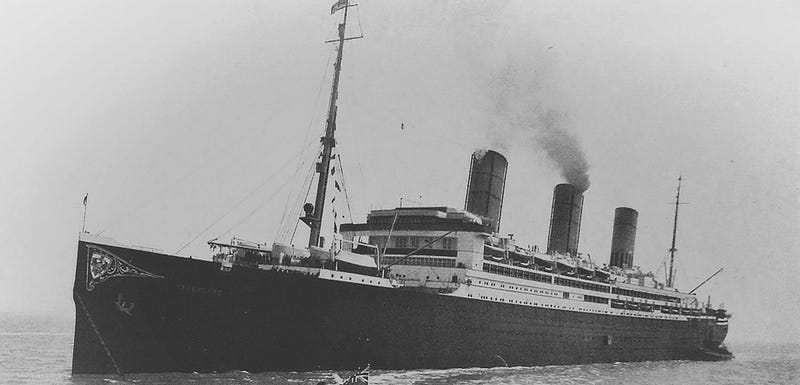
German ocean liner SS Vaterland/ National Museum of the U.S. Navy / Wikimedia Commons

The Titanic is perhaps the most famous ocean liner of all time, and people mistakenly believe her to be the largest vessel from the pre-war era. In fact, just a month after her tragic sinking, Germans launched at the Vulcan Shipyards in Hamburg an even larger liner, the SS Imperator.

Imperator was the first of a new class of ships envisioned by Albert Ballin, the chairman of the Hamburg America Line (HAPAG). At over 50,000 tons, and ranging from 906 ft (276m) to 955.8 ft (291.3m) in length, the three-funneled Imperator-class liners were the largest vessels in the world for nearly a quarter of a century.

Background

During the early 20th century, the transatlantic competition among rival shipping companies was intense, especially in Britain. Between 1906 and 1907, the Cunard Line had launched its famous duo, the Lusitania and the Mauretania. At the time of their completion, they were the largest and fastest ships in the world. Both ships were an instant success, immediately attracting the lion’s share of the transatlantic crossing.
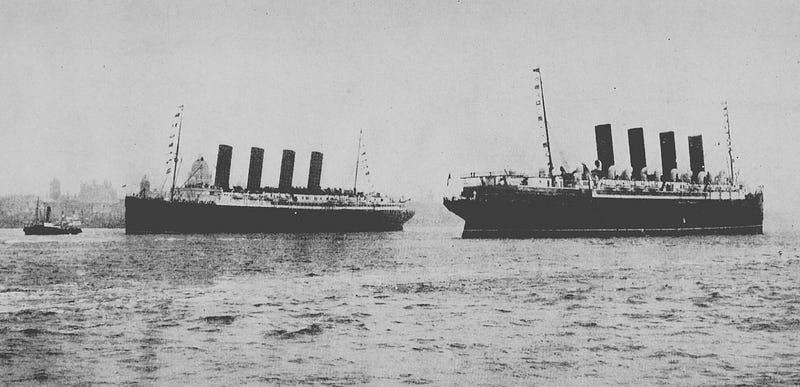
Lusitania (left) and Mauretania (right) sailing together in Liverpool harbor, circa 1911/ Javier Gómez / Wikimedia Commons.

Cunard’s arch-rival, the White Star Line, designed a new class of liners to match the competition. While not as fast as Cunard’s greyhounds, White Star’s new vessels were to be the biggest in the world. Luxury and comfort would be the trademark selling points of the so-called Olympic-class ships, which were promoted for offering “passenger accommodation of unrivaled extent and magnificence.” They were the Olympic, the Titanic, and the Britannic.
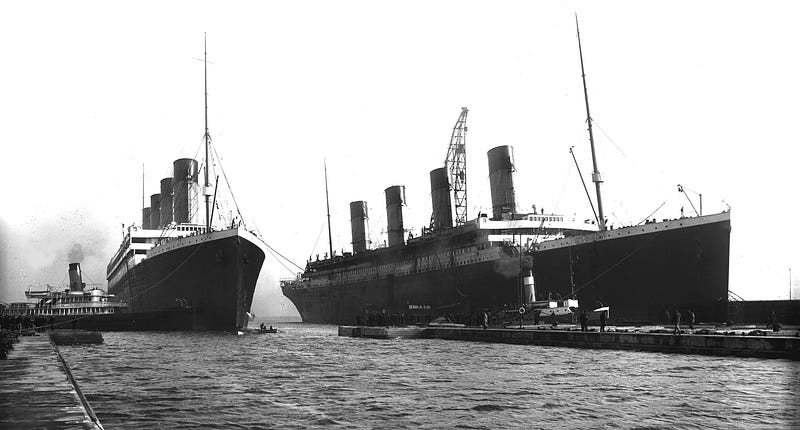
White Star’s Olympic (left) and Titanic (right)/ Photographed by Robert John Welch / Wikimedia Commons

Having the benefit of the example of both Cunard and White Star superliners, HAPAG could combine elements of both to achieve the best possible results for its ships. Designed to compete in comfort rather than speed, the Imperator-class liners practically were Germany’s response to Titanic and her sisters.

This is their story.

SS Imperator (1913–1938)
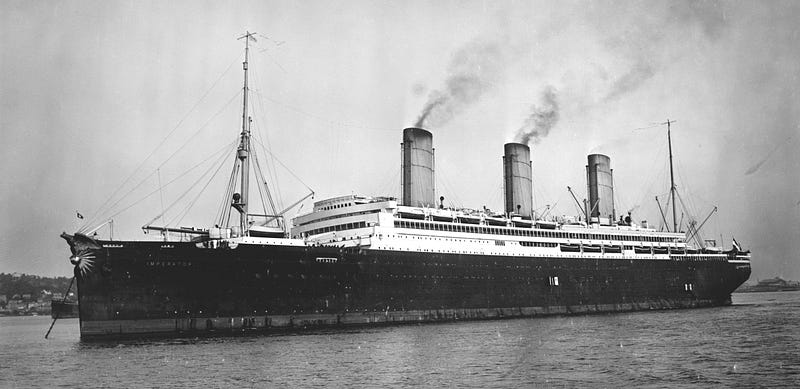
SS Imperator in 1913 / Bain News Service / Wikimedia Commons

Being HAPAG’s new flagship and the namesake of her class, the SS Imperator was launched on 23 May 1912. At the time of her completion in June 1913, Imperator held the title of the largest ocean liner in the world. At 52,117 gross register tons, she surpassed White Star’s Olympic-class giants, the Olympic, (45,324 tons), and the ill-fated Titanic (46,328 tons).

During the First World War, the ship was laid up in Hamburg, falling into dilapidation. The vessel remained inactive for over four years until the US Navy commissioned her to transport returning American troops from Europe.

As part of the war reparations, the SS Imperator was handed over to Cunard Line to replace the RMS Lusitania, which was tragically lost during the war. The Imperator was renamed RMS Berengaria and served under Cunard’s flag for the final decade of her career.

The company opted to retire the vessel in 1938 after the ship had suffered several electrical fires by aging wiring. Because of the size of the ship and the outbreak of the Second World War, the Imperator was not completely scrapped until 1946.

SS Vaterland (1914–1937)
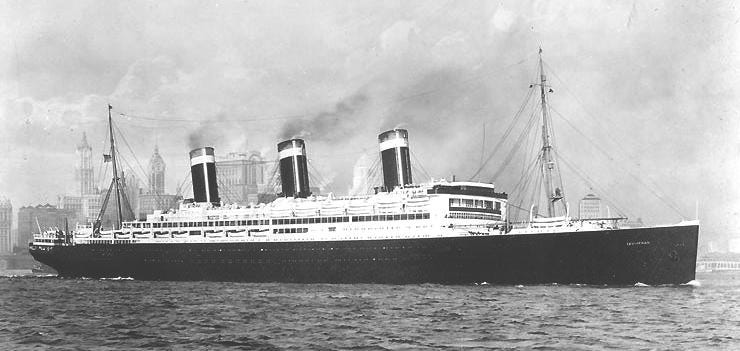
SS Leviathan (ex-Vaterland) steaming out of New York Harbor, circa the mid-1920s / US Navy / Wikimedia Commons

The second ship of the Imperator-class vessels, the SS Vaterland, was launched on 3 April 1913. At 54,282 gross register tons, she superseded her older sister, the SS Imperator.

The ship had crossed the Atlantic only seven times before the First World War broke out in August 1914. Vaterland was laid up for safekeeping in New York, where she remained immobile for nearly three years. When the United States entered the war in 1917, the American government seized the vessel and converted it into a troopship. Renamed Leviathan and operated by the navy, she carried 94,000 troops to France, one-sixth of the total American deployment in Europe. From 1919 to 1922, she was yet again laid up in New York Harbor.
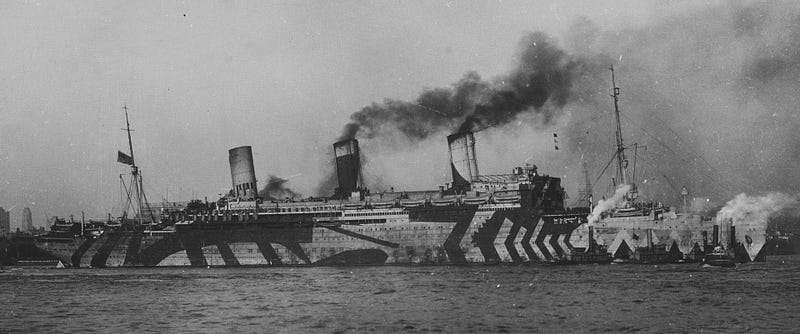
USS Leviathan (ex-Vatterland) in dazzle camouflage during WWI / Naval History Heritage Command / Wikimedia Commons

After a complete refurbishment, she re-entered commercial service as the flagship of the new United States Lines. She immediately proved popular with the American public in the 1920s, attracting attention as the largest and fastest ship in the American merchant marine. Despite being the most popular ship on the Atlantic, she wasn’t profitable because of the high labor and fuel costs, which were compounded by Prohibition. With the Atlantic shipping capacity over-saturated, especially after the Immigration Act of 1924, alcohol-seeking passengers readily chose other liners.

In the 13 years that she served U.S. Lines, Leviathan carried more than a quarter-million passengers, yet she never earned a cent. In 1938, she sailed to Scotland for scrap.

SS Bismarck (1922–1939)
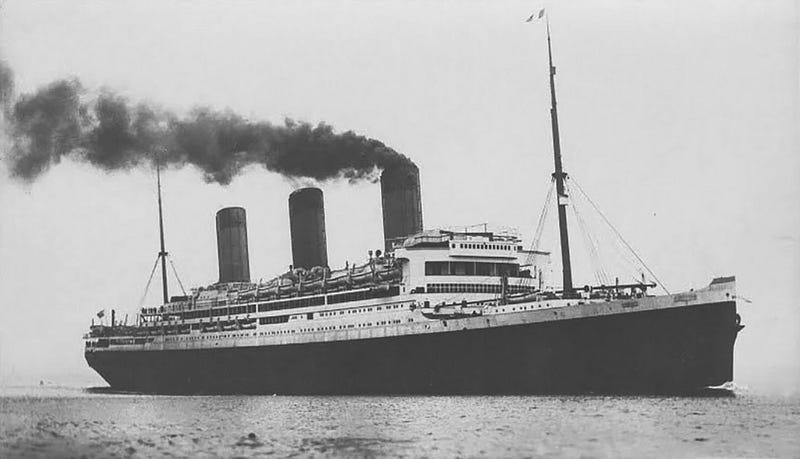
RMS Majestic (ex-Bismarck) / F. G. O. Stuart / Wikimedia Commons

The third and largest member of the Imperator-class of superliners launched on 20 June 1914, but its completion was delayed by the outbreak of the First World War. Intended to be HAPAG’s newest flagship, the SS Bismarck never sailed under the German flag except on her sea trials in 1922. At 56,551 gross register tons, this vessel was the largest ship in the world until the introduction of SS Normandie in 1935.

Following the Great War, she was unwillingly finished by her German builders and handed over to the allies as war reparations. The HMHS Britannic was the largest passenger ship to be lost during the war, and the White Star Line was pleased to accept the pride of the German fleet as her substitute. Renamed RMS Majestic, she became the company’s flagship from 1922 to 1934.

The Majestic was placed on the North Atlantic run in tandem with the RMS Olympic and the RMS Homeric. She sailed for the first time on 11 May 1922. Following her successful maiden voyage, she became one of the most popular liners of the time. In 1923, she carried more passengers than any other Atlantic liner.

Unfortunately, the onset of the Great Depression in the late 1920s made her increasingly unprofitable. She struggled through the first half of the 1930s before being sold off for scrapping.

After an agreement between the White Star and the ship-breaking yard, the British Admiralty took possession of the vessel and used it as a training ship. On 29 September 1939, she caught fire and sunk at her moorings. The wreck was sold in March 1940 to Thos W Ward for scrap, but it was not until 17 July 1943 that her remains were raised and towed to the scrapyard.
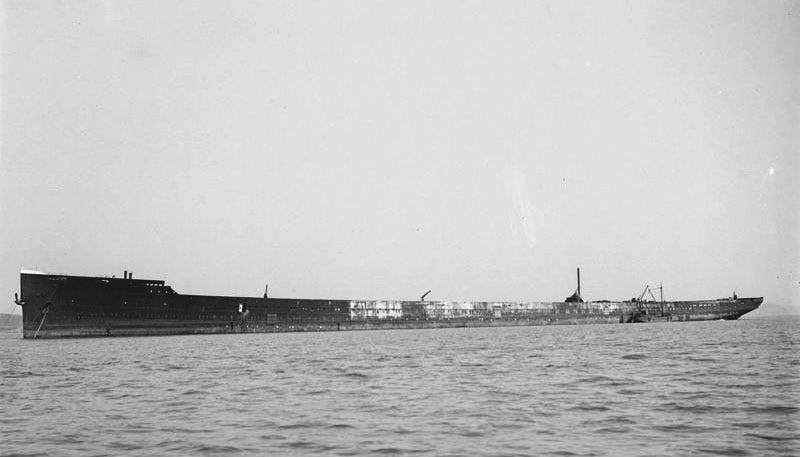
HMS Caledonia (ex-Majestic) wreck being scrapped, circa May 1943/ Smith, J H (Lt), / Wikimedia Commons

Epilogue

The Imperator-class giants had the misfortune to be launched in a time when the Atlantic crossing was interrupted by the outbreak of the worst war the world had yet seen. When it ended, all three superliners were handed over to foreign powers, never to carry the German flag again.

Anti-immigration laws by the United States government and the Great Depression that followed made their post-war service highly unprofitable, and despite their popularity, all three liners met their end in the scrapyard. It was an unfortunate outcome for Albert Ballin’s visionary dream.

References

J. Kent Layton, (2005), Atlantic Liners: A Trio of Trios, CafePress Publishing

Maxtone-Graham J.,(1972), The Only Way to Cross, Barnes & Noble, Inc.

Dawson P.,(2005), The Liner Retrospective & Renaissance, Anova Books Company Ltd

Fischer A., Kröhnert L., Schulte E., Valent J.,(2008), Luxury Liners Their Golden Age And The Music Played Aboard, edel entertainment GmbH

History
Ship
Titanic
World War I
World War II
Recommended from ReadMedium