
The Whitman Sampler
America Needs Walt Whitman Now
The secular American prophet can teach us many things
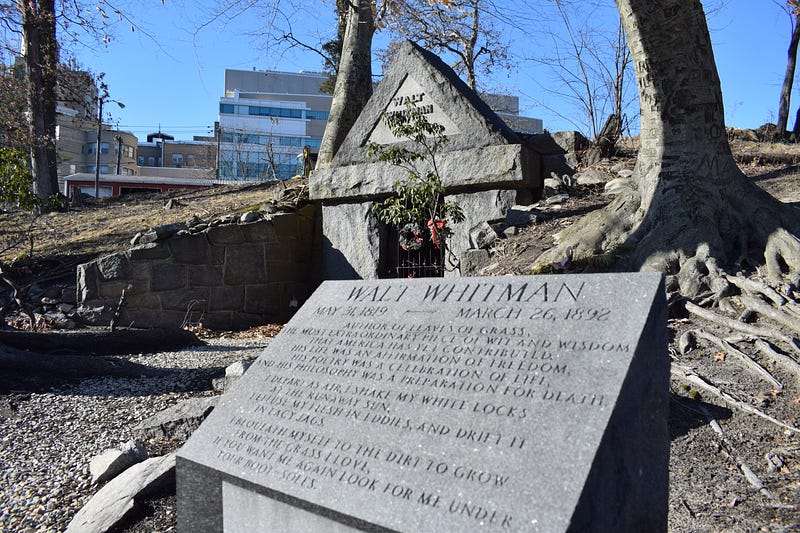
Why do I love Whitman?
The late Harold Bloom of Yale called him the “American Jesus,” a secular prophet for America. Whitman saw America in its ideal, encompassing the north and south, Black, white, brown — gay/straight — believing in the unity of the Body and the Soul and in the Individual and in democracy.
Why does America need Whitman today?
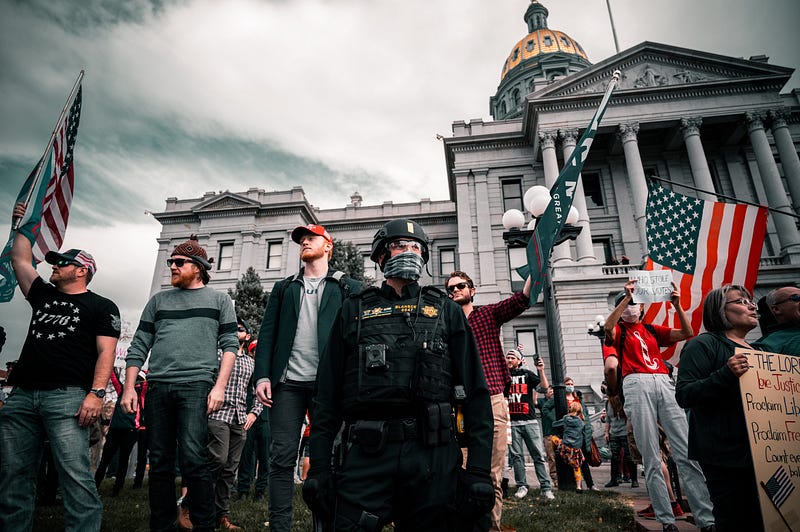
Turn on the news, and then turn off the news. Especially cable news. Look at our divided country. That news makes a profit on division. The Blue States and Red states, Police states. Black Lives Matter. Blue Lives Matter. Whitman believed in helping everyone in America, loving America.
What influenced Whitman? The Bible, operatic arias, and public speakers

Okay, three things really influenced Whitman in his writing style: the language of the King James Bible, attending operas, hearing the arias, and also public speaking. Public speakers like Emerson and Frederick Douglass were big in the 19th century.
What forms or techniques does Whitman use?

In discussing Whitman’s poetry, we can refer to five central forms or functions of his writing: the visionary, the elegiac, the imagistic, the messenger, and the topical mode. Harold Bloom categorized these forms, and placed Whitman at the “Center of the American canon.” These forms were published in “How to Write About Walt Whitman.”
When reading Whitman, consider what vehicle — or even what “mode” he uses when writing.
What is the elegiac function?
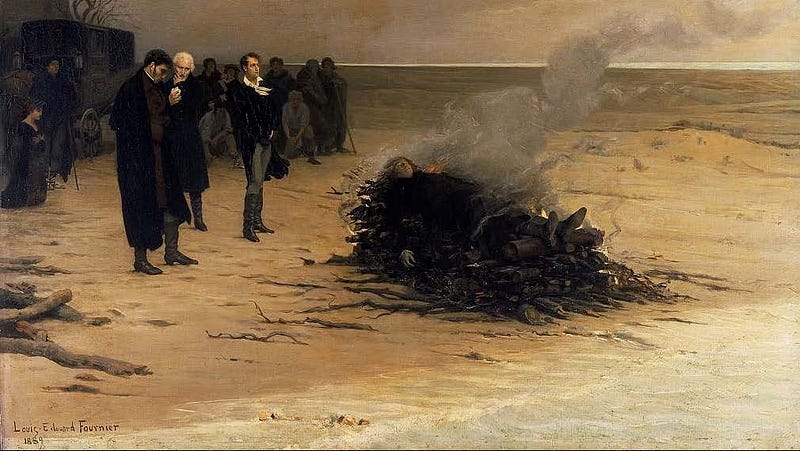
So what is an elegy or eulogy? Well, it’s a song of the dead. It’s full of passion. It’s full of remorse. It’s full of mourning. You’re pouring out emotion for someone who has gone, who has passed into that “undiscovered country.” It is usually composed to respect and honor the dead.
It’s the reason we turn to poetry at funerals or after 9/11 — like ‘The Disappearances” by Vijay Seshadri on September 30, 2001. Or Whitman’s famous, “O Captain, My Captain” about the assassination of Abraham Lincoln — Whitman’s hero and North Star.
Eulogy Example #1: “When Lilacs Last in the Dooryard Bloom’d”
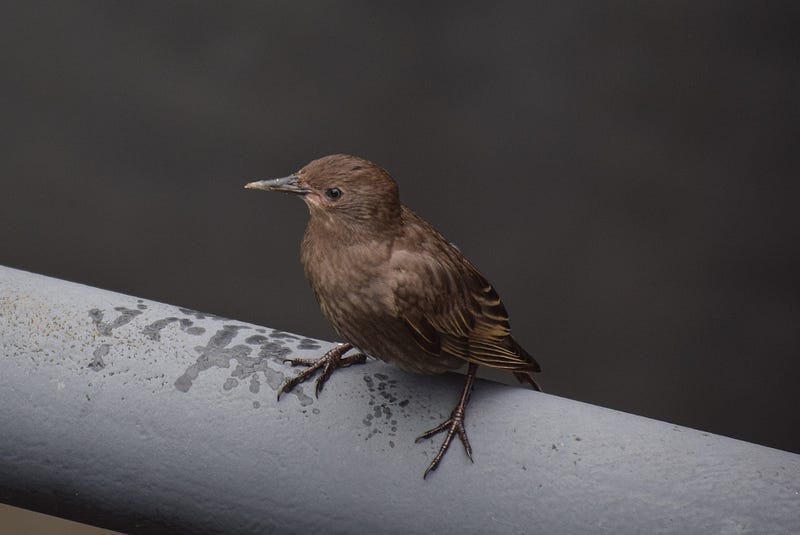
Walt Whitman was inspired to write “Lilacs Last in the Dooryard Bloom’d” after Abraham Lincoln died. And he sees himself as this thrush by himself in a swamp. “Singing deaths outlet song, the song of the bleeding throat” for his loved leader.
In the swamp in secluded recesses, A shy and hidden bird is warbling a song.
Solitary the thrush, The hermit withdrawn to himself, avoiding the settlements, Sings by himself a song.
Song of the bleeding throat, Death’s outlet song of life, (for well dear brother I know, If thou wast not granted to sing thou would’st surely die.)
Eulogy Example #2: “Vigil Strange I Kept on a Field One Night”
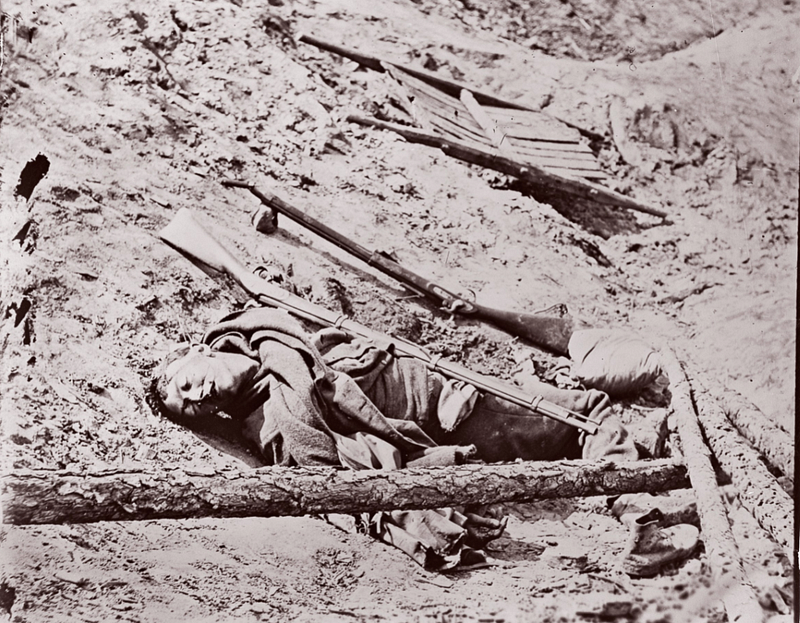
Whitman was a nurse in the American Civil War in Washington. He writes a remarkable poem called “Vigil Strange I Kept on the Field One Night.” He’s paying homage to this dying soldier, a soldier he doesn’t know, saying I am here for you, his “son.”
Vigil strange I kept on the field one night; When you my son and my comrade dropt at my side that day, One look I but gave which your dear eyes return’d with a look I shall never forget, One touch of your hand to mine O boy, reach’d up as you lay on the ground, Then onward I sped in the battle, the even-contested battle, Till late in the night reliev’d to the place at last again I made my way, Found you in death so cold dear comrade, found your body son of responding kisses, (never again on earth responding,)
Visionaries see beyond the day, the year, or the decade

Whitman is also a visionary. Someone who sees above the trees and the clouds to see the horizon. Thomas Jefferson said a good leader is one who can rise above the forest to see the future. (Ok — what about slavery, Tommy Boy?) But Whitman looks into the future.
Visionary Example #1 — “Crossing Brooklyn Ferry”
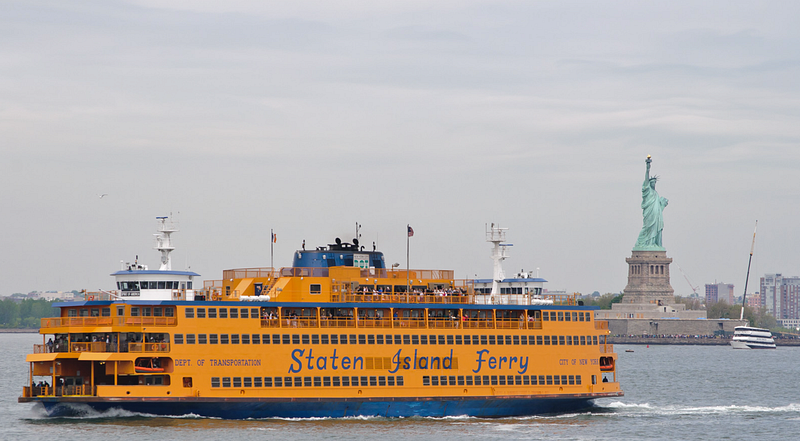
So, in this incredible poem, Whitman as the visionary, sees us and touches us. “Time avails not.” He says, just like you are taking the ferry or the train. I was on that ferry doing what I was doing, going to work. And he connects himself to us.
Crowds of men and women attired in the usual costumes, how curious you are to me! On the ferry-boats the hundreds and hundreds that cross, returning home, are more curious to me than you suppose, And you that shall cross from shore to shore years hence are more to me, and more in my meditations, than you might suppose.
Visionary Example #2 — “When I Heard the Learn’d Astronomer”

In this short, popular poem, Whitman becomes the visionary because he’s like, okay, there’s only so much you can get vicariously from a Ph.D. Prof in astronomy in a class. Let’s go out and look directly at the night sky and let us learn from the heavens what we can learn and feel for ourselves.
When I heard the learn’d astronomer, When the proofs, the figures, were ranged in columns before me, When I was shown the charts and diagrams, to add, divide, and measure them, When I sitting heard the astronomer where he lectured with much applause in the lecture-room, How soon unaccountable I became tired and sick, Till rising and gliding out I wander’d off by myself, In the mystical moist night-air, and from time to time, Look’d up in perfect silence at the stars.
Whitman serves as a messenger in his time and ours
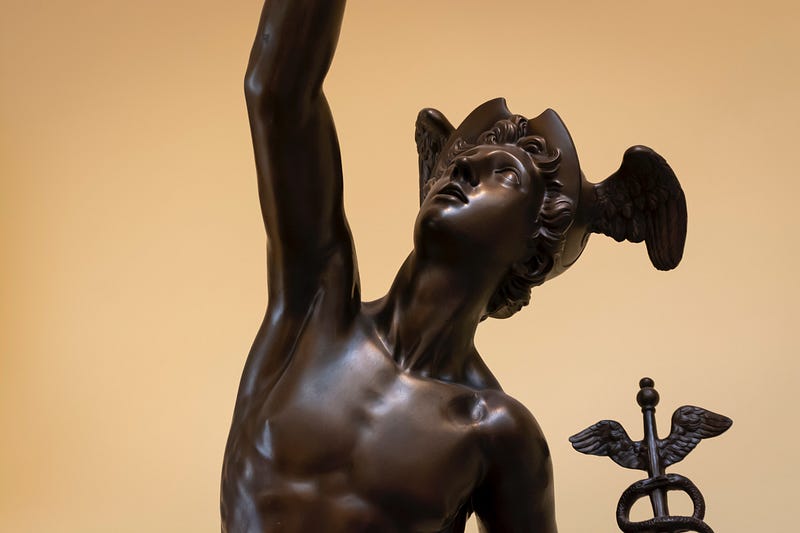
Like Mercury, Whitman plays the messenger mode. He has a message to give, and not only to those in his own time. Like, let’s stop the Civil War nonsense, but also how to be better Americans. How can we really love one another? Female, male, gay, straight, black, white, brown, Asian, Mexican, Republican and Democrat? Catholic or Jewish or Hindu?
The messenger function carries a message from the gods to the mortals — on a topic or an occasion.
Example #1 — “Poets to Come”

In this short poem, Whitman addresses you and me and this generation — saying, listen, I’m a poet now, but who are the poets in your time period? Who can speak to the truth and inspire you?
POETS to come! orators, singers, musicians to come! Not to-day is to justify me and answer what I am for, But you, a new brood, native, athletic, continental, greater than before known, Arouse! for you must justify me.
I myself but write one or two indicative words for the future, I but advance a moment only to wheel and hurry back in the darkness.
I am a man who, sauntering along without fully stopping, turns a casual look upon you and then averts his face, Leaving it to you to prove and define it, Expecting the main things from you.
Example #2 — “I Sing the Body Electric”

He also plays the messenger role here when he talks about the equality of the female and her form and her beauty and that the female form even surpasses the male form and everything that women have to offer in the world.
The female contains all qualities and tempers them, She is in her place and moves with perfect balance, She is all things duly veil’d, she is both passive and active, She is to conceive daughters as well as sons, and sons as well as daughters.
As I see my soul reflected in Nature, As I see through a mist, One with inexpressible completeness, sanity, beauty, See the bent head and arms folded over the breast, the Female I see.
The imagistic function paints pictures in words of a diverse and expansive the United States

Here’s my daughter Nancy picking lilacs in our yard. And for Whitman, the image of lilac is stunning. The lilacs were blooming when Lincoln died in April. They’re fragrant and they have a heart-shaped leaf. So for Whitman, this is an image that really connects him to Lincoln.
Example #1 — “Cavalry Crossing a Ford”

In his Civil War poems called “Drum-Taps,” he writes about a cavalry crossing a small stream. And it’s really just a very simple poem about a Union cavalry and the banners are flying. And it’s just a small little image: a stunning snapshot of a stunning “image.” Like a photo.
A line in long array where they wind betwixt green islands, They take a serpentine course, their arms flash in the sun — hark to the musical clank, Behold the silvery river, in it the splashing horses loitering stop to drink, Behold the brown-faced men, each group, each person a picture, the negligent rest on the saddles, Some emerge on the opposite bank, others are just entering the ford — while, Scarlet and blue and snowy white, The guidon flags flutter gayly in the wind.
Example #2 — “Song of Myself — Section 10”

“Song of Myself” spans 52 poetic sections of unequal lengths. Here, in Section 10, Whitman writes about wanting to get on the boat, wanting to dig for clams. He’s someone who’s just is observing people and wants to learn what they’re doing with their lives. That was his job as a New York reporter and also as a poet. PS: He was a much better poet.
The boatmen and clam-diggers arose early and stopt for me, I tuck’d my trowser-ends in my boots and went and had a good time; You should have been with us that day round the chowder-kettle.
The topical function serves to discuss the pressing needs of the day
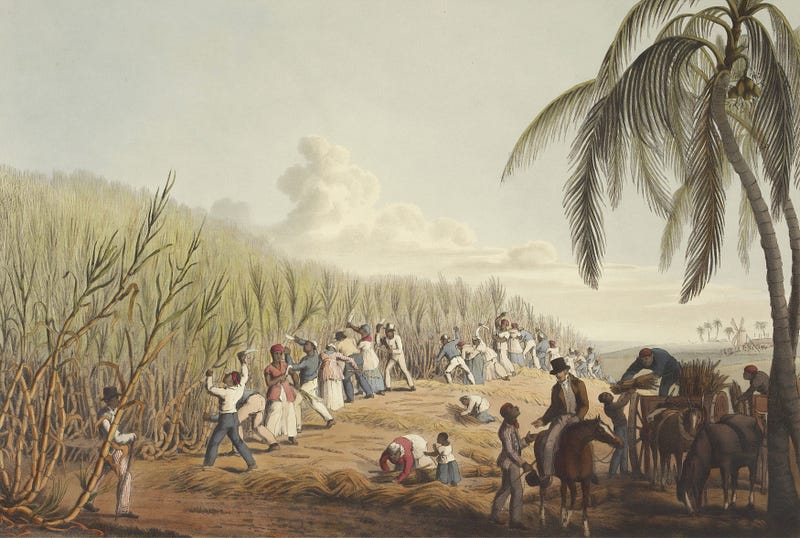
Okay, so a big topic in the 19th century, of course, was slavery. Okay, so here we have slaves working. I think this is Antigua. And he was against slavery for the most part, right? But like Lincoln, he wanted to keep America together. But for the “occasion” or for the “topic” — yeah — write about slavery.
Example #1 — “Song of Myself — Section 10”
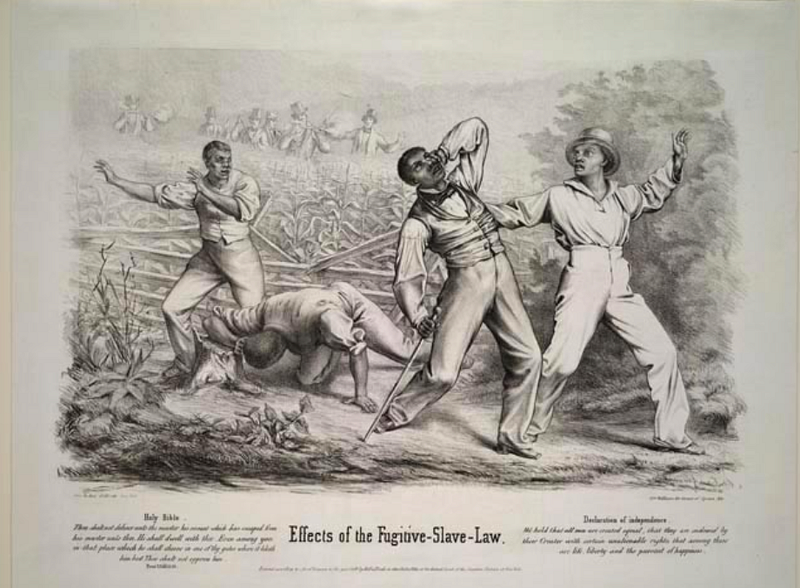
So here we have the Fugitive Slave Law. Okay. And Whitman was writing about protecting a runaway slave, hiding him in “Song of Myself,” and this was against the law, right? Assisting a slave to freedom was against the law, even in the North. True safety, like in The Handmaid’s Tale, only comes when crossing into Canada.
Ironic, right?
The runaway slave came to my house and stopt outside, I heard his motions crackling the twigs of the woodpile, Through the swung half-door of the kitchen I saw him limpsy and weak, And went where he sat on a log and led him in and assured him, And brought water and fill’d a tub for his sweated body and bruis’d feet, And gave him a room that enter’d from my own, and gave him some coarse clean clothes, And remember perfectly well his revolving eyes and his awkwardness, And remember putting plasters on the galls of his neck and ankles; He staid with me a week before he was recuperated and pass’d north, I had him sit next me at table, my fire-lock lean’d in the corner.
Example #2 — “Virginia — The West”
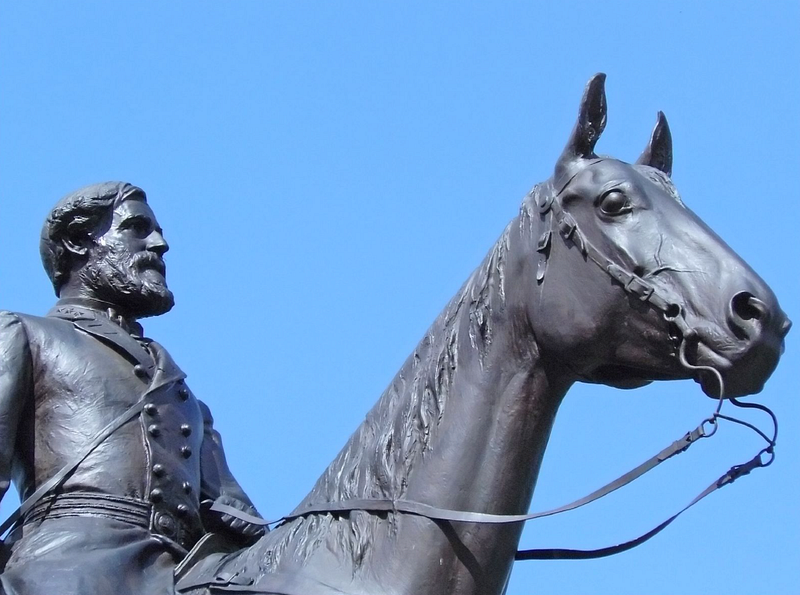
Another big topic was, you know, him criticizing the South — Virginia. This comes from “Drum-Taps,” too. Whitman says, listen, Virginia, you gave us so many great Founders, but now you have turned the knife against the great Mother, the United States of America.
THE noble sire fallen on evil days, I saw with hand uplifted, menacing, brandishing, (Memories of old in abeyance, love and faith in abeyance,) The insane knife toward the Mother of All.
The noble son on sinewy feet advancing, I saw, out of the land of prairies, land of Ohio’s waters and of Indiana, To the rescue the stalwart giant hurry his plenteous offspring, Drest in blue, bearing their trusty rifles on their shoulders.
Then the Mother of All with calm voice speaking, As to you Rebellious, (I seemed to hear her say,) why strive against me, and why seek my life? When you yourself forever provide to defend me? For you provided me Washington — and now these also.
Whitman is Not Then — He’s Now and Accessible

Okay, So why do we need Whitman today? Come on. Really. We need someone, we need a poet. We need someone a be a true leader, a poet. Someone who can show us the way out of this morass to bring us together — e Pluribus Unum.
And we need to listen to Whitman today.
Thank you for reading! Read more from Walter Bowne:


