
Meanness and agony without end
Shifting positions and perceptions in a weary world at a Walt Whitman Poetry Contest in Camden, New Jersey
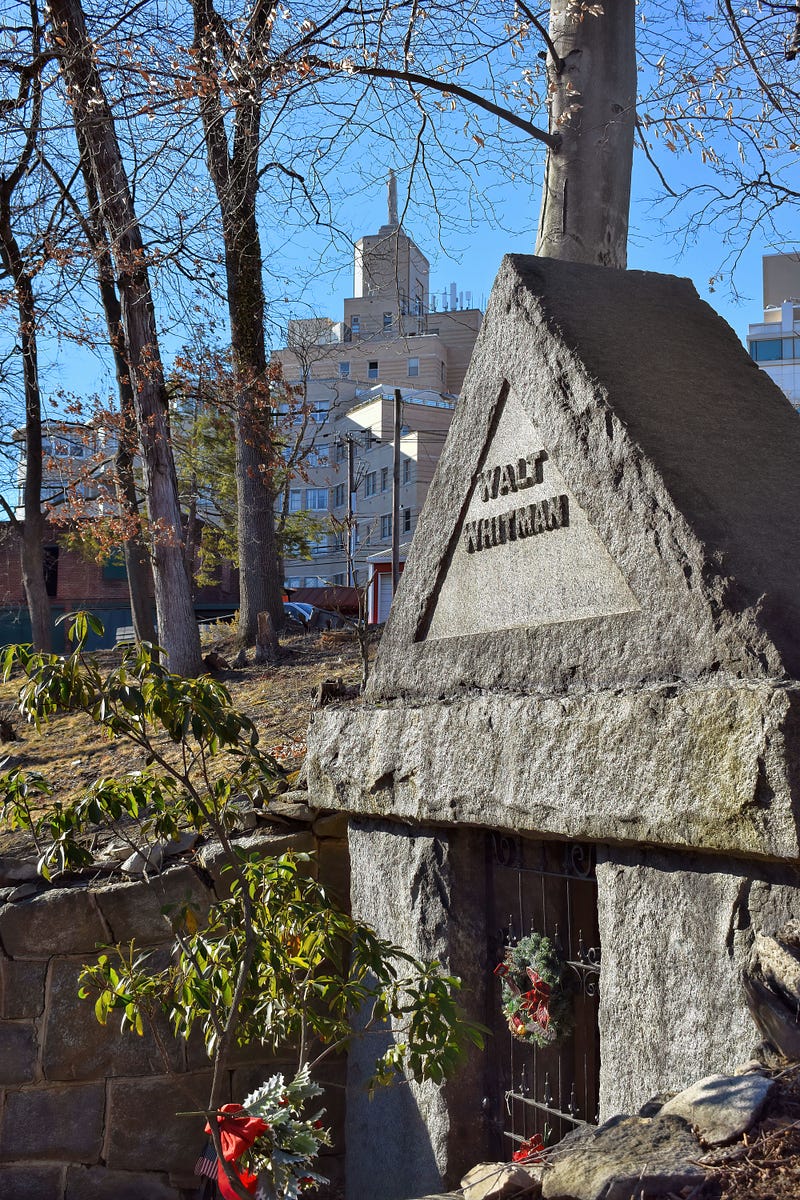
“Camden was originally an accident, but I shall never be sorry I was left over in Camden. It has brought me blessed returns.”- Walt Whitman
As a teacher, I’m not used to being tested. And I’m definitely not familiar with failing. Yet a test came during a poetry reading for one of my students at the Walt Whitman House in Camden.
I’ve driven through Camden countless times (doors locked, eyes firmly ahead), but street parking is another matter. If I died, would my student appreciate my sacrifice to the teaching profession?
Pink balloons knocked about the light brown edifice of the squat, two-story row home. A guy dressed for a cruise buffet, in a white Panama hat and blue blazer, welcomed the poetry fans.
After I parked, a man approached me. He held a 24-ounce can. It was wrapped in a red towel soiled with axle grease.
“That meter is no good,” he said rubbing the stubble on his face. “You need to use another.”
I obeyed, as is my nature, and moved my Civic. Did my car tremble with the thought of being alone? “It’ll be OK,” I said, patting the console.
“I work here,” the guy told me. He was probably my age, mid-40s, eyes polished red rubies, but he looked 20 years older in his dingy brown shirt. I was dressed in a blue blazer, tie, and khakis with striped blue and orange socks. Life is too short for boring socks, I always say, but this guy didn’t wear any socks. I examined the meter. I asked him if he had any change.
Yes, I asked a homeless man for change. He rooted through his pockets. Out fell scraps of paper and folded wads of gum. The guy said he could watch my car for some money.
“Oh, well, I think it’ll be OK,” I said.
He just shrugged his shoulders. “That’s your opinion,” he replied. “Not mine.”
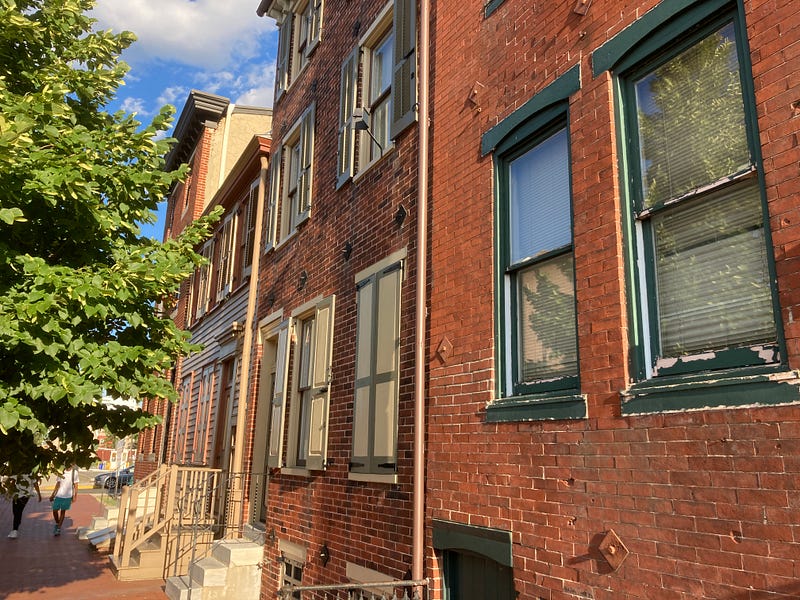
I have visited the homes of Keats, Twain, and Shakespeare, but my favorite American poet I had neglected. I suppose I just needed a reason to confront Camden. “I’m sorry it’s taken me so long to visit, Dear Gray-Beard,” I muttered as I entered his backyard, a walled garden of rarefied beauty.
I took a seat behind my student and her parents. Paul Stankard, a glass artist, spoke. One of his creations showcased a bee in amber. Then the students read, the parents clapped, and the birds chirped. The garden barred the reality of Camden. From a certain perspective, perhaps we were all trapped in amber. We had time for poetry, the food for the soul when so many don’t even have food.
After the taking of cake and tea, I remembered the poster in my classroom of Uncle Walt called “This is what you shall do.” One of his commandments is, “Give alms to anyone who asks.” But I didn’t. I felt guilty. I preach the gospel of Whitman, but on the street, I was Judas worrying about the 30 payments on my car.
I toured Whitman’s house. I usually find literary haunts underwhelming; I didn’t feel Hemingway’s spirit in the Café Iruna bar in Pamplona, Spain. I just felt overcharged.
Upstairs, I saw the bed where Whitman uttered his last words:
“Warry, shift …”
I was wary too and perhaps needed to shift positions.
As an educator, I know the power of education. My love of literature has made me more empathetic. But that power only extends so far. After all, if the world never listened to Walt Whitman, who would want to listen to me? “Did your poems stop the bullets at Manassas?” I asked Whitman.
Standing on the front stoop, I recalled lines from Whitman’s poem “I Sit and Look Out.” He wrote,
I observe the slights and degradations cast by arrogant persons upon laborers, the poor, and upon negroes, and the like; All these — all the meanness and agony without end I sitting look out upon, See, hear, and am silent.
I resolved to give the valet my only $5, but he was gone. My Civic waited. It was unmolested. I was relieved. But that relief embarrassed me. In the cosmic sense, it was not much to worry about. Perhaps I needed to heed more the commandments of Walt Whitman.
In a world still so divided, perhaps we all do.
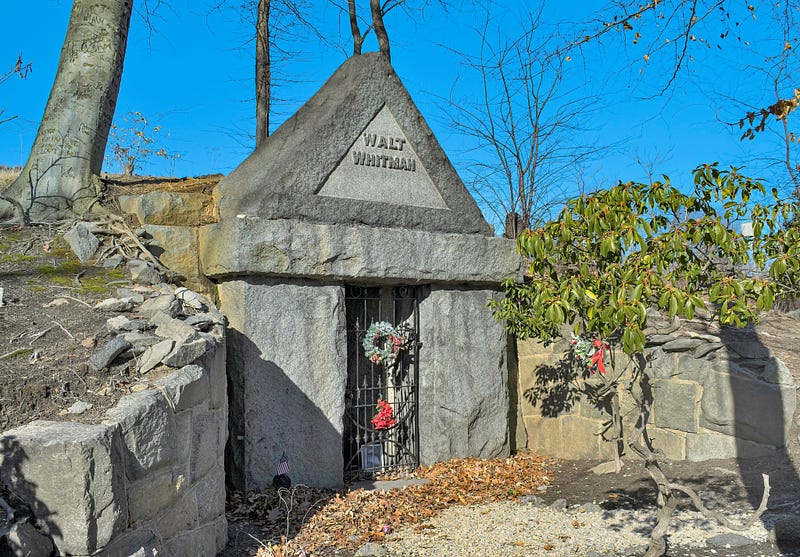
Thank you for reading. Follow me on Medium at Walter Bowne.


