Travel Diaries
Recovering What Was Lost in Scotland
Tablemates That I Wish Could Reunite Again for Another Pint
The Diary
My study in New Jersey — sixty miles from the Atlantic, and chilled to the beams in a winter twilight freeze — with sweet gum pods rolling down the roof and phantom-limbed oaks in the window and Christmas lights of blue — was, perhaps, the unlikeliest location to recover what I thought had been lost.
I had been flipping through the first two weeks of a diary from January 1979. There were no gems of wisdom, no evidence of talent discernable in that green pen scribble of a ten-year-old. The diary didn’t last long.
How many ways could I describe boredom?
Even then, the writing was hard. As I leafed through those pages full of nothing, I found a photograph from 1990. It was hiding in the back of the diary.
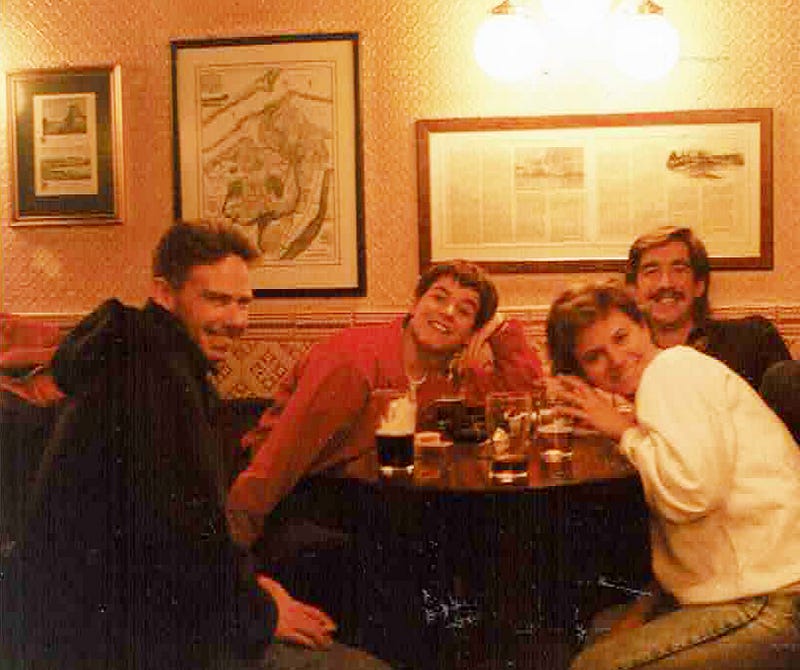
She surfaces again: Cheri, twenty-nine, and full of life. I am the youngest at twenty, a Jersey boy studying in the North of England. There are four smiles and five-pint glasses. The almost empty fifth glass belongs to the photographer — me.
Wearing a loose red sweatshirt, a woman with short black hair from Tennessee rests against her palm, her arm on the pub table. She has enough Southern charm to whisper butter into cream; Jess from Perth, Australia, that funny guy, appears too: short with red hair, he is razor-thin like a cross-country runner; a thick stout, half-finished, keeps him warm.
Richard from South Africa leans back against the yellow patterned and checkerboarded wallpaper of the pub. He is tall and obnoxiously handsome with long black hair and a trimmed black mustache. Maps and yellow newspaper clippings of Scotland adorn the walls. Three yellow lights cast a dim glow over the tablemates; Cheri poses with her light lager.
The conversation, the laughs, the mingling of accents, the thrill of travel and friendships cemented with a smile and a bought round for all: the picture in that pub at Inverness is my madeleine cake from Marcel Proust, conjuring the past into the present.
The Semester Abroad
I had been traveling the previous summer throughout Europe, but I eventually found myself in the North Country of England in late August. I was studying English, history, and people.
In early November, Newcastle-upon-Tyne had a fall break called “Reading Week,” a misnomer, of course, because beer mats contain so few syllables. Was I really planning on reading Middlemarch and The History of Tom Jones? Eventually, of course, but there were adventures out there and real people to encounter. Could I be my own Tom Jones, I wondered?
While other students and “mates” were heading off to London, Paris, and Amsterdam, my goal was to head north, write, drink ale, visit Edinburgh, drink ale, head farther north, and drink more ale. Or stout.
The legends of The Lost Generation taught me this: travel, drink, write. Rinse. Repeat.
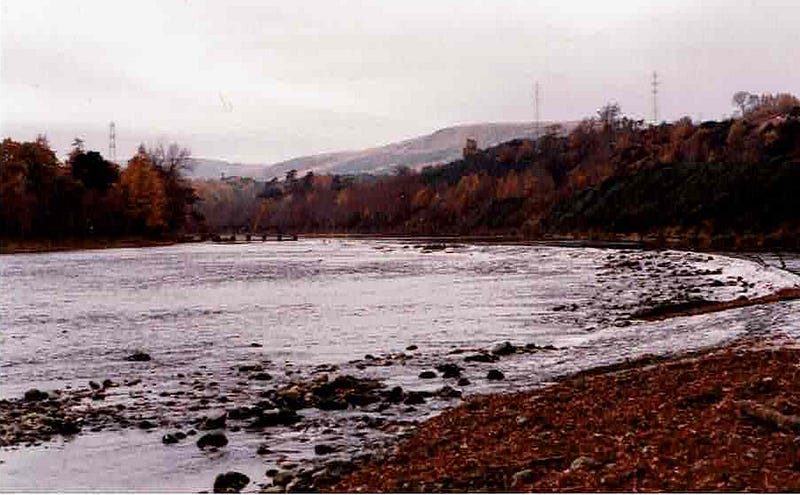
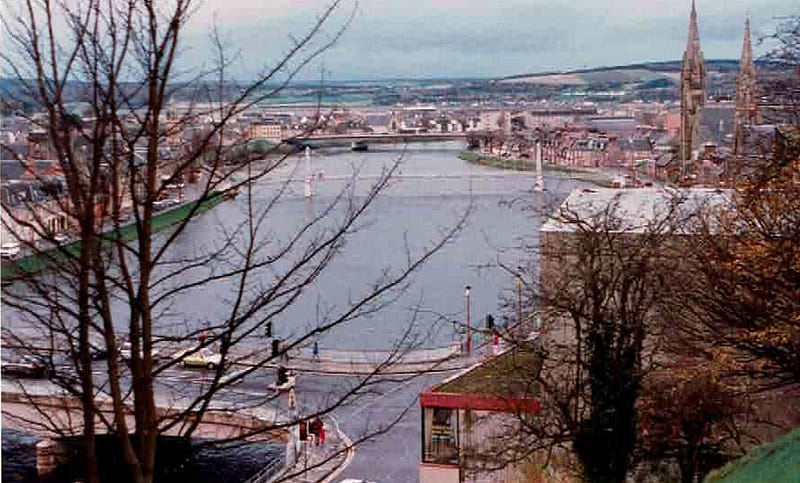
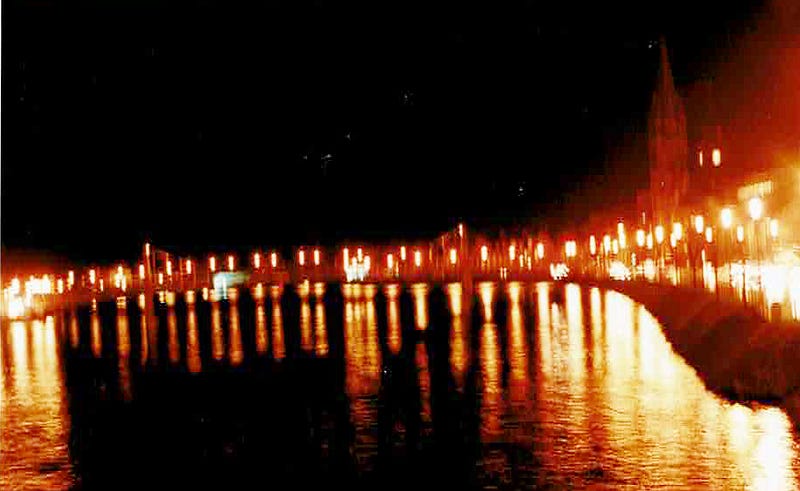
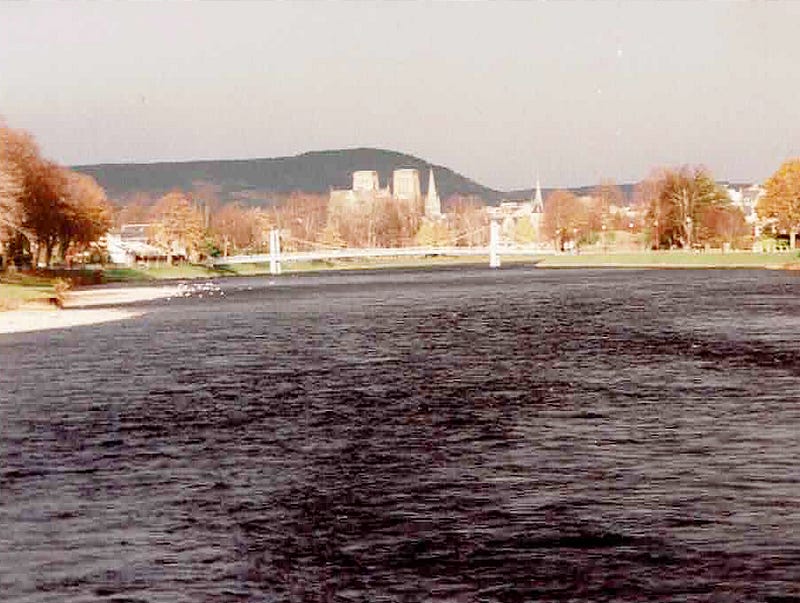
I loved Inverness for its simplicity. The weather was cold and foggy. For early November, it was expected. It was what I thought I wanted: solitude. Few places offer more abundant solitude than northern Scotland. In my memory, Inverness was a town of squat homes of pinkish stone on a rambunctious river that tumbled downhill from the famous Loch Ness.

Inverness, Scotland
I checked in at The Inverness Student Hostel. The Castle was just up the road. Across the river was St. Andrews Church. Unless the setting of a horror film, youth hostels were affordable and sociable, and safe. The communal kitchens were great places to chat, taste new foods, and demonstrate cooking skills. The day I met Cheri I remember writing, comfortable on a plaid, wingback chair near the fireplace in the dark-paneled room: Hogwartian in ambiance long before Harry Potter.
Over the years, my journals were oak barrels transforming into comedy what I thought contained tragedy. Doesn’t time eventually improve all youthful journals into burlesque?
I heard someone mention Philadelphia. The sound belonged to a cute woman, about 5’2, with short, brown hair, feathered back in that late 80s style. Her smile suggested youthful mischievousness. She had been talking to that group of tablemates from the photograph. We were all staying at the same hostel.
“Hey, Philly,” I called from across the darkroom, happy to find a cheesesteak compatriot. “I’m from Voorhees. South Jersey.”
Cheri was from Aston, Pennsylvania; only the Delaware River and thirty miles separated us. When you’re in northern Scotland, a long way from normal, she was Mike Schmidt, Rocky, and William Penn. We spent time talking over dinner in the communal kitchen. Jess and Richard and the gal from Tennessee joined us for my bangers and peppers.
We washed the dishes, and then, as custom, walked to the local pub. Cheri worked for a pharmaceutical company, took an extended leave of absence, signed up for a package tour, met a friend from Tennessee, and then decided to stay longer in Europe. If she could, why not? Life is short, after all.
“I’ve wanted to do this for the longest time,” Cheri told me. I remember thinking that was amazing about her: a mid-career, corporate woman, independent, intelligent, single without shame, who decides to “see the world” before marriage and children and responsibilities. Did she have any major responsibilities? I wondered. I only had novels to read and essays to write and oral exams with Dr. Peter Coss to terrify me.
My creative writing ceased as ready-made friends suddenly appeared with the call of the bagpipes. That’s the thing I miss about youth: the readiness to make friends.
In high school, I played the father in Brigadoon, and that week in Scotland seems like a once in a hundred-year event. The memory appears and vanishes as a highland mist under sable skies.

Perhaps it was her maturity that attracted me. A professional, self-possessed woman seemed so much more real than those gilded Fitzgerald-like girls I pursued. I was not alone in my curiosity, however, as the guys from the Commonwealth, Richard, and Jess, were also interested, but it never came to a row. It all stayed friendly.
I had the inside track, of course, with our own Schuylkill Expressway.
A week passed: We picnicked along the River Ness, walked through the town; I even introduced her to the band REM and laughed at the communal tables.
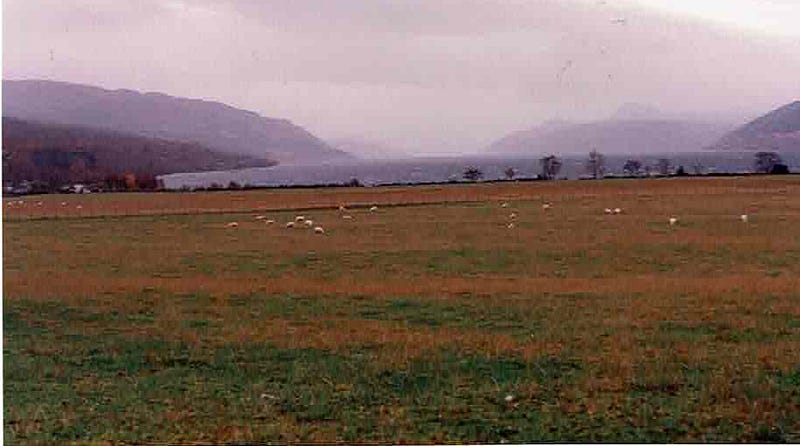
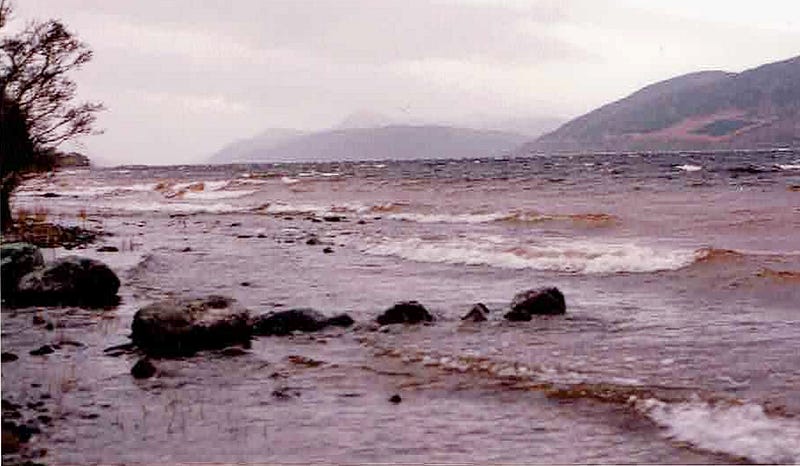
One day, alone, after a long bike ride to Loch Ness, I collapsed in exhaustion amongst the sheep-stained-blue along the A82. It would be such a peaceful place for a grave: the heather, the barren, rolling hills, the cool breezes. A local couple in a small, yellow bug stopped. Was I all right?
“I’m trying to get to Loch Ness,” I said. “I didn’t know it was all uphill.”
“It’s right ov’r the bend,” she said. “Dooghya need a lift, lad?”
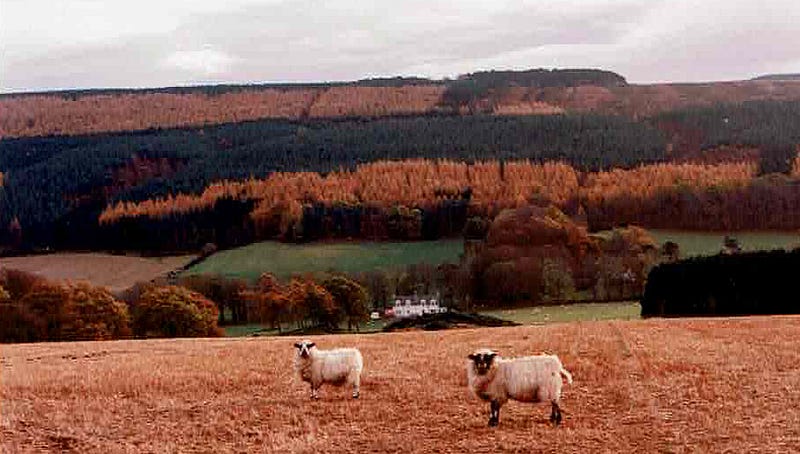
No, no, not a lift, just more cardiovascular training. The view, eventually, was marvelous. Cheri decided against the exercise. The four tablemates from the picture instead hired a car and drove to Macbeth’s castle.
Whatever made me choose rigorous exercise over a literary pilgrimage has never happened since.
“Take That Sheila Home!”
During one night in Scotland, it was one pub, and then another pub. It seemed straight out of Hemingway’s The Sun Also Rises. The ex-pats stumbling from one place to the next: The Dingo. The Select. The Ritz. Our group soon found ourselves in a dark nightclub. The Madchester Sound was big then, bands like The Charlatans, The Stone Roses, and The Happy Mondays.
I was mid-field to getting tight, or pissed, according to the custom, and having a smashing time. I was dancing with a local lass with lusciously long black hair. She was a mess. Her teeth were a mess. But she said she loved my accent, my South Jersey intonations. The ale broadened not only her vowels but also her judgment on phonetics. For a while, we spent the time on a leather couch messing around, and Jess from Australia said I had better “take that sheila home.”
Take her home to the hostel? Her place? But I didn’t. I didn’t know her. Jess and Richard gave me a wretched time, chiding me about my lack of prowess. Like a lifeline, Cheri grabbed my hand. “You’re a complete gentleman,” she said, kissing me on the cheek.
Philadelphia Freedom?
So the week emptied into Moray Firth, and then into the North Sea. The tablemates exchanged numbers and addresses. My studies resumed in Newcastle with the ebb and flow of old crowds and new friends. One night, Radio One played Elton John’s “Philadelphia Freedom.” I danced by myself in my flat, singing a song I always took for granted.
My homesickness ended, however, as soon as I returned to New Jersey. The only “Welcome Home Party” was attending my sister’s concert at my old high school. Life back home continued, but I was still in those currents in Loch Ness. Wow, London and Royal Albert Hall one night, and then the old stomping grounds the next.
When was the next flight to Heathrow?
A letter from Cheri, however, was waiting for me. She wrote that it was hard to “adjust to reality.” Would she “laugh or cry” when she developed the pictures? She said to call to get together for drinks and lunch.
We went out to Pizzeria Uno in Delaware County. Another night, she invited me over for dinner. She had a comfortable condo. It was odd to be with a woman with money. I had no money. I had sold my Nissan 200SX and drained my savings to travel and study in Europe. Now I was bumming my brother’s car.
Cheri and I had much to discuss, but never her condition. She was like a fighter who knew her weakness, and never revealed that she had one; she kept so much secret. She didn’t discuss her job either, really. What’s a job anyway? A way to pay the bills? A way to see the world? A way to provide warmth and meals? It was nothing compared to laughs and stories and what makes our heart heat and our soul sing to join the chorus of others.
I’m not a joiner, after all. I’m a soloist, in Thoreau fashion. Sometimes that theology and belief system in the “rugged individualist” can be downright lonely. And there was Cheri, still, encouraging me to sit at the communion table.
That’s another thing that caught my attention about Cheri: her instant readiness to engage with strangers. After all, she was the one who first contacted me upon arriving stateside. Would I have had the courage to call?
I didn’t know anything about her condition. She was interested in my travels, my writing, what I was reading, and what I planned on doing with my life. She spoke of her family and maybe some old relationships. There were awkward moments when it seemed right to kiss her, but the hottest it ever got was a peck on the cheek.
I’ve never been particularly aggressive. Women have told me such qualities were a turn-off. “You should have just taken me,” one girl once said. My reason always held the upper hand. It kept me away from the quicksands.
Over the next two years, Cheri and I largely exchanged letters. I have just recently discovered them, after finding the photo, not having read them for over twenty years. I was shocked. If we had just exchanged text messages, like everyone today, all that communication would have vanished.
Now I have her handwriting.
Her advice and her voice are still with me. Each letter revealed more of Cheri: her sickness, her selling the condo, her selling her furniture, her losing her job. She predicted a long legal battle. Apologies came for not attending my graduation party. Was there something I could’ve done? Could have said? Was she pulling away? What — was pulling her away?
Another thing about being an “individualist.” You simply believe other people are that way too, the old Golden Rule Lie, and would just wish to be left alone. I don’t know. The Golden Rule, after all, wouldn’t work so well for sadists.
In July of 1992, she wrote, “My thoughts are always with you, even though you may not hear from me.” She joked that my letters would be worth a fortune one day when I was a famous author. In another letter, she declared about living in another part of the country. In closing, she encouraged me to “write, write, write” and would “love to read some of my work.”
Paths Diverge
Then, we didn’t see each other anymore. College ended, and then came graduate school. More reading. More writing. I just recently found my last correspondence from Cheri from Jackson Square, New Orleans. She wrote in purple, “Hi, thanks for the helpful train info. So far, so good. Love N. Orleans. The jazz festival is wonderful. Great music, food. Hope all’s well. Love Cheri.”
The date surprised me because it was dated 5 Apr 1994. Three days earlier, I met Mary Jane Murphy at a dance on Boathouse Row in Philly. She was the nourishing kind of quicksand, and so I happily surrendered.
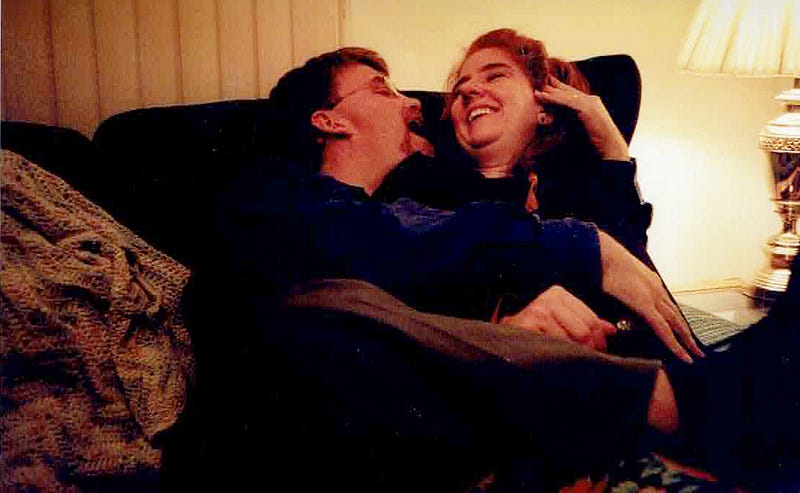
Within a year we were married.
We invited Cheri to the wedding, but we never heard from her. Her address had changed from Aston to Clifton Heights, several zip codes down the Baltimore Pike. What happened? Then, I no longer wondered. She vanished into the mist.
My life took off: more travel, job, new house, kids, diapers, lawn care, gardening, teaching, grading essays, and some writing.
I didn’t know too much about Cheri. I’ve always filled in the gaps with fiction. She re-appeared as a character in a section of an unpublished novel that is still several years away from being mature enough, you know, for readers. In my story, she meets a man and carries on a love affair in Scotland, all the while holding onto this secret that she is ill. She doesn’t feel it’s right to fall in love. It’s selfish. But the man can’t help himself. Would it make a decent novel from Nicholas Sparks or Jodi Picoult? The man finds her full of life even though her time left living is short.
That story has been now published, here, The Enchantment of the Heart, soon to appear in the novel, Overland to the World.
If I felt the pull of her story, why didn’t I try to contact her? Did I not have enough room in my life? In the days before the Internet, it was harder to track down the castaways, but was that just an excuse?
I wanted to reach out. Perhaps she was on Facebook. Women from the past had been “finding me” to touch base. I found Cheri, but only a law case about her and her obituary.
The Obituary
In the case against Rohm Company, she lost her appeal for unlawful termination of employment. It was a long legal brief, but this caught my attention:
“She worked as a sales engineer for Defendant from 1983 to 1990, and as a field salesperson from 1990 to November of 1991. Early in 1991, Plaintiff began developing symptoms of chronic fatigue and chronic colitis which began affecting her job performance until she eventually took short-term sick leave once in July 1991 and again from September 3, 1991, to November 18, 1991.”
Of course, the dates coincided with Scotland. Zelda Fitzgerald suffered from bouts of colitis, and my dietitian-trained wife confirmed that it can be quite serious and painful. I still don’t know how she died or whether she got married. She died in 2003 at forty-two. There were no pictures of her online. This was before everything was posted online.
All I thought about was that charming smile in that pub, that one picture, and those warm lips on my cheek, and the word “gentleman,” a word that no longer remains the kiss of death.
That Soulful Note That Still Sustains Me
Her smile in the photo reminds me of lost opportunities for friendship and support. I think of other friendships, other smiles, other missed connections. We must make time for our passions, like Cheri wanting to see the world, like me still yearning to be a writer.
Did Cheri ever get married? Did she leave behind a family of mourners? What dreams had been unfulfilled? Did she keep in touch with her friend from Tennessee? Did she ever hear from Jess or Richard? Where are they now? Did she live a lifetime in those forty-two years?
I think she did. I hope she did. The thin slice of life that I shared with her at those few tables, at home and abroad, indicated that she had a large appetite for life. More of us should be so daring to take flight and take those risks and risk reaching out for friends.
The connections we make, however strong in those fleeting moments, weaken as the demands of life, the wedding plans, the bills, the changing of diapers, accumulate. And while we lose track of these influential people, we must remember to tap the memories if memories are all that’s left, in their honor, to maximize the potential they saw in us. And also to hope we helped them, even in small ways. We never know when something small can actually be huge.
I was right, though, whether in fiction or nonfiction: she taught me so much. Will I be able to keep that smile in the future, even while knowing the end is coming?
But now I’m doing exactly what she encouraged me to do: write, write, write. I just wish I was able to tell her that and how much I admired her. Sure, my diary did not contain much, but it kept that picture safe, the past reclaimed.
And Cheri, nothing says “write more” than blank pages. Every day is one, right? Every minute. Every second. I’ll be writing and living until this trip draws to a close.
Thank you. I know this essay was only a peak in your photo albums. Sometimes, if we’re lucky, we can see a world in that one picture.
This is for you. I’m glad you got to New Orleans to hear all that jazz.