The Death of Fantasy Can Be Liberating
The measure of space between the boy of then and the man of now

If there was a rehearsal for heaven, the Vienna Boys Choir singing at Durham Cathedral may have rivaled the angels.
Sitting in the pews with my friends and fellow scholars from Newcastle-upon-Tyne, in the North of England, I was with them and not with them.
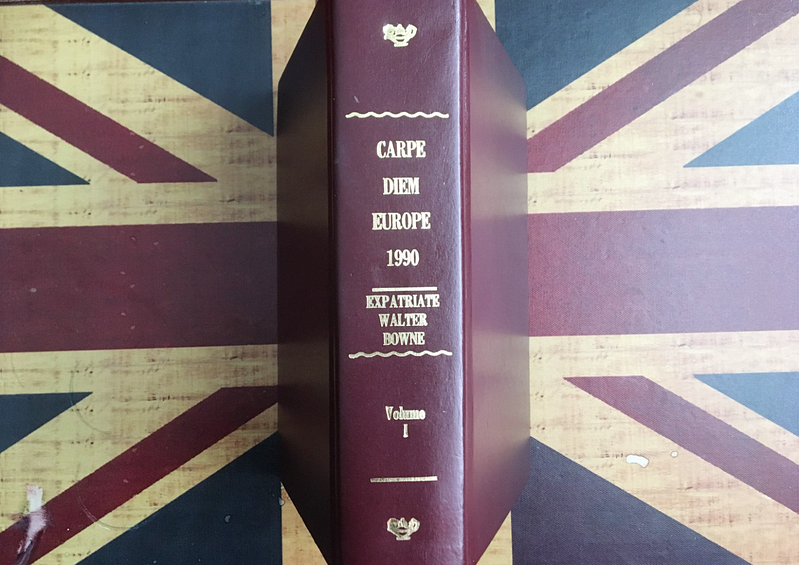
I felt the space of eternity lifting me away, especially now as I reread my entries in that massive leather journal, a dusty warehouse of laughs and tears when I was just one and twenty.
Now, two and fifty, I have had the time and the space needed to retreat to my single and solitary self and ask, “How curious you are to me, Walter Bowne.”
To paraphrase Walt Whitman from his miraculous poem, “Crossing Brooklyn Ferry,” I wondered, “What is the count of years between us?”
Back then, I was within the Cathedral and without the Cathedral. I had faith but no faith that I could mark in a box. Can God be reduced to a box labeled for bureaucrats and statisticians?
On religion, I just check “other.”
The massive stone walls and arches and stained glass collapsed around me. The sound reverberated off the barred clouds and the spirits released from my imagination.
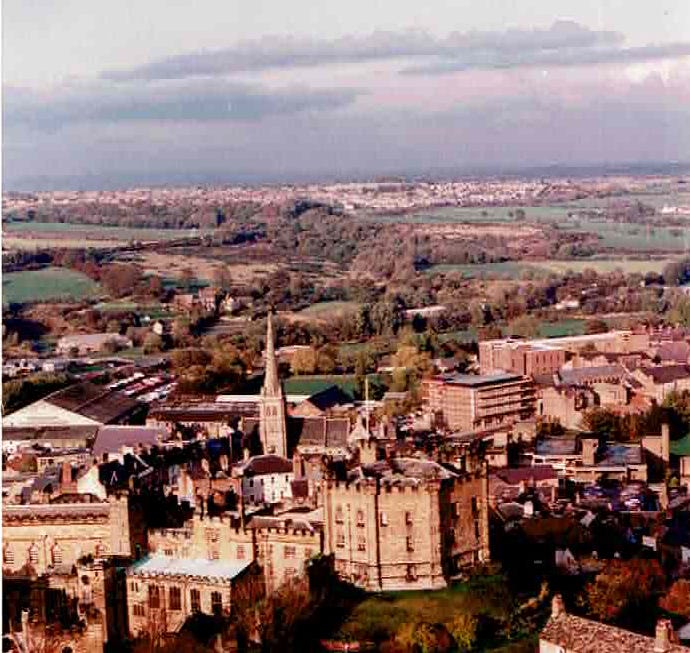
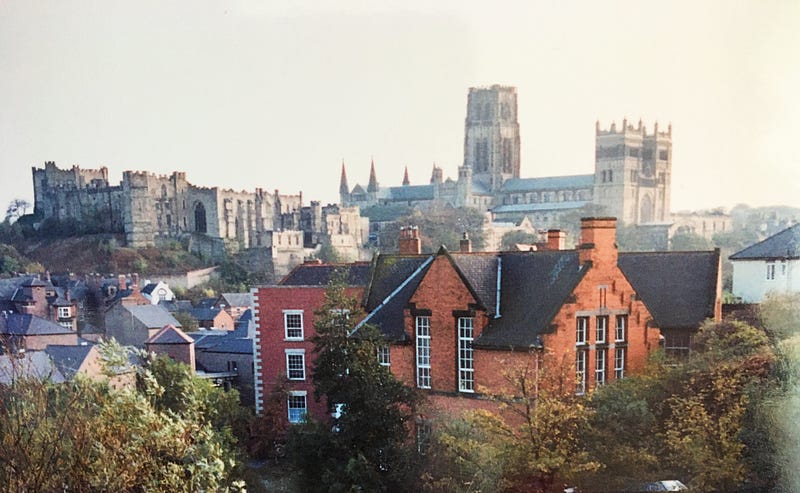
It was as if Durham Cathedral, of Norman origin, started in 1093 and finished forty years later, was already a ruin, a thousand years into the future. The voices of spirits and the motion of atoms, however, remain eternal and immortal.
With my eyes closed, I was alone, churning on the winds of the words sung in languages dead and strange and inviting. If I felt so alive, how could such words be dead? How could such young boys with voices angelic raise the dispirited?
Did my friends, Jenn, Nancy, and Texas Ted, notice my transformation? Did I appear to be sleeping? Did they know I was awakening to the dark mysteries of time and space? Or did they think I had too many pints of Newkie Brown at The Royal Archer?
Awakening to reality and bidding adieu to fantasies are indeed tough
Just ask Don Quixote and Jay Gatsby.
The death of fantasy, however, does not need to be tragic. It can be liberating. The dying of the ego is not death. It was like when I stood on the top of Elk’s Peak in South Dakota, alone, but not alone because of the eagles and the wind and mountains. Except for hiking boots and socks, I was naked.
From my 1988 journal then, I wrote that I felt as if I was returning to the preverbal world of the womb where there was only the double kick drum heartbeat in my dark and watery universe — my melody to my mother’s harmony.
Ttt-ttat. Tt-ttat. Ttt-ttat.
At the top of the Cathedral, walking those 325 steps, or on top of the tower at Durham Castle, I felt a parallel awakening — just fully clothed this time as it was cold and there were women present.
Both times I like to think I was beginning to understand the paradox of large egos in unlimited space and time. From that height, even now, I can see the young scholars walking to class at the university. I can hear the laughs of the youth. I can walk again in their shoes, and breathe in the positivity of the next generation. I can feel the potent mixture of hormones raging like Achilles — wanting to take action, but also refusing to listen to idiotic leaders. I can foresee my future children, excited about travel, and love, and learning — and following in their own footsteps. Not mine. Some things are not universal.
Even when dispirited then in England with a love that wasn’t even lost because it was never mine to lose in the first place with an American named Laura, I now tremble. I tremble and grow excited about what my daughters have planned for life — and what they have done — an internship in Phoenix, driving across the country at twenty, flying to Ireland for summer study, and working as an au pair in Barcelona, graduate school at GA Tech. A semester abroad in Chile — becoming fluent in Spanish. And all the while, nurturing mature relationships with incredible and committed boyfriends and friends and family.
At twenty-one then, and still a virgin, mostly of my choice, could I have imagined the life with my wife Mary Jane and the exciting lives of our two daughters — Madeline and Nancy?
Did my lonely man writings in that journal predict the coming of Mary Jane? Was I setting down, once and for all, what I wanted in a relationship? In a girlfriend? In a wife?
Yes, my friends.
The space granted through COVID-19 — with remote teaching, fewer commuting hours, and less expensive trips to exotic destinations — has allowed me time to write about this past. It has also granted me precious time to consider my future — my exit plan from teaching English.
Such a vacuum of space — especially space now quiet — once terrified me. It still does. Noise and action were my default modes, but it also led to many faults — not listening to introverts, impatience, and a prescriptive personality that could write an RX for anyone with any problem.
Now the tranquil space I have created in my garden, full of native flowers and pollinators, organic vegetables, ponds, and lily flowers, and bamboo fountains, has helped me to find solace and tranquility.
How can one contemplate and appreciate the joy of “Now” if always in motion? How could I plan for my future if always worrying about the material needs of “today.” What could I rescue or learn from my curious and quixotic past to understand my anxiety and insecurities of today?
And could I see that such a journey from then to now — from a lonely man on a mountain or high atop a cathedral — to a happily married man with mature daughters — is celebration enough?
Could I give up more to attain more?
That Durham concert now exists in stages of reconstruction and demolition and reclamation
From precious photos of American friends, now long lost, in an age before the internet and cell phones, I hear their voices and their laughs. How do they sound now? Are they still alive? What are their lives like now? Do they even think of me? Are there pictures of awkward Bowne? Did their opinions of me reflect what I thought of myself?
Did I ever tell you how important you were to my first time away from home for such a long time? And if not, it’s just a shame that youth does not think such things are essential. It’s as if we take everyday friends as a given. But as we mature, we may immature as we abandon such friends for the complexities and absurdities of modern life.
When young, especially very young, it’s easy to make friends. Why is it so difficult to maintain and meet new people as adults? Is this just me? Has my education limited me? Has my socio-economic level closeted me away in a ZIP-code coma?
From a summative passage in my journal, I place a few stones in this new construction project
I simply wrote:
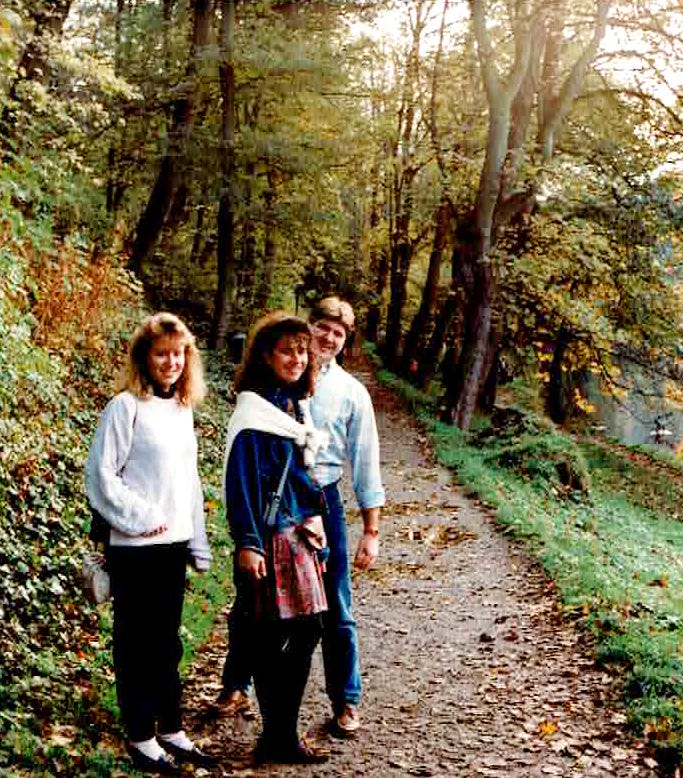
Went with Dr. Coss on a day trip to Durham Cathedral and heard the Vienna Boys Choir. It was amazing. Walked around the town and the castle with Jenn, Nancy, and Texas Ted. It was a great night. Came back late.
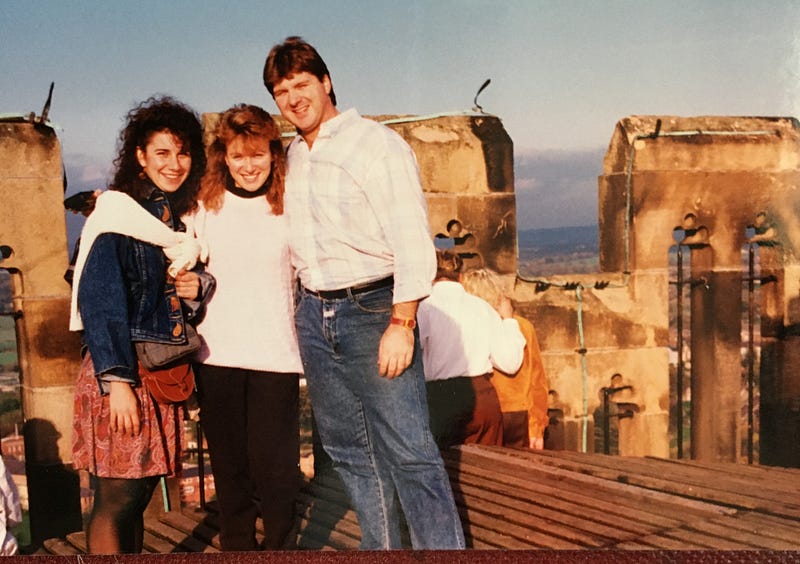
This entry is much too paltry for my hunger to understand the past. What was amazing? Why was it a great night? Why not vivid descriptions of the cathedral? The castle? The town? Why didn’t I keep the program of the songs? How about the weather? Yes —it’s autumn. It looks cool, but not cold, with the girls in just sweaters, and Ted in just a shirt.
A photo cannot reveal the breeze, the temperature, the taste of the day and night — and the fragrance and the feel of that magical, medieval town — surrounded by walls like its own secret garden or fairy world.
What did the stone feel like? Where are the red-breasted fellows? The swallows and willows? The over-ripe apples that infest the air with hints of death?
And what of my rival and lost friend in Newcastle, Jesse, in my fatalistic pursuit of love for Laura? Those names and those faces do not appear in the reconstruction. And it is now that I realize that the day trip to Durham Cathedral was an epiphany of sorts. It was the time I felt finally liberated from toxic love — or toxic passion — or whatever nonsense fixates one person to another that exists beyond logic and reason and common sense.
Was it divine liberation? Could I now find happiness with friends without worrying about some mad, bad, and terrible pursuit of a malignant grail? From the pictures and from my memory, a memory now thirty-one years old — as this was 1990. I was only twenty-one then.
I never had a girlfriend. I wanted the trip through Europe to be the death of my virginity, but it really perpetuated the depth of my stupidity. But was that it? Virginity? Or did I want it to be the death of my loneliness? Did I believe a good-looking stranger — this girl I did not know except we were attending the same school in England — could magically supply such an aching need?
I traveled through Europe with Laura for almost three weeks, in a chaste and Platonic partnership. I would not dirty the word “friend” if I dare use such a term. But that may be harsh. Did I know how to be a good friend, then? To anyone? A fight in Florence, Italy sent her back to England. I went to Nice. Then I resumed my lunacy at school in England.
The space I have now to read from my journal and from my letters, writing and transcribing it for publication, only offers clues. But no answers.
At dinner last week, just before our daughter Nancy returned to college, I asked my wife and daughter about my “looking back” stories. I asked, “What would make someone read what a twenty-one-year-old wrote about his travel and school experiences in 1990?”
Like many writers, take, for example, F. Scott Fitzgerald, Hemingway, or even Edith Wharton, past experiences are fertile fields to plow. There is critical distance — the space needed — between the “then” and the “now.” And the old adage: write about what you know.
My wife has said that the past keeps me from the future — writing new work, a new novel, that has nothing to do with old friends, photos, and failed romantic endeavors. And she’s right! The inspiration to move to new spaces in my imagination needs to happen soon, as soon as I rescue these orphan stories of the past.
The advice they gave was this:
What valuable lessons did you learn?
What insight did you gain from leaving home?
How did travel open you up to new experiences?
Reframe from being pathetic to finding new horizons.
People take different paths and that was a sign of your maturity, moving forward
You’re gonna have to imagine a lot what was going through her head or else she’s gonna come off as just a very flat character.
What the hell kind of parent would have let their daughter travel with a stranger?
But Durham was a turning point
My obsession waned until, one morning, after Durham, it vanished. Only recently has the interest returned this year as a literary exercise and exorcism of youthful follies and foibles. COVID-19 isolation and therapy have also encouraged me to create 3D models of my forgotten footprints that may reveal secrets.
What feelings from the past were keeping me moving forward? Can feelings be found in an archeological exploration? I have read my letters home. I have dug out old pictures. I have read my journal — pages and pages and pages of travel narrative and Emo Boy Tirades full of burlesque and youthful parody parading before the page like a tragedy.
Many of those stories are now published.
What was I wanting so much? Why did I think love was that easy — as if throwing two totally different people together for three weeks would recreate Eros from a petri dish or test tube. Was I that naive? That lonely? Was I that excited that someone needed “me” as a tour guide of Europe?
Why would her mom and dad allow their daughter to travel through Europe with a relative stranger? Yes — they trusted her, but I could have been a Jekyll and Hyde Nightmare. What did they know of me? I met them once. There was no “long talk.” There was no discussion of my intentions.
As a father now of two women, one twenty, and the other twenty-three, there would be no way in hell I would allow either one of my daughters to travel with a dude they met at college during the “semester abroad” meeting. Such things still baffle me.
But Durham was liberating like death.
At Durham, I had the insight to see a better path with friends that cared, and to muffle my ears from obsessive calls of sirens. I just wish I could recall last names. Why didn’t I write down last names? Children of the ‘80s did not use last names. I wish we had the internet back then. I know that Billy Joel sings that many faces come in and out of our lives, and “some will last, and some will be now and then.”
“Life is a series of hellos and goodbyes, and I’m afraid it’s time for goodbye again.” — “Say Goodbye to Hollywood”
Many of my high school friends, God bless them, have lasted. My wife will last until I die — and then into the Great Beyond. My daughters, too, and hopefully, their husbands or partners and grandchildren.
But there are brigades of buddies — female and male — that I wish I still knew. And then I think of Jenn, and how nice she was and goofy and punny, and Nancy, how sweet and intelligent, and Ted — someone who would drive a million miles to help you. And that wonderful Texas drawl! When I think of Texas, I think of him. He could do a world of hurt with how big he was, but at heart, he was a koala bear.
After Durham, I hung out more with different people, especially my British friends and my Hong Kong buddies, and my Spanish flatmates. I also saw more of Jenn, Nancy, and Ted.
I still ponder Jenn’s question, when alone with her in her dorm, after pints at the Royal Archer
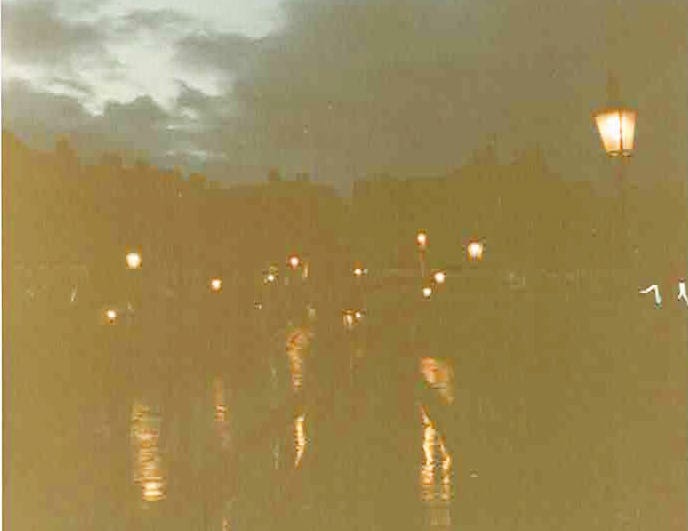
“I never understood what you saw in Laura,” she said.
Jenn knew her in college. They may have been from the same town in New Jersey, as I recall. I recall Jenn saying she wasn’t that nice.” I don’t recall my response. What was it that I saw? Was I that immature to say that she was just very pretty? Or just needed a white knight to carry her luggage?
There were so many other women who were so much better for me. But our fantasies can blind us — chasing a Dulcinea of our own imagination — or a fantasy ‘Golden Girl’ like Daisy Buchanan.
But to answer my daughter’s question about a lesson, I can think of a few, but the best ones are to open yourself to the universe; believe in the innate self, and the fictional self we fabricate as a mock-costume; and to know that to fail may lead to success.
After all, all those lessons lead me to that dance in Philly at Boathouse Row. And there, I was no myth of Walter Bowne. I opened myself up to something I would have never done — a ‘singles’ dance and found a wonderful woman.
To that boy I see in those yellowing pictures, I say — you had guts and grit doing what you did. That adventurous spirit has served you well. You may have even found your “calling” in that cathedral as a teacher and as a writer.
And to the man writing this now in my study, thankful for the space of summer vacation before the start of the next semester, I say, “You have come a long way, my friend. Count the many blessings, even the simple ones like your daughters telling you they love you, and a wife’s kiss goodnight, and a student emailing you ten years later about the impact you made of their life.”
Do we dare disturb the universe, Prufrock? Yes — yes — let’s indeed!
Thank you for reading! For more of my work in Age of Awareness, see: