
Thaddeus Littleman
A London Lad in the Jersey Pines
A satirical novel in serialised form
I knew I was in trouble.
A gunman stirred behind the half-dead shrubbery. A black barrel appeared between the spider web of twigs.
I dove for cover. The shot was wide, splattering a tree in yellow dye. In that second, just over my smart, summer-weight blazer from Fenwick’s on New Bond Street, London, I heard the air thump apart — just like my heart.
First, from the divorce. Then second, with the death of my mum.
Pine needles covered me. Did I know how allergic I was to pine? Nay— not until later when my skin itched and the sneezing commenced.
Or was it my reaction to America? Would my jacket ever be the same? Would the rest of my trunks from England — arrive safely?
“That’s Billy, your cousin,” The Father said, slamming the door of the rental — a red Kia Sorento. “On good days, he’s mostly harmless.”
What type of day was this?
“Since he missed,” The Father said, “probably a bad day, but lucky for you. At least for that jacket, you know, the one your mom bought for you.”
Like he actually had to remind me of Mum’s last gift.
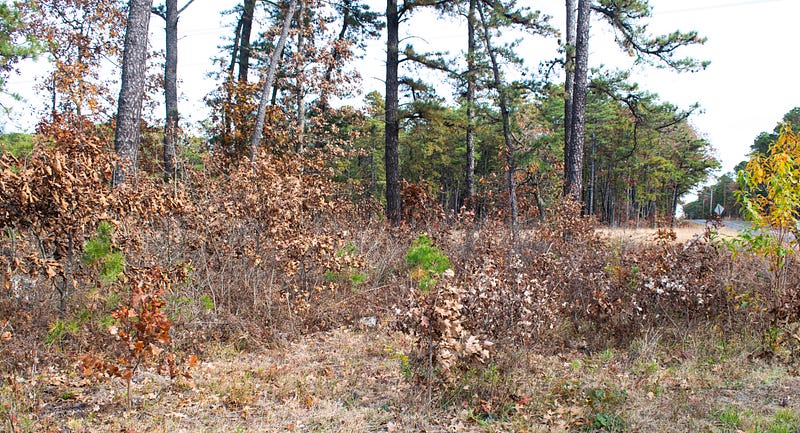
The safety of my blazer had nothing to do with that fickle femme female and her cursèd Wheel of Fortune. Was it the opposite of Fortune that my Buster Browns no longer treaded on the rich terra firma of Shakespeare? No ancient feet in ancient times ever crossed this sandy terrain with the Grail to Glastonbury or Tintagel of King Arthur. No Robin Hood in Sherwood hung out in this Depository Junkyard. No Winnie the Pooh ever left tracks in this Seven Acre Swamp. No Paddington Bear would dare declare how great he felt here swatting mosquitoes. There was no Bag End. Nor Elves or Ents. No Redcrosse Knight or Green Knight. No Neverland with Peter Pan. No Alice down a rabbit hole on the banks of — Atsion Lake.
Did this place contain any magic? Any charm? Or whimsy?
What would Mum think? She could trace her lineage to Cornwall chieftains around Exeter in The West Country after the Roman invaders departed. Her last name was Trahaearn — modernised as Treharne, a Welsh name meaning “most very iron.”
Why would such an amazing woman marry such a Yahoo as The Father — as I called him to vex him? Was this really where he grew up? What was she thinking? What did she see in him, then, at University?
Her first name was Gwenllian, but everyone called her Gwyn — except when I spoke to her, like face down now in pine needles and sand — Gwenllian Trahaearn — recreating her with every utterance of her name, still, picking wildflowers from our former verdant garden in Golders Green — her golden short hair radiant in the warming, late spring sun.
The Father — with the divorce — lived further up the Northern Line in Brent Cross.
What could grow here? In this damnèd soil besides les fleurs du mal of resentment and anger? And fertilised with tears and gunpowder and nostalgia?
Mum would asked me to choose the vase, arrange the flowers, and then I would name the bouquet on a Post-It Note. In my luggage, I still had every note, no matter how wrinkled or ripped or faded or water-stainèd with London rain.
When working, Mum would place each bouquet on her writing desk. It inspired her to find beauty everywhere.
Even here, Mummy?
The last bouquet I coined — “Delights Never Decay” — was still hearty on the mahogany side table in our flat, even two weeks later. Her latest story was printed out for a final edit beside the vase. The Father never really understood her art. When the water became fetid, I harvested the seeds, sealed them in a Zip-lock bag, and smuggled them to America. And it tore me apart to sell back the table on Portobello Road.
Why couldn’t The Father have kept that?
My Father continued to hold out his hand —
waiting for me to compose myself and my thoughts and to pick off the last of the clinging pitch pine needles. Everything has a name. My Irish derby seemed to have sprouted a few dozen needles — already adapting to its new environment.
“You remain any longer down there,” my Father said, “and you could sub as an air freshener.”
Photos of The Cousin — Billy — The Gunmen — made him look taller. My Father said that’s because Billy only posed by himself.
The Cousin, presumably, was “very sensitive.” American boys had different hobbies, and one of The Cousin’s hobbies was guns — mostly harmless paintball guns and BB guns.
“This is hunting country, son,” he said. Part of the culture.
“Just as long as he still doesn’t harbor resentment for The Boston Massacre.”
“Son, I’m sure he wouldn’t understand anything you just said.”
“The verb, the noun, or the allusion?”
My Father mumbled D) All of the above. Then he smiled, held my shoulder, his hand trembling, and said I inherited my mother’s love for words. “I wish I had half of your brain and charm.”
“But just leave out my pretension, Father.”
“We’re in America,” he said. “Can you call me Dad?”
No. Just The Father for now.
The pitch pine forest around The Aunt’s putrid green rancher resembled the colors of sherbet-sorbet. The yellow garbage bin was splashed with red; metal bins were white; white window boxes with humiliated begonias were tinged with purple. This was Hollywood — the set of some zombie apocalyptic Netflix series —
Piney Warriors in Candy Land.
My ferret-thin Cousin still lurked behind a half-dead bush. Was he hoping for an easier shot? He flipped up his goggles. Ahhh. Being a faceless machine made for an easier nemesis.
A square, short, sort of womanly personage soon filled the passage of the door. She turned sideways and jimmied through, like moving a Chippendale dining room table — all ball and claw through the threshold.
It was her — The Aunt.
There were photos of her, of course, as well as short tête-à-têtes on the cellular, but a Horror Show Kubrick is usually viewed safely on a screen in two dimensions.
The Other Cousin, or what I would soon dub, Cousin Other, was a teen girl named X. Was this something like that name Prince went by? She was crispy-thin with no shoes and with long black hair, parted asymmetrically in the middle — as if some drunkard had painted the motorway. She hung on the rusted railing in case those previous storm winds carried her aloft — perhaps to freedom or to Oz.
Why did she look rude and gloomy? Arms folded showed a defensive posture. Her carriage and deportment also hinted at possible signs of torture or a lack of confidence or a nutritious culture for the mind, body, and spirit. Her lips were black — and her hair? Was it blue? Magenta? Or turquoise?
Or was I just being hopeful?
All three were tall — tall for Munchkins. In fact, my Father claimed he was 5'8" on a good day, but I never had that type of red-letter day. What came first? The Littleman name? Or generations of such littlings? I chilled at the thought of remaining diminutive — like John Keats who was only five feet high. Could I change my name back to being “iron?” Thaddeus Treharne. Or something less sexist, like Thaddeus Littleperson — son?
There’s that ‘son’ — again! Damn, such sexist language!
I almost begged my Father to reverse the motorcar and drive; I didn’t care where: just drive: drive east, drive to New York; board Queen Elizabeth II, and sail home to Britain.
What was worse than losing a mum at the age of twelve? Living in some forsaken hole in South Jersey with gun nuts? My Father’s smile — this American Man — failed to comfort my every fear, anxiety, and sadness.
I wanted to hear: “Sorry, Son, I’ve made a dreadful decision. Let’s get out of here, where you can’t breathe, but instead, I heard, “Let’s go meet your new family!”
“I know it’s rude, but I think I’ll stay in the rental. I don’t fancy giving The Cousin another shot at a jolly holiday!”
As soon as The Aunt engulfed The Father in a surplus of flesh, I retreated to the privacy of the Sorento — a defensive position — and remained petrified in my own purgatory with the detritus of my former glory.
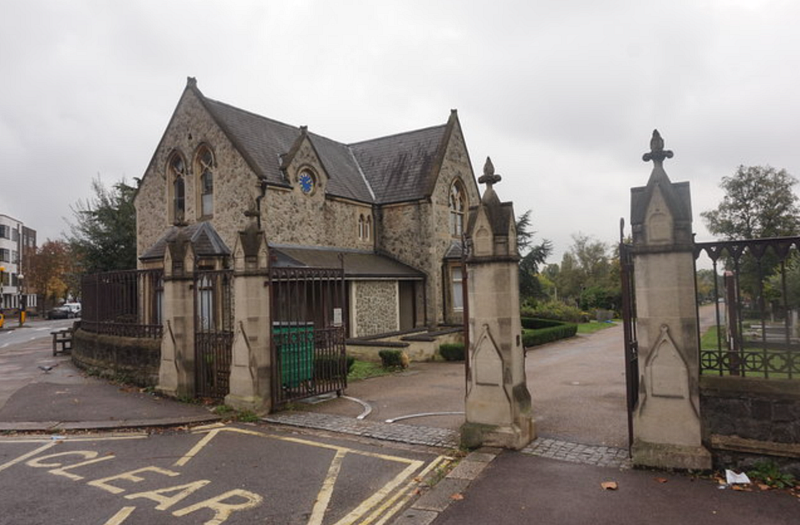
Mum still resided in that sunny corner on that grassy rise by Hampstead Cemetery.
It’s where I spent the weekends, bringing new daisies — all different types — the daisies from her wedding — and I was the Master Gardener, self-proclaimed, of the Littleman Estate. When the daisies faded, I would bring the high summer flowers, even the echinacea that she disliked, but not as much as the hydrangea — an “old lady flower.”
There was a reason for everything she had disliked. She disliked U2 because of her University flatmate. How many times can one listen to “War?” It was Chinese water torture. Her crotchety grandfather used to make horrible herbal remedies with coneflowers, including tea that “tasted like dried death.”
She disliked lilies because of her allergies, for funerals. She disliked those old lady flowers because she got in trouble for stealing an old lady’s bloom from the lady’s front yard when she was young and a budding naturalist.
“Midas turned things into gold,” my mum said, “but your touch makes things grow and thrive.”
With my hands on the cold, overturnèd earth, on her grave, complete with herbal remedies, I prayed such things were indeed true — “I wish I could make you grow and thrive, mum. Maybe daisies will grow here.”
By her grave, I made my own sign:
Natural Area. Please, No Mowing. No Pesticides. Life Will Returneth Here, Anon.
When would I see my mates again? When would my library be restored? Father promised a Kindle to hold the offspring of every Dickens and Austen available, but that was just not the same. Father did not respect the printed word — a book as a passage and a relic. Tangible. Real. Both destructible and indestructible. Why in the hell would The Father have married a writer? What sense did that make? Did Father know, then, of mum’s gift with words and insight into the human drama?
It was late summer.
For the first time, I dreaded school. Would they make fun of my accent? My diction? Did they not wear uniforms? They didn’t have forms or A levels and O levels. And what about University? Once being groomed for Oxbridge, I now heard Camden County Community College for saving “resources.”
I moaned at the thought about an American school — called a public school here — with American students. I once hoped for Eton or Harrow. But I knew my upper-class pretensions needed to be curbed — especially now among the classless Americans. First-class, after all, did not exist in America — only business class.
“And the business of America,” my Father said, quoting some dead president, “is business, son.”
And then there was the small matter of leaving my Girl behind — My Jewel — with the red locks who spoke to the poetry of my heart. Would I see her again? To give up so much, a Mother, a Language, a Country, a School, a Culture, a Grave, the House of Keats, and The Girl — all for this new life in The United States in a region called South Jersey in a town called Atco in an ecosystem named The Pine Barrens.
And worse — with a father I didn’t know well at all.
This was not the America I pictured — cowboys with reflector shades riding red sports cars that mirrored super skyscrapers. Instead, I found short heathens — like wilder dwarves from Middlearth — raging in a wilderness of pine, thirty miles southeast from The City of Brotherly Love with a homicide rate — or a total of 499 murdered and climbing.
Would being orphaned at a workhouse in England have been preferable? Books were full of orphans. Fairy tales, too. I knew scads about orphans. I was one parent away from an orphan, and even with The Father, I felt like an orphan.
Father’s plan was to stay “just two weeks” — a fortnight, I corrected, with The Aunt while he got settled in his new job with some Philly sports team and found a new place. How could I still bond with Father about football — Tottenham — when such a civilised sport didn’t really exist here — with the possible exception of baseball — just a bastardised version of cricket, right?
Did civilisation exist here?
It would not take long for me to find out it did not. In fact, I would learn well before tea time.


