
Artificial Intelligence
A Free ChatGPT4 Bot Creator Has Received Threats of Legal Action from Open AI
Reportedly, the owner of “GPT4free” faces legal threats due to sneaking past Open AI’s paywall.
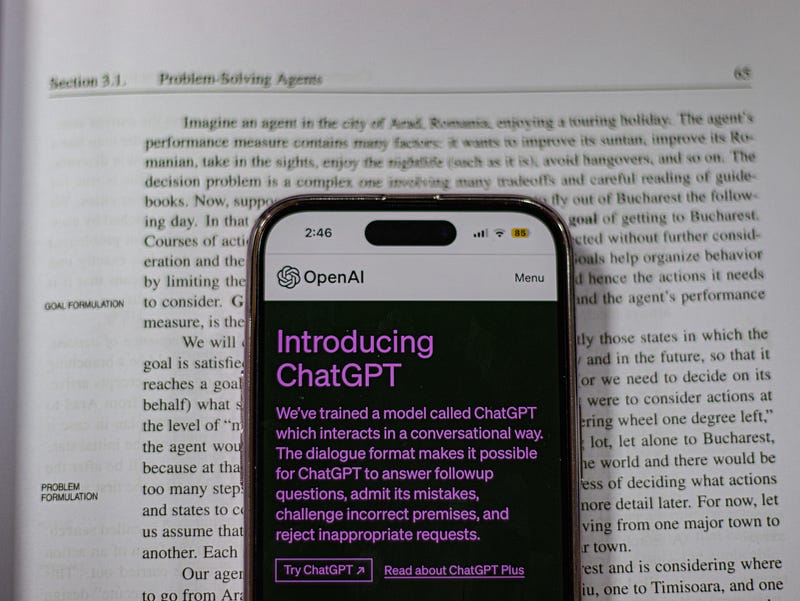
In various previous stories, I have spoken about ChatGPT. These will be linked at the end of this post. In this post, I will explain what ChatGPT4 is and why the owner of GPT4free faces legal action from Open AI.
A few days ago, browsing the famous Tom’s Hardware site, I came across an article titled “OpenAI Threatens Popular GitHub Project With Lawsuit Over API Use.”
Then when I was checking my gaming feedback from the PC Gamer site, I found another article titled “OpenAI threatens legal action against the developer of a free GPT4-powered chatbot for sneaking past its paywall.”
I will link these sources to the end if you are interested in exploring this interesting development further.
Then in my technology and gaming network, everyone started talking about this incident which motivated me to write this post to inform my readers. There were many social media posts as well.
I also found background info on the interesting project of this developer, who seem to reverse-engineered ChatGPT4. I attached the news to the end of this story.
First, I briefly introduce the new version of ChatGPT for those unfamiliar with it. It has more features than previous versions and is much faster.
What is GPT4?
OpenAI, an American AI research company, developed GPT-4.
This large language model can generate text from textual and visual inputs, representing a significant advancement from GPT-3.
GPT-4 was developed to handle more complex tasks than previous models. The model exhibits human-level performance on many professional and academic benchmarks, including the Uniform Bar Exam. It was designed to improve alignment and scalability for large models.
The model can handle both textual and visual inputs. The image inputs are currently in a research preview and not publicly available. The acronym GPT4 stands for Generative Pre-Trained Transformer 4.
GPTs are machine learning algorithms that respond to input with human-like text. These models are generative, meaning they generate new information, and pre-trained, meaning they first go through an unsupervised pre-training period using a large corpus of data.
Once this pre-training period is complete, the model goes through a supervised fine-tuning period to guide its output, and models can be fine-tuned to specific tasks.
GPTs use a deep learning model called transformers, which learns context by tracking relationships in sequential data. Specifically, GPTs track words or tokens in a sentence and predict the next word or token.
In 2018, OpenAI introduced GPTs in a paper titled “Improving Language Understanding by Generative Pre-Training.” You can read the paper for free at this link.
This paper described GPT’s semi-supervised learning model, which contrasted against other natural language processing models that used supervised learning and labeled data.
The paper claims that
“Our general task-agnostic model outperforms discriminatively trained models that use architectures specifically crafted for each task, significantly improving upon the state of the art in 9 out of the 12 tasks studied.”
The processing power of GPT models scales with the model’s number of parameters. Each new GPT model has more parameters than the previous one, allowing for more complex and accurate output.
For example, GPT-1 had 0.12 billion parameters, GPT-2 had 1.5 billion parameters, and GPT-3 had more than 175 billion parameters. The exact number of parameters in GPT-4 is unknown. Rumors suggest it may have more than 1 trillion parameters. It sounds great if it is true.
As with all AI tools, the development of GPT-4 involves ongoing research and consideration of such technology’s ethical and societal implications.
As I documented in a previous article, leaders in the AI field are very concerned bout the skyrocketing generative AI tools.
Summary of Legal action threat against GPT4free owner
OpenAI has threatened legal action against the owner of GPT4free, a free GPT4 AI chatbot.
The GPT4-free chatbot allows users to access ChatGPT4 without paying the $20 monthly fee by pulling queries from sites using ChatGPT4’s API, such as Quora and You.com.
This means GPT4free piggybacks answers from sites that pay for API licenses, enabling users to access ChatGPT4 for free.
Developer Xtekky, who owns GPT4free, claims he is not liable for what others do with the scripts from his GitHub repository.
Furthermore, he argues that OpenAI should not target him since he is not connecting directly to ChatGPT4’s API. Still, instead, his scripts just query the sites that do.
He suggests that OpenAI should contact those sites instead of targeting him. Xtekky further states that OpenAI could have notified the sites about the issue, which would have allowed them to collaborate and take down the repo.
However, OpenAI has sent Xtekky a letter demanding that he takes down the GPT4free project within five days or face legal consequences. The company alleges that GPT4free violates its terms of service, as the free chatbot circumvents ChatGPT4’s paywall and deprives OpenAI and its partner sites of revenue.
Tom’s Hardware, a technology news website, notes that every time a query is run on GPT4free, the sites that pay for an API license from OpenAI is essentially doing the work for free and missing out on potential ad revenue.
Xtekky argues that one could achieve the same result by simply opening tabs of the API sites and that his repo just makes it simpler. He also claims to have removed scripts that use sites like phind.com, ora.sh, and writesonic.com at their request.
Xtekky says that OpenAI had contacted him to pressure him into deleting the repo. However, he believes that an official DMCA, through GitHub, would have been the appropriate way for OpenAI to take down his repo.
However, Xtekky states that deleting his GitHub repo would be insignificant since his code has already spread across the internet. Instead, he plans to move his chatbot to a different domain and rebrand it as “gf4.”
GPT4free is not the first free GPT4 AI chatbot to emerge, and it is unlikely to be the last. However, OpenAI’s actions against GPT4free could serve as a warning to others who attempt to circumvent ChatGPT4’s paywall or violate OpenAI’s terms of service.
OpenAI’s letter to Xtekky indicates that the company is serious about protecting its intellectual property and revenue streams and is willing to take legal action to do so.
OpenAI, on the other hand, has a different perspective on the matter. The company believes that Xtekky’s GPT4free chatbot is causing significant harm to the businesses that use ChatGPT4’s API and pay for its services. According to OpenAI, Xtekky’s chatbot is violating the company’s terms of service and hurting the businesses’ ad revenue.
OpenAI’s decision to take legal action against Xtekky highlights the issues surrounding the unauthorized use of AI models. OpenAI has invested significant resources in developing its GPT models. In addition, it aims to monetize them through licensing agreements with businesses that use its API.
OpenAI’s business model depends on its ability to control the distribution of its AI models and ensure that it receives appropriate compensation for its use.
Xtekky’s actions raise questions about the ethics of using AI models without proper authorization. While Xtekky argues that his chatbot is a harmless tool, OpenAI sees it as a serious threat to its business and the businesses that use its API.
I believe that as AI models become increasingly powerful and ubiquitous nowadays, it is essential to establish clear guidelines, ethical rules, and regulations for their use and distribution.
The legal battle between Xtekky and OpenAI could have significant implications for future AI models’ development and use. It will be interesting to see how the case unfolds and its impact on the broader AI community.
I firmly believe this unique case highlights the need for more robust regulations, ethical guidelines, and technology standards for using AI models to ensure they are used ethically and responsibly.
Summary & Takeaways
OpenAI is threatening legal action against the owner of GPT4free, a free AI chatbot that allows users to access ChatGPT4 without paying the $20 per month fee.
Developer Xtekky, who owns GPT4free, claims that he is not liable for what others do with the scripts from his GitHub repo and that OpenAI should not target him since he is not connecting directly to ChatGPT4’s API.
Xtekky argues that OpenAI could have notified the sitesabout the issue, which would have allowed them to collaborate and take down the repo.
OpenAI alleges that GPT4free violates its terms of service, as the free chatbot circumvents ChatGPT4’s paywall and deprives OpenAI and its partner sites of revenue.
It is unclear how the situation will be resolved, but the hope is that both parties can find a way to resolve the issue without going to court.
I empathize with both parties, who have good intentions, from my understanding. I hope they solve this issue amicably rather than going to court. I will keep you informed of the progress.
If you enjoy my posts and would like to stay updated on the latest gaming-related news, technology advancements, design trends, and social media insights, I invite you to follow my profile.
I will continue to share my thoughts and insights on a wide range of topics in the world of entertainment and technology.
With that being said, thank you for reading my post, and have a good one.
Here are a few of my stories relating to ChatGPT:
Here is a story I wrote using ChatGPT as a sample for the new publication Lampshade of Illumination on Medium, designed to support writers using generative AI tools.
References
OpenAI Threatens Popular GitHub Project With Lawsuit Over API Use
The following news article gives some background to the project.
About Me
I write articles in my field covering gaming, film-making, social media, and design. I am also a YouTuber. Thank you for subscribing to my account to get notifications when I post on Medium. I also created a new website to share my content for free and promote stories of writers contributing to my publications on Medium. Let’s connect on Twitter and LinkedIn.
I own two publications on Medium. One for video gamers and another for YouTubers and Podcasters. I also support Illumination Integrated Publications as a volunteer editor and participate in collaborative activities in the Slack Workspace. Writer applications for my publications can be sent via this weblink. Please add your Medium ID.
If you are new to Medium, you may join via my referral link. You may also consider being a Vocal+ member to monetize your content. I write for both platforms and repurpose my content to reach a larger audience. Here is more information about Vocal Media.
This post includes my Medium and Vocal Media referral links.


