
Living in Japan
A Big Earthquake Woke Me from My Sleep and I Thought It Was The End
Earthquakes are one of the scariest natural disasters.
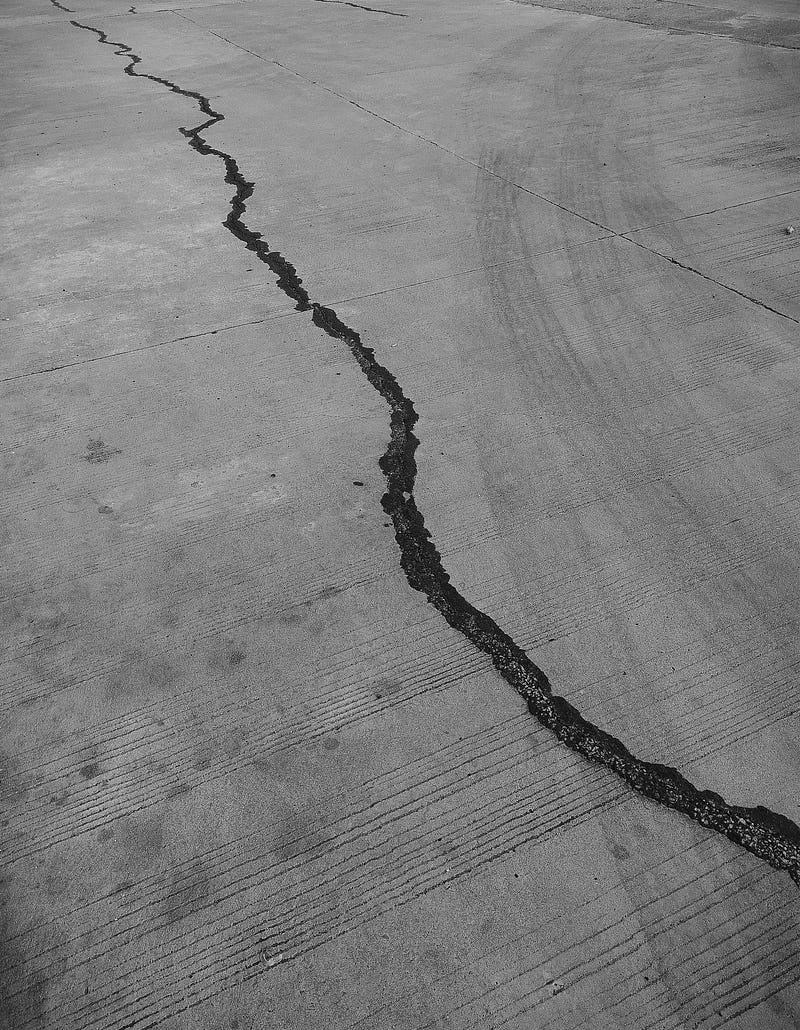
Japan is very prone to earthquakes. An average of 1500 earthquakes strike the country every year.
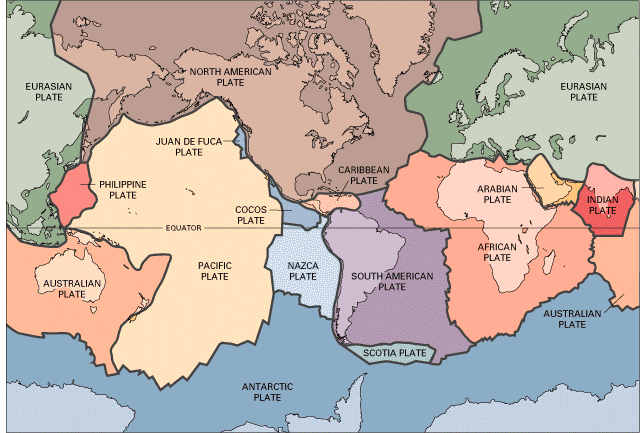
That is the cost of living in a country that lies at the intersection zone of four major tectonic plates – the Pacific Plate, the Eurasian Plate, the North American Plate, and the Philippine Plate.
On March 16, 2022, a big earthquake struck off the coast of Fukushima.
Exhausted from overtime work, I was already asleep in bed. It was about 11.36 PM when the earth began to rumble.
I remember because the earthquake woke me up, and I checked the time.
I’ve gotten relatively used to earthquakes, but the earthquake did not stop as it normally did after 10 seconds. No, it just kept getting more violent.
A thought flashed into my head.
This is it.
I thought it was the end.
My earliest experience of earthquakes in Japan
First, a bit of background. I’ve lived in Japan for quite a while and I’ve experienced several earthquakes living here.
The first time I experienced an earthquake, I was an exchange student in Kyushu, living in the city of Fukuoka. When the shaking happened, I was sitting on the floor of the apartment, eating instant ramen (as one expects of poor students).
When the shaking began, the bookshelf was the first thing to start shaking.
My first thought at that time was,
Is this… an earthquake?
I remember being frightened. Not sure what to do, I hurried out onto the ground floor, outside of the building. Other exchange students had already started to gather.
“That was an earthquake, right?!”
It was going to be the first of an endless string of earthquakes I would go on to experience in Japan.
After the 2011 earthquake in Japan, I headed to Japan, convinced that the low air ticket prices were worth the risk. I stayed in Tokyo at a friend’s place. No one was at home. It was in the morning, and the earth had begun to shake. Again. Suddenly, my idea to take the risk to travel to Japan after one of the most massive earthquakes in recent history didn’t seem like such a smart idea.
I was on the 12th story. The chandelier just above the dining table I was sitting at began to swing wildly.
Ok, that is definitely an earthquake.
I scrambled to hide under the table.
7 Oct 2021 — the night an earthquake stopped the elevator
Just last year on 7 October 2021, a relatively massive one shook Eastern Japan and rattled major parts of the Kanto region, including Tokyo.
Like every overworked Japanese salaryman, I was still in the office at 10:30 PM — which I must clarify, was a rare occasion since the pandemic struck. Since 2020, my company and many others have switched to working from home.
I was on the 14th floor.
At first, I thought my head was simply spinning from fatigue. It was 10:30 PM after all. But soon, it was clear it was not.
The entire building started to shake vigorously. I had become so used to earthquakes that my first instinct was to sit it out, like so many other times.
The shaking was so violent I started to wonder if I should evacuate. I wondered if the glass windows were going to shatter.
And just as suddenly as the earthquake had begun, it stopped.
Just like that, the earthquake was over.
Everything happened so quickly that I was surprised rather than scared, so I laughed out aloud. After an earthquake.
That is what living in Japan does to you.
The building continued to sway like bamboo in the wind.
The lamps and wall art in the office continued to swing ominously, but I knew the worst was over.
The earthquake had shut down the elevator, so I quickly made my way out of the building via the stairs with another colleague.
16 March 2022 – a very long earthquake
Let us return to the events of 16 March 2022.
On this particular evening, when the rumbling of the earth woke me up from my slumber, I imagined it was going to go away quickly. Most earthquakes have always ended quickly, in my experience.
Only this time, I was wrong.
It didn’t stop after ten seconds. No, not after twenty seconds either. It continued to shake.
Shake.
Shake.
Shake.
I started to feel nauseous.
I began to wonder if the shelves would start to collapse.
I started to wonder if I should hide under the table as I had done in 2011. That’s what the authorities recommend in the event of an earthquake – to protect yourself, in case lamps and shelves start falling and windows start breaking.
In the end, the violent shaking went on for what felt like over a minute.
Luckily, nothing broke.
In the aftermath of the shake, googling for information, I learned that a magnitude 7.3 earthquake had hit the coast off Fukushima. I discovered that tsunami alerts had been broadcast in Miyagi and Fukushima prefectures.
One of the trains on the Shinkansen derailed. Miraculously, none of the 78 crew and passengers on board died. If anyone can build high-speed trains and the safety systems in place to cope with massive earthquakes, it is the Japanese.
Unfortunately, not everyone escaped unscathed.
At least 4 people died that day from that earthquake.
This earthquake is particularly memorable because it happened only a few days after the 11th anniversary of the massively destructive magnitude 9.1 disaster in 2011, March 11.
That earthquake had taken the lives of 15,894 people. It also set off one of the worst nuclear accidents in modern history.
Compared to the death, destruction, and devastation of 2011.03.16, the damage wrought by this earthquake was mild and subdued.
Still, for many Japanese people, especially those living in Fukushima, the earthquake must surely have brought back terrible memories of that fateful day eleven years ago.
A harbinger of more doom to come?
The one thing that worries me is that I’ve felt more seismic activity in the past year.
Last year, after the quake in October 2021, minor earthquakes continued to happen every week.
Since it’s said that a massive earthquake is just bidding its time to take down Tokyo, one cannot help but wonder if both the earthquake last year and the one recently are both precursors to a larger rumble to come.
You’ve heard of aftershocks, but there is also a thing known as a foreshock; an earthquake that precedes the main event. Of course, these events are retrospective and can only be identified in hindsight.
Even though it scares me, for now, life must go on.
The only thing I can do besides moving out of Japan is to stay prepared and ready in case a city-shattering earthquake comes knocking on the door.
What if you experience an earthquake while traveling in Japan?
In the unlucky event that you experience an earthquake while traveling in Japan, the first step is to protect yourself.
- The immediate danger is from shrapnel from broken windows and falling objects. If you’re in a room, one thing to do is to seek immediate refuge under a table. Or, cover your head and neck with a pillow to protect against sharp objects.
- Wait for the tremor to subside.
- Secure an exit so you can evacuate at a moment’s notice. Please do not forget your shoes as the ground may be covered with broken glass and other sharp objects, particularly if the earthquake was strong enough to break things.
- Make sure all fire hazards are turned off.
For a more extensive earthquake reaction guide for other scenarios (for example, while on public transport, etc.), please refer to this document prepared by the Tokyo Metropolitan Government.
If you’re interested to know the damage that a massive earthquake can do to Tokyo — one of the most built-up metropolitan areas in the world — be sure to read Yuko Tamura’s 3.11 — The Day The Great East Japan Earthquake Revealed Our Fragility.
©Alvin T. 2022
The author writes on a variety of topics. His key topics are society, culture, modern work, and cryptocurrency, with the occasional fictional story, creative piece, or reflective essay. Discover his most-read stories here.
If these topics interest you, consider subscribing to receive new stories from the author via e-mail.