
What Happens When You Get Obsessed with Mastering Japanese?
It changes your life trajectory completely.
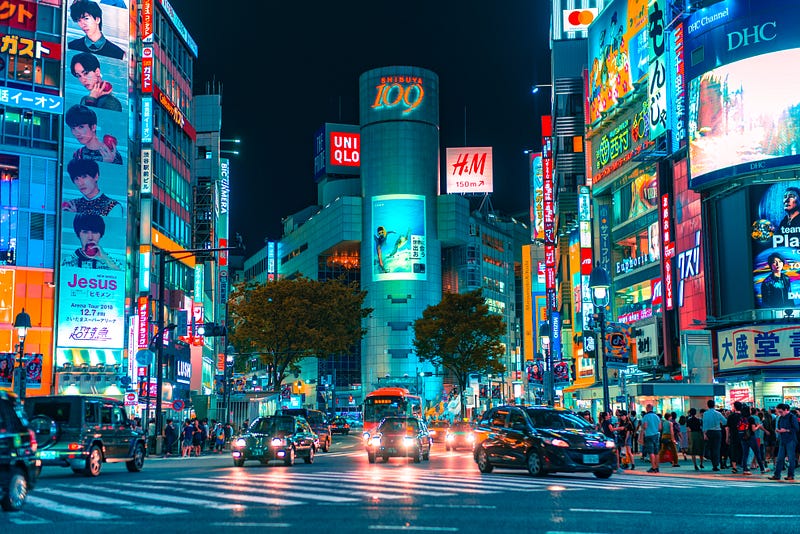
I pulled two pieces of trolley luggage — one black and one red, and a tan leather weekender bag — up to the front desk at the hotel.
“Four nights. I think my company has reserved it for me,” I said to the hotel receptionist.
The date was September 4, 2016.
I had arrived in Tokyo.
It wasn’t my first time in the Eastern Imperial Capital.
But this time was different.
I had booked a one-way ticket.
When I first started studying the Japanese language nearly at the age of 20, I never imagined that I would one day be working in Japan.
Japan Was Everywhere in the 1990s
You might laugh at me, but I liked the Japanese language because of its beautiful pronunciation.
Also, my father worked for a Japanese company for many years and lived in Japan for about a year for technical training in the 1970s.
When I was growing up, my father made many business trips to Japan.
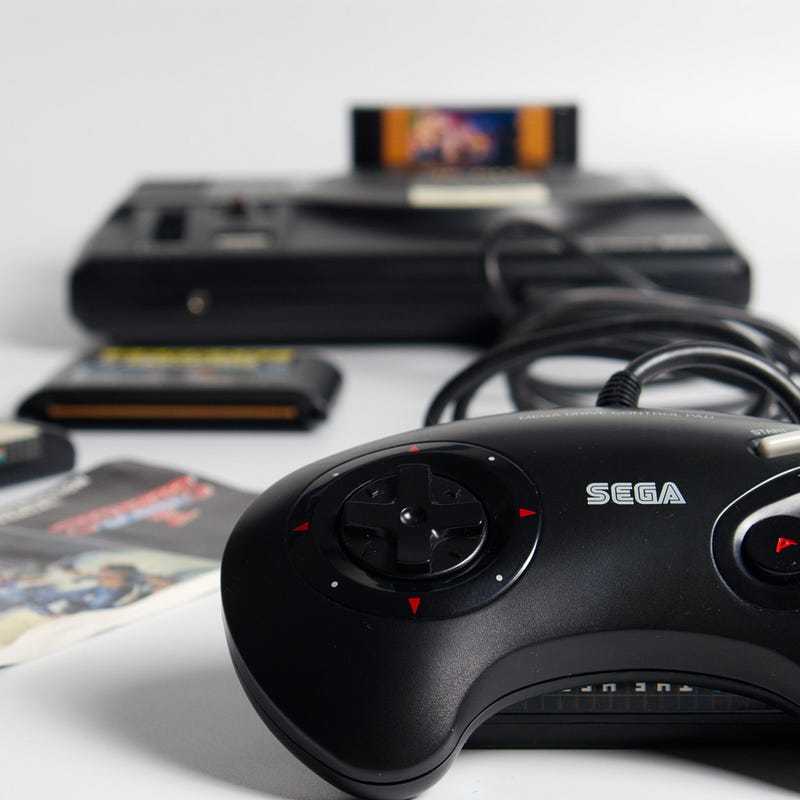
Whenever my father returned from a business trip to Japan, he would always bring back a Japanese souvenir and a Sega game, which I always looked forward to.
I was very much a geek. I spent my childhood playing “Sonic the Hedgehog” and “Street Fighter II.”
My father also liked Japanese food (he still does).
He also took us out to Japanese food regularly. I grew to like the taste of Japanese food even before I had any exposure to Japanese popular culture.
I have fond memories of my father making katsudon (pork cutlet served on top of a bowl of rice) for our family a couple of times.
You see, the 1990s in Asia was a strange time.
J-pop was all the rage, and pop culture such as SPEED, Ayumi Hamasaki, and dramas such as GTO and HERO featuring Takuya Kimura “invaded” every Asian country and region, including Singapore.
Given the current global circumstances, the word “invasion” might not be the most appropriate word to use.
But it certainly felt like that. In an age before Netflix or YouTube, you could listen to Japanese songs on the radio. Japanese TV dramas were broadcast on TV without dubbing.
In hindsight, it was a very strange and curious time.
Studying Japanese During the K-Pop Boom
The Japanese boom faded away as we moved toward the year 2000, to be replaced by the Korean wave.
The Korean wave is far from over, as evidenced by last year’s Squid Game, which deservedly went viral around the world on Netflix.
“Squid Game” also inspired a crypto scam of its own, but I digress.
Members of K-pop idol groups such as Blackpink have also become models for global brands such as Tiffany and MAC.
Amazing.
I started studying Japanese in college. When I was a freshman, Japanese was the most popular foreign language. In the first level of study, there were 400 students enrolled.
I must have spent more than 20 hours a week in lectures, tutorials, and homework for at least 3 years. There was a new writing system to memorize. Situations to memorize and roleplay. Short passages to write.
I spent lots of time listening to the sample dialogues on CD to remember the pitch accent of Japanese. Then I would try to reproduce them in Standard Japanese. I wanted to have the clean pronunciation I first heard on TV. That melody-like speech pattern.
Why? Because I sang in a choir for eight years. You can say that I have some musical training.
To my musical ears, spoken standard Japanese sounded like a song with a rhythm and a melody. I thus find it strange when people tell me that they cannot hear the pitch accent in Japanese.
But I digress. There were tests as well. All that hard work, and if you didn’t do well, your university grade score would be negatively affected.
As the levels got harder and harder from level one through six, understandably, at every level, more and more students would quit.
By level six, there were only 20 students left.
In 2015, I happened to have a chance to talk with one of the Japanese language teachers that had taught me at university.
“Korean language classes were introduced a while ago, and are now the most popular foreign language,” she told me with a hint of regret in her voice.
A New Mission: Connecting Japan with the World
I must confess that life in Japan was very difficult and painful at first.
On my first day at work, I lost my concentration in a two-hour meeting full of honorifics (keigo), and I did not understand half of what was going on.
I was also the only foreigner in my department.
I had to deal with a lot of late nights in the office and never-ending meetings where nothing got decided.
Looking back, even I am amazed that I managed to work in such an environment for two and a half years.
Throughout that difficult time, I often wondered why I ever came to Japan. Did I come all the way to Japan to be a salaryman working endless overtime work?
You see, I graduated from graduate school. Before entering the business world, I lived in the academic world. I liked to read, and I liked to think — make that overthink. I missed the act of reading, thinking, reflecting, and writing in the academic world.
There wasn’t much of that in the corporate world.
It was around this time last year that I came across Medium. I didn’t actually start writing until a little later, but since I was in Japan anyway, I thought I would write about Japan.
Looking back, half of it was to vent my own frustration… The first article I wrote was “Love Japan and Want To Move There? 5 Reasons Why You Could Regret Your Decision.
It was my first “hit article.”
Maybe because I wrote it with a lot of emotion. It was 100% unfiltered.
Opening the Door to the Real Japan Through Writing
“In fact, the whole of Japan is pure invention. There is no such country. There are no such people.” — Oscar Wilde
I have no illusions that I’ll ever become near-native like in my Japanese language skill. It’s not as fluent or smooth as English without thinking about the words, and my ability to express myself is not as good.
My range of expression is also limited.
But, if I had not started studying Japanese, I have no doubt that my life would have turned out very differently. I would just like the rest of my countrymen — an ordinary Singaporean who would have settled for life in Singapore.
I would not be able to speak Japanese, nor would I know anything about Japanese culture. Having encountered Japan, for better or worse, my life has become intimately tied to Japan.
It is a bittersweet feeling — you are liminal — caught between worlds, but never fully a part of either.
But this gives me a tremendous advantage… to bridge Japan and the world. Or at least, I want to believe that.
Oscar Wilde once wrote:
“In fact, the whole of Japan is pure invention. There is no such country. There are no such people.” — cited in Japan: A Reinterpretation (nytimes.com)
What he meant by that was that Japan is more a mythical country that is constructed by foreigners (and perhaps even by the Japanese themselves).
Japan as represented in the media is nothing like Japan in reality. So, I see part of my mission to dispel the myths and to write about Japan as I experience it.
Final Thoughts: Studying a Foreign Language Can Change the Trajectory of Your Life
Today, studying foreign languages is perhaps less popular than studying programming languages.
English speakers expect the world all over to speak English, even though many parts of the world do not speak English.
With amazing tools like machine-learning translation software, there’s no need to learn local languages anymore.
Or so you think.
But you start to study a new language.
And then you realize that language is more than just a couple of words in a different language.
It is an entirely different worldview.
Installing a new language into your brain gives you an additional language to interface with other operating systems. Other things start making sense to you.
And then you realize that learning a foreign language completely transforms your understanding of self, nationality, citizenship, and identity.
You become more aware of my own biases and the relativity of cultural systems. And that sort of critical self-examination of your own cultural biases — which goes deep into language — is sorely missing today.
Sometimes all it takes to break those cultural biases is to sweep away the built-in language you have from underneath your feet.
As you fall, you grasp at air, desperately trying to piece together a new language’s grammar and vocabulary to make the ground you need to stand on again.
Until one day, you realize that you’ve done it, but you look around you, and the world isn’t quite the same anymore.
© Alvin T. 2022
A slightly different version of this article was published in the Japanese language as 「16年前日本語と出会った私が今、日本に住んで思うこと」 — Translated as “What I Think about Living in Japan Today, 16 Years After Encountering the Japanese Language.”
Discover other articles by the author about Japan:
The author is an editor of Japonica, a Japan-focused publication, but also writes on a wide variety of topics. His key topics of interest are society, culture, modern work, creator economy, and cryptocurrency, with the occasional fictional story, creative piece, or personal essay. Discover his most-read stories here.


