
5 Common Fitness Myths Debunked
It’s not 2005 anymore — so, you should stop listening to this terrible fitness advice.

Many of us want to be the best version of ourselves.
Especially when it comes to our bodies. We want to be lean, fit, strong, and generally good-looking.
However, the problem with fitness advice is that a lot of it is really bad and based on assumptions that just aren’t correct.
I may not be able to help in the good looks department… However, I can dispel some of the bad advice you may have read online or received during watercooler chat at the gym.
Here are 5 common fitness tips that have long been being disproven by science. Ignore these ‘tips’ to be on the road to obtaining your dream body!
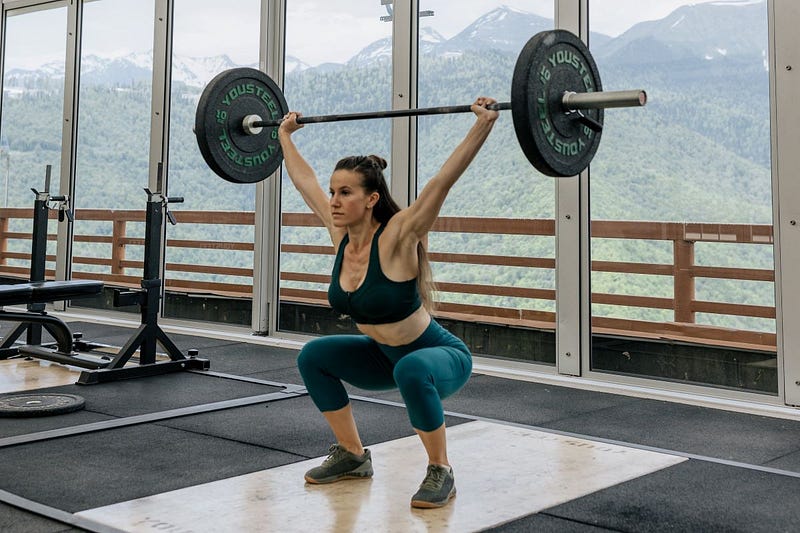
Knees mustn’t travel forward past your toes during a squat
One of the most common pieces of advice you will hear from trainers and gym-bros, in general, is that your knees must be behind your toes while squatting.
Unfortunately, we now know that this is a misguided piece of advice.
Yes, there is some increased impact on the knees if they go past the toes while squatting. However, it's very minimal and there is not a certain point at which these forces suddenly become dangerous.
It’s completely natural for your knee to move forward past your toes during movements such as walking downstairs or playing sport.
Although restricting the forward movement of the knees could limit the stress on the knee joint, we’re likely transferring that force to the hips and low-back region.
Research indicates that restricting the squat movement to keep the knees behind the toes creates significantly greater torque at the hip joint and a massive potential increase for shear forces in the lower back.
“While it is critical to protect the knees from unnecessary forces, it is also important to avoid unnecessary forces acting at the hips. These hip forces will ultimately be transferred through the lower back…” — Fry, Smith, & Schilling, 2003
Moreover, many people experience ankle limitations because of this movement pattern myth.
So, we shouldn’t base the guidelines for multi-joint movements on considering forces on just one joint, whilst ignoring forces on the other joints.
When squatting, let your body move naturally and the movement pattern will usually be what is most efficient. Therefore, allowing your knees to move slightly past the toes could be most beneficial to your joints overall.
For more about best practices for squatting, read the article below.

Fasted cardio burns more fat
In some fitness circles, it is a common belief that cardio on an empty stomach will burn more calories than cardio after a meal.
It follows the idea that if we didn’t add energy to our body in the form of calories such as carbohydrates, it has to use body fat stores as energy for exercise.
However, even though fasted cardio may burn more fat during the session itself, it doesn’t mean you’ll burn more fat overall.
A 2017 review and meta-analysis concluded that “performing exercise in a fasted state did not influence weight loss or changes in lean and fat mass.”
Therefore, it doesn’t matter if you do cardio whilst fasting or after a meal.
“Body composition changes associated with aerobic exercise in conjunction with a hypocaloric diet are similar regardless whether or not an individual is fasted prior to training.” — Schoenfeld et al., 2014
If it’s more convenient to do cardio after your workout, that’s absolutely fine. If it makes life harder to get to the gym in the morning to do fasted cardio, then don’t bother!
What is more important than when you do your cardio is its intensity and your nutrition. For most people, performance will be a lot better after consuming nutrients.
For more about fat loss, check out the article below.
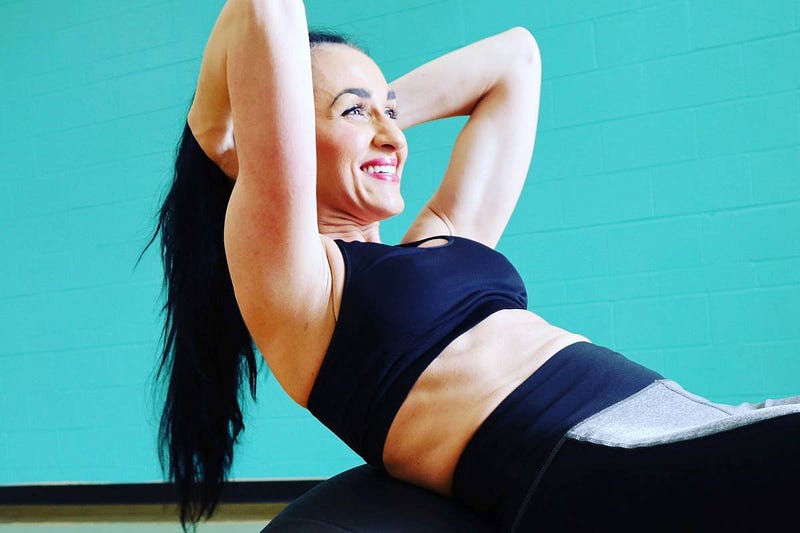
Do sit-ups and crunches for 6-pack abs
Many of us will remember at least one of the countless abs' machines sold to us via TV infomercials in the 1990s. Some of us will still have one stored away somewhere at home.
“In little as 5 minutes a day…”, we were told all we needed for rock-hard abs is one of these pieces of exercise equipment.
Unfortunately, they were selling a lie.
These exercises might make our abs stronger, but they won’t give us a visible 6-pack of abs. Instead, our nutrition is the key influence on our midsections.
You’ve probably heard that “abs are made in the kitchen”. Well, it’s true.
Many of us have far too much body fat to see our abs. It doesn’t mean they’re not there — especially if we keep training them.
We won’t see abs until we’re at a low body fat level — approximately 15% for men and 20% for women. So, to reach these low body fat levels, we need to burn fat.
We burn fat through a calorie deficit — eating less energy than it takes to sustain your current body weight.
To work out how much you should be eating to lose weight, use a calorie calculator.
To lose 1 kg of body fat (2.2lb), you need to burn 7700 calories.
“1 gram of adipose tissue yields an average of 7.7 calories…Therefore, a deficit of about 3500 calories leads to the metabolism of a pound of adipose tissue, and a deficit of about 7700 calories leads to the metabolism of 1 kg of adipose tissue.” — Jolliffe & Alpert, 1951
Assume you’re 90 kg and maintenance calories are 2700. If you reduce your calories by 770 each day, it would take 10 days to burn 770 calories and lose a kg of body fat. To lose a kg in a week, your deficit would need to be 1100 calories a day.
Considering most of us will have to burn at least 10 kg at the lower end to have visible abs, there's a long way to go. Don’t get discouraged if it takes you months. If you’re consistent, it will happen. As you lose weight, further reduce the total number of calories you consume.

No carbs after 6 pm
A common fitness myth is that we shouldn’t eat carbs after 6 pm. Some people will inform us that we shouldn’t eat at all after 6 pm.
However, it really doesn’t matter what time of day you eat your carbs.
As discussed in the previous section, what controls fat loss or gain is how many total calories we consume.
The myth that we shouldn’t eat carbs at night is based on the assumption that as we don’t expend much energy at night, we don’t burn these calories off so they’re converted to fat when we sleep. However, science has now well and truly proven that the basis of weight management is the total calories we consume over time.
“A fundamental principle of nutrition and metabolism is that body weight change is associated with an imbalance between the energy content of food eaten and energy expended by the body to maintain life and to perform physical work.” — Hall et al., 2012
Personally, I don’t get hungry in the morning so I fast until midday. I eat a moderate amount in the afternoon and then consume the majority of my calories at night. It works for me. For others, they might prefer to load their morning with more calories and not eat a lot in the evenings.

Sugar makes you fat
Sugar is not inherently bad for you.
However, for the past half a century, we’ve been fed the idea that sugar should be avoided at all costs.
Sugar was first demonised as inherently “bad” for us in a 1972 book by John Yudkin called “Pure, White and Deadly. How sugar is killing us and what we can do to stop it.” Initially, the shift came very slowly as fat was the enemy at the time and for some time after.
The anti-sugar movement has built up a lot of steam over the past couple of decades, with numerous public health campaigns informing us to avoid sugar. However, sugar isn’t somehow magically transformed into body fat after we consume it.
Sugar doesn’t make you fat — overeating makes you fat.
A 2013 study found that a person’s weight was not affected by replacing sugar in a person’s diet with another energy source with an equal number of calories.
“Evidence from a variety of sources does not suggest that sugars per se make a unique contribution to obesity. Moreover, in a condition as complicated as obesity it is highly unlikely that one single nutrient would uniquely cause this condition.” — Rippe, & Angelopoulos, 2015
To avoid sugar, we also have to avoid most fruit due to their high sugar content. The problem here is that fruit is packed full of fibre and micronutrients (vitamins and minerals).
The big problem with sugar is that foods that are dense in refined sugar are easy to overconsume, such as sodas, candy, cakes and other highly processed foods. These contain empty calories, meaning that they serve no benefit nutritionally. However, this lack of nutrition doesn’t mean that you should avoid sugar completely.
For more about why it’s okay to eat sugar, check out the article below.
Final Thoughts
If you’re reading this article, you probably have some interest in losing fat, building muscle or improving your health and fitness in general.
I have debunked five common fitness myths that science should have long put an end to.
Those five fitness myths are: sugar makes you fat, no carbs after 6 pm, do sit-ups and crunches for 6-pack abs, fasted cardio burns more fat, and your knees mustn’t travel forward past your toes during a squat.
If you have been making one or more of these mistakes, stop!
I hope you have enjoyed the content and learnt something to transfer into your own nutrition and exercise routines to achieve your fitness goals.
Thank you for reading.
If you enjoyed the content, you might be interested in this article outlining five common mistakes people make with New Year’s resolution fitness goals.
Read More Medium Articles
Non-Medium members can only read 3 articles a month — become a Medium Member for unlimited access.
If you would like to read more articles like this one, sign up to become a Medium member for only $5 a month.
Subscribe to be notified when I publish new content.


