avatarDaniel Hopper

Free AI web copilot to create summaries, insights and extended knowledge, download it at here

4695

Abstract

–3 times a week. Otherwise, we risk its “interference effect” reducing our ability to build muscle.</p><p id="282d">High-intensity cardio is very taxing on the body —there is a lot more impact on our joints and our bodies generally have to work a little bit harder. If we’re also lifting weights, our bodies will struggle to recover from regular HIIT.</p><p id="bc8c">Low-intensity cardio doesn’t create the same stimulus that requires an adaption from our body. Therefore, we find it much easier to recover from it.</p><h1 id="9480">Stop doing cardio that you hate</h1><p id="72c0">Don’t do cardio activities that you don’t enjoy.</p><p id="d85d">Many trainers will say something liché like “harden up” and “embrace the pain” to help you to reach your fitness goals. In reality, if we want to lose weight, we shouldn’t go all out and one form of cardio we hate is better replaced by something we’re more likely to do more of.</p><p id="27c4">One type of cardio isn’t going to give magical fat-burning results above other forms of cardio. As long as it’s increasing our heart rate by getting us moving, then it’s doing its job — we’re burning calories.</p><p id="9976">The main thing is that we do cardiovascular exercise for its overall health benefits.</p><p id="ca1f">But, if you don’t enjoy cardio, you probably won’t do it. As simple as that.</p><p id="fcc6">You’re far more likely to dedicate time and effort to a form of cardio you enjoy. You should try something new if you dread doing cardio and tend to avoid it.</p><p id="5f20">If you hate the treadmill, use a stationary bike.</p><p id="a3ee">Hate doing cardio on a machine? Go for a run in a local scenic outdoor area such as a park, lake, river, or beach.</p><p id="2c7d">Cardio could be playing sports or taking the kids for a bike ride. Just get yourself moving by doing something physical that you don’t hate!</p><figure id="1f13"><img src="https://cdn-images-1.readmedium.com/v2/resize:fit:800/1*SEKxQeZElae8NKOJZeB3EQ.jpeg"><figcaption>Photo by <a href="https://unsplash.com/@jannesglas?utm_source=unsplash&amp;utm_medium=referral&amp;utm_content=creditCopyText">Jannes Glas</a> on <a href="https://unsplash.com/s/photos/sport?utm_source=unsplash&amp;utm_medium=referral&amp;utm_content=creditCopyText">Unsplash</a></figcaption></figure><h1 id="ee0a">Stop thinking that fasted cardio burns more calories</h1><p id="780b">In some fitness circles such as bodybuilding, there is the perception that doing cardio whilst fasting — i.e. first thing in the morning before you eat; will burn more calories than if you do cardio-fed.</p><p id="13a0">If the body isn’t fed and doesn’t have carbohydrates or other macronutrients as energy, it has to use body fat stores.</p><p id="14c6">And there may be some truth to this theory. However, the reality is that even though fasted cardio burns more fat during the session itself, it doesn’t mean you’ll burn more fat overall.</p><p id="1f88" type="7">“When moderate endurance exercise is done to lose body fat, fasting before exercise does not enhance lipid utilization; rather, physical activity after a light meal is advisable.” — Paoli et al., 2011</p><p id="ca26">Findings from a <a href="https://pubmed.ncbi.nlm.nih.gov/21411835/">2011 study</a> suggest that we burn more fat during a HIIT workout, but we burn less over the subsequent 24-hour period.</p><p id="a8f9">Moreover, according to a <a href="https://www.mdpi.com/2411-5142/2/4/43/htm">2017 review and meta-analysis</a>, “performing exercise in a fasted state did not influence weight loss or changes in lean and fat mass.</p><p id="c475">Therefore, it doesn’t matter if you do cardio whilst fasting or not.</p><p id="387a">If it’s more convenient to do cardio after your workout, that’s fine.</p><p id="ace6">If you enjoy cardio early in the morning on an empty stomach and can get to the gym twice a day, there’s no reason you shouldn’t do fasted cardio.</p><p id="f364">But don’t do fasted cardio if it makes your life harder, just because you think it’s more effective. Because it’s not.</p><p id="0ef6" type="7">“Body composition changes associated with aerobic exercise in conjunction with a hypocaloric diet are similar regardless whether or not an individual is fasted prior to training.” — Schoenfeld et al., 2014</p><figure id="6ee5"><img src="https://cdn-images-1.readmedium.com/v2/resize:fit:800/1*862LPuFX73PnbkJNrQRNzg.jpeg"><figcaption>Image via <a href="https://p0.piqsels.com/preview/678/826/426/fitness-women-sports-gym.jpg">Piqsels.com</a></figcaption></figure><h1 id="5d3c">Don’t rely too much on cardio</h1><p id="c366">Often, people who struggle with losing weight mistakenly believe that cardio can off

Options

set a bad diet.</p><p id="cb25">It’s very common to overestimate the number of calories we burn during cardio. I wrote all about this in the article below — check it out for an in-depth discussion.</p><div id="b93c" class="link-block"> <a href="https://readmedium.com/youre-not-burning-as-many-calories-as-you-probably-think-1275f53abae9"> <div> <div> <h2>Your Exercise Is Burning Fewer Calories Than You Think</h2> <div><h3>It’s true — eat less.</h3></div> <div><p>medium.com</p></div> </div> <div> <div style="background-image: url(https://miro.readmedium.com/v2/resize:fit:320/1*Zx22odHuJCM1TEySeSpB8A.jpeg)"></div> </div> </div> </a> </div><p id="ecd8">You will never out-train a bad diet with a large caloric surplus.</p><p id="2bac">To provide you with some context — There are about 1000 calories in a medium Big Mac combo. If you weigh 170 pounds (or 77 kg), it will take approximately 3 hours of brisk walking to burn 1000 calories.</p><p id="15ce">A lot of cardio is required to burn the calories consumed from one bad meal!</p><p id="5881"><a href="https://europepmc.org/article/med/34519717">Recent research from Broskey et al. (2021)</a> indicates we’ll only lose approximately a quarter to half the number of calories we’d expect to lose from cardio alone.</p><p id="e6fa" type="7">“Weight loss will likely be 20–50%, on average, of expected weight loss without a concomitant energy restricted diet.“ — Eric Helms, 2022</p><p id="f1d6">A big problem with relying on cardio alone for fat loss is that our body adapts to exercise and becomes more efficient. Therefore, we experience diminishing returns in terms of our fat loss as our body compensates and adapts.</p><p id="8ca6">We should consider cardio supplementary to our diets to manage our fat loss.</p><h1 id="e165">Final Thoughts</h1><p id="4092">Many of us utilise cardio to keep fit and help manage our weight.</p><p id="c440">However, many of us make common cardio mistakes that can sabotage achieving our fitness and fat loss goals.</p><p id="83be">In this article, I have discussed 5 common cardio mistakes to avoid: doing cardio before a workout, overdoing HIIT, doing cardio that you hate, thinking that fasted cardio burns more calories, and an overreliance on cardio.</p><p id="2619">I hope you found the information in this article helpful to achieve your health and fitness goals!</p><p id="b83b"><b>Bonus tip: stop holding onto the treadmill!</b></p><p id="fab3">You often see people in the gym every day holding onto the treadmill. You really shouldn’t… Why is it such a big mistake? Find out in the article below.</p><div id="5248" class="link-block"> <a href="https://readmedium.com/stop-holding-onto-the-treadmill-dd1310adde52"> <div> <div> <h2>Stop Holding Onto the Treadmill!</h2> <div><h3>It reduces the effectiveness of cardio. And, the same goes for holding yourself up on the stairclimber.</h3></div> <div><p>medium.com</p></div> </div> <div> <div style="background-image: url(https://miro.readmedium.com/v2/resize:fit:320/1*TKlwb4rQxDuQCX7WrpsbFg.jpeg)"></div> </div> </div> </a> </div><p id="f6aa"><b>Thank you for reading.</b></p><p id="6e2b">If you enjoyed the content, check out the article below about simplifying fat loss.</p><div id="7bc5" class="link-block"> <a href="https://readmedium.com/stop-overcomplicating-weight-loss-7ef4c27a2a49"> <div> <div> <h2>Stop Complicating Fat Loss</h2> <div><h3>The number of calories we eat literally controls our weight.</h3></div> <div><p>medium.com</p></div> </div> <div> <div style="background-image: url(https://miro.readmedium.com/v2/resize:fit:320/1*67Ymd3aGvOpSsl27_dUcrQ.jpeg)"></div> </div> </div> </a> </div><h1 id="43d3">Read More Medium Articles</h1><p id="a042"><i>Non-Medium members can only read 3 articles a month.</i></p><p id="ffd5"><a href="https://danielhopper.medium.com/membership"><b><i>Become a Medium Member</i></b></a><i> for unlimited access to my content and articles from thousands of other writers, for just<b> $5 a month.</b></i></p><p id="00a0"><a href="https://danielhopper.medium.com/subscribe"><b><i>Subscribe</i></b></a><b><i> </i></b><i>to be notified when I publish new content.</i></p></article></body>

Improve Your Fat Loss by Avoiding These 5 Common Cardio Mistakes

It’s much easier to consume calories than it is to burn calories.

Photo by Franzi Meyer on Unsplash

Many of us struggle with our weight. According to 2018 data, almost half of American adults recently tried to lose weight.

Often, we don’t try to manage our weight until we’re overweight.

It’s hard to prioritise eating healthy and low-calorie foods.

A bad diet is one of the common reasons to struggle with our weight. But, I’m not here to talk about dieting.

In this article, you’ll hear about five common mistakes that people make with cardio.

Dont do cardio before a workout

The first mistake many people make in the gym is doing cardio before their weights.

Don’t get me wrong, you should warm up with light cardio to minimise the risk of injury. Moreover, research indicates that lifting performance can be improved by warming up with light cardio before a weights session.

But, stop after 5–10 minutes maximum of cardio.

A 2018 systematic review and meta-analysis found significantly worse improvements in strength gains when cardio was done directly before a lifting session.

Because of the interference effect, exerting too much effort into cardio before a workout means our main workout is compromised. We cannot lift weights with the optimal effort and intensity required to get the best results.

“Strength training performance is compromised for at least six to eight hours following endurance training.” — Murlasits, Kneffel, & Thalib (2018).
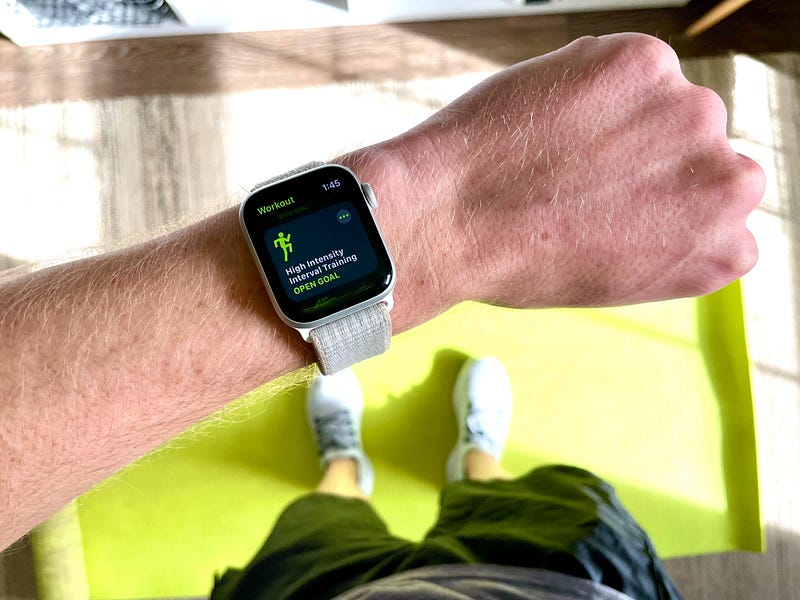
Photo by Blocks Fletcher on Unsplash

Don’t Overdo HIIT

High-intensity interval training (HIIT) is a popular way for people to do cardio who are short on time but high on energy. It involves short bursts of intense exercise alternated with low-intensity periods to recover between the hard sets.

Some proponents of HIIT think it is better than doing low-intensity steady-state cardio (LISS).

Is it better or worse? I’m not here to argue either point. But I will give some of the realities of HIIT.

One benefit of HIIT is the afterburn effect — when our metabolic rate is heightened after a workout, creating an “oxygen debt”. Because our body requires oxygen to return to its resting state, it burns more calories. The technical term for the afterburn is “excess post-exercise oxygen consumption” (EPOC).

However, this “afterburn” has less impact on the number of calories burnt than many people think. The afterburn could comprise just 6 to 15% of the total calories burnt we burn during exercise.

Several studies (example 1, and example 2) find no evidence that HIIT burns more calories than low-intensity steady-state cardio.

“[There’s] No evidence to support the superiority of either high-intensity interval training or steady-state cardio for body fat reduction.” — Keating et al., 2017

Despite what you’ve heard, HIIT won’t magically keep burning calories well after our workouts.

If you really love HIIT and it keeps you motivated to exercise, carry on. However, be wary that we should limit our high-intensity cardio to just 2–3 times a week. Otherwise, we risk its “interference effect” reducing our ability to build muscle.

High-intensity cardio is very taxing on the body —there is a lot more impact on our joints and our bodies generally have to work a little bit harder. If we’re also lifting weights, our bodies will struggle to recover from regular HIIT.

Low-intensity cardio doesn’t create the same stimulus that requires an adaption from our body. Therefore, we find it much easier to recover from it.

Stop doing cardio that you hate

Don’t do cardio activities that you don’t enjoy.

Many trainers will say something liché like “harden up” and “embrace the pain” to help you to reach your fitness goals. In reality, if we want to lose weight, we shouldn’t go all out and one form of cardio we hate is better replaced by something we’re more likely to do more of.

One type of cardio isn’t going to give magical fat-burning results above other forms of cardio. As long as it’s increasing our heart rate by getting us moving, then it’s doing its job — we’re burning calories.

The main thing is that we do cardiovascular exercise for its overall health benefits.

But, if you don’t enjoy cardio, you probably won’t do it. As simple as that.

You’re far more likely to dedicate time and effort to a form of cardio you enjoy. You should try something new if you dread doing cardio and tend to avoid it.

If you hate the treadmill, use a stationary bike.

Hate doing cardio on a machine? Go for a run in a local scenic outdoor area such as a park, lake, river, or beach.

Cardio could be playing sports or taking the kids for a bike ride. Just get yourself moving by doing something physical that you don’t hate!

Photo by Jannes Glas on Unsplash

Stop thinking that fasted cardio burns more calories

In some fitness circles such as bodybuilding, there is the perception that doing cardio whilst fasting — i.e. first thing in the morning before you eat; will burn more calories than if you do cardio-fed.

If the body isn’t fed and doesn’t have carbohydrates or other macronutrients as energy, it has to use body fat stores.

And there may be some truth to this theory. However, the reality is that even though fasted cardio burns more fat during the session itself, it doesn’t mean you’ll burn more fat overall.

“When moderate endurance exercise is done to lose body fat, fasting before exercise does not enhance lipid utilization; rather, physical activity after a light meal is advisable.” — Paoli et al., 2011

Findings from a 2011 study suggest that we burn more fat during a HIIT workout, but we burn less over the subsequent 24-hour period.

Moreover, according to a 2017 review and meta-analysis, “performing exercise in a fasted state did not influence weight loss or changes in lean and fat mass.

Therefore, it doesn’t matter if you do cardio whilst fasting or not.

If it’s more convenient to do cardio after your workout, that’s fine.

If you enjoy cardio early in the morning on an empty stomach and can get to the gym twice a day, there’s no reason you shouldn’t do fasted cardio.

But don’t do fasted cardio if it makes your life harder, just because you think it’s more effective. Because it’s not.

“Body composition changes associated with aerobic exercise in conjunction with a hypocaloric diet are similar regardless whether or not an individual is fasted prior to training.” — Schoenfeld et al., 2014

Image via Piqsels.com

Don’t rely too much on cardio

Often, people who struggle with losing weight mistakenly believe that cardio can offset a bad diet.

It’s very common to overestimate the number of calories we burn during cardio. I wrote all about this in the article below — check it out for an in-depth discussion.

You will never out-train a bad diet with a large caloric surplus.

To provide you with some context — There are about 1000 calories in a medium Big Mac combo. If you weigh 170 pounds (or 77 kg), it will take approximately 3 hours of brisk walking to burn 1000 calories.

A lot of cardio is required to burn the calories consumed from one bad meal!

Recent research from Broskey et al. (2021) indicates we’ll only lose approximately a quarter to half the number of calories we’d expect to lose from cardio alone.

“Weight loss will likely be 20–50%, on average, of expected weight loss without a concomitant energy restricted diet.“ — Eric Helms, 2022

A big problem with relying on cardio alone for fat loss is that our body adapts to exercise and becomes more efficient. Therefore, we experience diminishing returns in terms of our fat loss as our body compensates and adapts.

We should consider cardio supplementary to our diets to manage our fat loss.

Final Thoughts

Many of us utilise cardio to keep fit and help manage our weight.

However, many of us make common cardio mistakes that can sabotage achieving our fitness and fat loss goals.

In this article, I have discussed 5 common cardio mistakes to avoid: doing cardio before a workout, overdoing HIIT, doing cardio that you hate, thinking that fasted cardio burns more calories, and an overreliance on cardio.

I hope you found the information in this article helpful to achieve your health and fitness goals!

Bonus tip: stop holding onto the treadmill!

You often see people in the gym every day holding onto the treadmill. You really shouldn’t… Why is it such a big mistake? Find out in the article below.

Thank you for reading.

If you enjoyed the content, check out the article below about simplifying fat loss.

Read More Medium Articles

Non-Medium members can only read 3 articles a month.

Become a Medium Member for unlimited access to my content and articles from thousands of other writers, for just $5 a month.

Subscribe to be notified when I publish new content.

Fitness
Fat Loss
Exercise
Health
Cardio
Recommended from ReadMedium