avatarDaniel Hopper

Free AI web copilot to create summaries, insights and extended knowledge, download it at here

4696

Abstract

id="2405">Oh, but HIIT keeps burning calories!</h1><p id="1cca">You may have about the afterburn effect from doing HIIT.</p><p id="028b">If you didn’t know, HIIT stands for High-Intensity Interval Training, which involves short bursts of intense exercise alternated with low-intensity periods to recover between the hard sets.</p><p id="7aee">Afterburn is thought to keep burning calories well after a workout is finished as our metabolic rate is heightened for some time after a workout.</p><blockquote id="39c7"><p>“The afterburn effect is simply additional energy expenditure that occurs after exercise.” —<a href="https://legionathletics.com/afterburn-effect/"> Legionathletics.com</a></p></blockquote><p id="5936">Technically, the afterburn is “excess post-exercise oxygen consumption” (EPOC). It’s an oxygen debt and our body requires oxygen to return to its resting state, theoretically requiring energy.</p><p id="c233">The functions of this resting state include:</p><ul><li>restoring oxygen levels</li><li>removing lactic acid</li><li>replenishing <a href="https://en.wikipedia.org/wiki/Adenosine_triphosphate">ATP</a> (stores and transfers energy in our cells)</li><li>replenishing creatine stores</li><li>repairing muscle</li></ul><p id="d694">The higher the intensity of the exercise, the more energy your body expends to return to its resting state.</p><p id="eef2">EPOC is the highest right after a workout, continuing for up to 24 hours or potentially longer. Moreover, findings from a <a href="http://www.ncbi.nlm.nih.gov/pubmed/11882927">2002 study</a> demonstrated that this “afterburn” effect could last up to 38 hours.</p><p id="c71a">However, most calories are burnt is during exercise and the effects of EPOC are highest directly after (<a href="https://www.ncbi.nlm.nih.gov/pubmed/24303194">2–3 hours</a>). Then, they drop significantly.</p><p id="e3d0">A <a href="https://www.ncbi.nlm.nih.gov/pubmed/28513103">Colorado State University Meta-analysis in 2017</a> that EPOC had no impact on resting metabolism 23 hours after exercise. The effects of EPOC are also relatively minor — the afterburn only comprises 6 to 15% of the overall calories burnt from exercise.</p><p id="5df2">So, is it worth doing high-intensity training? Probably only if you’re lacking time for exercise.</p><p id="977d">An <a href="https://www.ncbi.nlm.nih.gov/pubmed/28513103">Australian 2017 meta-analysis</a> compared fat loss between HIIT and steady-state cardio. Steady-state is doing cardio at a low or medium intensity for a long period, without rest.</p><p id="a3f9">They analysed the results of 28 trials with almost 1000 participants and found <i>“no evidence to support the superiority of either high-intensity interval training or steady-state cardio for body fat reduction.”</i></p><p id="4ccb">Moreover, <a href="https://www.ncbi.nlm.nih.gov/pubmed/22710610">Canadian researchers found</a> that the total number of calories we burn over 24 hours has little difference between HIIT and steady-state cardio.</p><p id="3b70" type="7">“The role of exercise in the maintenance of body mass is therefore predominantly mediated via the cumulative effect of the energy expenditure during the actual exercise.” — LaForgia, Withers & Gore, 2006</p><p id="77c1">So, cardio is cardio. Doing HIIT isn’t going to magically keep burning calories well after the workout.</p><figure id="ba13"><img src="https://cdn-images-1.readmedium.com/v2/resize:fit:800/1*AWxaVu-Azlc4KSX3QDdCWA.jpeg"><figcaption>Photo by <a href="https://unsplash.com/@andrewdinh?utm_source=unsplash&amp;utm_medium=referral&amp;utm_content=creditCopyText">Andrew Dinh</a> on <a href="https://unsplash.com/?utm_source=unsplash&amp;utm_medium=referral&amp;utm_content=creditCopyText">Unsplash</a></figcaption></figure><h1 id="0b33">It’s much easier to control our weight through calorie intake</h1><p id="fa0e">What ultimately controls our weight?</p><p id="43a4">Energy in and energy out. Meaning, the number of calories we consume over a day versus how many calories we burn.</p><p id="f15d">Exercise will burn some calories. But, the more calories we consume, the more activity is required to burn off any excess energy. To lose weight, we consume fewer calories than it takes to sustain our body weight.</p><p id="ed74">Activity levels vary between individuals.</p><p id="277c">The difference in the number of calories burnt is massive between a desk job and a physically active job.</p><p id="56df">The best way to manage this weight gain is through our diet — controlling our calorie intake to be in a <a href="https://www.healthline.com/nutrition/calorie-deficit">calorie deficit</a>.</p><p id="d0b7">Calories are govern

Options

ed by the laws of <a href="https://prezi.com/0melggjcnvmv/food-and-the-first-law-of-thermodynamics/">thermodynamics</a>. Energy content is transferred from food to the person eating it and if we consume more energy than we need, our body stores it as body fat for later use.</p><p id="71af">Thus, we all have an average daily calorie intake to sustain our body weight.</p><figure id="5b30"><img src="https://cdn-images-1.readmedium.com/v2/resize:fit:800/1*XVdggES1rLLTJkXy8SXArA.jpeg"><figcaption>Photo by <a href="https://unsplash.com/@yunmai?utm_source=unsplash&amp;utm_medium=referral&amp;utm_content=creditCopyText">iyunmai</a> on <a href="https://unsplash.com/s/photos/scale?utm_source=unsplash&amp;utm_medium=referral&amp;utm_content=creditCopyText">Unsplash</a></figcaption></figure><p id="340f">Weight management is a long term process, so don’t let the scale weight get you down — one day, you might have more water weight than the last time you weighed yourself. Calories are averaged out over time, so trust the process!</p><p id="b37c">Equally, the odd bad day is okay. If you overeat today, you won’t gain kgs of fat overnight.</p><p id="9e4f">Have the odd cheat meal to help make life worth living.</p><p id="9ddb">But, consider that there are around 550 calories in a Big Mac. It will probably take you over an hour on the treadmill just to burn off those calories.</p><p id="6636">But, don’t make it a habit.</p><p id="6b2d">What’s easier? Not eating that Big Mac or running on a treadmill for an hour?</p><p id="0503">If you said running on a treadmill, you’re lying!</p><h2 id="f8fa">How to calculate your daily calorie intake to lose weight</h2><p id="a77a">Each person’s maintenance level of calories depends on genetics, activity, and current body weight.</p><p id="f42b">Luckily, it’s pretty easy to work out.</p><p id="170d">Firstly, you can use a <a href="https://www.calculator.net/calorie-calculator.html">calorie calculator</a> to give an estimate of your maintenance level of calories.</p><p id="19ee">But to be precise, write down everything you consume for a week. Any drink or sauce you use, add the calories. Then, average this out for a daily number. That should be very close to your maintenance calories.</p><p id="3584">Then, aim for a reduction of 250 to 500 calories a day.</p><p id="36b0">Use an app such as <a href="https://www.myfitnesspal.com/">My Fitness Pal </a>to add calories throughout your day and Google is your friend when it comes to finding out how many calories are in different foods.</p><h1 id="67a9">In Conclusion</h1><p id="4d02">In this article, we’ve explored how many calories we burn during exercise.</p><p id="af2f">The number of calories burnt during exercise is very little compared to how easy it is to replace those calories with food.</p><p id="91b2">However, I’m not saying to stop doing cardio, We should all aim to do 2–3 hours a week of cardiovascular exercise a week to keep our hearts healthy. But, we shouldn’t make the mistake of relying on exercise as our key tool to manage our weight.</p><p id="f240">Our diet manages our weight above all else.</p><p id="4bf9">The odd ‘cheat’ meal is okay to help maintain our sanity — but every day, it just makes it that much harder to have the physique we desire.</p><p id="b534">Thank you for reading.</p><p id="d062">If you enjoyed the content, you may be interested in this article about 6 mistakes people commonly make when trying to lose fat.</p><div id="4237" class="link-block"> <a href="https://readmedium.com/dont-make-these-6-common-mistakes-when-trying-to-lose-body-fat-d70c88cf8c19"> <div> <div> <h2>Don’t Make These 6 Common Mistakes When Trying to Lose Body Fat</h2> <div><h3>The hardest thing about a diet is sticking to it.</h3></div> <div><p>medium.com</p></div> </div> <div> <div style="background-image: url(https://miro.readmedium.com/v2/resize:fit:320/1*-d6UkfhmOcxbMVHFQA81hA.jpeg)"></div> </div> </div> </a> </div><h1 id="b2db">Read More Medium Articles</h1><p id="67b1"><i>Non-Medium members can only read 3 articles a month — become a Medium Member for unlimited access.</i></p><p id="02bc"><i>If you would like to read more articles like this one, <a href="https://brand-yourself-better.medium.com/membership"><b>sign up to become a Medium member</b></a><b> </b>for only<b> $5 a month.</b></i></p><p id="751f"><a href="https://brand-yourself-better.medium.com/subscribe"><b><i>Subscribe</i></b></a><b><i> </i></b><i>to be notified when I publish new content.</i></p></article></body>

Your Exercise Is Burning Fewer Calories Than You Think

It’s true. It’s easier to eat fewer calories than it is to do more cardio.

Photo by Gabin Vallet on Unsplash

Do you struggle to lose weight, despite exercise? Do you assume that if you exercise, your diet doesn’t matter?

Yet, does your weight stay the same, despite exercising regularly?

You’re not alone.

Many people on diets overestimate how many calories they burn during exercise. Many of those same people underestimate how many calories are in food.

It’s a vicious cycle that results in people struggling to lose weight.

You can never out-exercise a bad diet. Don’t even try.

Abs are made in the kitchen.

In this article, we discuss how many calories are actually burnt during exercise and what we should focus on instead to manage our weight.

How many calories are burnt during exercise?

Calories are how we commonly measure the energy content in food.

The main reason many of us do cardiovascular exercise is to burn calories. Sure, some of us are athletes or just want to keep fit, but you’re the minority.

Have you ever thought about how calories you actually burn during exercise?

If you’re using the exercise machine as a basis for how many calories you burn during exercise, this is a problem. According to Business Insider, exercise machines can overestimate the number of calories we’re burning by up to 50%.

The machine overestimating how many calories we’re burning is a problem as we assume it’s true and then we’re more likely to “reward” ourselves for burning these ‘ghost calories’ with food.

I’ve met people that stop in at a cafe for a coffee and muffin after a 60-minute walk…

This section provides a broad range of how many calories you’ll burn doing a variety of activities. All of these numbers will vary from person to person depending on gender, weight, intensity and fitness levels.

These numbers are based on estimations provided by the calorie calculations via Captain Calculator. These were compared to other sources found doing a Google search.

From the following activities, you could expect to burn the following number of calories per hour:

  • Walking — 200 to 400 calories
  • Running — 500 to 700 calories
  • Biking — 500 to 700 calories
  • Rowing — 500 to 800 calories
  • Lifting weights — 200 to 500 calories
  • Yoga — 300 to 500 calories
Image via Flickr

Playing sports?

High-intensity team sports such as Basketball, football, rugby and hockey will all burn around 500 to 800 calories. For individual sports, Golf will burn around 300–500 calories, tennis around 400–800 calories, and skating around 350–600 calories.

Other activities that burn calories include sex at an average of 70–100 calories per session and gaming around 200–250 calories an hour.

That’s a lot of sex to burn off a Big Mac.
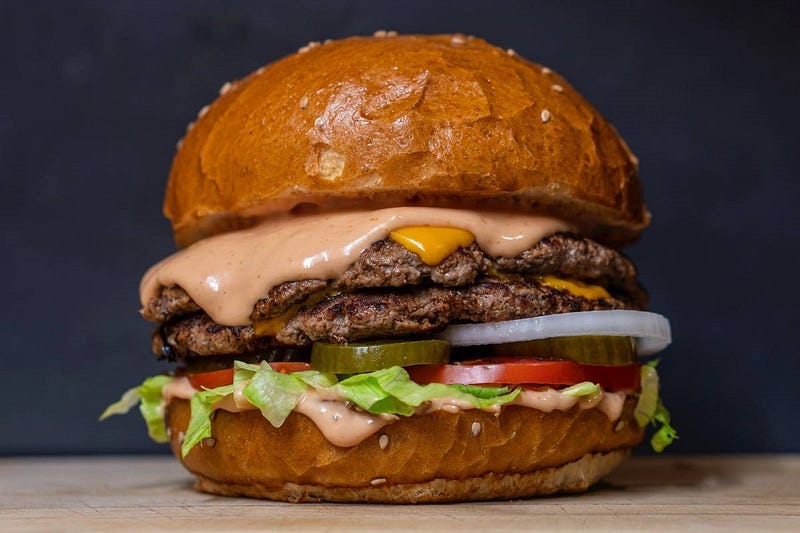
Photo by amirali mirhashemian on Unsplash

Oh, but HIIT keeps burning calories!

You may have about the afterburn effect from doing HIIT.

If you didn’t know, HIIT stands for High-Intensity Interval Training, which involves short bursts of intense exercise alternated with low-intensity periods to recover between the hard sets.

Afterburn is thought to keep burning calories well after a workout is finished as our metabolic rate is heightened for some time after a workout.

“The afterburn effect is simply additional energy expenditure that occurs after exercise.” — Legionathletics.com

Technically, the afterburn is “excess post-exercise oxygen consumption” (EPOC). It’s an oxygen debt and our body requires oxygen to return to its resting state, theoretically requiring energy.

The functions of this resting state include:

  • restoring oxygen levels
  • removing lactic acid
  • replenishing ATP (stores and transfers energy in our cells)
  • replenishing creatine stores
  • repairing muscle

The higher the intensity of the exercise, the more energy your body expends to return to its resting state.

EPOC is the highest right after a workout, continuing for up to 24 hours or potentially longer. Moreover, findings from a 2002 study demonstrated that this “afterburn” effect could last up to 38 hours.

However, most calories are burnt is during exercise and the effects of EPOC are highest directly after (2–3 hours). Then, they drop significantly.

A Colorado State University Meta-analysis in 2017 that EPOC had no impact on resting metabolism 23 hours after exercise. The effects of EPOC are also relatively minor — the afterburn only comprises 6 to 15% of the overall calories burnt from exercise.

So, is it worth doing high-intensity training? Probably only if you’re lacking time for exercise.

An Australian 2017 meta-analysis compared fat loss between HIIT and steady-state cardio. Steady-state is doing cardio at a low or medium intensity for a long period, without rest.

They analysed the results of 28 trials with almost 1000 participants and found “no evidence to support the superiority of either high-intensity interval training or steady-state cardio for body fat reduction.”

Moreover, Canadian researchers found that the total number of calories we burn over 24 hours has little difference between HIIT and steady-state cardio.

“The role of exercise in the maintenance of body mass is therefore predominantly mediated via the cumulative effect of the energy expenditure during the actual exercise.” — LaForgia, Withers & Gore, 2006

So, cardio is cardio. Doing HIIT isn’t going to magically keep burning calories well after the workout.

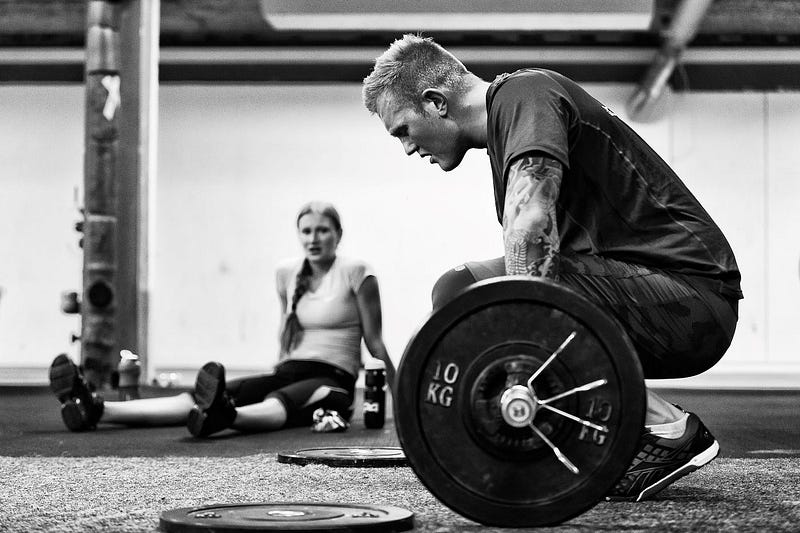
Photo by Andrew Dinh on Unsplash

It’s much easier to control our weight through calorie intake

What ultimately controls our weight?

Energy in and energy out. Meaning, the number of calories we consume over a day versus how many calories we burn.

Exercise will burn some calories. But, the more calories we consume, the more activity is required to burn off any excess energy. To lose weight, we consume fewer calories than it takes to sustain our body weight.

Activity levels vary between individuals.

The difference in the number of calories burnt is massive between a desk job and a physically active job.

The best way to manage this weight gain is through our diet — controlling our calorie intake to be in a calorie deficit.

Calories are governed by the laws of thermodynamics. Energy content is transferred from food to the person eating it and if we consume more energy than we need, our body stores it as body fat for later use.

Thus, we all have an average daily calorie intake to sustain our body weight.
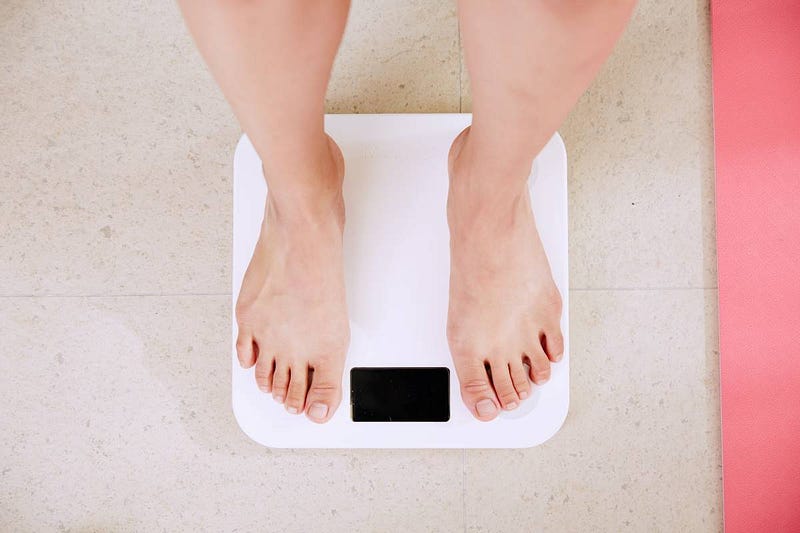
Photo by iyunmai on Unsplash

Weight management is a long term process, so don’t let the scale weight get you down — one day, you might have more water weight than the last time you weighed yourself. Calories are averaged out over time, so trust the process!

Equally, the odd bad day is okay. If you overeat today, you won’t gain kgs of fat overnight.

Have the odd cheat meal to help make life worth living.

But, consider that there are around 550 calories in a Big Mac. It will probably take you over an hour on the treadmill just to burn off those calories.

But, don’t make it a habit.

What’s easier? Not eating that Big Mac or running on a treadmill for an hour?

If you said running on a treadmill, you’re lying!

How to calculate your daily calorie intake to lose weight

Each person’s maintenance level of calories depends on genetics, activity, and current body weight.

Luckily, it’s pretty easy to work out.

Firstly, you can use a calorie calculator to give an estimate of your maintenance level of calories.

But to be precise, write down everything you consume for a week. Any drink or sauce you use, add the calories. Then, average this out for a daily number. That should be very close to your maintenance calories.

Then, aim for a reduction of 250 to 500 calories a day.

Use an app such as My Fitness Pal to add calories throughout your day and Google is your friend when it comes to finding out how many calories are in different foods.

In Conclusion

In this article, we’ve explored how many calories we burn during exercise.

The number of calories burnt during exercise is very little compared to how easy it is to replace those calories with food.

However, I’m not saying to stop doing cardio, We should all aim to do 2–3 hours a week of cardiovascular exercise a week to keep our hearts healthy. But, we shouldn’t make the mistake of relying on exercise as our key tool to manage our weight.

Our diet manages our weight above all else.

The odd ‘cheat’ meal is okay to help maintain our sanity — but every day, it just makes it that much harder to have the physique we desire.

Thank you for reading.

If you enjoyed the content, you may be interested in this article about 6 mistakes people commonly make when trying to lose fat.

Read More Medium Articles

Non-Medium members can only read 3 articles a month — become a Medium Member for unlimited access.

If you would like to read more articles like this one, sign up to become a Medium member for only $5 a month.

Subscribe to be notified when I publish new content.

Exercise
Health
Fitness
Diet
Weight Loss
Recommended from ReadMedium