
Zelenskyy Has Given Us A Master Class In Messaging
Can Ukraine’s president keep it up now that his political enemies are becoming more vocal?
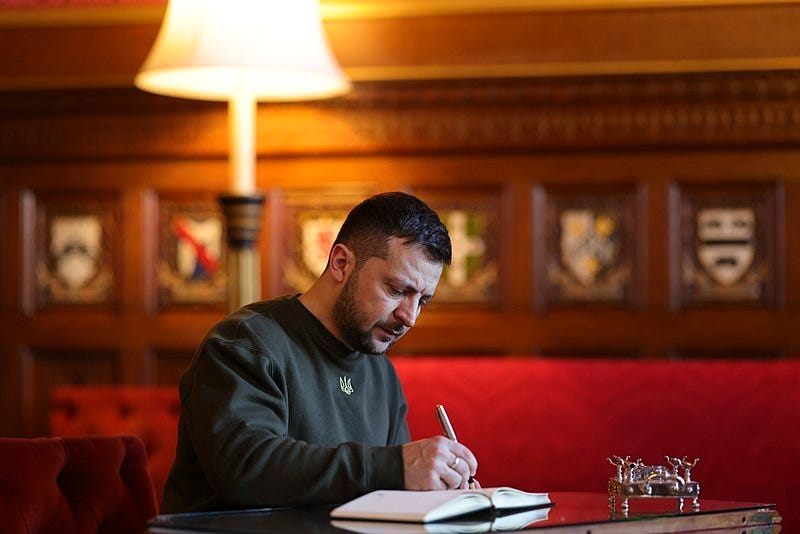
.jpg)
“He’s Churchill with an iPhone.”
Not long after Russia invaded Ukraine, the Guardian columnist Jonathan Freedland wrote those words about Volodymyr Zelenskyy. It was a stretch, but you knew what he meant.
Within weeks of the Russian assault, Ukraine’s president had become “arguably the most popular politician in the modern world, feted for his integrity and bravery,” the journalist Luke Harding wrote in his recent Invasion, a finalist for the Orwell Prize for political reporting.
He danced to Elvis before he spoke to Congress
How did it happen to a former TV actor who, a few months earlier, might have been better known to some Ukrainians for winning his country’s version of “Dancing With the Stars,” aided by his sure-footed jive to Elvis’ “Blue Suede Shoes”?
Harding caught the essence of Zelenskyy’s appeal in Invasion :
“He was at ease in front of a camera; he took everything he knew from TV and applied it to the conversational idiom of social media. Yes, he was an actor. But it was evident from his iPhone appearances that he believed what he said. He spoke from the heart, an amplifier of the national mood. His public statements were delivered not from above, but horizontally, citizen to citizen, an act of truth-telling in the fog of war.”
The power of connecting with people emotionally
Zelenskyy also drew on classic speechwriting principles. Invasion makes clear that, intentionally or not, he’s used at least three.
- Appeal to people’s emotions. In Zelenskyy’s speeches, “emotions are the most important things,” his speechwriter Dmytro Lytvyn told Harding. Ukraine’s president has spoken remotely to more than 30 democratic parliaments. With each, he’s tried to foster an emotional bond, a sense of their common humanity, “so we understand each other,” Lytvyn said.
- Know your audience. At the U.S. Capitol, Zelenskyy urged Congress to remember Pearl Harbor when “the skies were black from the planes attacking you,” Harding recalled. At the House of Commons, he “linked his struggle against Putin to Britain’s against Hitler in the summer of 1940.” Techniques like these helped to foster a sense of shared humanity, Harding said. Zelenskyy’s information operation is highly effective, a U.K. official told him: “It’s agile, multiplatform, multimedia, and extremely well tailored to difference audiences.”
- Deliver good lines, not just good ideas, and repeat them often. Early on, the U.S. reportedly offered to take Zelenskyy out of Ukraine. His reply went viral: “I need ammunition, not a ride.” He also had a consistent sign-off. “The president’s bulletins ended with a defiant shake of the arm and the words ‘Slava Ukraini,’ ” or “Glory to Ukraine,” Harding said.
Tactics like those have helped Zelenskyy stay popular at home and abroad. His personal approval rating is 81% among Ukrainians, according to a Gallup survey released in October. At a recent summit in Granada, Spain, nearly 50 world leaders vowed to stand by Ukraine.
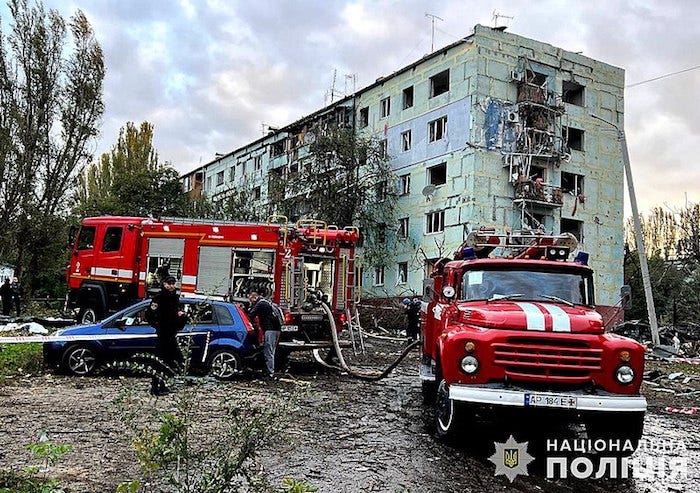
But the country’s summer and fall counteroffensive made few gains, and Zelenskyy faces new woes.
.jpg)
In September Russia said it had annexed parts of Donetsk, Kherson, Luhansk, and Zaporizhzhia, which includes the largest nuclear power plant in Europe, annexations the U.S. and the U.N. view as illegal.
More recently, Congress failed to approve a new military aid package for Ukraine, and President Biden accused Republican lawmakers of “kneecapping” an ally with urgent needs.
At the same time, the political unity in Ukraine is showing cracks.
- Vitali Klitschko, the mayor of Kyiv, has accused Zelenskyy of “actively moving toward authoritarianism” as a leadership style.
- Gen. Valery Zaluzhny, Ukraine’s commander-in-chief, told the Economist that the war was a stalemate. That clashed with the message Zelenskyy keeps repeating: that Ukraine will win, which he delivered again on January 1: “Happy New Year! The year of our victory.”
- Ukraine has had to launch a major recruitment drive to find fresh soldiers to relieve front-line troops exhausted by two years of fighting a more powerful nation.
For much of the war, Zelenskyy has succeeded, at times brilliantly, with his unique style of communicating: boosterish, confident of victory, and laser-focused on the need for more and better weapons to make it happen.
He has, as Harding noted, given the world “a master class in messaging and emotional outreach.” It’s been inspiring to watch him at work, and it will be even more so if he can adjust his message to reflect the new challenges he and his country will face this winter.
@JaniceHarayda is an award-winning critic and journalist in the Deep South. Her work has appeared in major print and online media including the New York Times, the Wall Street Journal, the Washington Post, Newsweek, and Salon.
You might like two of my other stories about Ukraine: