
SERHIY ZHADAN’S INSPIRING STORY
Ukraine’s Heroism Through The Eyes Of Its Most Popular Poet
An activist writer tells why he began taking bulletproof vests to the front in his new book, ‘Sky Above Kharkiv’
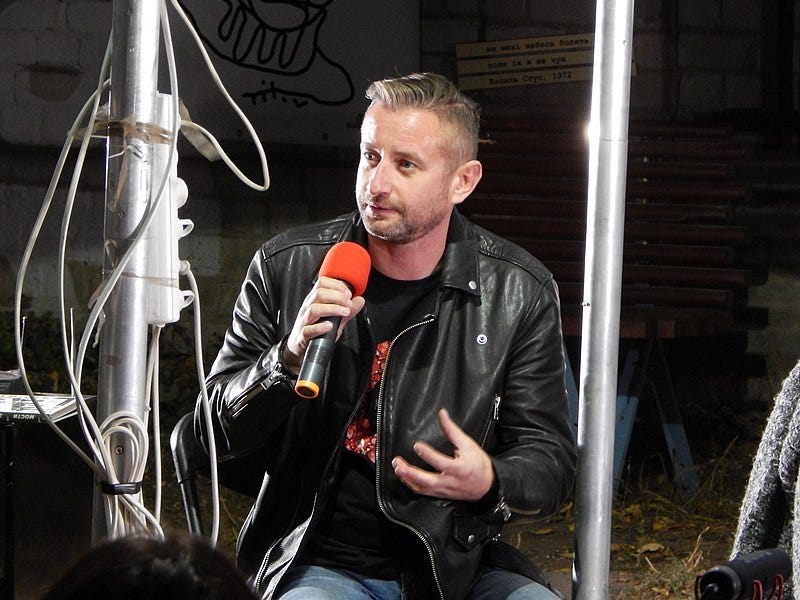

After Russia invaded Ukraine, Serhiy Zhadan heard a heartbreaking request from a boy taking cover from the bombings in a Kharkiv subway station.
Zhadan was checking on families sheltering underground when the 9-year-old asked for rugs, so babies wouldn’t have to keep crawling on cold floors as Russians shelled the city.
It was one of many poignant stories he’s heard in the three years since the assault began.
Zhadan is Ukraine’s best-known poet and has won worldwide honors for his work, including a nomination for the Nobel Prize for literature. He’s also an activist and novelist and the frontman for the ska band, Zhadan and the Dogs.
But when war came to Ukraine, Zhadan neither fled nor went into hiding to protect his career. He did what millions of his compatriots did: He put helping his country first.
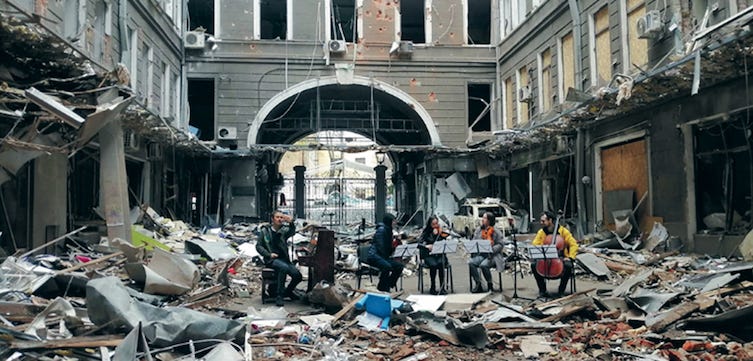
Zhadan began using his Facebook page to coordinate resistance efforts, ranging from raising money for drones to publicizing a concert for subway dwellers bombed out of their homes. He also posted daily messages of uplift for Ukrainians. In a beat-up Hyundai, he took donated food, medicine, bulletproof vests, and more to men and women at the front.
More recently, Zhadan has gathered the first four months of his post-invasion Facebook posts in a harrowing diary, Sky Above Kharkiv: Dispatches from the Ukrainian Front (Yale University Posts, April 2023). It’s an optimistic but fierce defense of his country that collects lightly edited versions of his messages to the world from February 24 to June 24, 2022, translated from the Ukrainian by Reilly Costigan-Humes and Isaac Stackhouse Wheeler.
Sky Above Kharkiv includes, along with several of Zhadan’s poems, more than two dozen black-and-white and color photos and other art that heightens its emotional impact. It’s a small hardcover book — about 9” x 5” — that would fit into a deep pocket of a soldier’s flak jacket, reminiscent of the Penguin paperbacks distributed to American G.I.s in World War II.
Zhadan views the war though the lens of events in Kharkiv, a major cultural and educational center 26 miles from Russia. Many residents have friends or family across the border.

But for all the cross-cultural ties that may exist, Zhadan depicts the invading Russians unsparingly in Sky Above Kharkiv, casting them as war criminals intent on “a genocide of the Ukrainians”:
“The Russians are barbarians. They’ve come here to destroy our history, our culture, and our education, because all those things are alien and hostile to them. We have to protect all that, restore it, keep developing it.”
Unlike the Russians, the Ukrainians were “battle-ready,” Zhadan says. They’d been preparing for another assault since Russia annexed Crimea eight years ago:
“If the Russians had launched a full-scale war back in 2014, there probably wouldn’t have been any unity or resistance. The Russians simply don’t understand what has been going on here for the past eight years. That’s where all their nonsense about denazification comes from. So what has been going on? We’ve been developing, while they’ve been decaying.”
How much of the credit for this should go Ukrainian President Volodymyr Zelenskky?
Zhadan says only that he used to be “rather skeptical of the current government,” which he saw as too similar to past regimes. He sounds more sympathetic now to the new generation of leaders, in their 40s, who have “the cruel lot of having to stand up for their country”:
“Young Ukrainian men and women — that’s who this war of annihilation is being waged against.”

But Zhadan shows the effects of war on all generations. He mentions only in passing tragedies that occurred beyond Kharkiv: the carnage in Bucha, the occupation of Kherson, and the siege of Mariupol and the valiant last stand of fighters holed up at the city’s Azovstal metalworks plant.
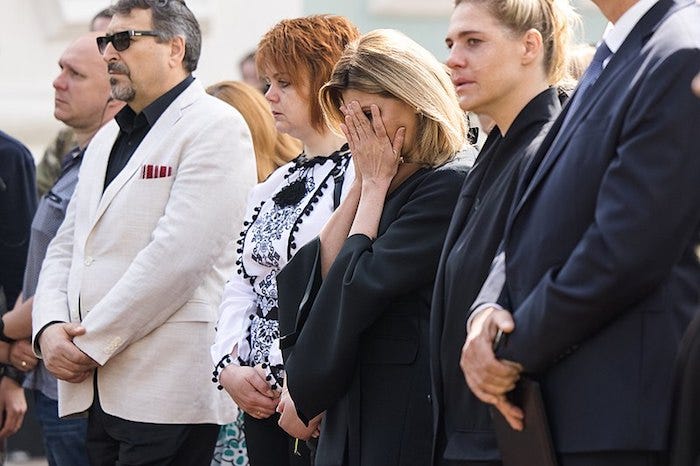
Sky Above Kharkiv nonetheless shows vividly how the war is affecting his city and country. Amid the blaring of sirens and booming of guns, Zhadan takes insulin to a hospital, attends a funeral for a field commander, and gives a concert in a bunker to support the Territorial Defense Forces.
He seldom mentions religion as he exhorts his compatriots to stand fast amid their trials. Instead, like streetcorner Churchill, he urges Ukrainians to have faith their country, in one another, and in their certainty of victory.
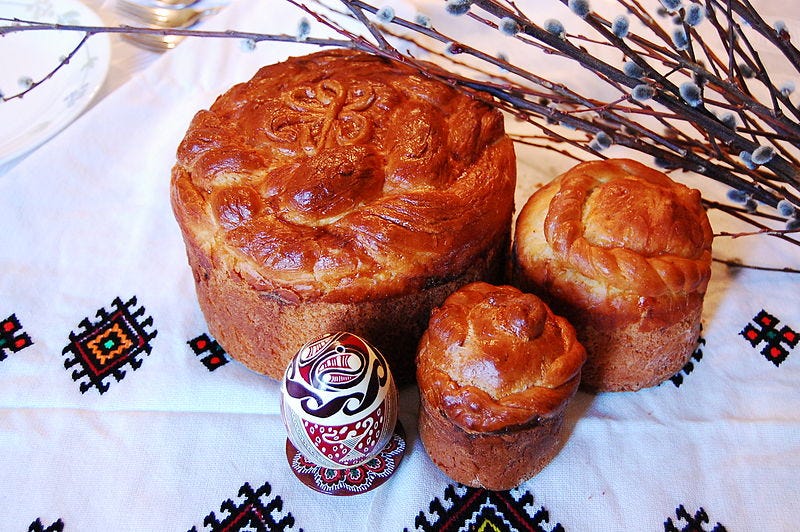
An exception occurred during Holy Week when he and others took several hundred of the Easter breads known as paskas to people sheltering in metro stations. He writes the next day:
“Christ is risen, dear believers and agnostics! Wishing you health and happiness!”
.jpg)
Zhadan is well aware of the risks of writing about the kinds of the pain Ukrainians are suffering. In his introduction he admits that “using blood and gore as literary material seems ethically dubious and completely inappropriate.”
That may help to explain why his messages focus on not on the horrific sights he’s seen but on what Ukrainians are doing to survive. So do the photos, which are surprisingly moving for pictures taken in low light with a smartphone. They show scenes such as the wreckage of a gratuitously destroyed museum and of a thin and apparently abandoned dog, looking lost atop ruins.
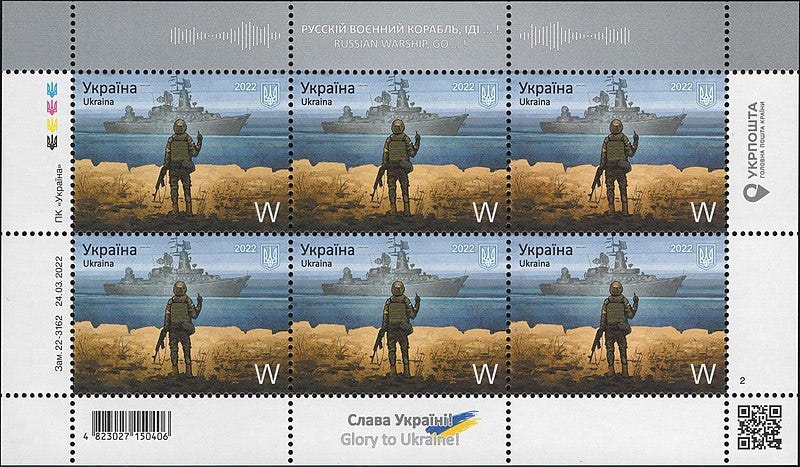
Flashes of wry humor help to leaven the book. Sky Above Kharkiv shows the first-day cover for a Ukrainian postage stamp honoring the words a Ukrainian fighter shouted to Russian missile cruiser off Odessa: “Russian warship, Go…!” Zhadan adds a smiley-face emoji to an entry noting that he and others bought envelopes to use to when writing to relatives in Russia:
“I mean, everyone from Kharkiv has relatives in Russia, right?”
All of it makes his story a unique and welcome addition to the growing payload of books about the Russian invasion.
But one photo in Sky Above Kharkiv may have special resonance for Americans who wonder if Ukrainians value the vast financial and other help their country has received from the U.S.
The picture shows a priest speaking to the resistance fighters in what resembles an underground bunker. On the wall hang three flags: those of Ukraine, a World War II resistance group, and — at their center — Old Glory.
@Janiceharayda is an award-winning critic and journalist who has been a writer and editor for Glamour, the book critic for Ohio’s largest newspaper, and a vice president of the National Book Critics Circle. She has written for many major media.
You might like another of my stories about Ukraine: