
AN ORWELL PRIZE FINALIST
‘Invasion’ Is A Moving Reminder Of Ukraine’s Courage
A gifted journalist shows a nation’s resilience in a blend of first-rate reporting and insightful analysis
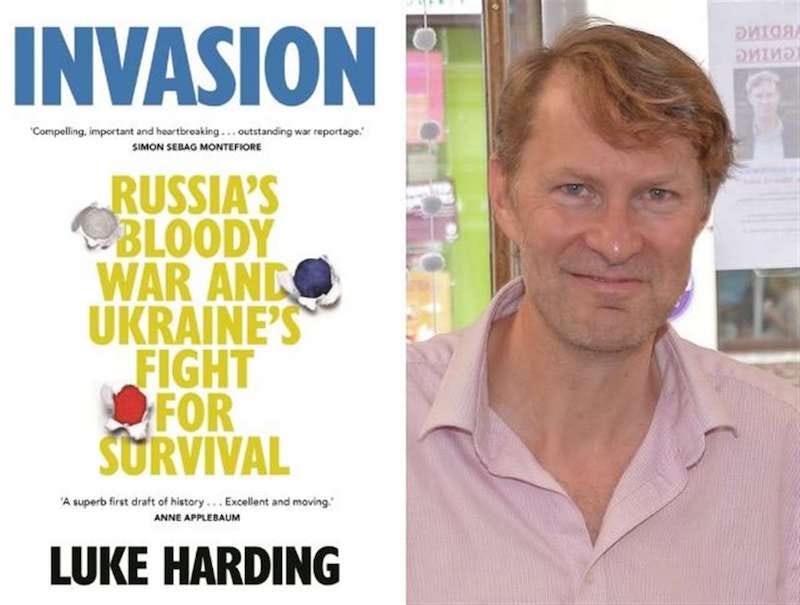
Three seconds before a Russian artillery attack, stray dogs take cover — “a useful alarm signal,” a young Ukrainian officer told Luke Harding.
Harding, a Guardian foreign correspondent, recalls their conversation in his ninth book, Invasion: The Inside Story of Russian’s Bloody War and Ukraine’s Fight for Survival. A finalist for the 2023 Orwell Prize for political reporting, his impressive chronicle is full of details like that one.
He was in Kyiv on February 23, 2022, the eve of the Russian invasion, sharing a meal of borscht with Andrey Kurkov, Ukraine’s leading novelist, and follows the story through Russia’s storming of the Zaporizhzhia Nuclear Power Station seven months later.
Harding’s pithy summary of what Vladimir Putin hoped to do at the plant suggests his gift for melding harrowing reporting from the front lines with an aerial view that sets regional events in a global context.
“Putin was attempting to do something unknown to history: to steal a civil nuclear plant from another state,” he writes.

Harding’s limited time frame means that he is, in effect, scraping the windshield while it’s still snowing. His focus precludes coverage of pivotal events that occurred after 2022: the death of the mercenary leader Yevgeny Prighozhin; the 2023 Ukrainian counteroffensive; and the growing opposition in Washington to giving Ukraine more money or weapons.
That doesn’t undermine the high quality of his reporting on what he does cover, including the siege of Mariupol, a “modern Guernica,” and the massacre at Bucha.
Nor does it diminish the courage shown by Harding, who had been deported from Russia, where he was the Guardian’s Moscow bureau chief, and was fired at by a sniper in the Donbas in Eastern Ukraine. He devotes a chapter to how Putin punishes truthful journalists like Anna Politkovskaya, who was fatally shot not far from the Guardian’s Moscow office.
.jpg)
Perhaps the greatest value of this book is that Harding digs deeper than drive-by journalists who dash into and out of hot spots to burnish their reporting credentials. He’s always seeking the “why?” behind the “what’s happening right now?”
A few examples of the “whys” Harding explores:
Why wasn’t Putin prepared for his worldwide condemnation?
He took his cues from what happened after he annexed Crimea:
“The Kremlin had calculated that the democratic world’s reaction would be similar to that of 2014, after Crimea: harsh words, minor sanctions, and not much else. Putin believed the West to be decadent and feeble, and in the grip of the same terminal decline that had overwhelmed the Soviet Union in 1991.”
Why were Ukrainians able to respond so heroically to an assault by a more powerful country?
Ukrainians are more individualistic than Russians, a former Kyiv official told Harding, with a vast number of civil-society bonds, linking families, churches, and small enterprises:
“There are a huge number of horizontal links. It’s what differentiates us from Moscow.”
In that sense, Ukraine is more like Greece or Italy than Russia:
“Russia has a vertical tradition and is a place of strong institutions. When Putin said something, Russians listened. But in Ukraine, institutions are weak and rulers are mistrusted….
“In contrast, Russians came from an autocratic system. They bowed to authority, followed orders, and loved the tsar — unless they didn’t like him, in which case they killed him. The Soviet state and its modern successor revolved around a single party, and a dictator.”
_(cropped).jpg)
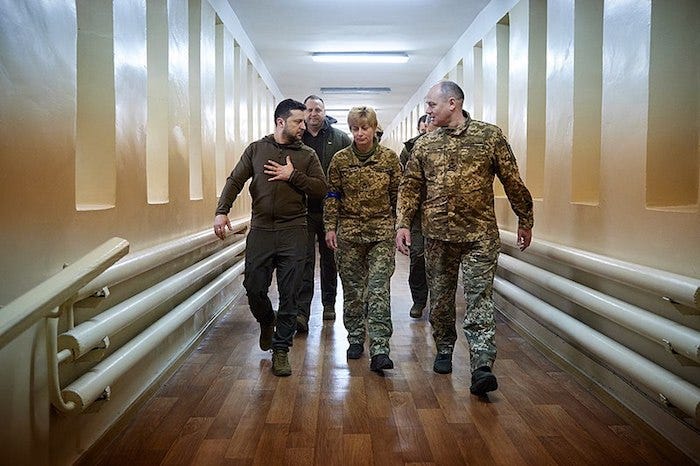
Ukrainians’ distrust of authority helps to explain why they elected President Volodymyr Zelenskyy, Harding says. As a TV actor, he had played an idiosyncratic history teacher who ranted about “impunity and misrule, themes familiar to every Ukrainian.”
Why does the Kremlin see the invasion as more than a land grab?
Putin tries to justify his aggression with a specious blend of history, geography, and ideology. He claims Russians and Ukrainians both descend from a princedom called Kyvian Rus, an idea that relies heavily on a monk’s 12th-century chronicle and that Harding ably dismantles.
Why does Ukraine keep saying it needs more and better weapons?
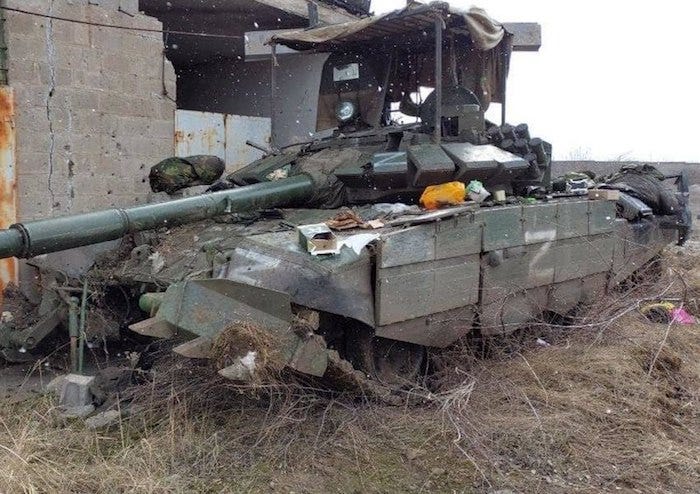
The Russians had plenty of everything when they invaded, a Ukrainian special forces commander told Harding: tanks, ammunition, rockets. Ukrainians didn’t and faced murderous fire on the front.
“The U.S., UK, and Swedish anti-tank weapons that proved so effective in the early weeks of the war were now of little use, he explained. His fighters couldn’t get close enough to lock on enemy targets.”
Harding enlivens his story with anecdotes, quotes, and vignettes involving ordinary Ukrainians as well as military and government officials, including a poignant story of a mother who sobbed as she retrieved her daughter’s wedding dress from an apartment destroyed by the war. He might today have to write a less optimistic book about Ukraine’s wartime prospects than he did in 2022.
But he more than makes his case that the invasion has shown Putin to be “a foolish despot lost in fantasy.”
Ukraine has not won the war, Harding allows, or not yet. But it has become “a proven state,” one tested by two world wars, Stalin’s famines, occupation and invasion by Russia, and more.
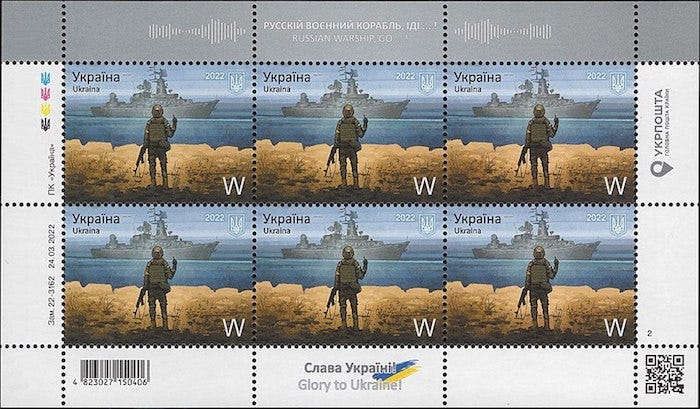
In an especially lively section of Invasion, Harding recalls a Ukrainian border guard on a Black Sea island ordered to surrender by a caller on the Russian warship Moskova. The guard’s five-word response went viral: “Russian warship, go fuck yourself.”
The words inspired a Ukrainian postage stamp and became a rallying cry on billboards, road signs, T-shirts, magnets, and more. Harding writes:
“They perfectly summed up Ukraine’s response to Russia’s overweening assault, to its arrogance, and presumption — go fuck yourself.”
@JaniceHarayda is an award-winning critic and journalist who has been the book editor of a large U.S. newspaper and a vice president of the National Book Critics Circle. Her work has appeared in the New York Times, the Wall Street Journal, the Washington Post, Newsweek, Salon, and elsewhere.
You might like another of my stories about Ukraine: