

Your First Day on The Job
What Should You Be Doing to Be Effective?
📚 Connect with us. Want to hear what’s new at The Pragmatic Bookshelf? Sign up for our newsletter. You’ll be the first to know about author speaking engagements, books in beta, new books in print, and promo codes that give you discounts of up to 40 percent.
So, you’ve just begun your first day in a team lead position. Congratulations!
If you’ve arrived from outside the organization, you’re probably busy with induction meetings, getting your desk set up (erm, what’s the WiFi password?), and forgetting your pass for the third time when visiting the bathroom. If you’ve been promoted internally, you may be beaming with pride, or you may be anxious about how your relationship is going to change with your peers. In fact, are you still allowed to hang out with Jim and Ana on weekends now that you’re managing them?
Depending on how much preparation time you’ve had, you may have a plan for your first week. However, for many new managers, it’s likely that you may not have a clear picture of what you should actually be doing with your time in this role. What is your output? It used to be JIRA tickets and deploys to live, and now it’s… stuff.
The truth is that no organization is the same in its approach to management. You may have had several bosses who acted in dramatically different ways: maybe you had a quiet, sagely manager who was better at structured written communication compared to face-to-face exchanges; maybe you had a bouncing entrepreneurial manager who motivated valiantly but was a bit scattershot, or maybe even a manager who was consistently never there at all (believe me, I’ve heard stories). What specifically should you be doing to be effective?
First, you need some structure. Let’s explore how to set up a framework in which you can succeed and create predictability within your working week.
Here’s the basic framework that we’ll break down task by task:
- Introduce yourself to your team.
- Book a weekly 1 to 1 with everyone on your team.
- Create a private document for each person on your team and share it with them.
- Book a weekly 1 to 1 with your manager.
- Review past reviews.
Make Introductions

Introduce yourself in person, or at the very least, via video call if you have remote staff. Not primarily via email or Slack.
You’ve probably already met some of your staff in the hiring process, but now’s the time to start building rapport.
- Ask them to describe the team and what they’re working on.
- Ask them what things are going well and what could be improved.
You’ll begin to uncover all manner of information about your new team:
- Details of the current project(s) and clarity of their objectives.
- Knowledge, or confusion (!) about who is accountable for particular decisions, such as the priority of work and the roadmap.
- How they feel working at the company.
- How they feel the team is perceived within the department and the company.
- How enthusiastic they are about their current project and what they like and dislike about it.
You can meet individually with each member of staff or book time with the whole team depending on your feel for the people and the workplace. Lots of interesting issues and conflicts tend to arise when people describe the current situation. People may tell you about communication issues, work stress points, interpersonal issues, and beyond. These points allow you to start contributing to making things better. Make sure you capture all the issues.
Book Team 1 to 1s

1 to 1s are the most important meetings that you have with your staff. They are the core, private, regular session that allows you and your staff to build rapport with each other by having frank and open conversations in a safe environment. Give everyone at least an hour. This might seem like a long time, but you’ll easily fill it, especially as you get to know each other better. You may be entering into an organization where 1 to 1 meetings are part of the culture, but if you’re not, ask your staff to try them out to see how they go. Run correctly, they are an essential process.
In order to prepare yourself for these 1 to 1s, you need to define a place for information to be recorded. So…
Create Private Documents
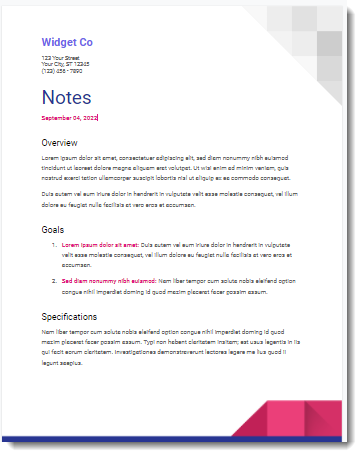
A private document is a great way of recording what you discuss in your 1 to 1s. You can capture actions that either you or your staff have to do, and jot down discussion points as the week goes on, ahead of time. It’s useful to get into a habit of jotting these notes as situations arise. As you get to know your staff, you’ll be able to more easily judge which issues to bring up immediately versus those to note down and defer to your to 1 to 1 for a focused chat in private.
The software you use may vary here, but my current company uses Google Drive, so I store these documents there and share them via the team member’s email address. You can leave comments and assign actions from documents on Drive too.
Book a Manager 1 to 1

Don’t wait for a request to come from the top down, do it from the bottom up. Repeat the process of creating a private document between you and your manager and use it in exactly the same way that you use it with your own staff. You may find that your manager never looks at it, or prefers her own paper-based notes, but you can still prepare for your own meetings and capture actions.
Additionally, you may find that it’s useful to schedule this meeting at an impactful time. Slotting it in on a Monday allows the session to be forward-looking for the week ahead and can help cover strategic points that you can implement in the days to come. Meetings at the end of the week can be more retrospective considering the week has just passed. When to hold the meeting is entirely your call depending on how you like to operate.
Review Past Reviews
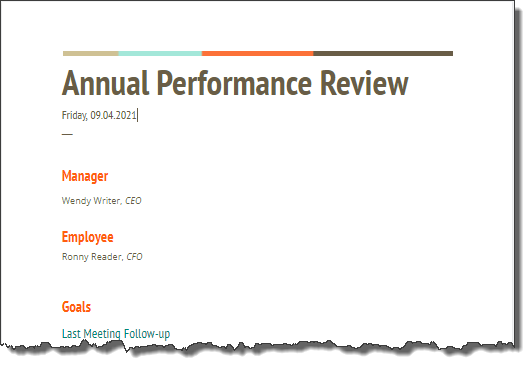
Ask your manager where you can find the previous annual or mid-year reviews for all of your staff. Once you have them, read them so that you can work out how everyone on your team is doing.
- Are they performing well?
- Are they trying to improve?
- Are there any pressing worries?
- What goals are they working towards, if any?
These are great topics of conversation for your 1 to 1s.
Why Are You Doing All Of This?
It’s simple: you’ve begun to implement the framework that you operate in as a manager.
Next time we’ll dig deeper into your first 1 to 1s and explore an exercise called contracting, which is a great way to begin your relationship with your direct reports.
If you enjoyed this article, be sure to pick up James Stanier’s book from The Pragmatic Bookshelf:
Through the end of October 2021, you can save 35 percent on the ebook version using promo code jsengman_medium_35. Note that promo codes are not valid for prior purchases.
Further Reading
Also by James Stanier:
Become An Effective Software Engineering Manager on Medium: